What the Guide Idler Bracket Does on a Troughing Set
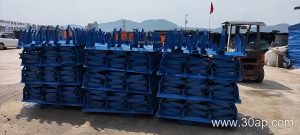
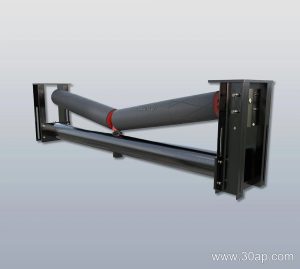
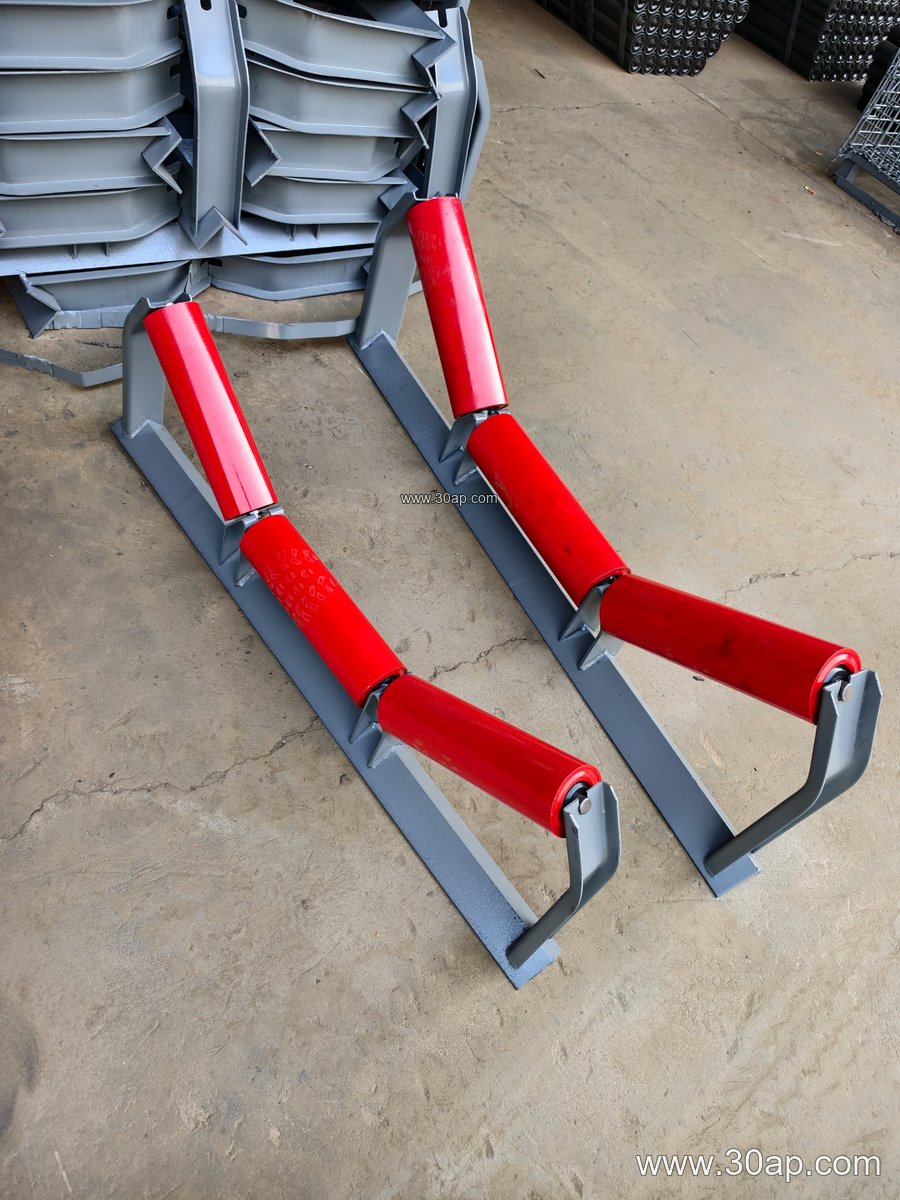
A guide idler bracket is the support that holds the side idler of a troughing set at the required angle, so the belt edge is lifted and guided instead of rubbing flat against the frame. On a quarry conveyor or a crusher feed line, the bracket is often the part that decides whether the belt trains quietly or walks toward the structure. It is a steel item, usually bolted to the main frame, and it is not the same thing as a bend pulley or a tail pulley — those are rollers that turn the belt path, while this bracket only positions an idler roller.
How the Bracket Is Built
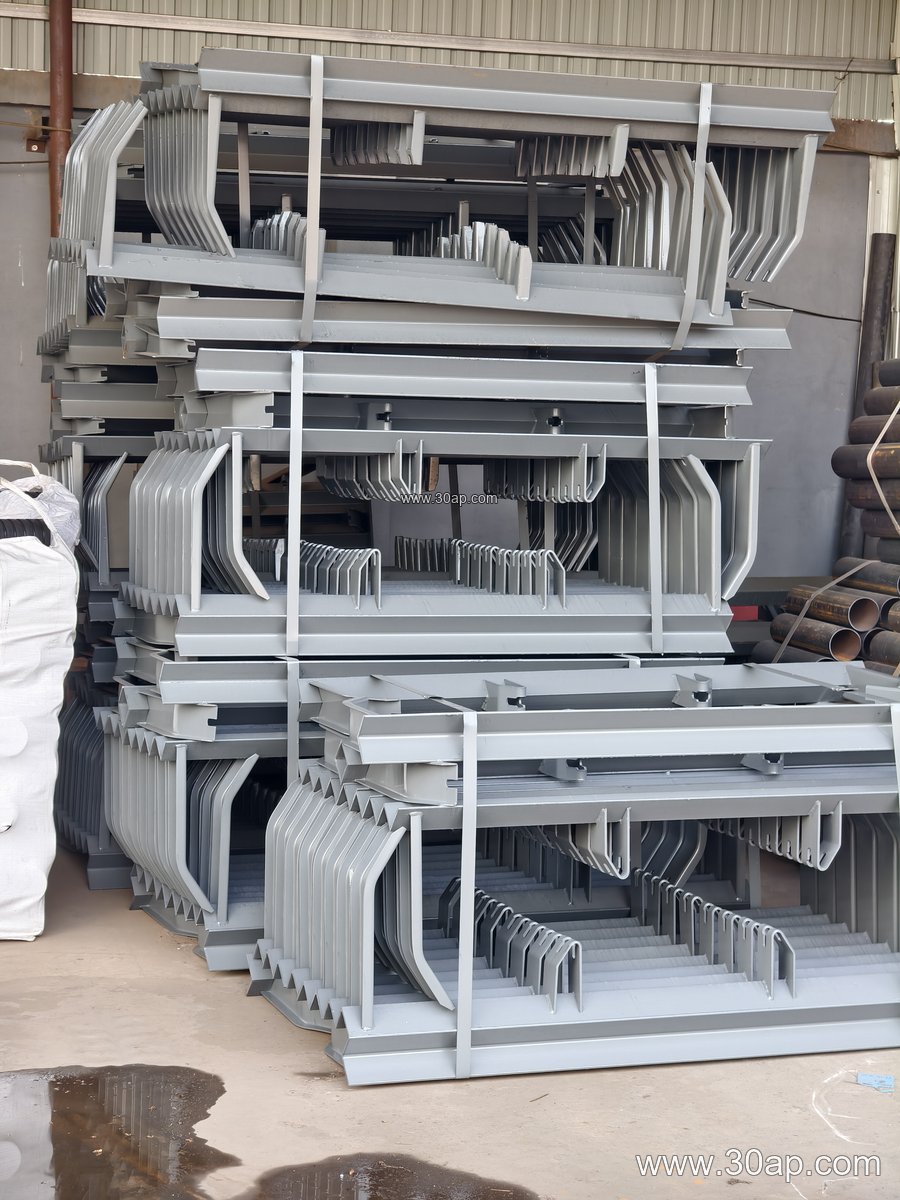
Most units are formed from angle steel, channel steel or folded plate. The common arrangement is a base plate with slotted or drilled mounting holes, an angled arm that carries the idler shaft, and a stop or notch that fixes the trough angle. Adjustable versions use a slotted arm or a pivoted plate so the angle can be set on site; fixed versions are welded or bolted at one angle.
Typical reference values used in design work, not a universal rule:
| Item | Common Range |
|---|---|
| Trough angle | 20°, 30°, 35°, 45° |
| Belt width | B500, B650, B800, B1000, B1200, B1400, B1600, B1800 |
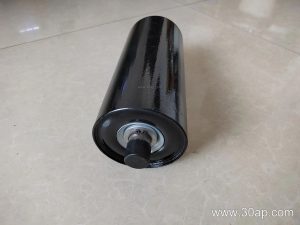
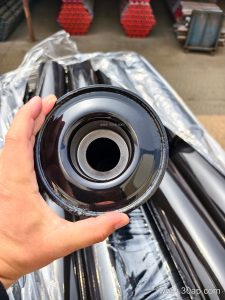
| Idler diameter | Ø89, Ø108, Ø133, Ø159, Ø194 |
| Material | Angle steel, channel steel, folded plate |
| Forward tilt, if used | about 1.5° to 2° |
Hole spacing and crossbeam length change with belt width and trough angle, so they are set by design rather than taken as a fixed number. A B800 set with a 35° angle and Ø108 idlers is a normal combination, and a B1200 set at 45° with Ø133 idlers is just as ordinary; neither belt width locks the bracket to one angle or one roller size.
Where These Brackets Are Used
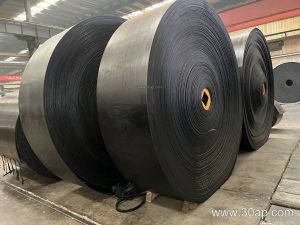
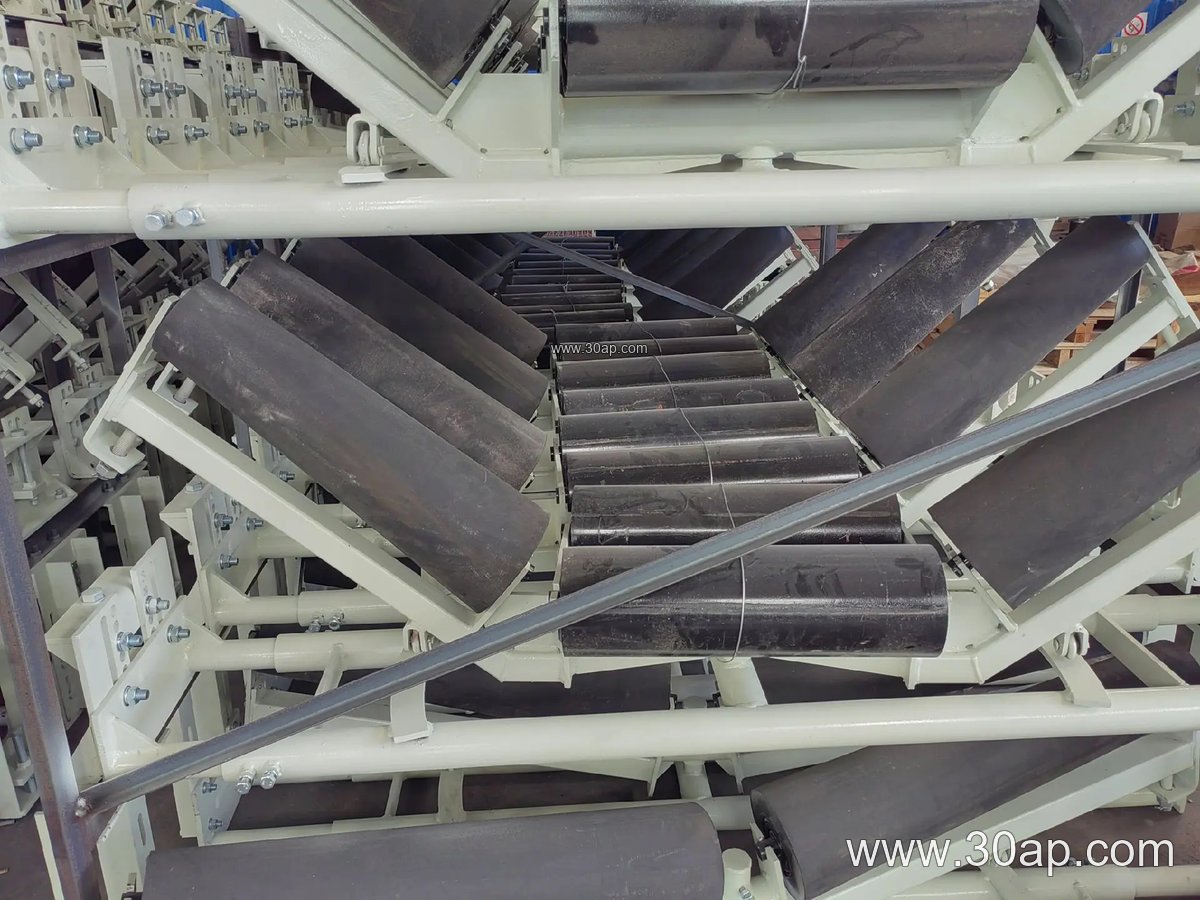
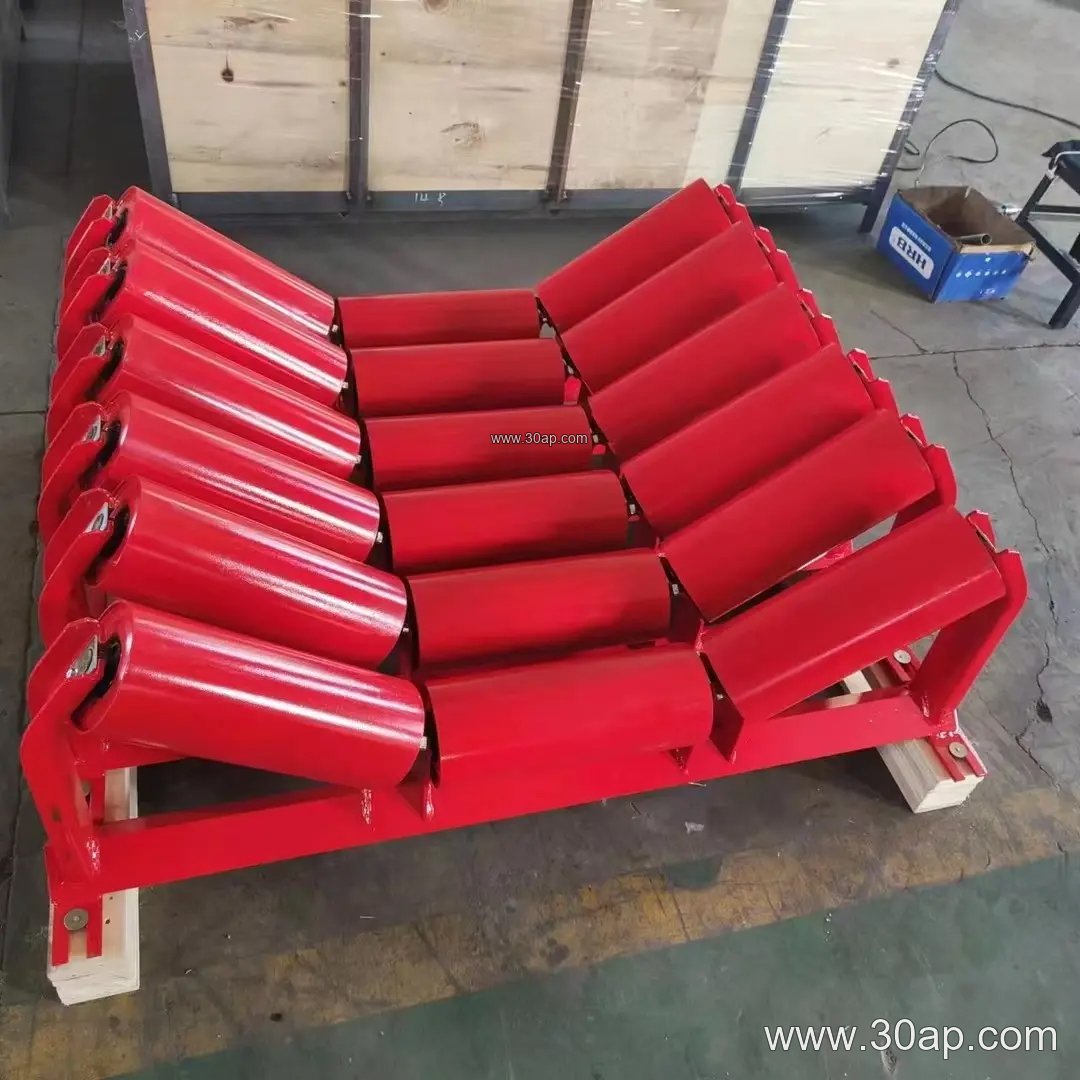
The load side of a bulk handling conveyor is the main home. In a coal preparation plant or a power plant coal yard, the bracket sits on the troughing frame and holds the wing idler that shapes the belt into a trough, keeping a flame retardant conveyor belt or an abrasion resistant conveyor belt centred on the run. In a cement plant or a lime kiln feed line, the same part carries hot-duty idlers under a heat resistant conveyor belt.
At a port or a ship loading terminal, wide belts such as a 1800mm wide conveyor belt need steady side support over long spans, and the bracket spacing is checked against sag. In a sand and gravel line feeding a screen, a quarry conveyor belt with heavy lumps benefits from a robust bracket and a well-chosen trough angle. The part is also found on the return side in the form of V-return and flat-return brackets, and on transition brackets near the head and tail, where the belt changes from flat to troughed.
Fixed, Adjustable and Tilted Versions
Fixed brackets are simple and repeatable, which suits long straight runs. Adjustable brackets allow the trough angle to be trimmed after installation, useful where belt tracking is sensitive or where the same frame type serves several belt widths. A forward-tilted bracket, usually around 1.5° to 2°, leans the side idler slightly in the direction of travel and helps self-alignment; it is a different function from a self-aligning bracket, which pivots as a whole.
It is worth keeping the comparison clear: a troughing bracket holds idlers, a bend pulley changes belt direction, and a drive pulley transmits power. They are not interchangeable, and a bracket is never a substitute for a pulley.
Buyer Checklist
- Confirm belt width and the trough angle the frame is designed for.
- Match the idler shaft size and diameter to the bracket slot.
- Check mounting hole spacing against the existing crossbeam.
- Decide between fixed and adjustable before ordering.
- Review steel thickness and coating for the site environment.
- Ask how the bracket handles belt wander on curves and transitions.
For a mining conveyor belt or a steel cord conveyor belt running at high tension, the bracket should be matched to the frame stiffness, not chosen by belt width alone. For lighter duties, such as a food grade conveyor belt on a short line, a folded-plate bracket is often enough. Matching the bracket to the belt, the idler roller and the pulley layout is the practical way to keep a conveyor running straight.