What an Iron Ore Conveyor Pulley Does on a Bulk Handling Line
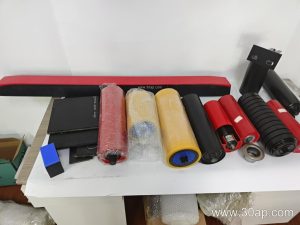
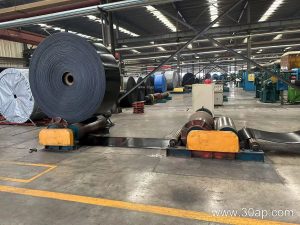
An iron ore conveyor pulley is the rotating cylindrical component that supports and drives the belt on a heavy-duty bulk handling conveyor. In a typical iron ore transfer circuit, this pulley works together with the conveyor belt, idler rollers, and conveyor brackets to keep hundreds of tonnes per hour moving from the mine stockpile to the crushing plant, screening station, or ship loader. The duty is severe: sharp lump ore, abrasive fines, dust, and often moisture place high demands on both the pulley shell and its lagging.
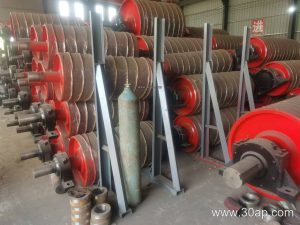
Because the same basic component can serve different functions, buyers should first confirm the position in the conveyor. A drive pulley transmits torque from the gearbox to the belt. A tail pulley returns the belt at the loading end. A bend pulley changes belt direction without driving. These roles are not interchangeable, and each has its own load profile and lagging requirement.
Construction Details That Matter in Ore Duty
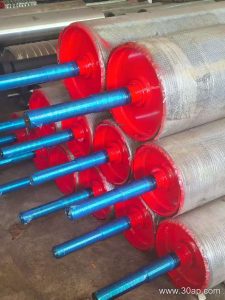
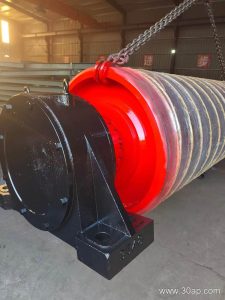
Most iron ore conveyor pulleys are built from a rolled steel shell welded to end discs, with a shaft pressed or keyed into machined hubs. The shell diameter and face width are matched to the belt width and the required belt wrap angle. Common face widths run slightly wider than the belt, for example about 1150 mm for a B1000 belt or about 1400 mm for a B1200 belt. Diameters are frequently selected from ranges such as Ø500, Ø630, Ø800, Ø1000, and Ø1250, but the final choice depends on belt tension, shaft torque, and bearing life rather than belt width alone.
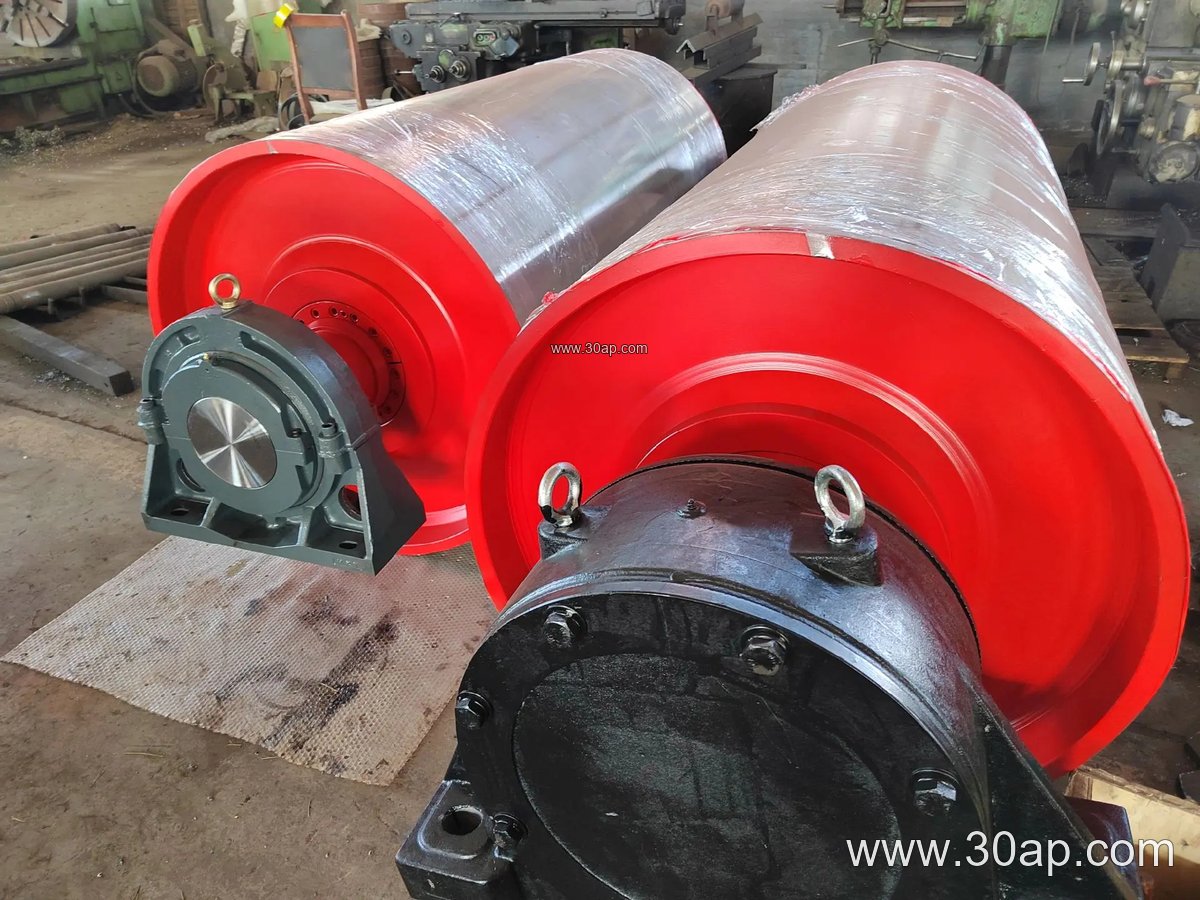
Lagging is where ore conveyors differ most from light-duty systems. Plain steel shells slip badly when fines are present, so most iron ore installations use rubber lagging applied by hot vulcanization, cold bonding, or cast-on methods. Diamond grooving helps shed water and fines, while ceramic lagging may be chosen at the drive position where grip and wear resistance are critical. Lagging thickness commonly falls between 8 mm and 20 mm, with heavier builds used on high-torque drive pulleys.
- Shell material and weld quality affect fatigue life under shock loading
- Shaft diameter is calculated from torque and bending load, not copied from belt width
- Bearing housings and conveyor brackets must suit the actual take-up arrangement
- Lagging pattern and hardness should match ore size and moisture conditions
Matching the Pulley to the Belt and the Circuit
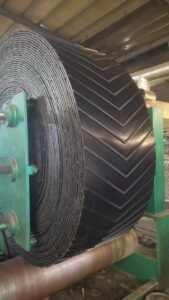
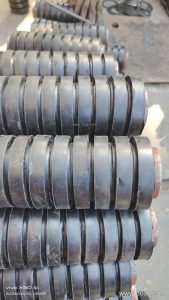
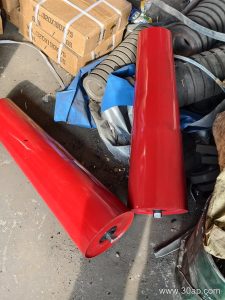
An iron ore conveyor pulley never works alone. The belt itself may be an abrasion resistant conveyor belt, a steel cord conveyor belt for long overland runs, or a multi-ply fabric core belt on shorter sections. Heavy impact at the loading point is usually absorbed by impact idler rollers and a skirted conveyor belt zone before the ore reaches the tail pulley. On inclined sections, a chevron conveyor belt or corrugated sidewall belt may be used, and the pulley face and lagging must accommodate the belt profile without edge damage.
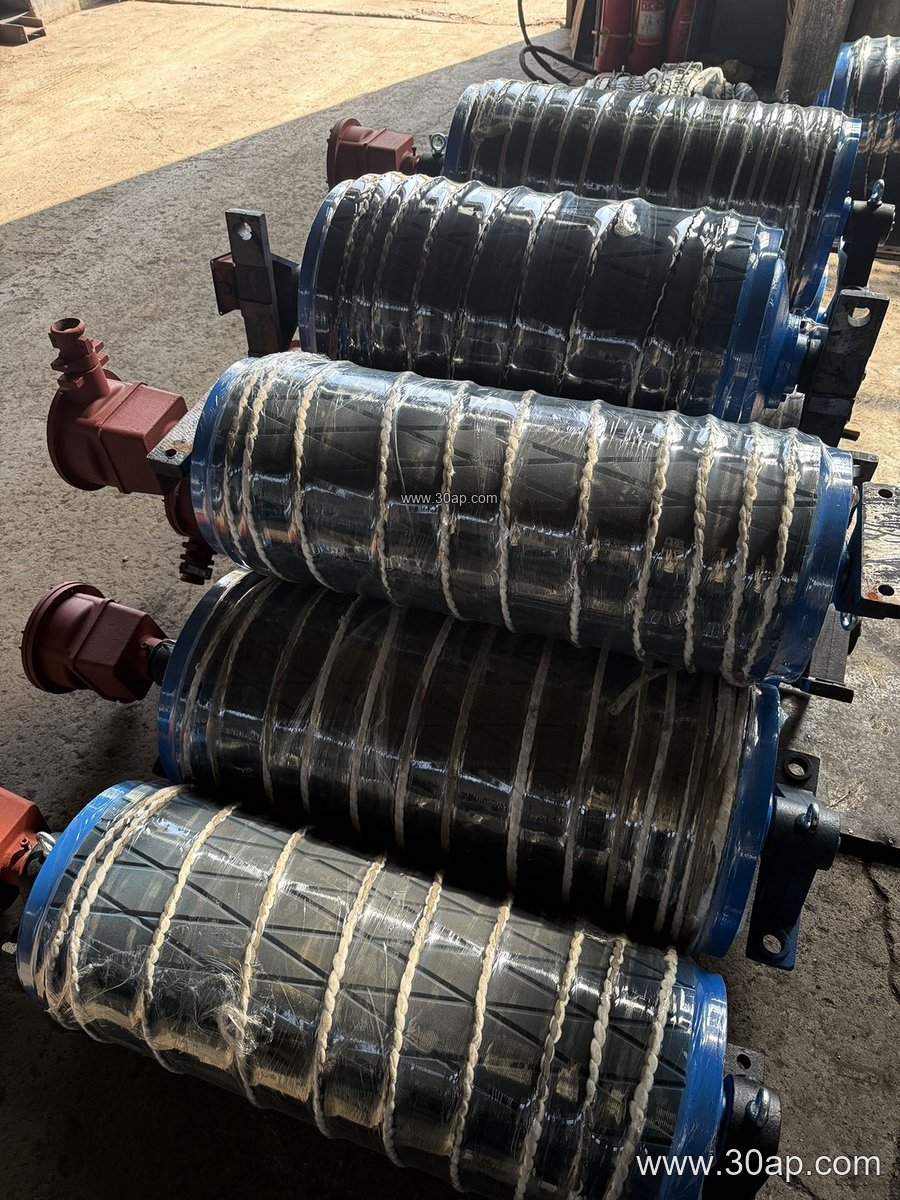
Typical combinations are often described in shorthand. A B1200 × Ø1000 drive pulley with diamond rubber lagging is a familiar arrangement on a primary ore conveyor, while a B800 × Ø500 bend pulley might appear on a shorter transfer. These are reference examples, not fixed rules. The same belt width can pair with several diameters depending on tension and wrap angle.
Where These Pulleys Are Installed
Iron ore handling covers more than the mine pit. A concentrator plant, a sintering line at a steel works, and a port stockyard all use conveyors with drive, tail, and bend pulleys. In a pelletizing or sintering plant, heat resistant conveyor belts may run alongside standard ore belts, and the pulleys serving those lines need lagging that tolerates elevated temperatures. At a port, ship loading conveyors often use wide belts such as 1800 mm or 2000 mm, which call for larger pulley shells and heavier shafts.
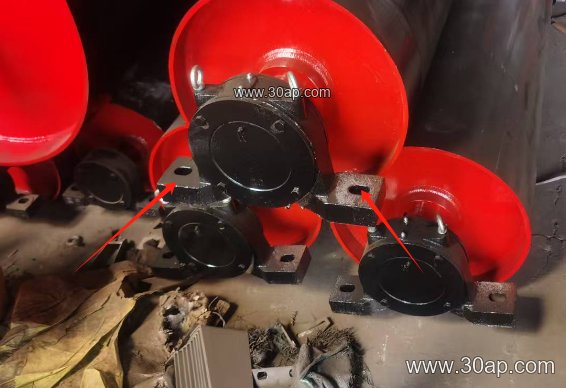
Dust control also matters. Fine ore dust works into bearing seals and between the belt and lagging, so sealed housings and periodic inspection are part of normal maintenance. A worn lagging surface reduces grip and increases belt slip, which quickly damages both the belt cover and the pulley.
Buyer Checklist Before Ordering
A clear specification avoids costly rework. Provide the belt width, the pulley position, the required diameter, the shaft diameter, the lagging type and thickness, and the bearing arrangement. State whether the pulley is a drive, tail, or bend unit so the supplier can size the shell and welds correctly. Confirm the mounting dimensions needed for the conveyor brackets and the take-up frame.
Ask about dynamic balancing for high-speed pulleys and about the inspection report for shell welds. For a mine or quarry conveyor, spare lagging and a second tail pulley can shorten downtime. Keep records of shaft diameter, keyway size, and bearing model so replacements match the existing structure.
Finally, treat catalogue figures as common reference values. Diameters, face widths, and lagging thicknesses should be confirmed against the actual conveyor design, belt tension, and ore characteristics before purchase. A properly specified iron ore conveyor pulley protects the belt, the idler rollers, and the entire conveying line.