What the Ø180 Conveyor Idler Is
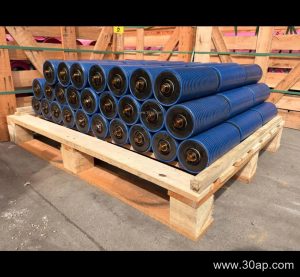
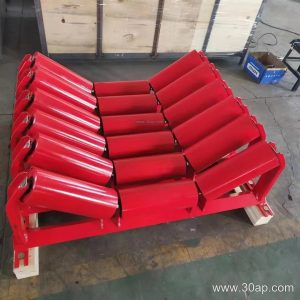
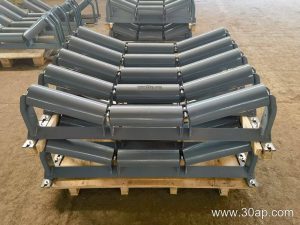
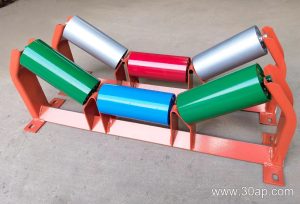
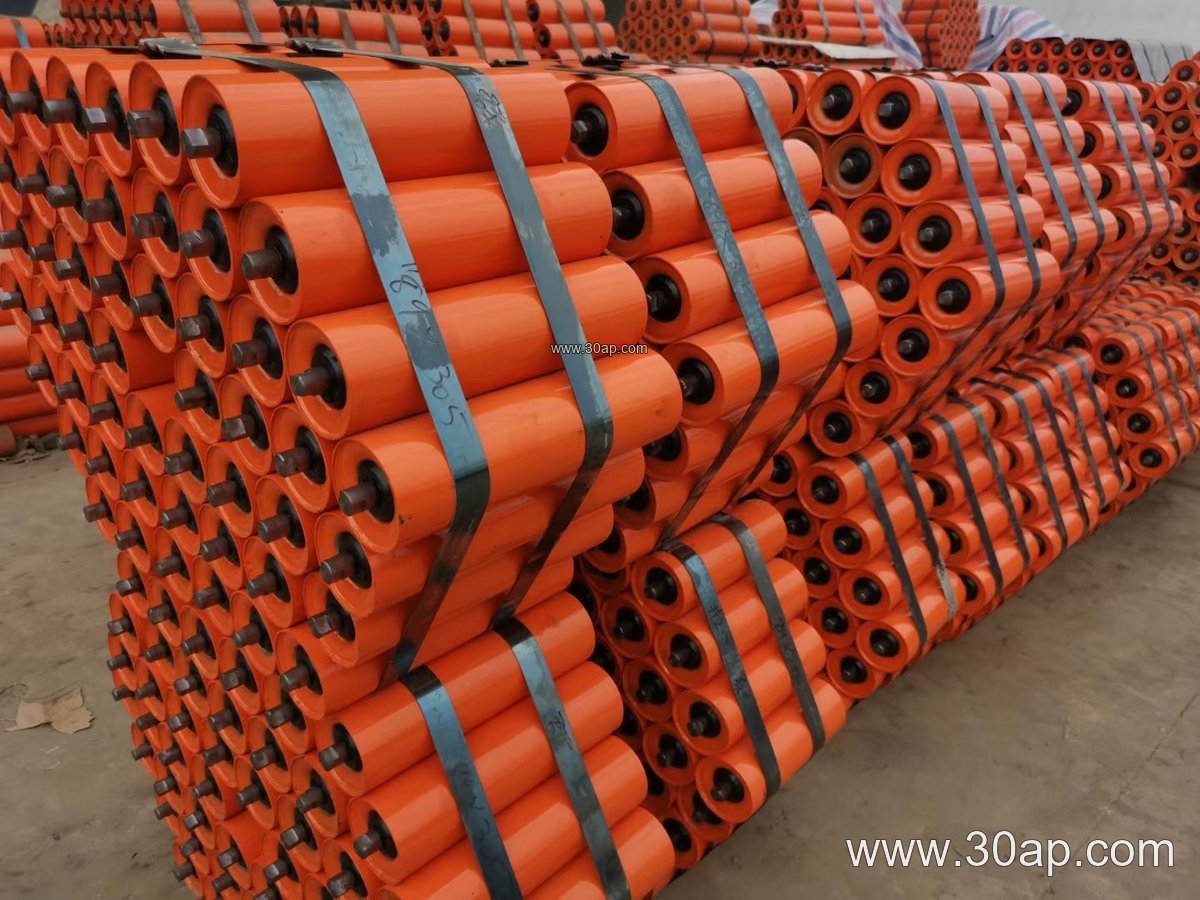
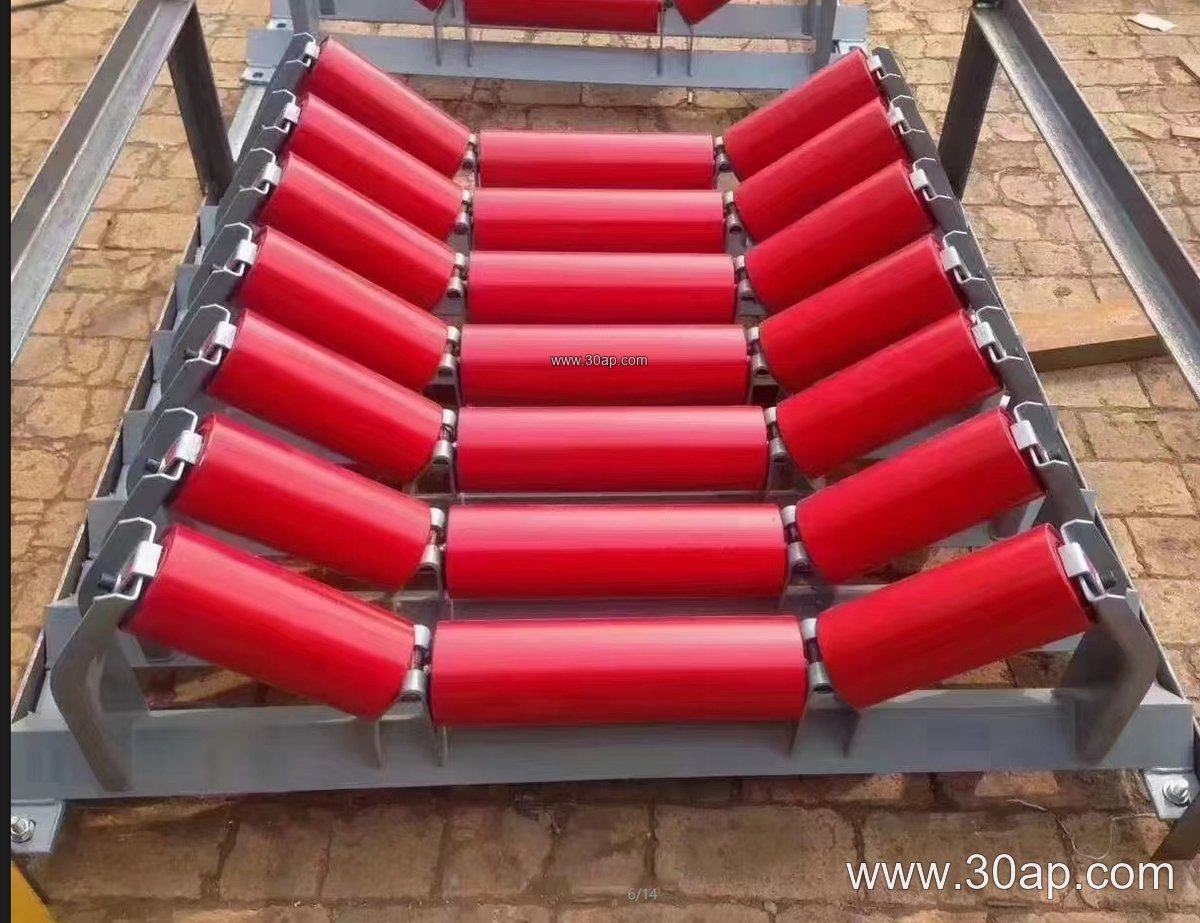
An Ø180 conveyor idler is a carrying or return roller with a nominal shell diameter of 180 mm. It sits between the smaller 159 mm and the larger 194 mm and 219 mm rollers in common heavy-duty ranges. In a troughing set, three of these idlers support the loaded belt and shape it into a stable trough, which keeps bulk material centered on the line. You will also see the same shell used as a flat return roller under the belt. On long overland lines and high-tonnage transfer points, this diameter gives a useful balance between load capacity and rolling resistance. Buyers often compare it with a conveyor pulley, but the two are different components. A conveyor pulley drives or redirects the belt at the head, tail, or bend, while an idler roller simply supports the belt along its run.
How the Roller Is Built
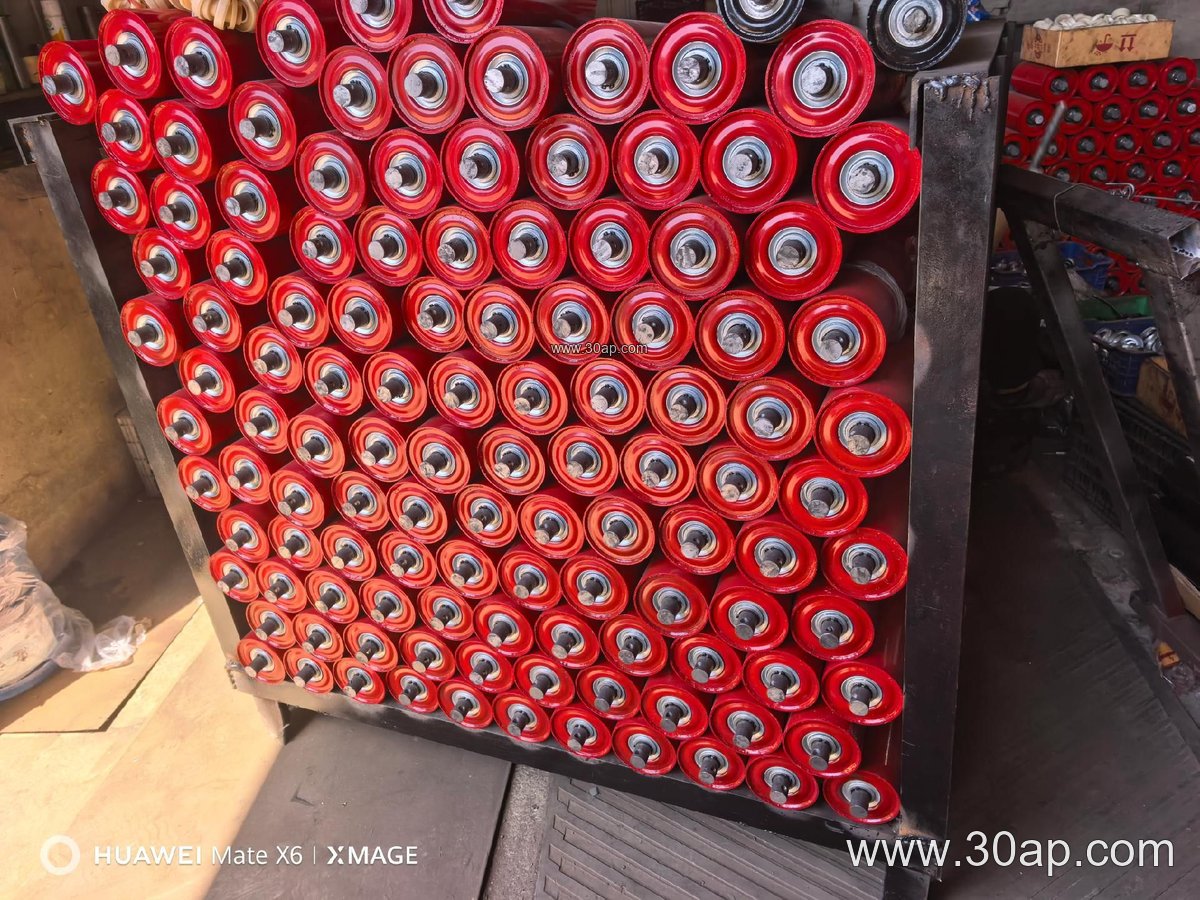
A typical Ø180 idler uses a seamless steel tube shell, welded end caps, a through shaft, and sealed ball bearings. The bearing housing is packed with grease and protected by labyrinth seals or a combination of felt and lip seals. On abrasive duty, the shell may carry a rubber lagging or ceramic tile surface to protect the tube and improve grip on the belt. Roller ends are often fitted with a small gap seal that lets the roller breathe without letting dust in. The shaft is usually machined from round bar and keyed or flattened at the ends so it drops into the conveyor bracket. Quality comes down to concentricity, weld soundness, seal fit, and the amount of grease inside the bearing cavity.
Where It Fits on the Conveyor
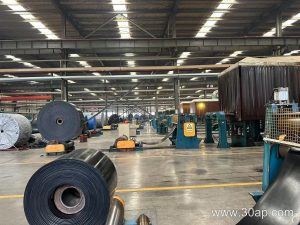
At 180 mm, the shell is mostly specified for medium to heavy belts in primary crushing circuits and main haulage lines. A few typical settings:
- Quarry and aggregate plants, where a heavy-duty conveyor belt carries blasted rock after the primary crusher.
- Coal preparation plants, where a flame retardant conveyor belt runs on troughing idlers through transfer towers.
- Power plant coal yards and cement plant clinker lines, where dust and heat shorten seal life.
- Iron ore and copper ore concentrators, where an abrasion resistant conveyor belt moves wet or dry ore at high tonnage.
It is less common on small package or light sand lines, where Ø89 or Ø108 rollers are enough. It is also not a substitute for a bend pulley at a direction change; that job belongs to the pulley, not the idler.
Sizes to Discuss with a Supplier
No single diameter is mandatory for a given belt width. The values below are common examples, not fixed pairings. Roll length changes with belt width, trough angle, and the number of rolls in the set.
| Item | Common reference |
|---|---|
| Shell diameter | Ø180 mm |
| Troughing set | 3-roll, 20° / 30° / 35° / 45° |
| Belt width range | B800 to B1800 in many designs |
| Roll length example, 3-roll 35° | 315 mm at B800, 380 mm at B1000, 465 mm at B1200, 530 mm at B1400, 600 mm at B1600, 670 mm at B1800 |
| Bearing options | 6206, 6306, 6307, 6308 depending on load |
| Shell surface | Plain steel, rubber lagged, ceramic |
| Seal style | Labyrinth, felt, lip seal |
When a line carries sticky or wet material, a rubber lagged shell helps the belt release fines. For dusty transfer points, a well-sealed bearing matters more than a thicker tube.
Buyer Checklist
- Confirm the actual shaft diameter from the drawing, not from the belt width alone.
- Ask for the bearing number, seal type, and grease quantity per roller.
- Check the wall thickness and end cap weld, since thin shells dent at impact points.
- Match the trough angle to the material’s angle of repose; a 45° set holds a deeper load than a 20° set.
- For inclined sections, a chevron conveyor belt or corrugated sidewall conveyor belt may carry material better than a smooth belt on the same idlers.
- Specify surface treatment if the plant is coastal or the ore is corrosive.
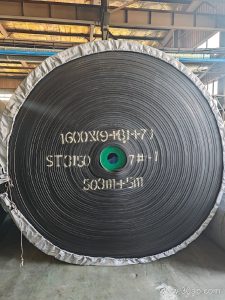
On a typical 1200 mm wide line, the idler set, conveyor bracket, and belt are selected together. A heavy EP conveyor belt or steel cord conveyor belt may need closer idler spacing, while a lighter NN conveyor belt can run with wider gaps. If you are sourcing for a mine or cement works, ask the supplier for a roller drawing and a sample inspection report before the full order. Browse conveyor idler and roller options at www.beltidler.com to compare shell, bearing, and seal configurations.
Installation and Maintenance Notes
Misalignment is the most common cause of early failure. Check that the bracket faces are square to the belt centerline and that the troughing rolls sit in one plane. Keep the belt tracking straight; a wandering belt wears roller ends and can damage the seal. Grease sealed-for-life idlers only if the design includes a grease nipple, and do not overfill. Replace a roller when it seizes, runs hot, or shows a visible flat spot. On a coal mining conveyor belt line, a seized roller can rub through the cover quickly, so monthly temperature checks at transfer points pay off. For high-tonnage lines, keep a small stock of spare Ø180 rollers and end brackets so a single failure does not stop the whole conveying system.