What an NN200 Conveyor Belt Is
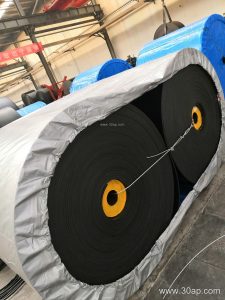
An NN200 Conveyor Belt is a fabric-core rubber belt built on nylon (polyamide) warp and weft cords. The “NN” identifies the carcass fiber, and the 200 refers to the nominal tensile strength of the fabric, commonly expressed in N/mm per ply. In practice, the belt is ordered as a multi-ply assembly: two to six plies of nylon fabric bonded under heat and pressure between rubber covers. Buyers browsing catalogs will also see it listed as a nylon conveyor belt, an NN conveyor belt, or a fabric core conveyor belt, and all three names point to the same product family.
Nylon carcass is valued for its high strength-to-weight ratio, excellent fatigue resistance, and strong adhesion between plies. Compared with an EP conveyor belt (polyester warp, nylon weft), the NN carcass stretches more under load and has slightly lower modulus, which matters when take-up travel is limited. That trade-off is why engineers sometimes compare NN and EP constructions before fixing the final specification.
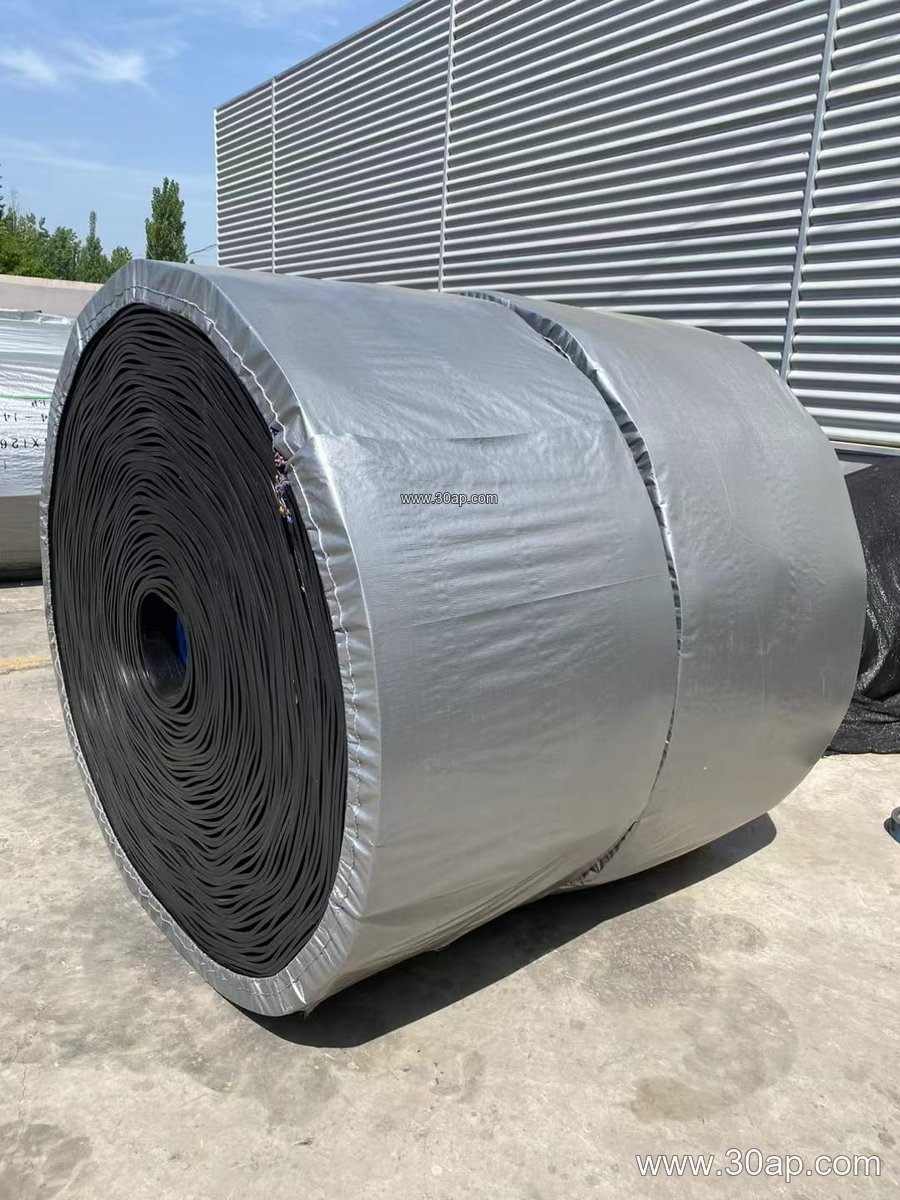
Construction and Typical Specifications
The belt body consists of nylon fabric plies, skim rubber between plies, and top and bottom covers. Cover thickness is selected to suit the material being carried; common combinations include 3+1.5 mm, 4+2 mm, 5+2 mm, 6+2 mm and 8+3 mm. Heavier covers are usual on abrasive rock and ore duty. Edge construction is normally cut edge or molded edge, and the belt can be supplied in open length or as an endless conveyor belt vulcanized to the pulley centers.
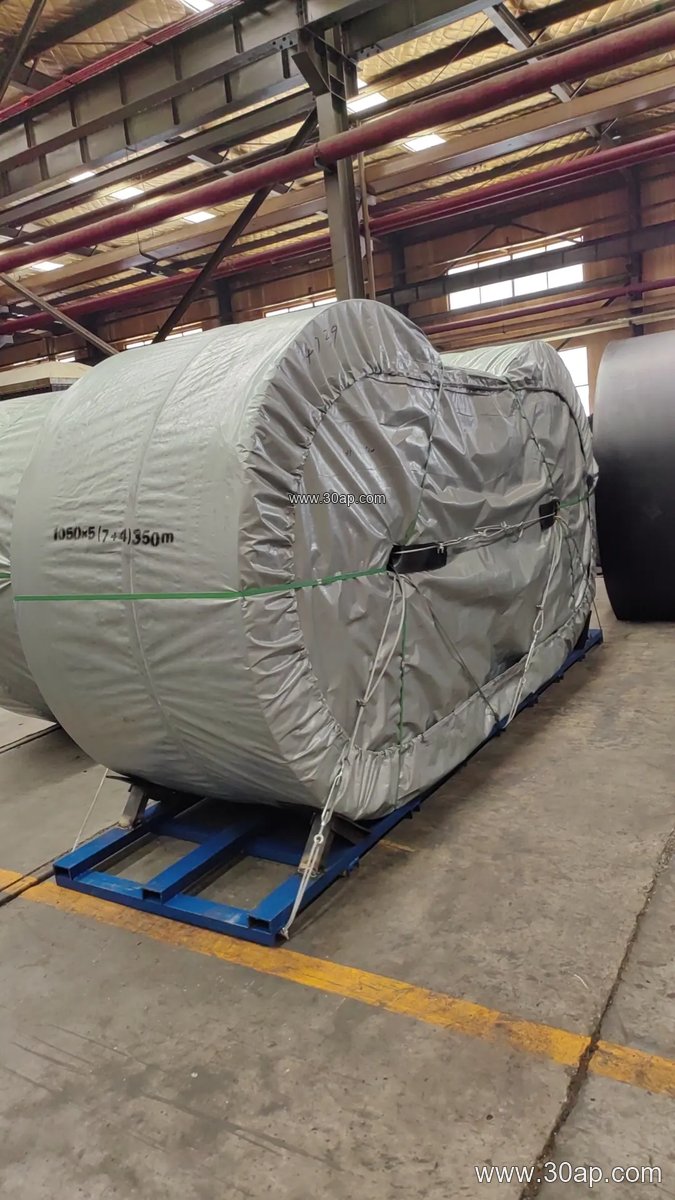
Reference data below reflect common catalog ranges rather than a fixed supply promise. Actual values are confirmed per design, and different manufacturers publish different tables.
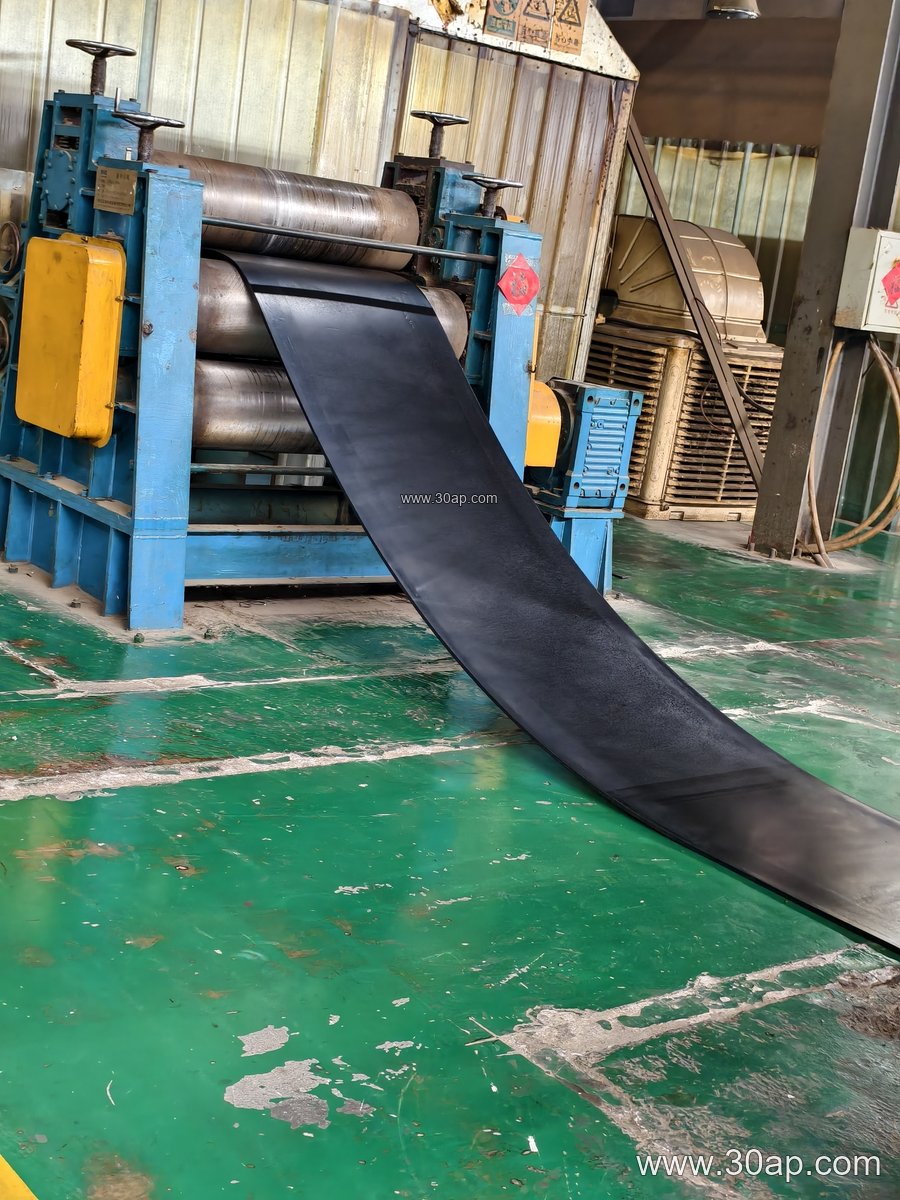
Strength Grades
- NN100, NN200, NN300 and NN400 are the usual nylon grades; NN200 sits in the middle of this range and suits many medium-duty bulk handling lines.
- Higher grades such as NN300 and NN400 are chosen where the same belt width must carry more tension or handle a longer center distance.
Common Belt Widths
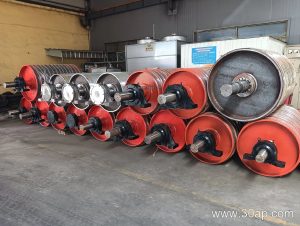
Fabric belts are frequently offered in B500, B650, B800, B1000, B1200, B1400, B1600 and B1800. A 1200mm wide conveyor belt or 1500mm wide conveyor belt is a frequent request for main haulage, while narrower widths serve transfer and screening lines. Width alone does not dictate pulley diameter; the drive pulley, tail pulley and bend pulleys are sized from belt tension, wrap angle and carcass flexibility together.
| Parameter | Typical reference range |
|---|---|
| Carcass | Nylon fabric, 2 to 6 plies |
| Strength grade | NN100 to NN400 |
| Cover thickness | 3+1.5 mm up to 8+3 mm |
| Belt width | B500 to B1800 |
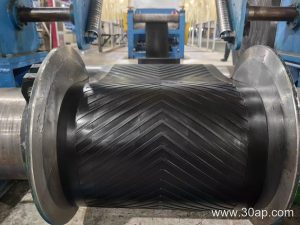
| Surface options | Smooth, chevron, skirted or corrugated sidewall |
Where NN200 Belts Are Used
The grade fits a broad band of bulk material conveyor belt duties. In a quarry conveyor belt line, an NN200 handles crushed stone from the crusher conveyor belt to the screening deck. Cement plants use it on clinker and raw meal routes, power plants on coal conveyor belt runs, and sand and gravel yards on aggregate conveyor belt systems. Underground coal mining conveyor belt service usually calls for a flame retardant conveyor belt or fire resistant conveyor belt specification, so the cover compound and antistatic properties must be confirmed for that environment rather than assumed from the carcass type.
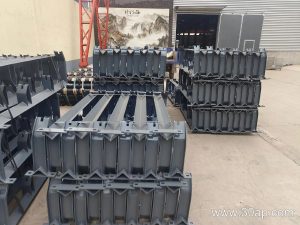
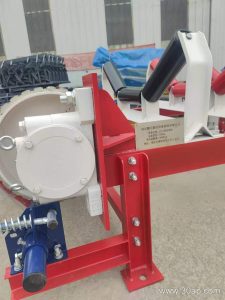
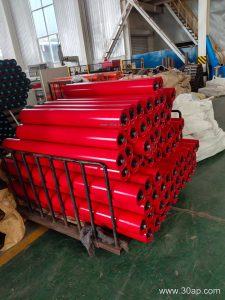
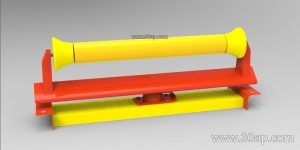
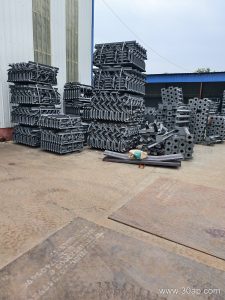
In a steel plant conveyor belt or port conveyor belt installation, the belt runs over idler rollers spaced along the trough, wraps the drive pulley and tail pulley, and is supported by a conveyor bracket and frame structure. Belt training, troughability and impact resistance at the loading point all influence service life, and impact idlers or a cushioning chute arrangement help where large lumps drop onto the belt.
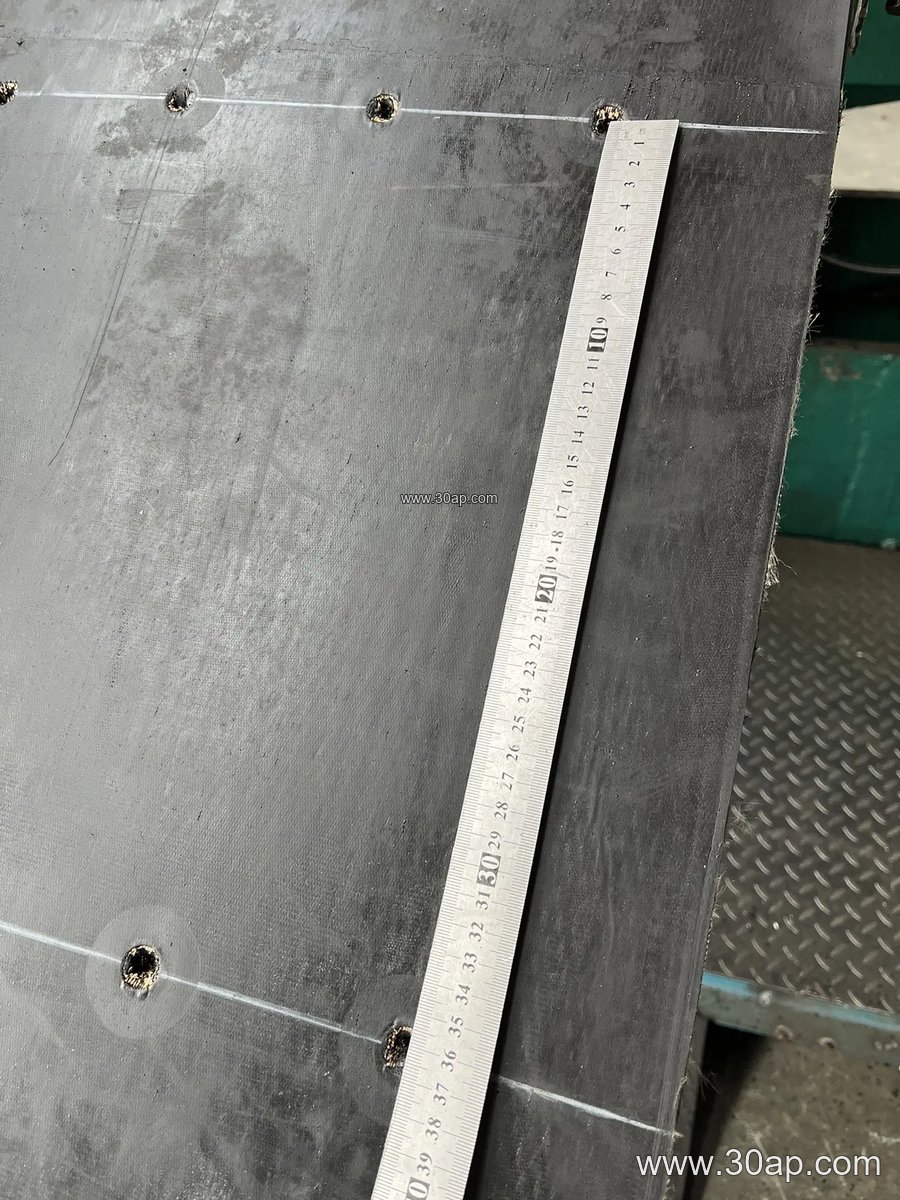
Selection Points for Buyers
Start with the duty: material type, lump size, moisture, temperature and tonnage per hour. Then match the strength grade, ply count and cover thickness to the calculated tension and wear conditions. Where heat is present, a heat resistant conveyor belt compound is needed; where oil or chemicals are present, oil resistant or acid resistant covers apply; in cold climates, a cold resistant belt avoids cracking at start-up. Abrasion resistant conveyor belt covers are common on ore conveyor belt and iron ore conveyor belt routes.
Give the belt maker the pulley diameters, trough angle, idler roller spacing, take-up type and splice method. Do not infer a shaft diameter from belt width, and do not assume one belt width matches only one pulley size. For steep inclines, a chevron conveyor belt or a corrugated sidewall belt may be more suitable than a smooth NN200, while a pipe conveyor belt suits routes needing enclosed transport. Confirm cover grade, ply configuration and delivery length in writing, and keep spare splice material on site for repairs. The same approach applies whether the line serves a mine, a cement kiln feed, or a power station coal yard, and a clear specification sheet prevents mismatches at installation.