What a Rubber Lagged Pulley Does on a Conveyor
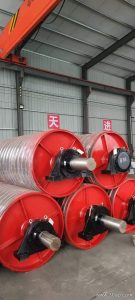
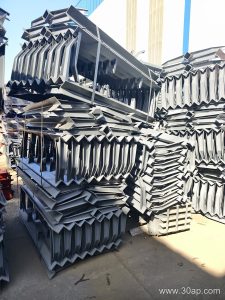
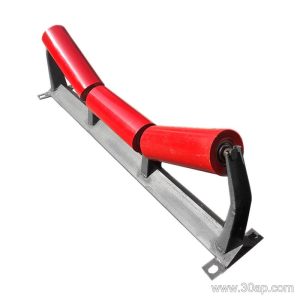
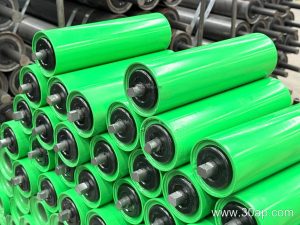
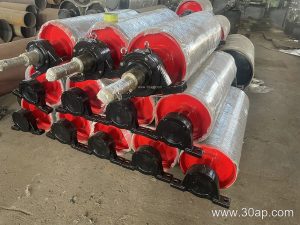
A rubber lagged pulley is a conveyor pulley whose cylindrical shell is covered with a rubber layer, bonded or mechanically fastened to the steel surface. The lagging raises friction between the pulley face and the conveyor belt, protecting both components in dusty, wet, or high-torque duty. In a typical bulk handling line, the lagged drum works together with the conveyor belt, idler roller, and conveyor bracket to keep material moving steadily from loading point to discharge.
Rubber lagging is equally common on drive pulleys, tail pulleys, bend pulleys, and take-up pulleys, but the function differs by position. On a drive pulley, the rubber layer improves grip so the belt does not slip under starting loads. On a tail or bend pulley, it mainly reduces wear and buildup. Because drive, tail, and bend pulleys are not interchangeable, the lagging specification should be matched to the actual duty of each position.
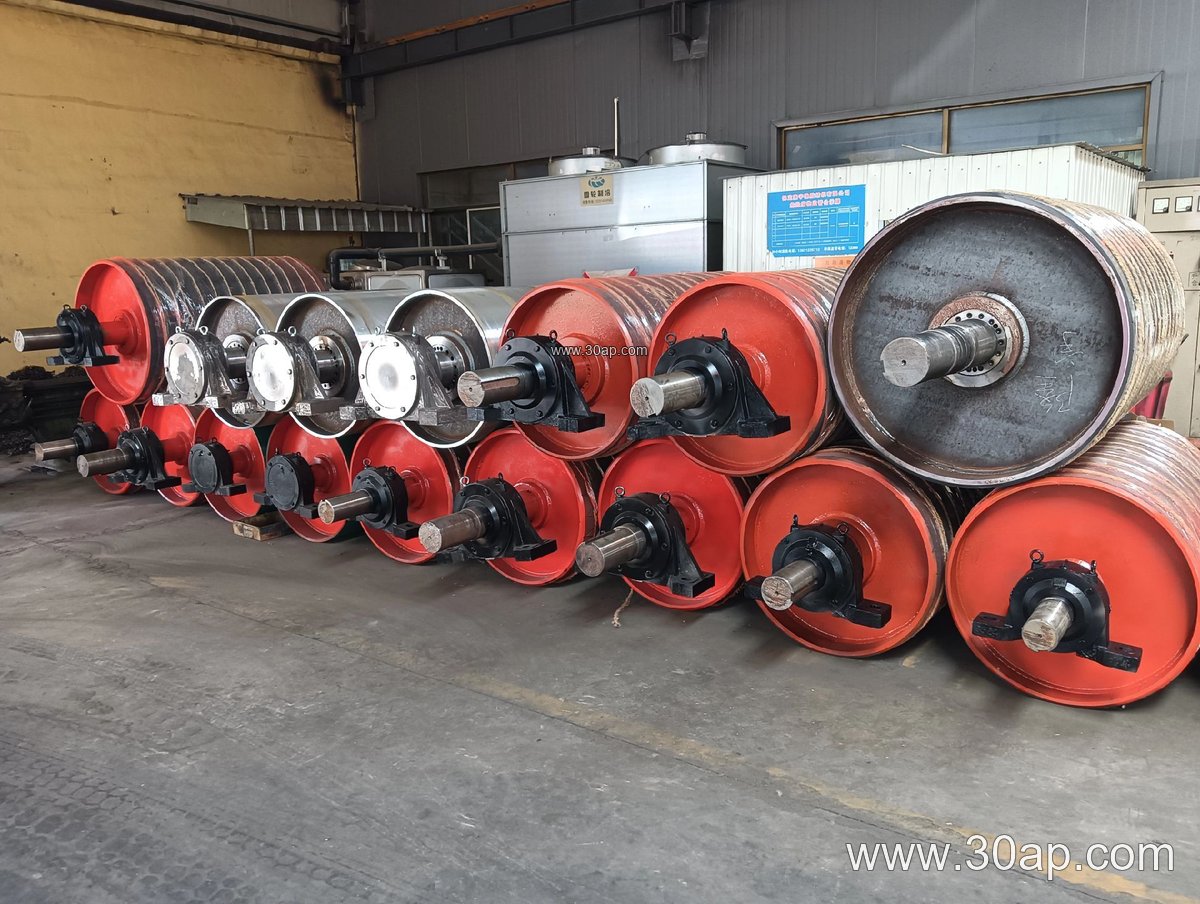
Construction and Surface Forms
The shell is usually a welded steel cylinder machined to the required diameter, with shaft, hub, and end disc assemblies sized for the torque and radial load. Rubber lagging is applied in three main ways: hot vulcanized rubber, cold bonded rubber, and cast rubber. Hot vulcanized lagging generally offers the strongest bond and is often chosen for heavy-duty drives.
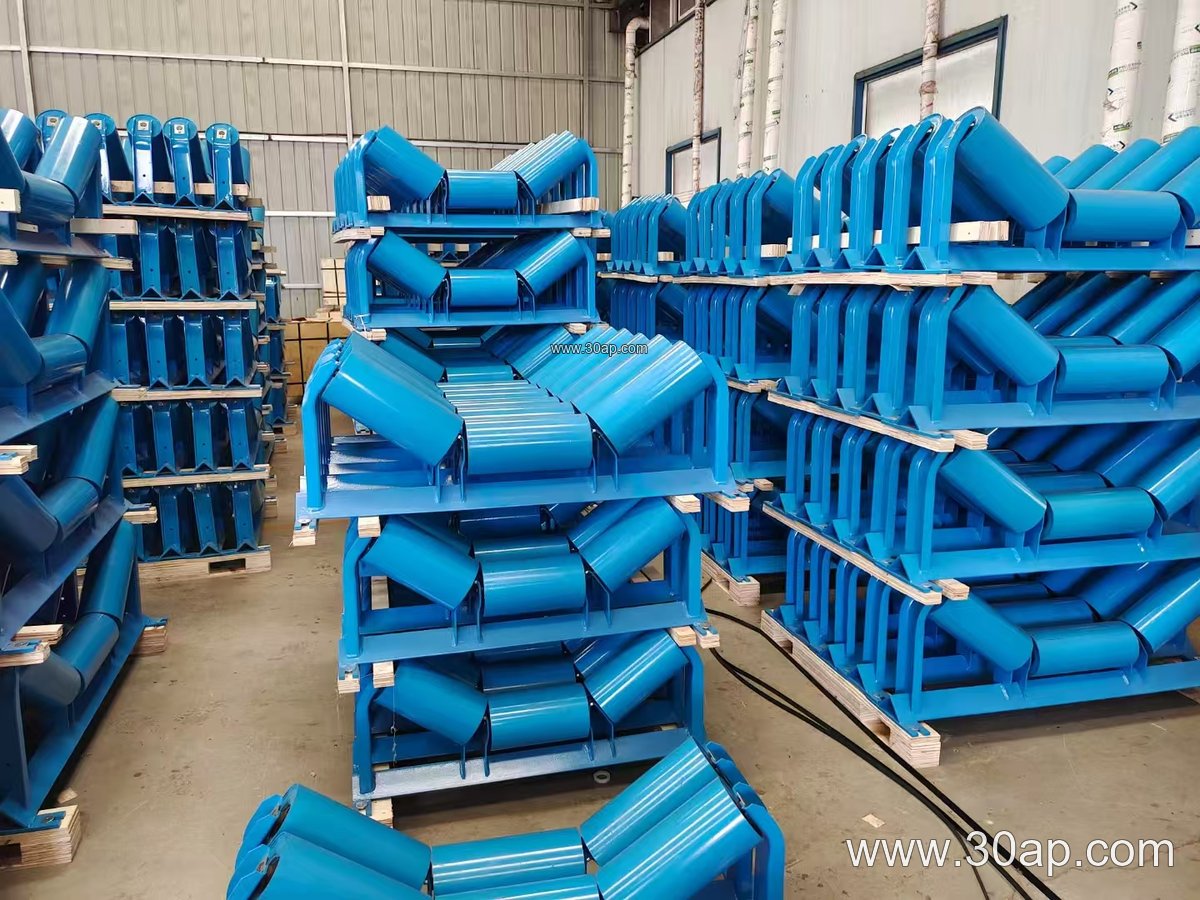
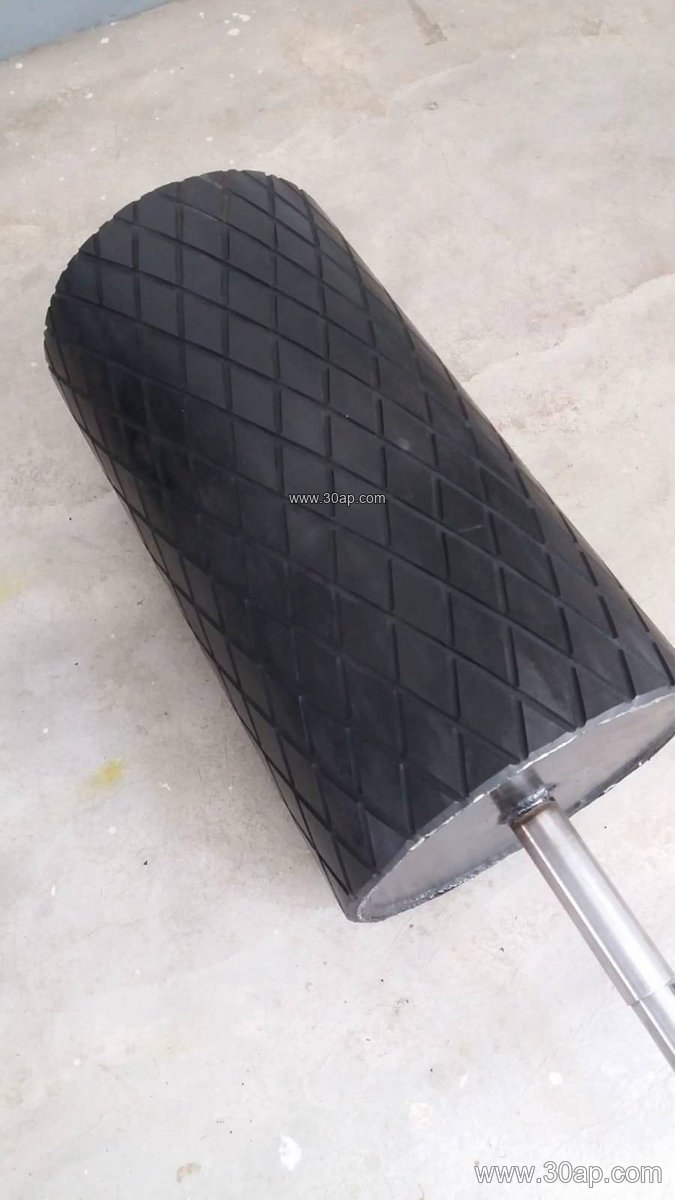
Surface patterns matter as much as the compound. Plain or flat rubber suits general conveying. Diamond lagging helps shed water and fine particles. Chevron or herringbone grooves improve traction on wet or oily belts, while ceramic lagging is reserved for extremely abrasive or slippery conditions. Common lagging thicknesses include 8, 10, 12, 15, and 20 mm, selected according to belt tension, pulley diameter, and environment.
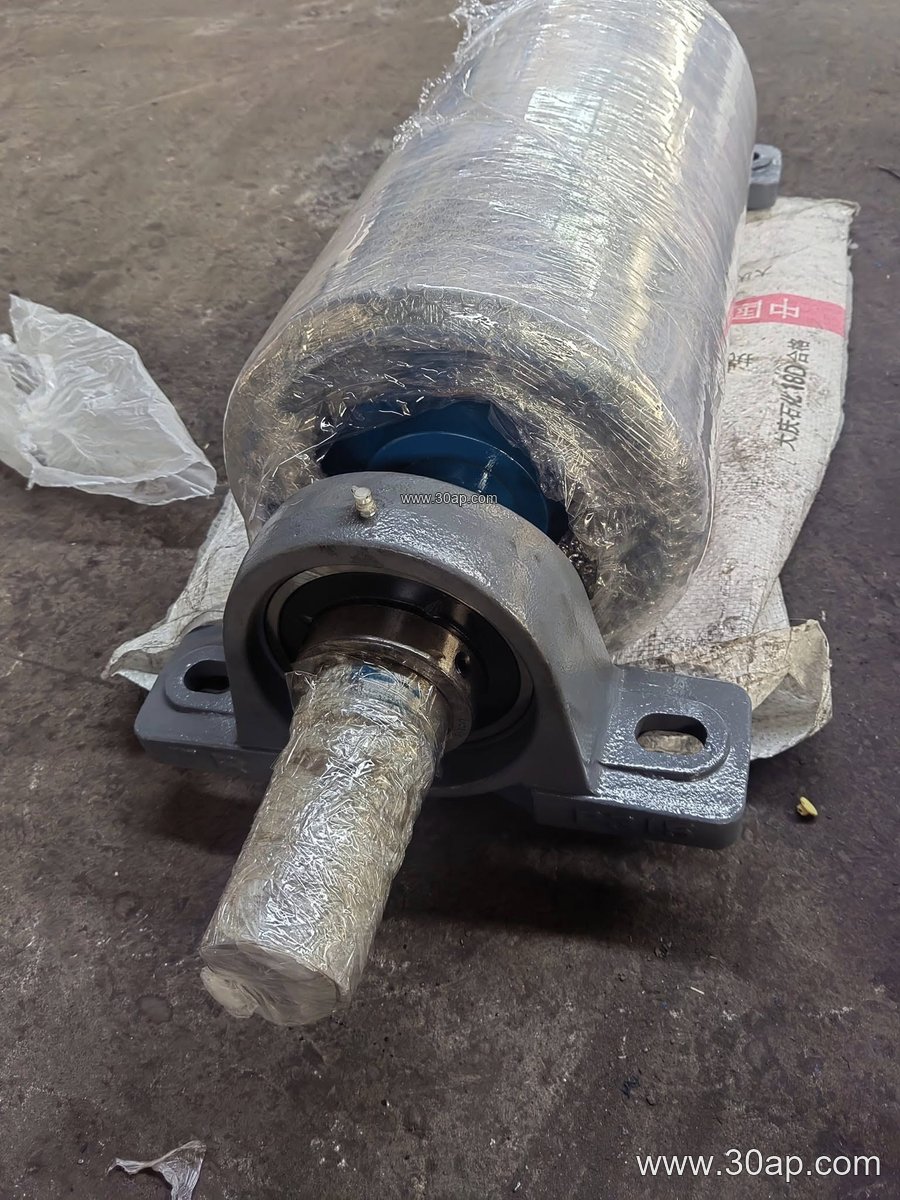
Typical Duty Points and Industries
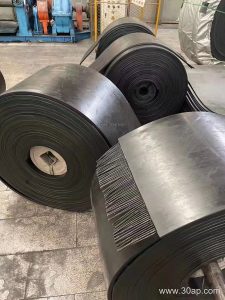
Rubber lagged pulleys appear across quarry conveying, cement plant clinker lines, power plant coal handling, iron ore and copper ore transport, and port bulk terminals. In a stone crushing circuit, a lagged head pulley pulls an abrasion resistant conveyor belt away from the crusher, while a lagged tail pulley keeps the return strand tracking. In a coal preparation plant, flame retardant conveyor belt and anti-static conveyor belt grades often run alongside lagged drums to meet underground or dusty operating conditions.
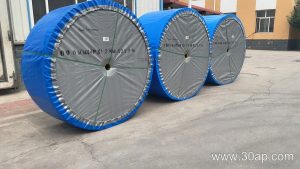
When the belt is a heavy-duty mining conveyor belt or a steel cord conveyor belt such as ST1600 or ST2000, the drive pulley usually needs a robust lagging and a carefully calculated shaft. For lighter fabric carcass belts, including EP conveyor belt or NN conveyor belt constructions, a plain or diamond lagged drum may be sufficient. Matching the lagging to the belt grade and the material being carried is more important than following a single fixed rule.
Common Dimensions and Combinations
Pulley size is normally described as belt width plus diameter, for example B800 x Ø500, B1000 x Ø630, or B1200 x Ø1000. Larger drums, such as B1400 x Ø800 or B1800 x Ø1000, are common on high-capacity trunk conveyors. Face width is usually slightly greater than belt width, so a 650mm conveyor belt typically runs on a pulley face of about 750 mm, and a 1200mm wide belt on roughly 1400 mm. These are reference relationships, not fixed pairings; final dimensions follow conveyor design.
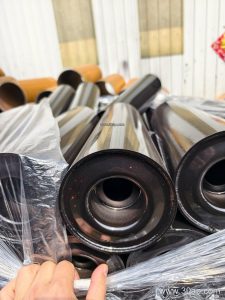
Shaft diameter is determined by torque, bending load, and bearing selection, with common sizes including Ø80, Ø100, Ø120, Ø140, and Ø160. A given belt width does not dictate one shaft size, and a pulley diameter should not be chosen from belt width alone. Buyers should provide belt tension, speed, pulley position, and motor power so the supplier can calculate the correct combination.
Buyer Checklist
- Confirm pulley position: drive, tail, bend, take-up, or snub.
- State belt type and grade, including whether an EP conveyor belt, steel cord belt, or flame retardant belt is used.
- Specify lagging material, surface pattern, and thickness.
- Provide belt width, required pulley diameter, and shaft load data.
- Describe the environment: wet, dusty, oily, abrasive, or high temperature.
- Check balancing, bearing fit, and keyway dimensions before installation.
Routine inspection of lagging wear, groove depth, and bond integrity helps prevent belt slip and premature belt damage. Replacing worn lagging on time is often cheaper than replacing a slipping drive pulley or a damaged conveyor belt.