What a High Strength Conveyor Belt Means in Practice
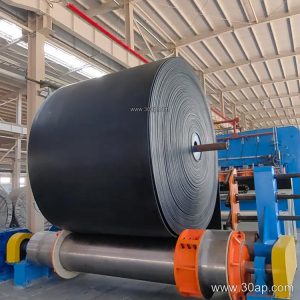
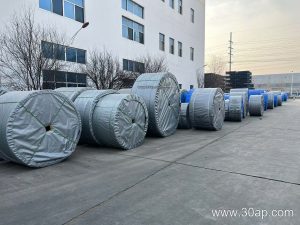
A high strength conveyor belt is a heavy-duty conveyor belt built to carry dense, abrasive or sharply graded material over long runs without stretching out of tolerance. In most plants the phrase points to a belt with a reinforced fabric or steel cord carcass and a thick rubber cover, rather than a light-duty belt used for packaging or small parts. The strength rating is the defining feature: it tells the buyer how much tension the carcass can take per unit of width, and therefore how far the belt can span between a drive pulley and a tail pulley before an intermediate drive or a transfer point becomes necessary.
Because strength and wear resistance are separate properties, a high strength belt is often specified together with an abrasion resistant cover, a flame retardant compound, or a heat resistant layer. Those additions change the compound, not the carcass grade, and they are chosen from the duty rather than from the strength number alone.
Carcass Types Behind the Strength Rating
Two carcass families dominate this category. Synthetic fabric belts use EP or NN plies, and steel cord belts use brass-plated cords embedded in a single rubber core. Both can reach high strength levels, but they behave differently on the conveyor.
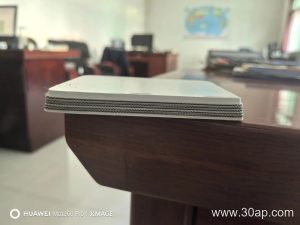
- Multi-ply fabric core: several EP or NN plies bonded under rubber. Flexible, easy to splice on site, and common on quarry and aggregate lines where pulleys are relatively small.
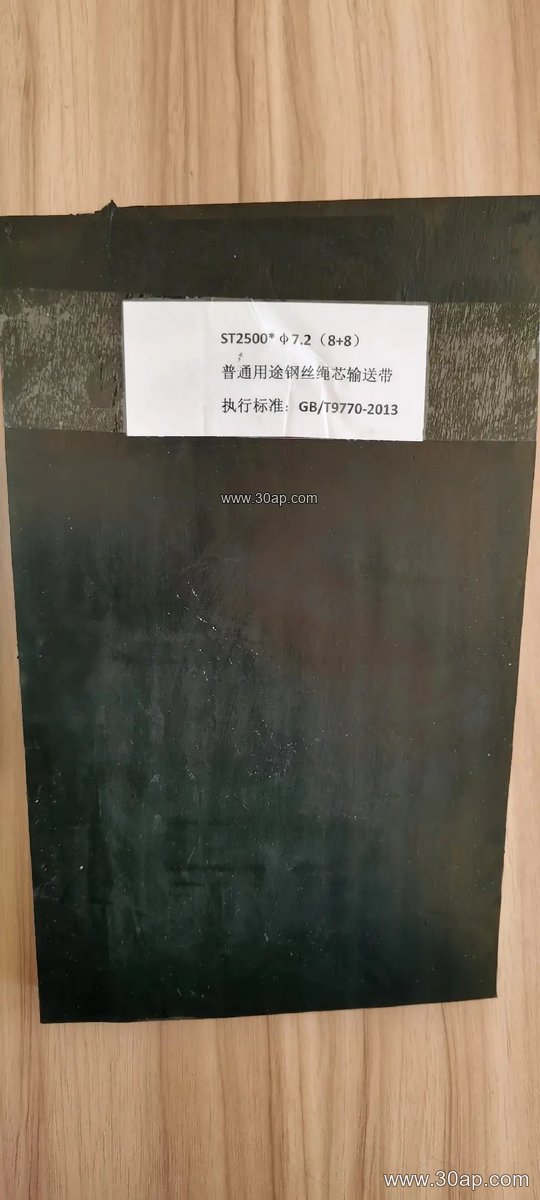
- Steel cord: very low elongation and high tension capacity, used on long overland runs in mining, ports and power plants.
- Solid woven PVG or PVC: a single woven core with covers, often chosen underground where flame resistance and anti-static behavior matter more than ultimate tensile grade.
An EP conveyor belt with four plies and an EP1000 rating is a different product from an ST2500 steel cord belt, even though both could be called high strength. Buyers should compare carcass type, ply count or cord pitch, and cover thickness together, not the strength figure alone.
Common Strength and Width Ranges
The values below are typical reference ranges used in specification discussions. Actual supply depends on the manufacturer and on the conveyor design, so treat them as starting points for a technical conversation rather than fixed catalog promises.
| Property | Typical reference values |
|---|---|
| EP fabric grades | EP200, EP315, EP400, EP500, EP630, EP800, EP1000, EP1250, EP1600, EP2000 |
| Steel cord grades | ST1000, ST1250, ST1600, ST2000, ST2500, ST3150 |
| NN nylon grades | NN100, NN200, NN300, NN400 |
| Belt width | B500, B650, B800, B1000, B1200, B1400, B1600, B1800, B2000 |
| Cover thickness | 3+1.5, 4+2, 5+2, 6+2, 8+3 mm |
| Fabric plies | usually 2 to 6 layers |
Width and strength are independent choices. A 1200mm wide belt can be supplied in several carcass grades, and a given grade can be built in more than one width. The pulley diameter, shaft size and take-up travel are set by the conveyor designer from tension, wrap angle and sag limits, not by belt width alone.
Where These Belts Are Used
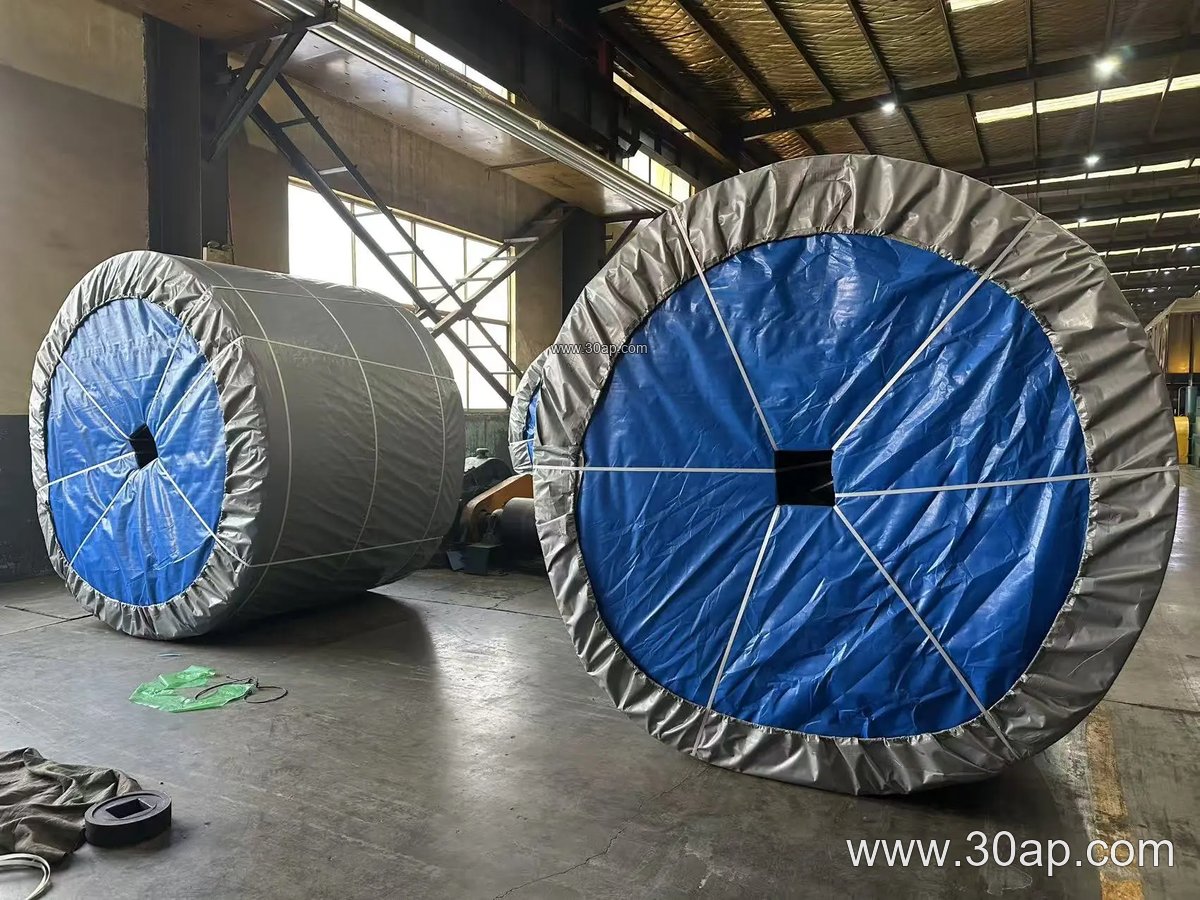
High tension belts show up wherever tonnage is heavy and the route is long. In a coal mining conveyor belt system, a flame retardant and anti-static construction is usually required underground, while a surface coal conveyor may use a standard EP or steel cord belt with an abrasion resistant cover. Cement plants use them on clinker and limestone lines, where hot material and sharp edges attack the cover. Power plants rely on them for coal and ash handling, and iron ore, copper ore and gold mining operations use steel cord belts on steep or long overland conveyors.
Sand and gravel pits, stone crushing plants and port ship loading systems also benefit, especially where a crusher conveyor belt must survive impact at the loading point. In those positions an impact resistant belt with extra breaker plies or a thicker top cover reduces puncture damage. For inclined sections, a chevron conveyor belt or a corrugated sidewall belt may be preferred, but those are separate designs chosen for slope, not substitutes for a flat high strength belt on a horizontal run.
Selection and Maintenance Notes for Buyers
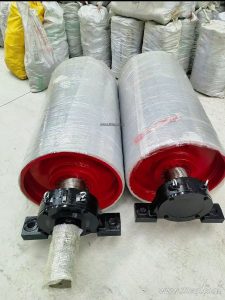
Start with the calculated maximum tension and the safety factor required by the conveyor design, then match the carcass grade. Check the minimum pulley diameter recommended for that carcass, because a belt that is too stiff for the drive pulley, tail pulley or bend pulley will crack at the splice. Confirm cover thickness against lump size and drop height, and confirm compound type against temperature, oil exposure or fire risk.
Ask how the belt will be joined. Steel cord belts usually need a vulcanized splice with matched cord pitch, while fabric belts can often be spliced mechanically for a fast repair. An endless conveyor belt made to the exact center distance reduces splice risk on critical lines but complicates installation.
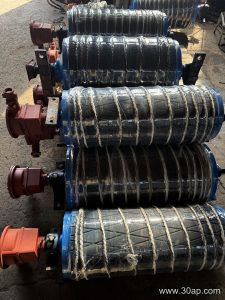
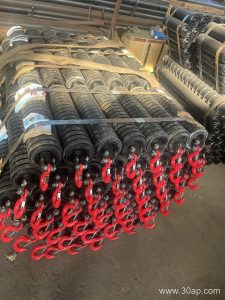
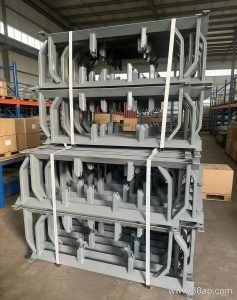
During operation, watch the idler roller alignment and the conveyor bracket condition; a seized roller or a misaligned frame can destroy an otherwise sound belt. Keep the drive pulley lagging clean and check the tail pulley for material buildup. Store spare belts flat, away from ozone sources and direct sunlight, and rotate stock so the rubber does not age before installation.
For buyers comparing offers, request the carcass construction, grade, cover thickness, width, and splice method in writing. A clear specification on those five points makes it much easier to compare a high strength conveyor belt from different suppliers and to avoid paying for tension capacity the conveyor cannot use.