What a Guide Roller Does on a Conveyor
A guide roller is a rotating support element that keeps a conveyor belt running in the correct path and helps carry the load between the head and tail of the system. In many plants the same component is simply called a belt guide roller or training roller, and it is usually grouped with the idler roller family rather than with the conveyor pulley. This distinction matters: a conveyor pulley drives or redirects the belt at the ends, while a guide roller works along the carrying or return run, correcting drift and supporting the belt edge or the belt surface.
In a quarry, a limestone mine, a cement plant or a power plant coal yard, small misalignment can grow into edge damage and spillage. A well-placed guide roller gives the belt a gentle correcting force before that happens.
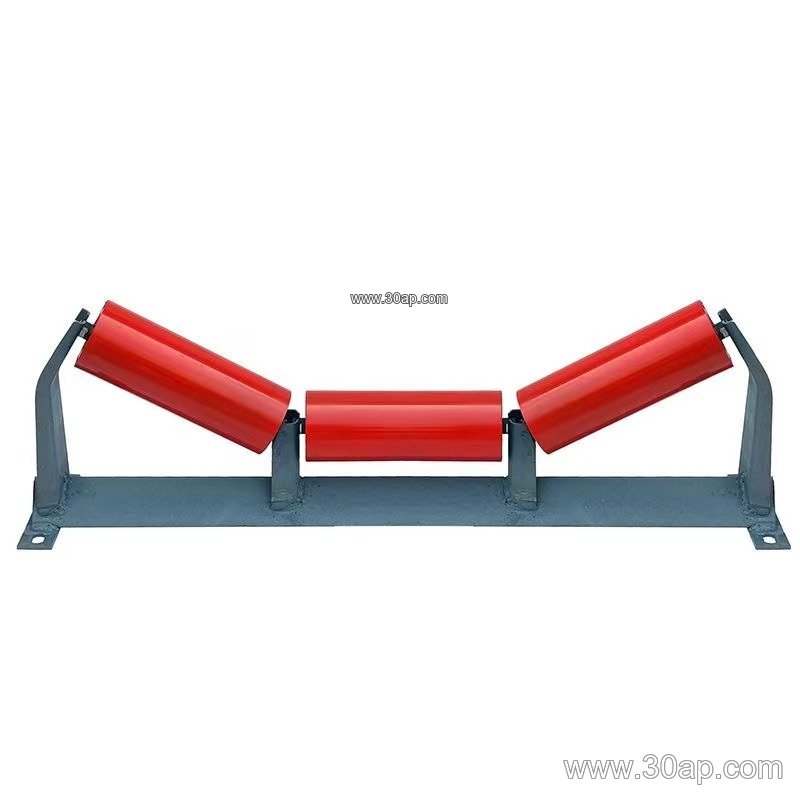
Construction and Typical Forms
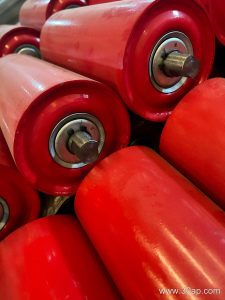
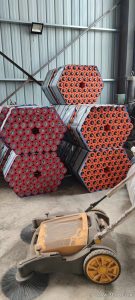
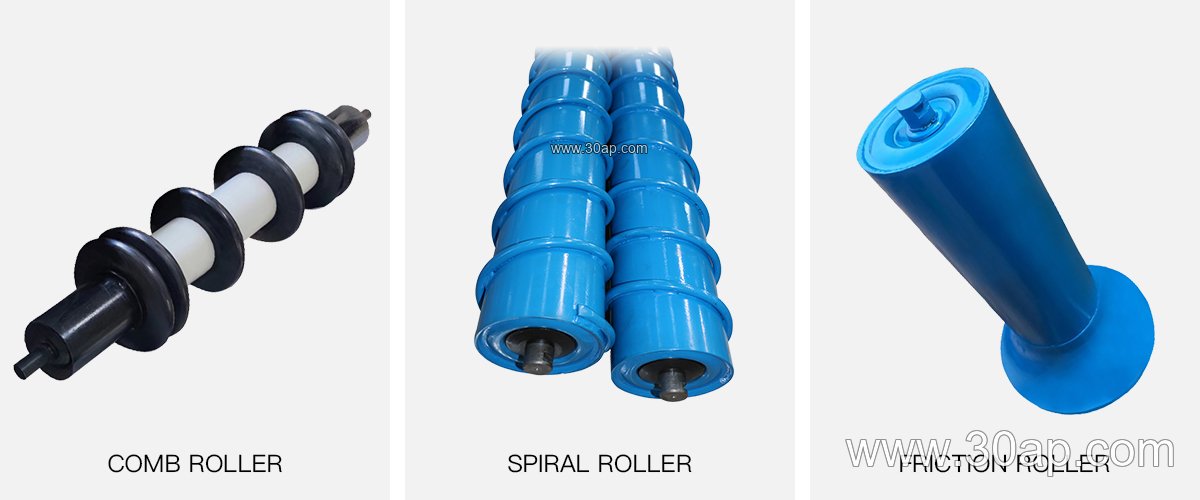
Most guide rollers share a simple build: a steel tube shell, a shaft, bearing housings, and a sealing arrangement to keep dust and water out. Common bearing sizes include 6204, 6205, 6305, 6306, 6308 and 6310, matched to load and speed by the designer rather than fixed to one shell diameter. Roller diameters often range from Ø63 and Ø76 up to Ø159, Ø178 or Ø219 depending on belt width and duty. The roller face may be plain steel, nylon, ceramic or rubber ring, and rubber rings are useful where impact and noise need softening.
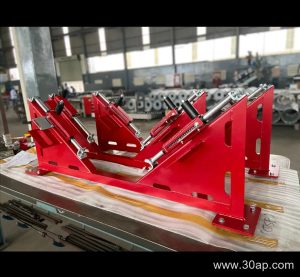
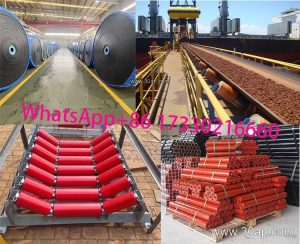
Guide rollers can be supplied as single-roll units, two-roll assemblies or three-roll troughing sets. Trough angles of 20, 30, 35 or 45 degrees are common, and a small forward lean of about 1.5 to 2 degrees is sometimes used on training rollers to encourage self-correction. Roll length changes with belt width and trough form; for example, a three-roll troughing set may use roughly 200 mm rolls at B500 and 750 mm rolls at B2000, with side rolls differing from the centre roll. These are reference examples, not fixed pairings.
Where Guide Rollers Fit in the Line
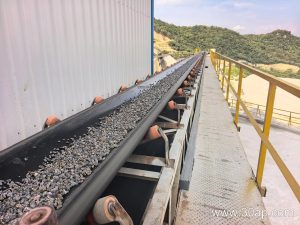
On a heavy-duty mining conveyor belt or an aggregate conveyor belt, guide rollers are often installed just after the loading point and at intervals along the return strand. They are not a replacement for the drive pulley, tail pulley or bend pulley, and they should not be confused with impact rollers at the chute or with plain return rollers. A guide roller is selected for tracking duty, while a buffer roller is selected for absorbing falling material energy.
Applications vary widely. In a copper ore or iron ore concentrator, dusty conditions put sealing quality first. In a cement plant or a lime kiln feed line, fine abrasive dust and heat may call for a heat resistant conveyor belt upstream and well-sealed rollers below. In a port ship loading conveyor, long runs reward low-friction bearings and stable roller alignment. Food and fertilizer plants may need a food grade conveyor belt and corrosion-aware roller finishes.
Selection Points Buyers Should Check
- Belt width and trough angle, so the roller set matches the belt profile.
- Roller diameter and shaft size, confirmed against the conveyor bracket and frame.
- Bearing class and sealing, especially for washdown, dust or outdoor service.
- Shell material and surface form, such as rubber rings for impact zones.
- Mounting height and clearance, since a guide roller must sit square to the belt path.
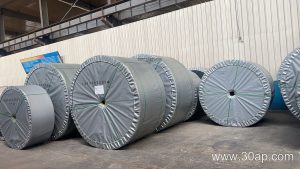
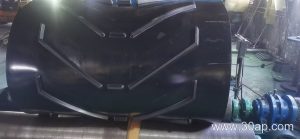
It also helps to review the belt specification together with the roller choice. An EP conveyor belt or a multi-ply fabric core conveyor belt behaves differently from a steel cord conveyor belt under tension, and a chevron conveyor belt or corrugated sidewall conveyor belt may need different edge guidance. For abrasive stone lines, an abrasion resistant conveyor belt paired with durable rollers reduces total maintenance. Buyers working with a supplier at www.example.com/guide-roller can ask for a roller layout drawing that shows positions, diameters and bracket spacing before ordering.
Installation and Maintenance Notes
Alignment is the first maintenance task. A guide roller mounted slightly out of square will fight the belt instead of guiding it. Check that the roller axis is perpendicular to the belt centreline, that brackets are tight, and that the roller turns freely by hand. Listen for squealing bearings and watch for material build-up on the shell, which can cause vibration and belt wander. Replace rollers in matched sets where possible so the belt is not pushed by one new, stiff roller against worn neighbours.
For a coal mining conveyor belt or an underground mining conveyor belt, flame retardant and anti-static properties belong to the belt specification, while the roller choice focuses on sealing, bearing protection and frame fit. Keeping those two decisions separate avoids confusion during procurement and keeps the guide roller doing the job it was designed for.