What a Guide Roller Does on a Conveyor
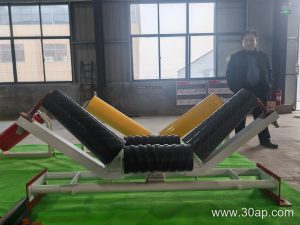
A guide roller is a small-diameter idler mounted where the belt needs a gentle correction rather than a full support function. It is typically installed along the edges of the carrying side or close to the tail and head areas, where misalignment begins to appear. Unlike a standard carrying idler that mainly supports material load, this roller applies a light sideways influence that nudges the belt back toward the center line. In a quarry or a sand and gravel line, a well-placed guide roller often prevents the belt edge from rubbing the frame long before a full training idler would react.
The same component is also called a belt guide roller or edge guide roller. These are accurate equivalent names for the same product; they are not interchangeable with drive pulleys, tail pulleys or bend pulleys, which transmit motion and change belt direction rather than steer it.
Construction and Mounting Details
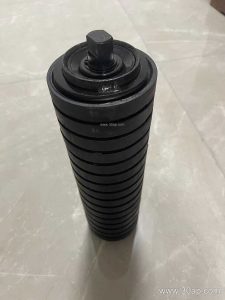
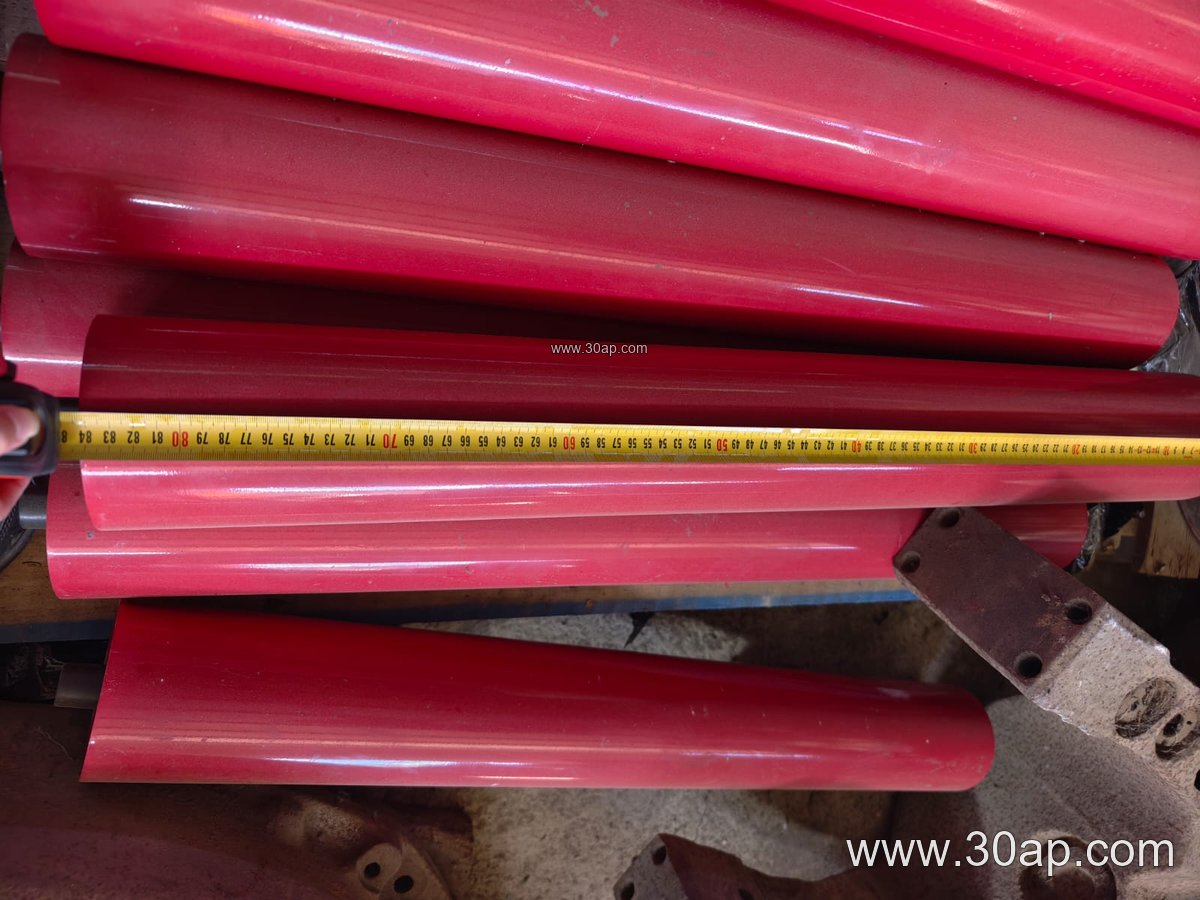
Most units use a steel tube shell with a sealed bearing housed at each end. Common shell diameters are Ø63, Ø76 and Ø89 mm, while larger frames may use Ø102 or Ø108 mm. The roller length is usually short because the unit works at the belt edge; a length of 150 to 300 mm is typical, with the exact figure set by the bracket design and belt width. Bearings such as 6204, 6205 or 6305 appear frequently, but the bearing must be matched to the calculated load and shaft, not chosen from the roller diameter alone.
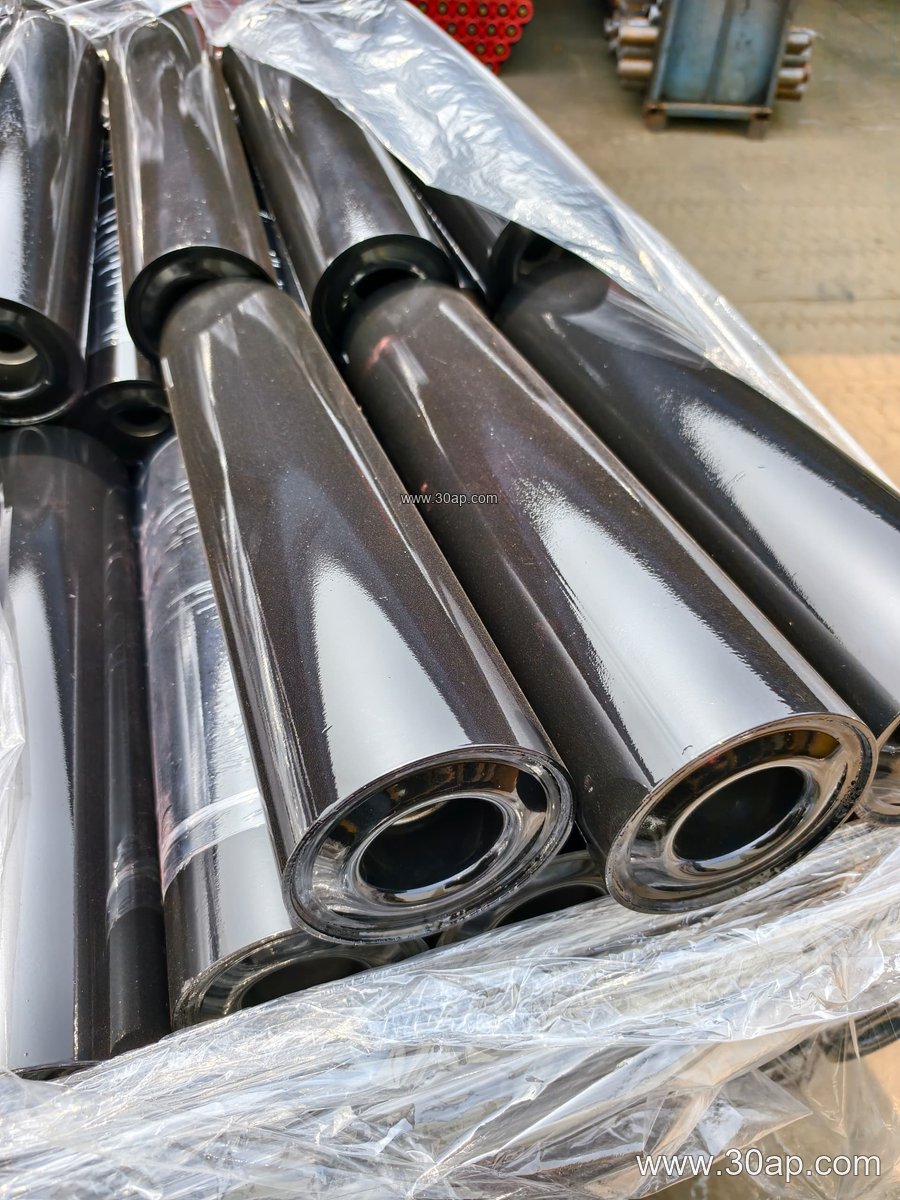
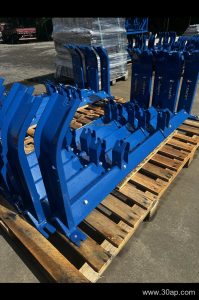
Surface options matter in dusty service. A plain steel shell is economical, a nylon sleeve reduces friction against the belt edge, and a rubber ring version absorbs small impacts where lumps fall near the loading point. The mounting bracket should allow vertical and angular adjustment so the roller can be set with a slight lead angle, often around 1.5 to 2 degrees, to produce a steering effect.
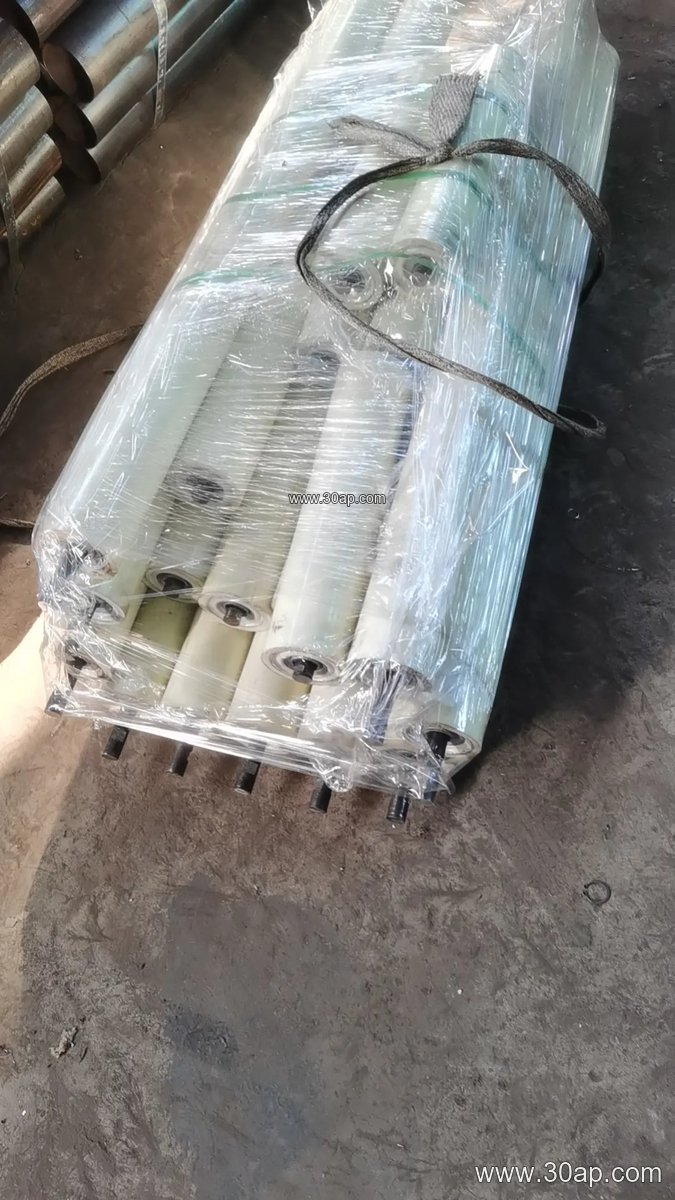
- Sealed, greased-for-life bearings for wet or dusty conditions
- Adjustable bracket with slotted holes for fine alignment
- Reinforced shaft ends to resist side load
Where It Fits in Bulk Handling
In a coal preparation plant or a power station coal yard, belt wander is a constant concern on long inclined runs. A guide roller placed just ahead of a transfer point keeps the belt centered as it enters the chute. In a limestone crushing and screening circuit, the roller protects the belt edge from the structural steel during start-up surge. Similar placements help in tunnel spoil removal and in fertilizer or grain handling, where dust and fine particles work into moving parts.
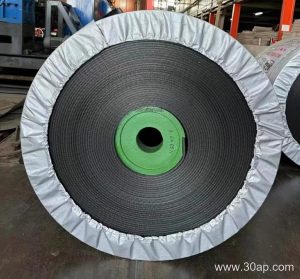
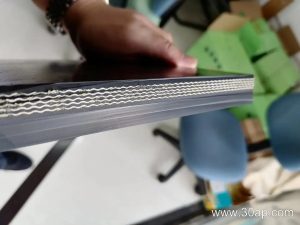
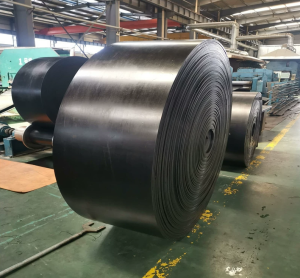
The roller works together with the conveyor belt, the conveyor bracket and the main conveyor pulley, but it does not replace any of them. On a steel cord conveyor belt running at high tension, edge steering must be gentle; a heavy training idler alone can overcorrect and damage the carcass. On a fabric core conveyor belt, especially an EP conveyor belt or NN conveyor belt, the lighter contact of a guide roller is often enough to hold tracking.
Common Reference Dimensions
The table below gives typical starting points only. Final values depend on belt width, trough angle and frame layout.
| Belt width | Typical roller diameter | Typical roller length | Common bearing |
|---|---|---|---|
| B500 | Ø63 – Ø76 mm | 150 – 200 mm | 6204 |
| B650 | Ø76 – Ø89 mm | 180 – 250 mm | 6204 / 6205 |
| B800 | Ø89 – Ø108 mm | 200 – 315 mm | 6205 / 6305 |
| B1000 | Ø89 – Ø108 mm | 250 – 380 mm | 6305 / 6306 |
| B1200 | Ø108 – Ø133 mm | 300 – 465 mm | 6306 / 6308 |
| B1400 | Ø108 – Ø133 mm | 350 – 530 mm | 6308 |
| B1600 | Ø133 – Ø159 mm | 400 – 600 mm | 6308 / 6310 |
These figures are reference data, not a fixed matching rule. A 1200 mm wide conveyor belt can be served by more than one roller diameter, and the shaft size must be calculated from the actual side load.
Buyer Checklist
Before ordering, confirm the belt width, the mounting position and the available bracket space. Ask for the bearing type and sealing arrangement, since a dusty cement plant or an iron ore terminal punishes poor seals. Check whether the shell is steel, nylon or rubber-covered, and whether the bracket allows angular adjustment. For flame retardant or heat resistant conveyor belt installations, keep the roller clear of hot material and verify that grease does not migrate onto the belt cover.
Inspect guide rollers during routine idler checks. A stiff bearing or a worn sleeve will drag on the belt edge and can cause the very misalignment it was fitted to prevent. Replacing a single worn unit is usually faster than re-aligning a whole conveyor frame.