What a Multi-Ply Fabric Core Conveyor Belt Is
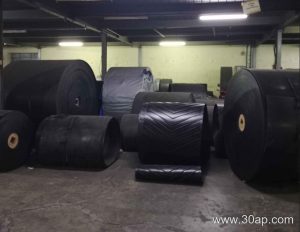
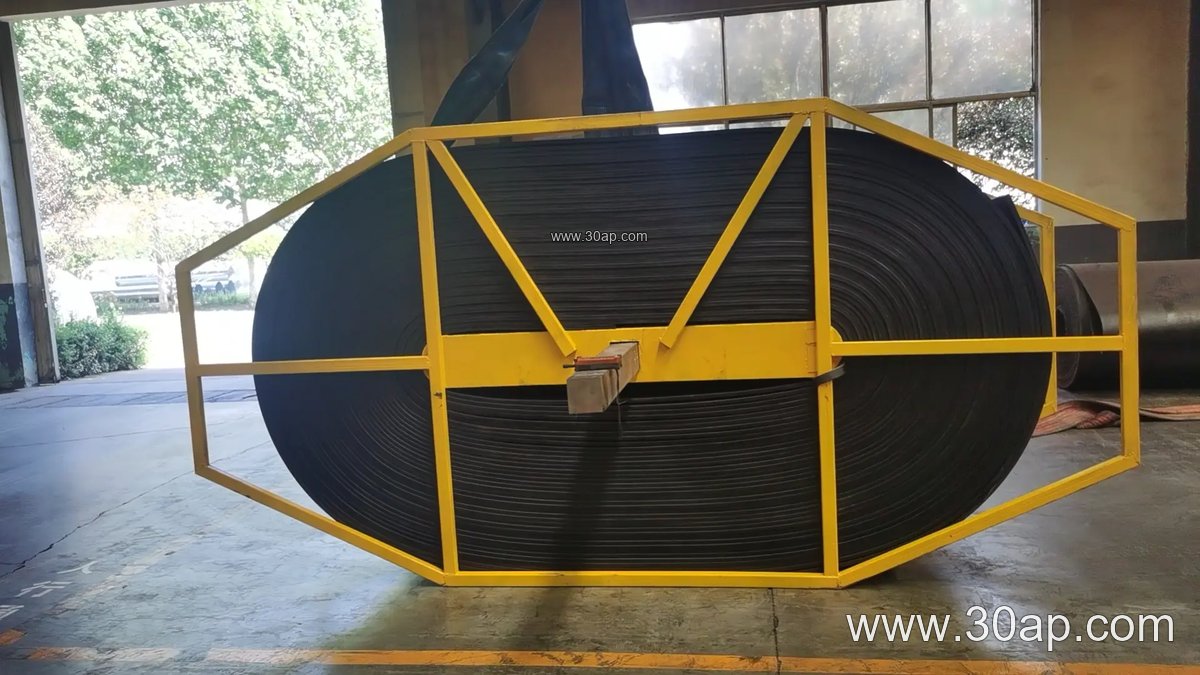
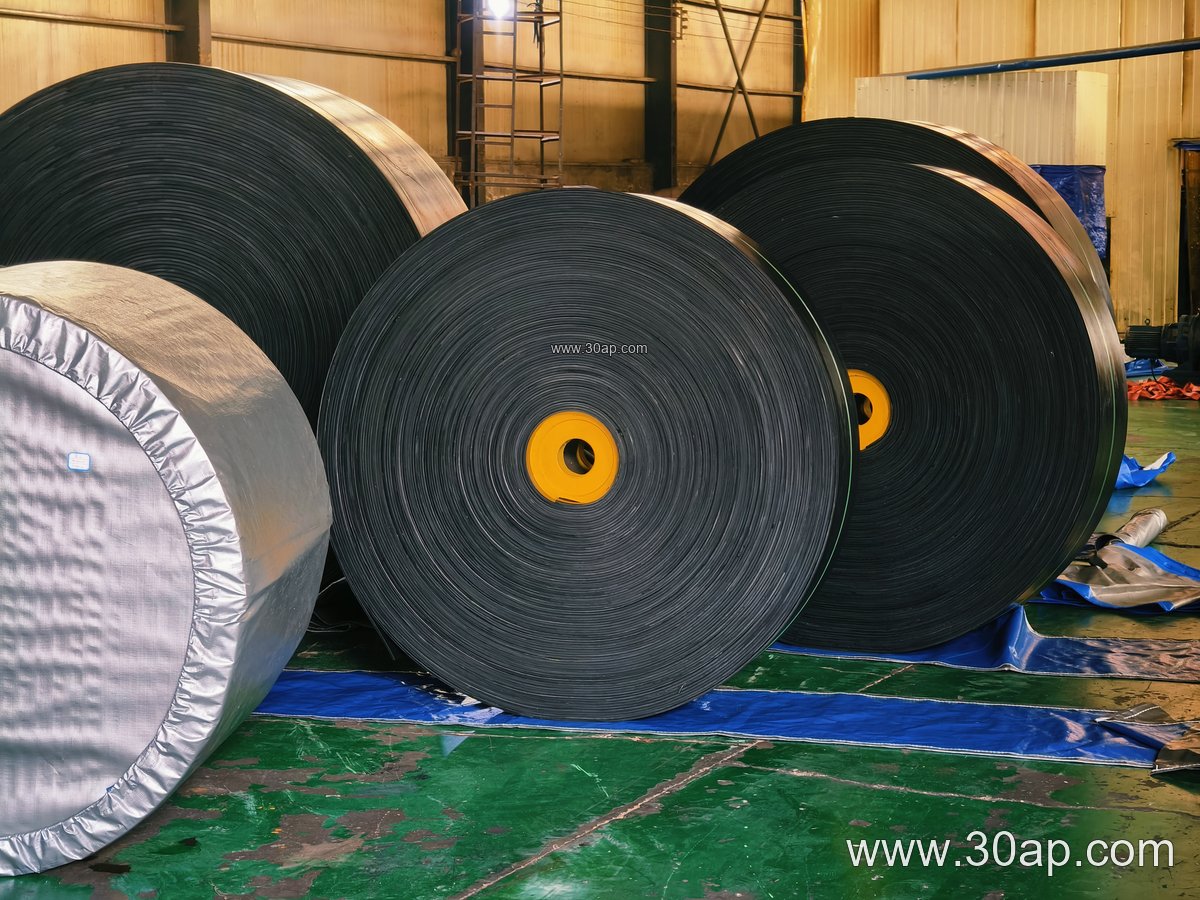
A Multi-Ply Fabric Core Conveyor Belt is a rubber belt built around several layers of woven textile fabric, usually two to six plies, bonded together with rubber skim and protected by top and bottom cover compounds. The plies carry the tension; the covers take the abrasion, impact and environmental attack. Because the carcass is fabric rather than steel cable, the belt is flexible, splices well and tolerates smaller pulleys than a comparably rated steel cord construction.
The same product is often called a multi-ply fabric conveyor belt, or described by its carcass material as an EP Conveyor Belt or an NN Conveyor Belt. Those names refer to the same fabric-core family with different yarns, so they should not be treated as separate belt types.
How the Carcass and Covers Are Built
Warp and weft yarns are woven into fabric plies, dipped and frictioned, then laid up and vulcanized under heat and pressure. EP (polyester warp, nylon weft) offers low stretch and good moisture resistance; NN (nylon warp and weft) gives high flexibility and excellent shock absorption. A buyer will usually see the carcass described in newtons per millimetre of width, for example EP400 or EP630, followed by the cover grade and thickness.
Cover compounds are chosen to suit the duty: an Abrasion Resistant Conveyor Belt for sharp crushed rock, a Heat Resistant Conveyor Belt near clinker or sinter, a Flame Retardant Conveyor Belt and Anti-Static Conveyor Belt for underground coal, or an Oil Resistant Conveyor Belt where lubricants and oily scrap are present. Multiple properties can be combined in one compound, but each addition usually trades off some abrasion or flex performance, so the actual operating mix matters more than the label.
Typical Duty Points in Mining, Cement and Power
These belts are common on main haulage and yard conveyors in mines, quarries and sand and gravel plants, on clinker and limestone lines in cement works, on coal and ash handling in power plants, and in ports and crushing circuits feeding screens and stockpiles. A heavy-duty mining conveyor belt may run at high tension over long distances, while a short transfer belt at a crusher discharge needs impact resistance and edge durability more than raw strength.
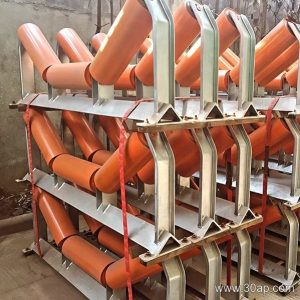
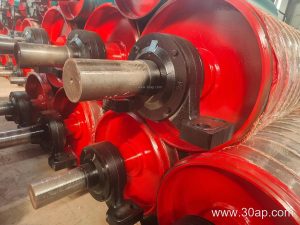
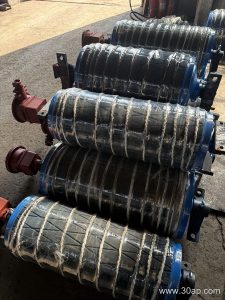
On the machine itself, the belt runs over a drive pulley, tail pulley and bend pulleys, supported by idler rollers and held by conveyor brackets and frames. Those components are separate products: a bend pulley is not a substitute for a drive pulley, and idler types are not interchangeable either. Correct alignment of pulleys and rollers, plus proper take-up, extends fabric belt life considerably.
Common Reference Ranges
The values below are typical reference data only. Actual supply depends on the manufacturer and on the conveyor design, and no single width is tied to one pulley diameter.
- Strength grades: EP200, EP315, EP400, EP500, EP630, EP800, EP1000, EP1250, EP1600, EP2000
- Belt widths: B500, B650, B800, B1000, B1200, B1400, B1600, B1800, B2000
- Cover thickness combinations: 3+1.5, 4+2, 5+2, 6+2, 8+3 mm
- Ply count: usually 2 to 6 layers
| Grade | Typical application | Notes |
|---|
| EP400 | Medium-duty aggregate and yard conveyors | Good balance of strength and flexibility |
| EP630 | Cement and power plant main lines | Often paired with abrasion-resistant covers |
| EP1000 | Heavy mining haulage | Requires careful splice design |
| EP1250 | Long overland and plant conveyors | Check pulley and take-up loads |
Widths such as 800mm, 1000mm, 1200mm and 1400mm are widely used in crushing and screening circuits; wider belts like 1800mm and 2000mm appear on high-capacity bulk material conveyor belt systems. A 1200mm wide belt may carry EP630 or EP1000 depending on tonnage and incline, so width alone tells you little about the required carcass.
Buyer Checklist
- Confirm the required strength grade and ply count from the conveyor design, not from an existing belt alone.
- Specify cover grade and thickness for the real material: wet, oily, hot, abrasive or flame-sensitive.
- Check minimum pulley diameters and transition distances recommended for the selected carcass.
- Decide between cut-edge and moulded-edge construction, and confirm splice method and vulcanizing equipment.
- Ask for edge, cover and carcass tolerances, and for the belt’s storage and handling conditions.
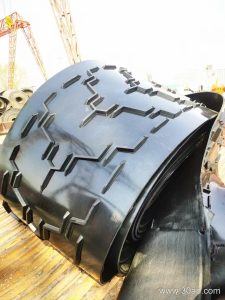
Where a conveyor needs steep inclines or material containment, other constructions such as a Chevron Conveyor Belt, Corrugated Sidewall Conveyor Belt or Pipe Conveyor Belt may be more suitable than a flat multi-ply belt; they are different products, not replacements for the flat fabric-core belt discussed here.