What a Cast-Welded Pulley Is
A cast-welded pulley is a conveyor pulley whose shell is produced by casting and then joined to the end discs, hubs and shaft assembly by welding. In practice, the cast shell gives the drum a dense, wear-tolerant surface, while the welded connection lets the manufacturer match the pulley to a specific shaft, bearing arrangement and face width. Buyers often meet this product under the shorter name cast-welded conveyor pulley, and the two terms describe the same item.
The design sits between a fully cast drum and a fabricated steel drum. It is common in bulk handling lines where the pulley has to carry a steady belt load for long shifts, such as a limestone quarry, a coal washing plant or a cement clinker transport section.
How the Pulley Is Built
The shell is cast first, then machined on the outside and at the ends. End discs and the hub are welded to the shell, and the shaft is fitted by welding, shrink fitting or a keyed connection depending on the design. After welding, the pulley is machined again so the face runs true and the lagging sits evenly.
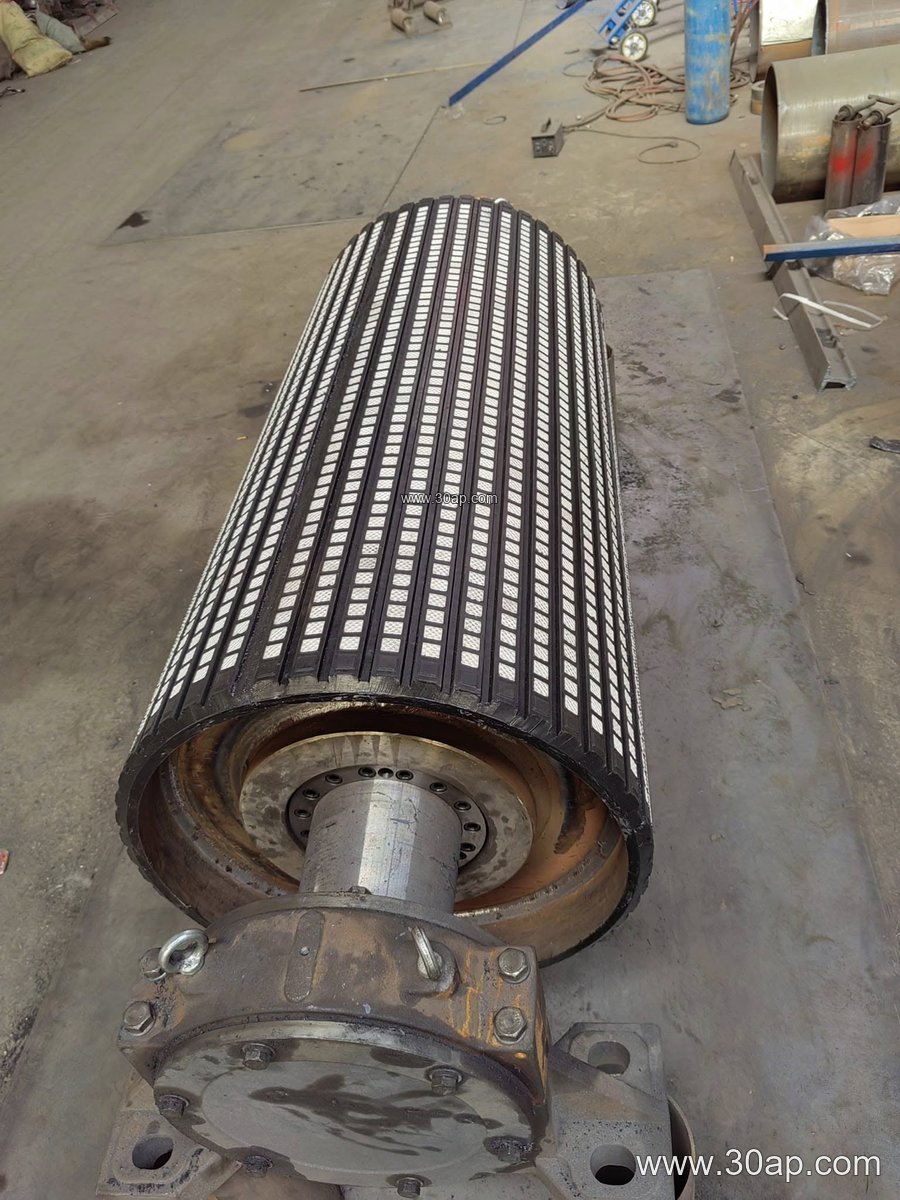
- Cast shell with machined outside diameter
- Welded end discs and hub assembly
- Shaft sized by torque and bearing load, not by belt width alone
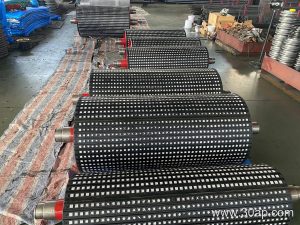
- Lagging applied as plain rubber, diamond groove, herringbone or ceramic tile
- Bearing housings and a conveyor bracket matched to the frame
Because the shell is cast, the wall thickness can be kept consistent around the circumference, which helps the pulley run smoothly under a heavy conveyor belt. Because it is welded, the shaft and hub details can be changed without making a new casting pattern.
Where It Fits on the Conveyor
The cast-welded pulley appears in several positions. As a drive pulley it transmits torque to the belt and is usually lagged for grip. As a tail pulley it returns the belt and may be plain or lagged. A bend pulley changes belt direction, and a take-up pulley maintains tension. These roles are not interchangeable, so the position should be stated clearly when ordering.
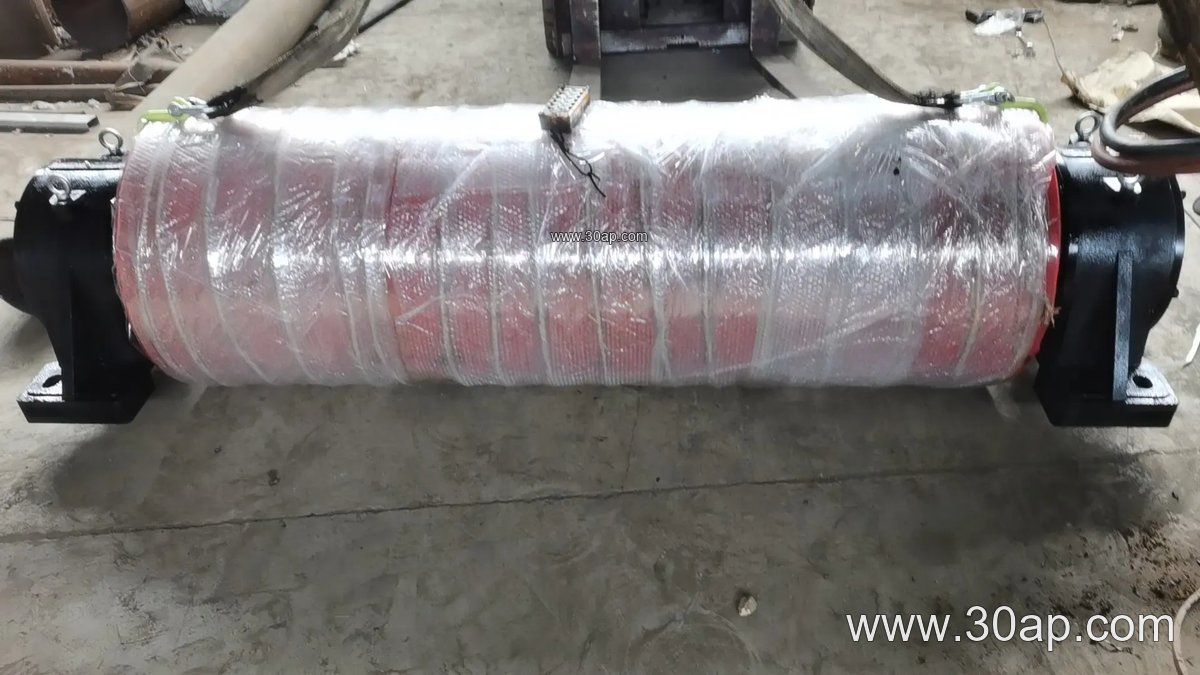
One relevant comparison is the wing pulley, which is used mainly for cleaning and self-cleaning duty rather than for general drive service. A cast-welded drum is the better choice where smooth belt contact and load carrying matter.
Typical duty includes a quarry conveyor belt moving crushed stone, an ore conveyor belt in an iron ore plant, or a cement plant line handling clinker. In these settings the pulley works together with the idler roller, the conveyor bracket and the belt itself, so alignment across the whole frame matters as much as the pulley alone.
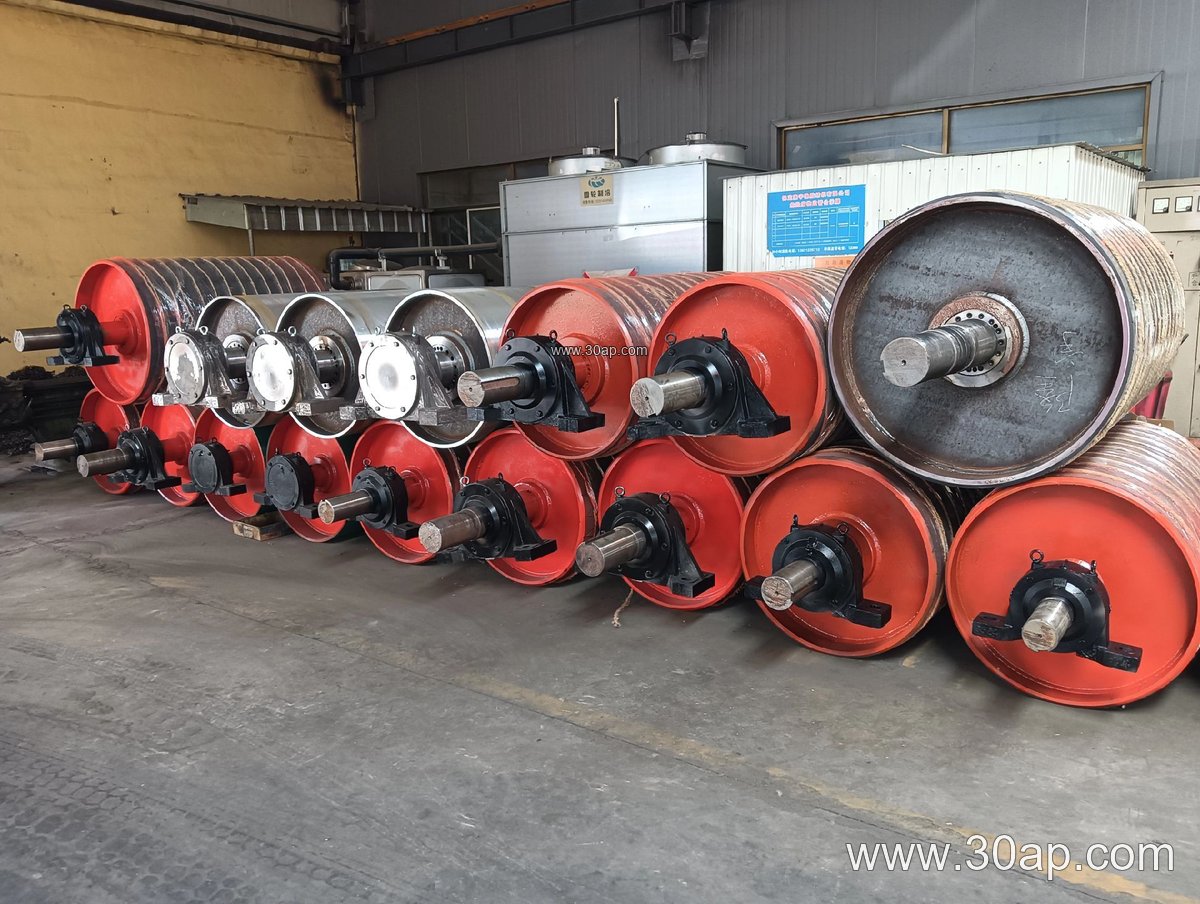
Common Sizes and Surface Options
Face width is normally wider than the belt. The table below shows typical combinations, not fixed rules. A given belt width can be paired with more than one diameter, and the final choice depends on belt speed, wrap angle and tension.
| Belt width | Typical pulley face | Example diameter |
|---|---|---|
| B500 | about 600 mm | Ø250 to Ø400 |
| B650 | about 750 mm | Ø315 to Ø500 |
| B800 | about 950 mm | Ø400 to Ø630 |
| B1000 | about 1150 mm | Ø500 to Ø800 |
| B1200 | about 1400 mm | Ø630 to Ø1000 |
| B1400 | about 1600 mm | Ø800 to Ø1250 |
| B1600 | about 1800 mm | Ø1000 to Ø1400 |
Lagging thickness is often 8, 10, 12, 15 or 20 mm. Surface forms include plain, cast rubber, cold-bonded rubber, hot vulcanized rubber, diamond groove, herringbone, ceramic and flat rubber. Shaft diameters commonly range from Ø50 to Ø200, but the shaft should be calculated from torque and load rather than copied from a belt width.
Buyer Checklist
Before ordering, confirm the pulley position, belt width, required face width, diameter, shaft size and lagging type. State the belt specification too, since an abrasion resistant conveyor belt, a heat resistant conveyor belt or an oil resistant conveyor belt places different demands on the drum surface. A flame retardant conveyor belt used in an underground coal mining conveyor system may call for a matching fire-safe lagging compound.
Ask how the shaft is joined to the hub, what balancing is done, and how the bearing housings align with the conveyor bracket. For high-tension lines, a steel cord conveyor belt or a heavy-duty EP conveyor belt may need a larger diameter to limit bending stress. Regular checks of lagging wear, bolt tightness and shaft runout keep the cast-welded pulley in service longer.