What a Conveyor Idler Bracket Does
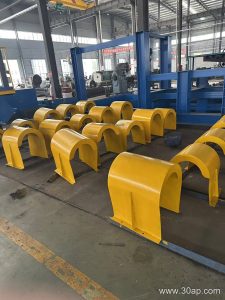
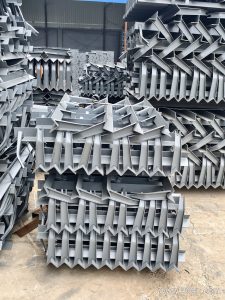
A conveyor idler bracket is the support frame that holds idler rollers at the right height, angle, and spacing along a conveyor. In everyday plant language it is also called an idler support bracket or roller bracket, and the two terms describe the same component. The bracket does not turn or carry the load by itself. It positions the idler roller so the belt keeps its trough shape, tracks steadily, and returns cleanly on the lower run. On a long overland line or a short transfer in a crushing circuit, the bracket is the quiet link between the structure and the moving belt.
Construction and Mounting
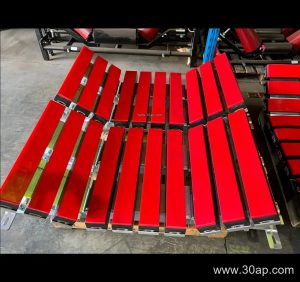
Most brackets are fabricated from angle steel, channel steel, or folded plate. The choice depends on load, span, and how the frame is fixed to the conveyor stringer. A troughing bracket carries three idlers and sets the trough angle. A return bracket holds a single flat roller, while a V-return bracket uses two rollers in a shallow V to help center the belt on the return side. Impact brackets sit under loading points and carry rubber-ring or disc impact idlers.
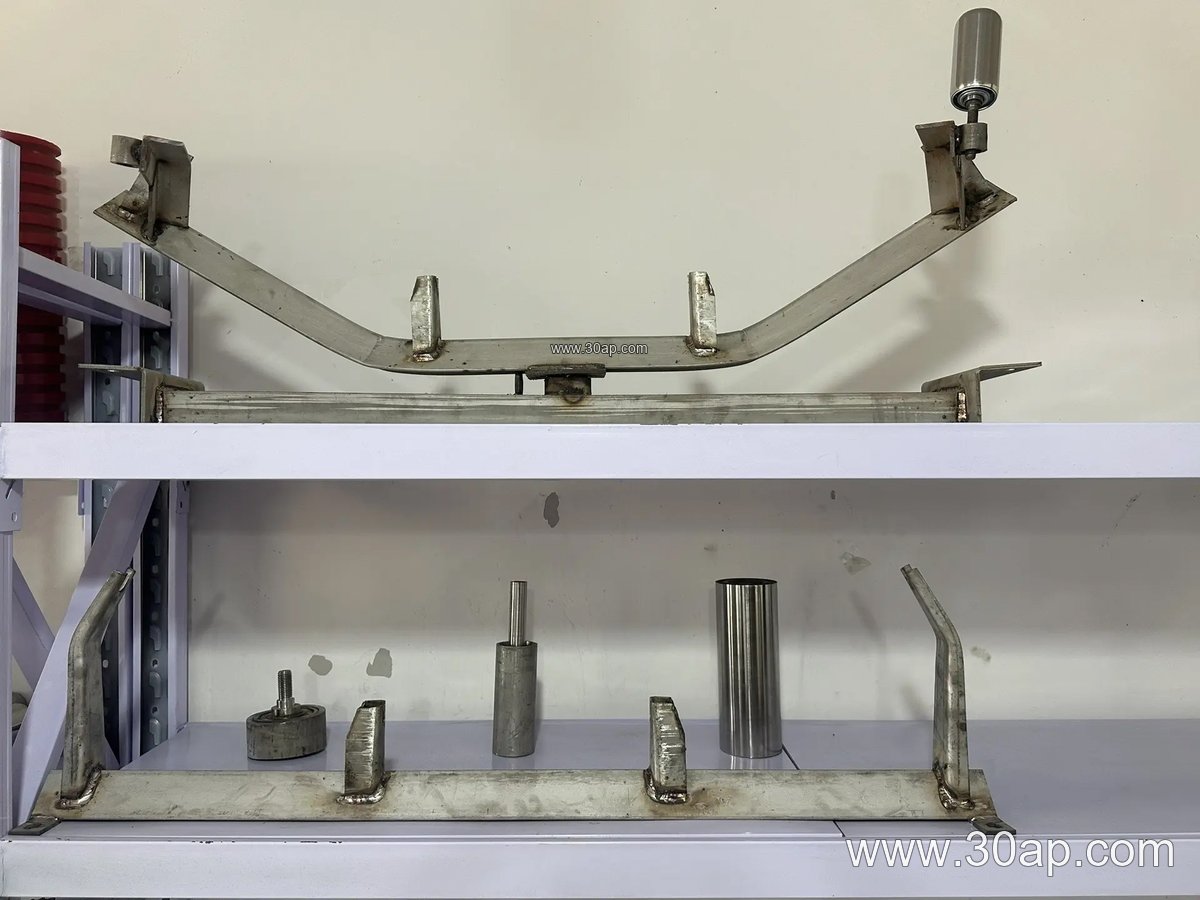
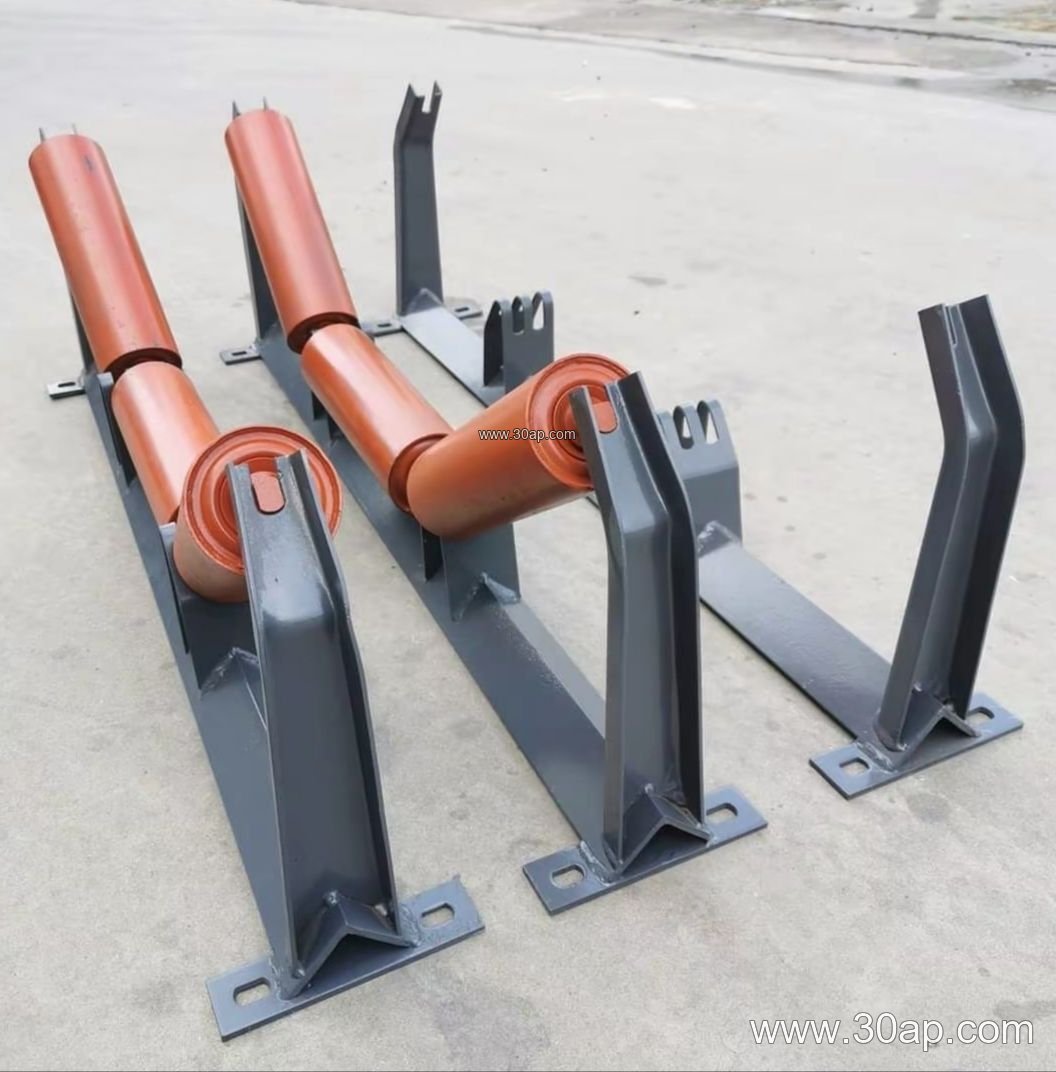
Mounting details are usually matched to the conveyor design. Bolt hole spacing and crossbeam length change with belt width and trough angle, so they are not fixed numbers. A buyer should confirm the hole pattern, the stringer spacing, and the height of the roller seat before ordering.
- Troughing and upper brackets for the carrying side
- Return and V-return brackets for the lower run
- Impact brackets at transfer and loading zones
- Self-aligning and forward-leaning brackets for belt training
- Adjustable brackets that allow the trough angle to be changed
Belt Width, Trough Angle, and Roller Diameter
The bracket has to suit the belt and the roller together. Common belt widths range from B500 and B650 up to B2000 and B2200, and trough angles of 20, 30, 35, and 45 degrees are widely used. Roller diameters such as Ø89, Ø108, Ø133, Ø159, and Ø194 appear across different duty levels. A wider belt does not automatically mean a single trough angle or one roller size; the combination is set by the conveyor design, the material, and the load.
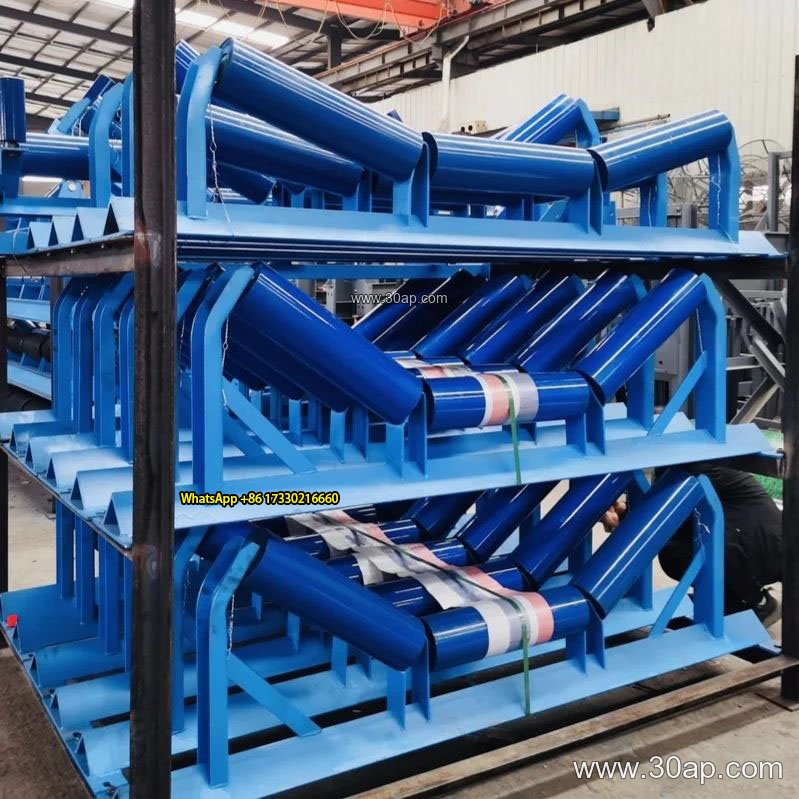
| Belt width | Trough angle | Roller diameter | Typical bracket role |
|---|---|---|---|
| B650 | 30 degrees | Ø89 | Light aggregate line |
| B800 | 35 degrees | Ø108 | General bulk handling |
| B1000 | 35 degrees | Ø133 | Quarry and cement plant |
| B1200 | 45 degrees | Ø133 | High-capacity carrying side |
| B1400 | 35 degrees | Ø159 | Heavy-duty mining duty |
| B1600 | 45 degrees | Ø159 | Ore and coal transport |
| B1800 | 35 degrees | Ø194 | Large tonnage main line |
These are reference combinations, not mandatory matches. A plant may use a different angle or roller size after checking belt tension, material lump size, and transition distance.
Where the Bracket Fits in the Plant
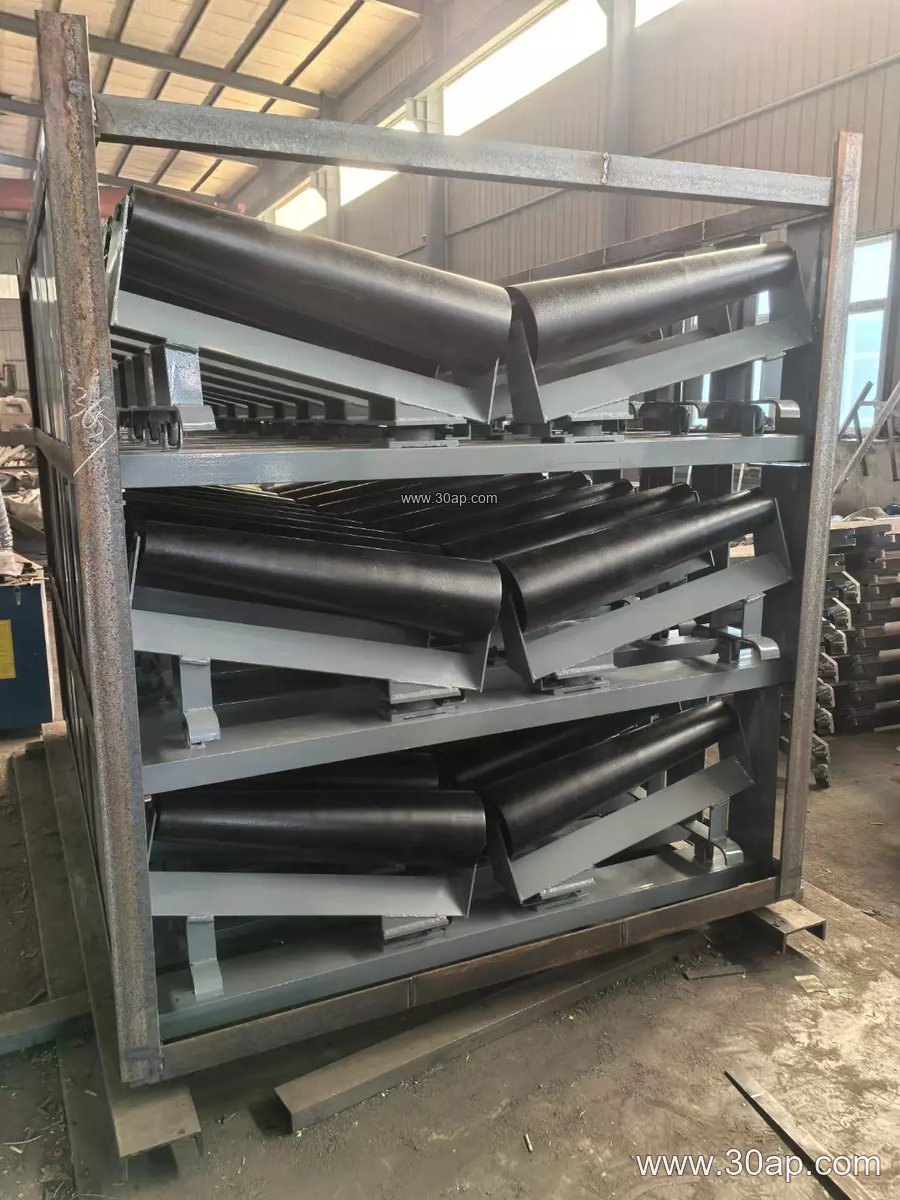
In a limestone quarry or a sand and gravel line, troughing brackets keep the belt cupped so crushed rock stays on the belt. At a cement plant, brackets under the clinker and raw material conveyors must cope with dust and heat. In a power plant coal yard, flame retardant and anti-static belt grades are common, and the bracket frame should be checked for corrosion and buildup. Underground coal mining conveyors use compact brackets that fit limited space, while a port ship loading line may need wide, heavy frames for a 1800mm or 2000mm belt.
The bracket also works with the pulley end of the system. Drive pulleys, tail pulleys, and bend pulleys are separate components and are not interchangeable with brackets or with each other. A bend pulley changes belt direction; a bracket simply supports the idler. Keeping that distinction clear helps when ordering spare parts.
Buyer Checklist
- Confirm belt width and the required trough angle before choosing the frame.
- Check roller diameter and the idler fixing method used on site.
- Match bolt holes and crossbeam length to the existing stringers.
- Choose adjustable brackets where the trough angle may need tuning.
- For training problems, consider self-aligning or forward-leaning brackets at about 1.5 to 2 degrees.
- Specify the material finish for dusty, wet, or corrosive locations.
A well-matched conveyor idler bracket keeps the belt centered, reduces edge wear, and extends roller life. Whether the line carries coal, clinker, iron ore, or grain, the bracket is a small part with a direct effect on uptime.