What a Ceramic Rubber Lagged Pulley Is
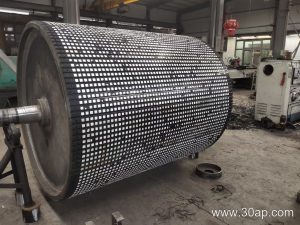
A ceramic rubber lagged pulley is a conveyor pulley whose shell is covered with a rubber lagging that contains embedded ceramic tiles. The ceramic blocks sit proud of the rubber surface, so the pulley grips the conveyor belt through a hard, wear-resistant pattern while the rubber body absorbs shock and flexes under load. In practice, this covering is chosen where ordinary smooth or diamond rubber lagging wears out too quickly, or where the pulley must keep traction on a wet, dusty, or oily belt.
The product is also described as a ceramic lagged conveyor pulley or a pulley with ceramic rubber lagging. Those names refer to the same item. It is not a substitute for a drive pulley, tail pulley, or bend pulley by name; those are positions in the conveyor, and any of them can be supplied with ceramic rubber lagging when the duty calls for it.
How the Lagging Is Built
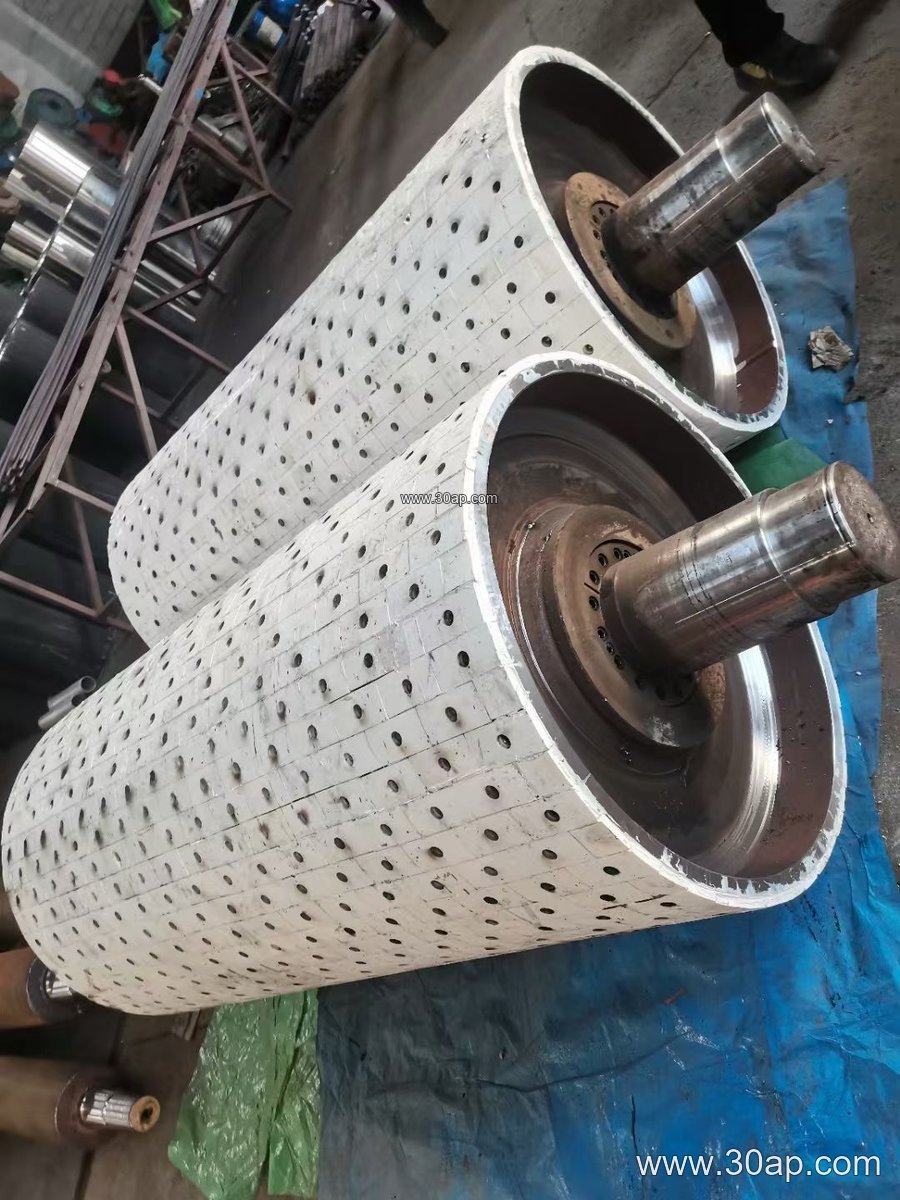
The rubber layer is usually bonded to the pulley shell by hot vulcanization, which gives a continuous joint around the circumference. Ceramic tiles, often small rectangles or hexagons, are set into the rubber during the process. The tiles are spaced so that each one presents a raised edge to the belt, and the gaps between them let water and fines escape instead of building up a slippery film.
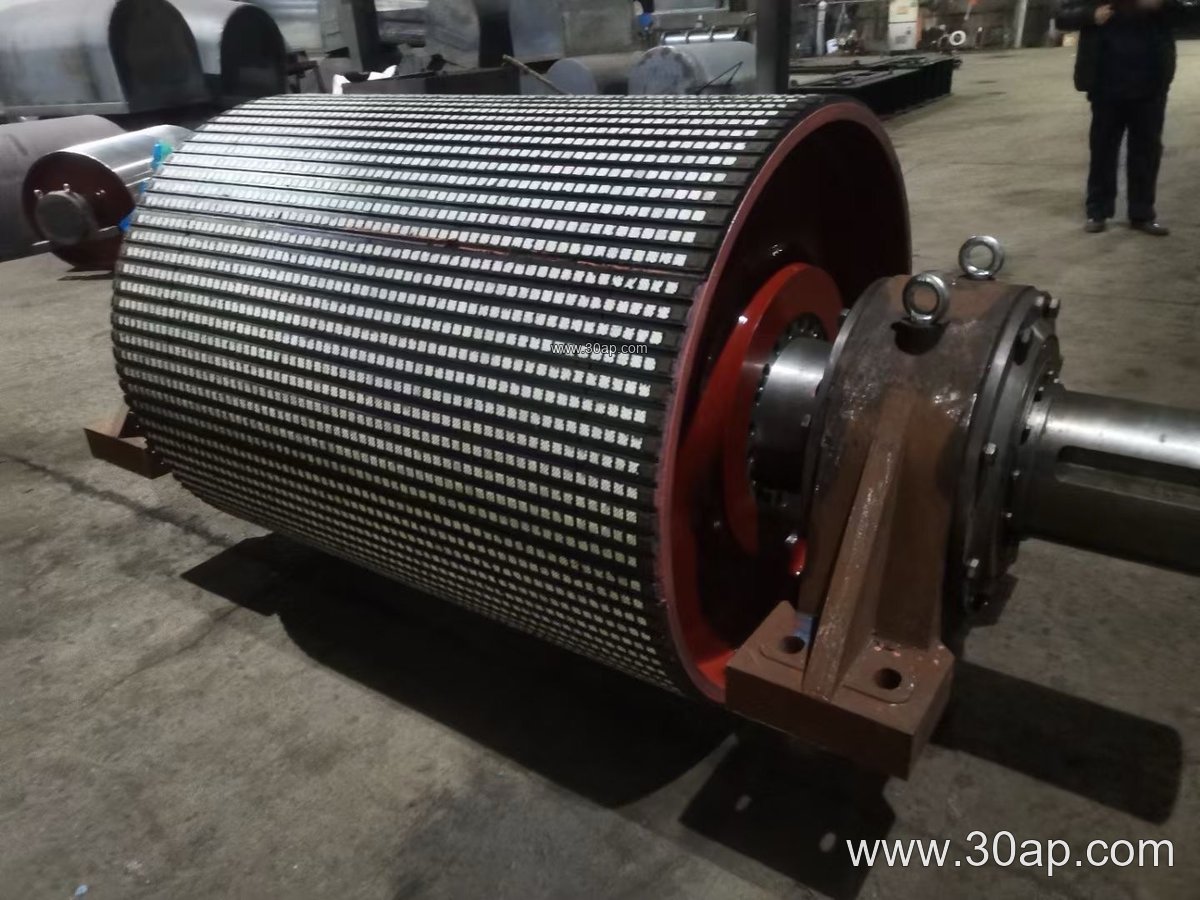
Common lagging thicknesses are 8, 10, 12, 15, and 20 mm, with the thicker covers used on larger diameter pulleys and heavier belts. The ceramic pattern is generally described by tile shape and coverage rather than a single standard, so buyers should confirm the layout on the drawing.
Where It Fits on the Conveyor
Ceramic rubber lagging is most often specified on the drive pulley, where slip is costly, and on the tail or bend pulley in abrasive service. In a quarry or aggregate line, a ceramic lagged head pulley helps keep a rubber conveyor belt tracking under a steady load of crushed stone. In a coal mining or underground coal mining conveyor, the same covering resists fine coal dust and moisture that would polish a plain steel shell.
Plant operators in cement, power, and iron ore handling also use it where a conveyor pulley sees grit and water together. Because the ceramic surface is hard, it is less suited to very small diameter pulleys with tight wrap angles, and it is rarely the first choice for a light-duty conveyor with a thin fabric core belt.
Matching Pulley Size to the Belt
The pulley diameter and face width follow the belt and the duty, not the other way around. Face width is normally a little wider than the belt; for example, a B800 belt often runs on a pulley with roughly 950 mm face, and a B1200 belt on about 1400 mm. Diameter is selected from torque, belt tension, and the space allowed, so a B800 pulley might be Ø500 in one conveyor and Ø630 in another.
Typical combinations include B800 × Ø500, B1200 × Ø1000, and B1400 × Ø800. Shaft diameter is set by torque and bearing load; common shaft sizes range from Ø50 to Ø200, and the shaft is never chosen from belt width alone.
Reference Data for Early Planning
The table below gives common reference values. They are starting points for discussion, not fixed supply commitments.
- Belt width range: B400, B500, B650, B800, B1000, B1200, B1400, B1600, B1800, B2000
- Pulley diameter range: Ø200, Ø250, Ø315, Ø400, Ø500, Ø630, Ø800, Ø1000, Ø1250, Ø1400
- Lagging thickness: 8, 10, 12, 15, 20 mm
- Surface options: plain, hot vulcanized rubber, cold bonded rubber, diamond, chevron, ceramic
- Shaft diameter: Ø50, Ø60, Ø70, Ø80, Ø90, Ø100, Ø120, Ø140, Ø160, Ø180, Ø200
When the conveyor carries a steel cord conveyor belt or a heavy multi-ply fabric core belt, the pulley and lagging must be sized together with the belt tension. A ceramic rubber lagged pulley is often paired with an abrasion resistant conveyor belt in the same circuit, and in coal service with a flame retardant conveyor belt.
What Buyers Should Check
Ask for the lagging thickness, tile pattern, rubber hardness, and bonding method on the drawing. Confirm the pulley position, the belt width, the shaft size, and the bearing arrangement, because a drive pulley and a bend pulley of the same diameter are not interchangeable in the frame. Also check that the conveyor bracket and idler roller layout leave room for the lagging thickness, since the finished diameter grows after covering.
For a wet or dirty transfer point, ceramic lagging can extend service life, but it should be matched to the belt cover grade. A conveyor pulley with ceramic rubber lagging is a wear decision as much as a traction decision, and the right choice comes from the duty, not from a catalog default.