What a Three-Roll Idler Bracket Does
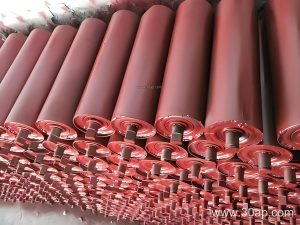
A three-roll idler bracket is the steel support that holds three carrying idlers in a trough shape under the loaded side of a conveyor belt. In practice it is often called a troughing idler bracket or troughing set frame, and the three-roll arrangement is what gives the belt its cradle profile so bulk material stays centered on the run. The bracket carries the weight of the belt, the material, and the idler rollers themselves, and it keeps the three rolls at a consistent angle along the whole conveyor line.
On a quarry conveyor or a cement plant transfer line, these brackets are usually bolted to the stringer or frame at regular intervals. The center roll sits flat, while the two side rolls angle upward to form the trough. That geometry matters because it affects how the belt tracks, how much material spills at the edges, and how evenly the load is shared across the rollers.
How the Bracket Is Built
Most three-roll idler brackets are fabricated from angle steel, channel steel, or folded steel plate. The side arms are shaped to hold the wing rolls, and the base section locates the center roll. Slotted or drilled mounting holes allow the bracket to be fixed to the conveyor frame, and the hole spacing and crossbeam length vary with belt width and trough angle rather than following one fixed number.
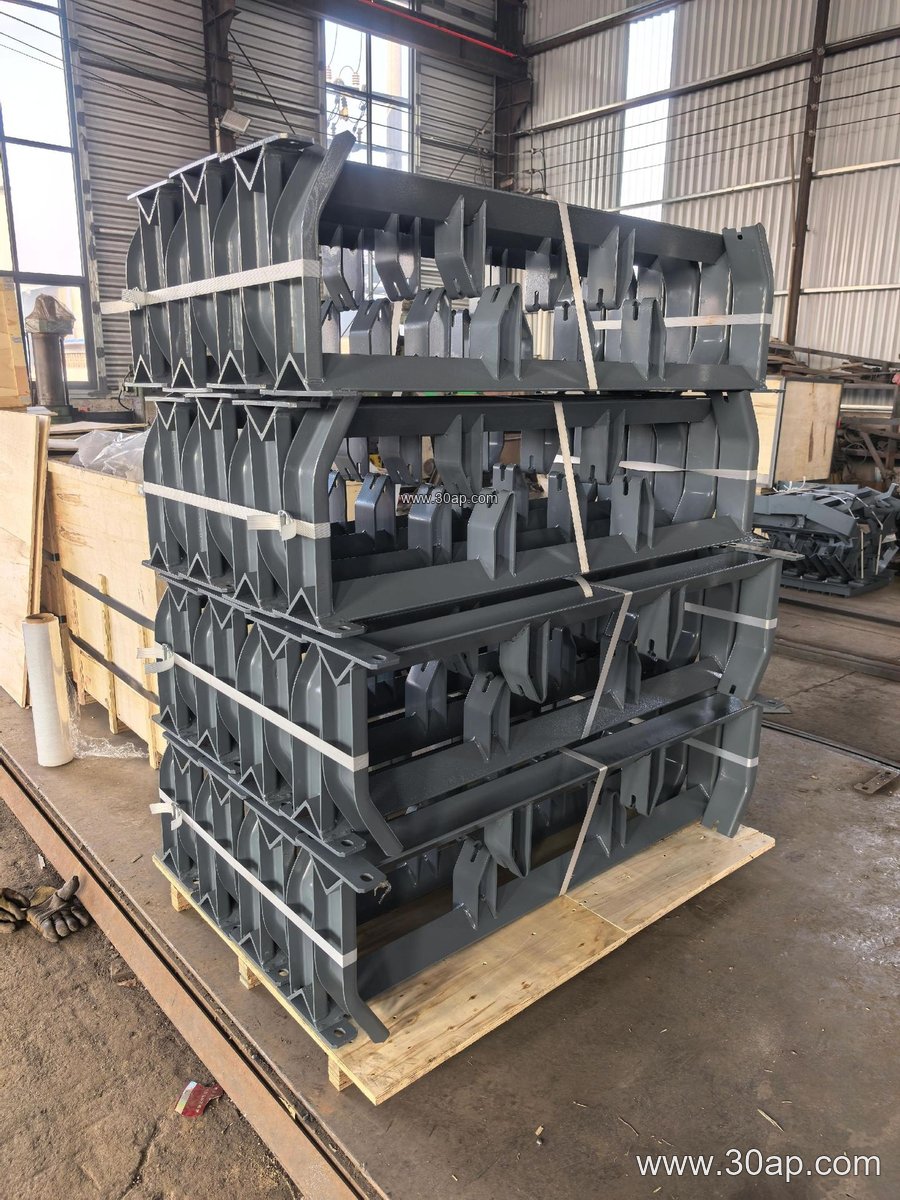
A typical bracket assembly includes:
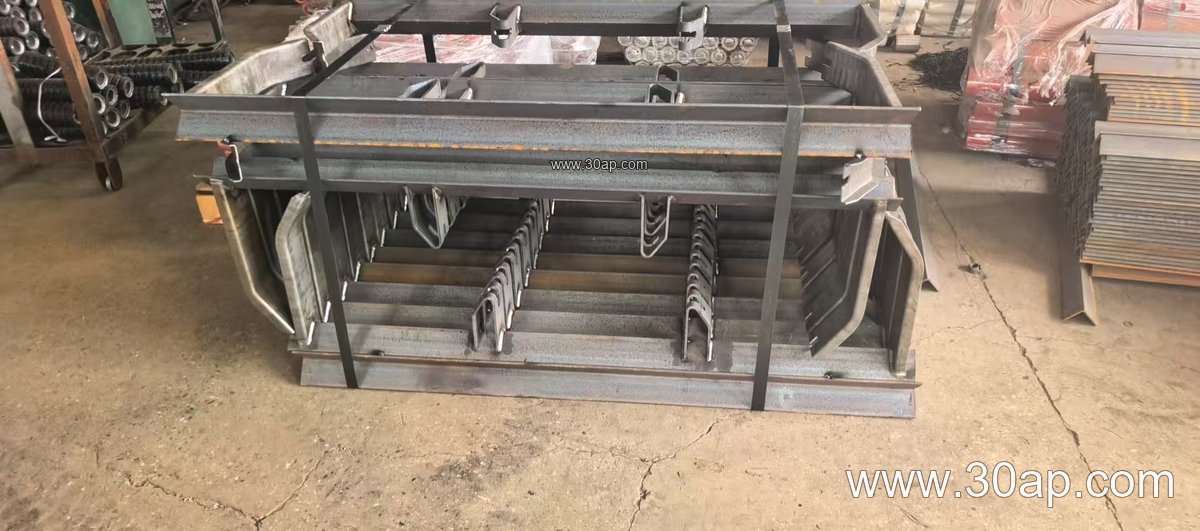
- Two angled side supports for the wing idlers
- A center support for the middle idler roller
- A base plate or crossbeam with mounting holes
- Roller seats or clamps that keep the idler shafts in place
Some designs are fixed, while adjustable brackets let maintenance crews change the trough angle between common settings such as 20, 30, 35, and 45 degrees. Fixed brackets are simpler and stiffer; adjustable ones are useful where the same frame may handle different materials or where belt training needs fine tuning.
Trough Angle and Roller Diameter Choices
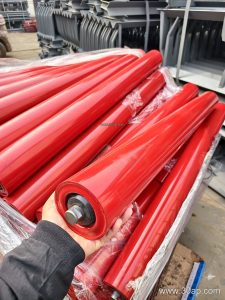
The trough angle and roller diameter are usually selected together with belt width. A narrow belt on a small aggregate conveyor may run 30 degrees with Ø89 idlers, while a wider B1200 or B1400 belt in a coal handling plant often uses 35 or 45 degrees with Ø133 or Ø159 rollers. These are common reference combinations, not fixed rules. The final choice depends on belt width, material lump size, capacity, and the conveyor designer’s calculations.
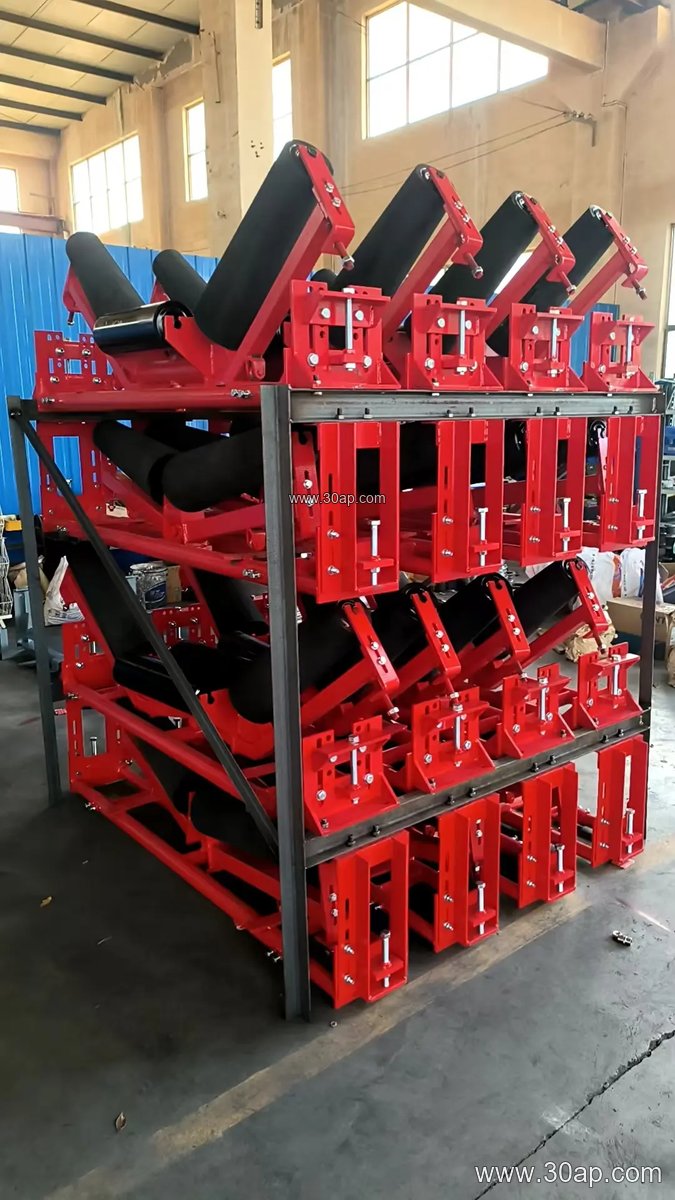
Common bracket and roller reference values are summarized below. Treat them as general guidance only.
| Belt Width | Common Trough Angle | Typical Idler Diameter |
|---|---|---|
| B500 | 20–30 degrees | Ø89 |
| B650 | 30 degrees | Ø89–Ø108 |
| B800 | 30–35 degrees | Ø108 |
| B1000 | 35 degrees | Ø108–Ø133 |
| B1200 | 35–45 degrees | Ø133 |
| B1400 | 35–45 degrees | Ø133–Ø159 |
| B1600 | 35–45 degrees | Ø159 |
| B1800 | 35–45 degrees | Ø159–Ø194 |
Installation hole spacing and crossbeam length should always be confirmed against the actual conveyor frame drawing. A bracket that fits one frame may not fit another even when the belt width is the same.
Where Three-Roll Brackets Are Used
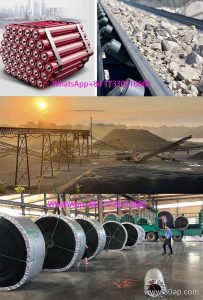
These brackets appear wherever a troughed belt carries bulk material. In a limestone mine or stone crushing line, they support the belt after the crusher and before the screening deck. In a power plant coal yard, they carry the belt through transfer towers and along long inclined runs. Sand and gravel plants, fertilizer handling, and grain silos also use them on the loaded side of the conveyor.
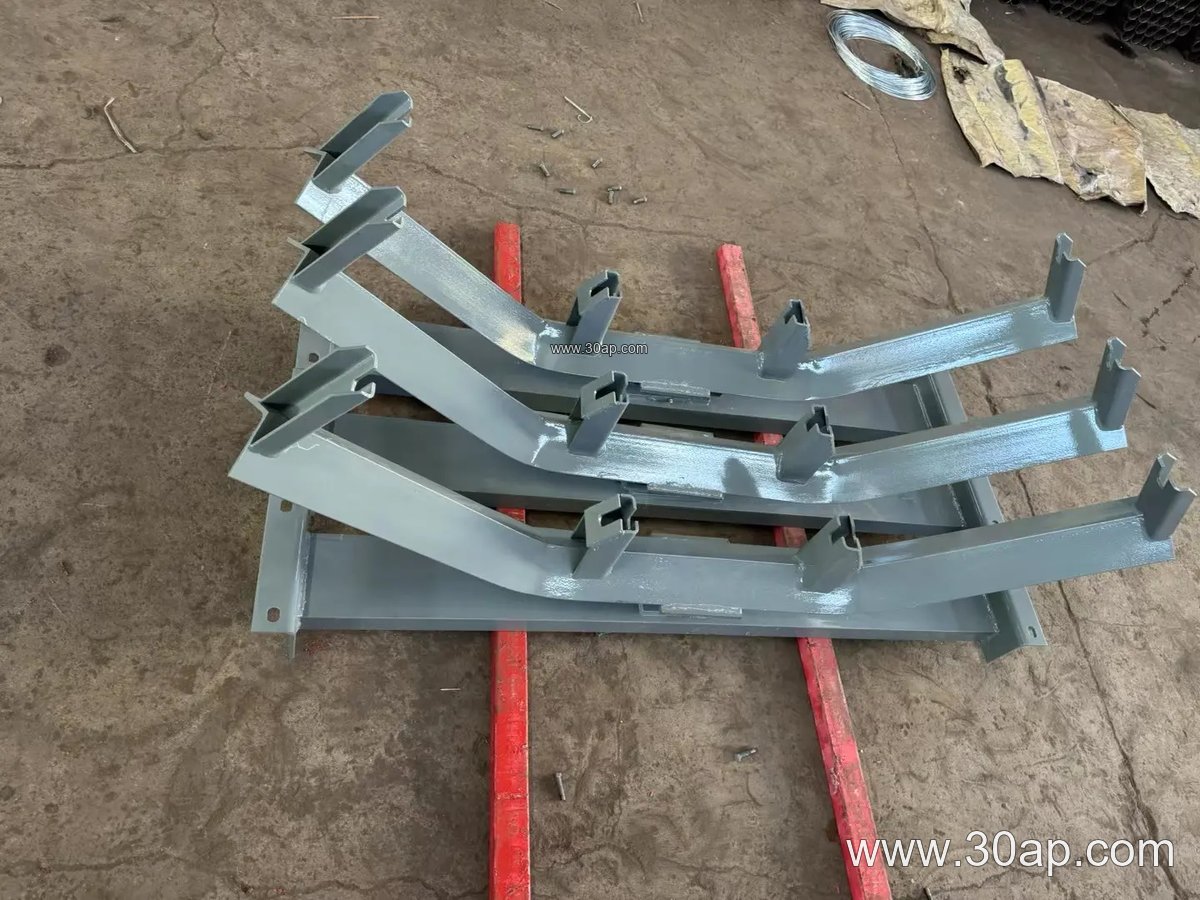
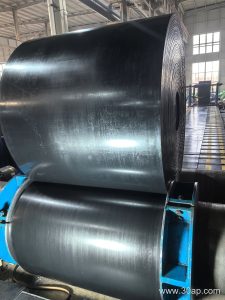
The bracket works together with the conveyor belt and the idler rollers. A well-aligned bracket keeps the belt seated in the trough, reduces edge wear, and helps prevent material from spilling. On a heavy-duty mining conveyor belt carrying abrasive ore, the bracket also needs enough stiffness to resist vibration and impact from large lumps.
Buyer Checklist
Before ordering, confirm the belt width, the required trough angle, the idler diameter, and the mounting hole pattern. Ask whether the bracket is fixed or adjustable, and check the material and finish against the environment. In a coal mine, flame retardant conveyor belt and anti-static properties are often specified for the belt, and the bracket should be compatible with the same frame and roller standards. For a cement plant or a port conveyor, dust and corrosion resistance may matter more than impact strength.
Also confirm whether the bracket is for the carrying side only or whether return brackets are needed on the same frame. A three-roll idler bracket is a small component, but it controls how the belt and rollers work together, so matching it to the frame and the duty is worth the extra check. For general conveyor components such as conveyor bracket, idler roller, and conveyor pulley, keep the same dimensional reference through the whole project.