What the Carrying Bracket Does on a Conveyor
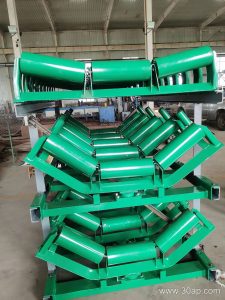
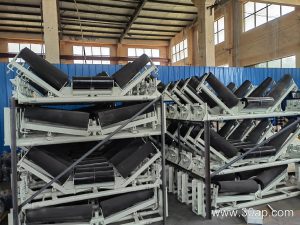
A conveyor carrying bracket is the steel frame that holds the troughing idlers under the loaded side of a belt. It is not a roller itself, and it is not a pulley. The bracket carries the idlers, the idlers carry the belt, and the belt carries the material. In a quarry, a coal preparation plant, or a cement plant, this simple steel component decides whether the belt sits in a clean trough or runs out of line and spills.
The bracket is usually bolted to the conveyor stringer or frame, and the idler shafts drop into slots or are fixed with bolts. Because the bracket sets the trough angle and the spacing between rollers, it has a direct effect on belt life. A correct carrying bracket keeps the belt supported at the right profile; a worn or bent one lets the belt sag and drift.
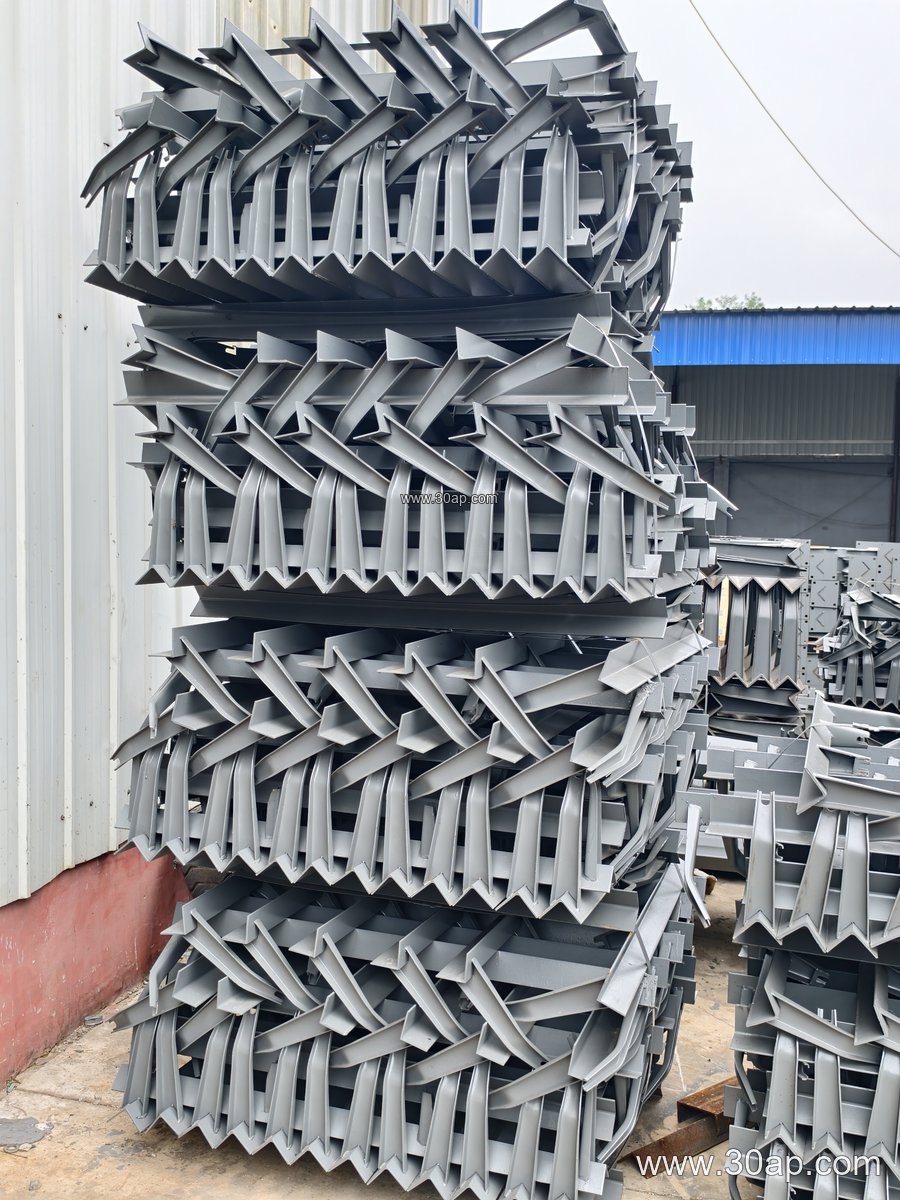
Construction and Common Forms
Most brackets are made from angle steel, channel steel, or folded steel plate. A standard troughing bracket has three positions, one for the center roller and two for the side rollers, with the side positions set at a fixed angle. The angle is the trough angle, and it is often 20, 30, 35, or 45 degrees depending on the belt width and the material being handled.
Other forms exist for specific duties:
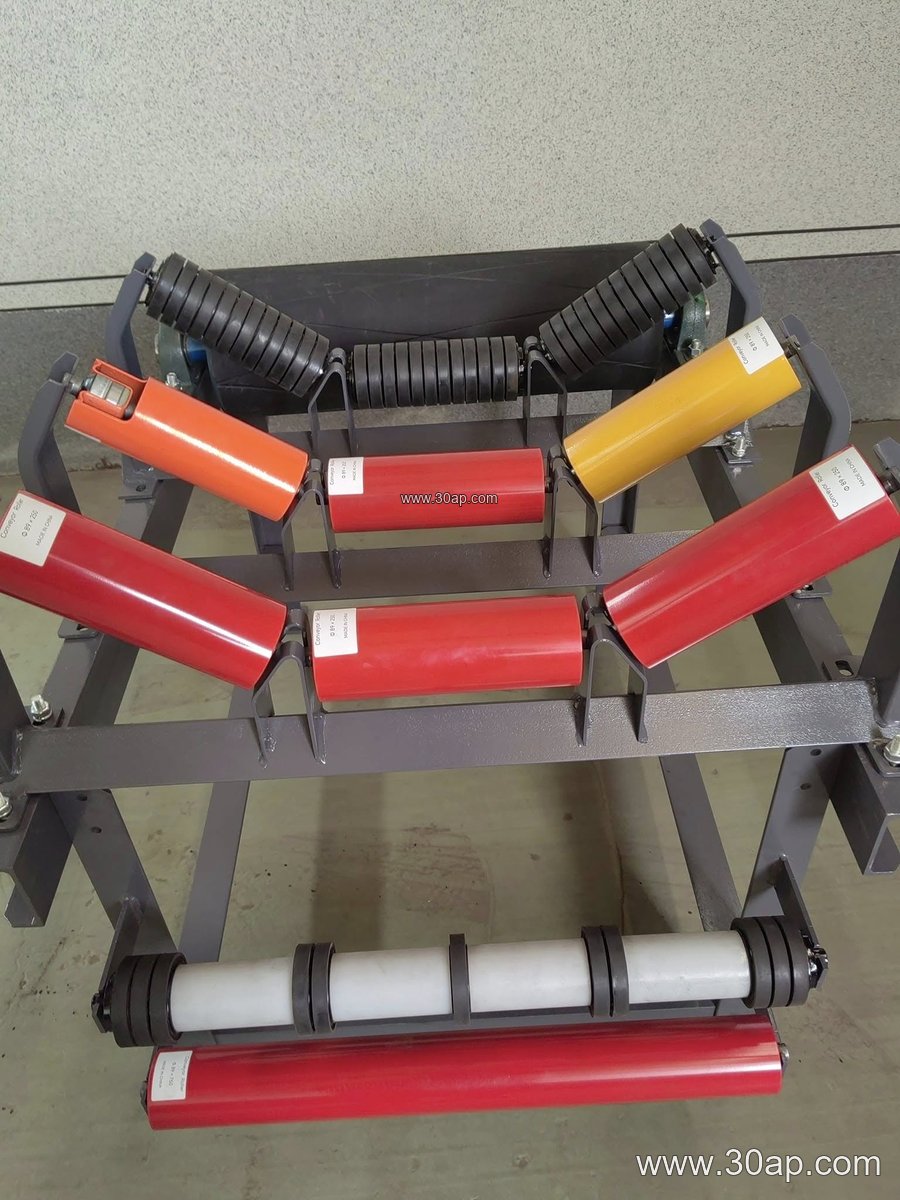
- Transition brackets, placed near the head and tail to ease the belt from flat to troughed.
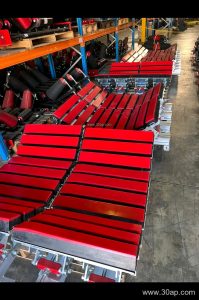
- Impact brackets, used under loading points with impact idlers and often reinforced.
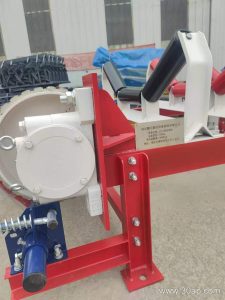
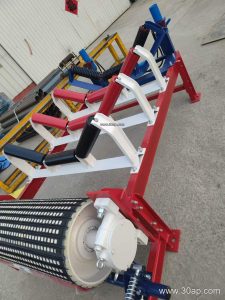
- Self-aligning brackets, which allow the idler set to pivot slightly and correct belt drift.
- Return brackets and V-return brackets on the empty side, which are a separate duty from carrying.
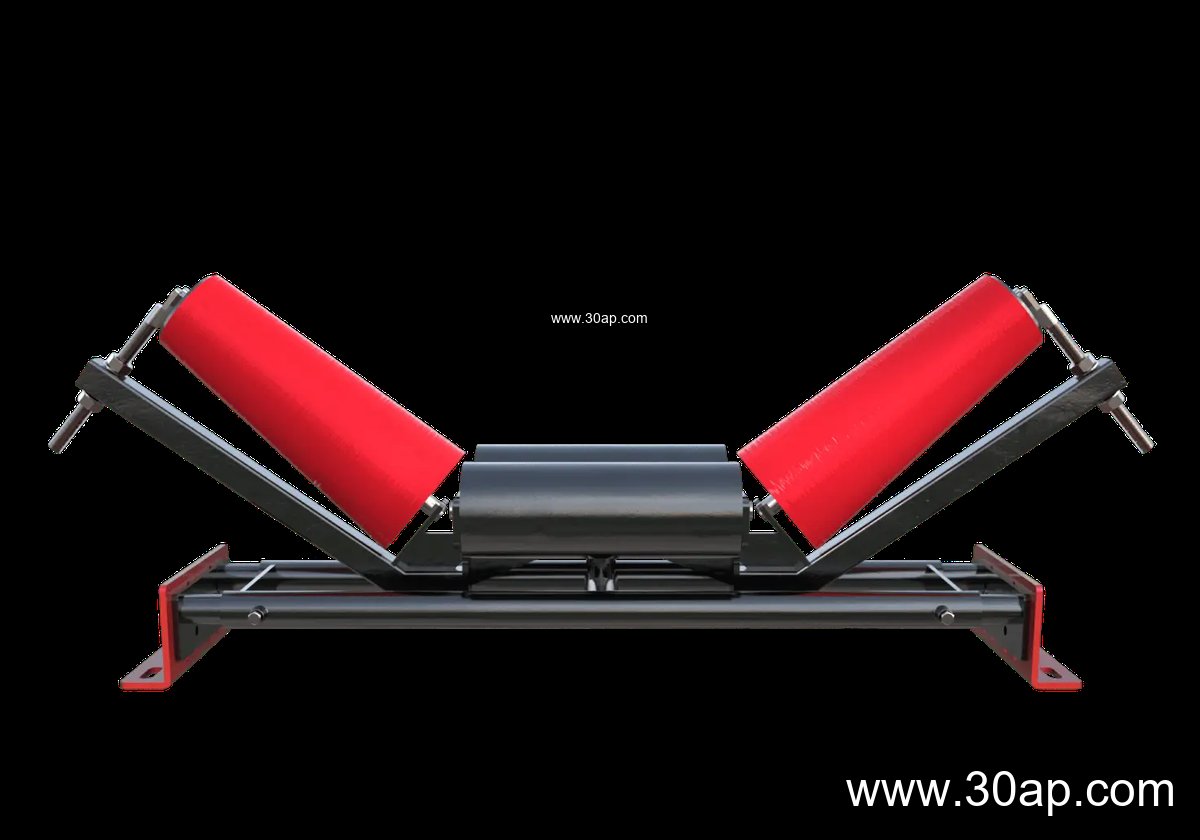
- Adjustable brackets, where the trough angle can be changed within a range instead of being welded fixed.
Forward-tilted brackets, usually around 1.5 to 2 degrees, are used to help keep the belt centered on long runs. These are not a replacement for a self-aligning set, but they are a common choice on high-speed lines.
Where the Bracket Fits in the Line
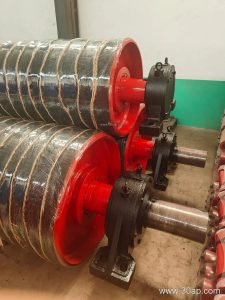
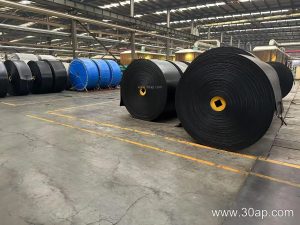
On a typical troughed conveyor, carrying brackets are spaced along the load-carrying run, while return brackets support the belt on its way back. The bracket works together with the conveyor belt, the idler roller, and the conveyor pulley at each end. If the belt is a heavy-duty mining conveyor belt or an abrasion resistant conveyor belt carrying sharp rock, the bracket and idlers must be sturdy enough to hold the load without flexing.
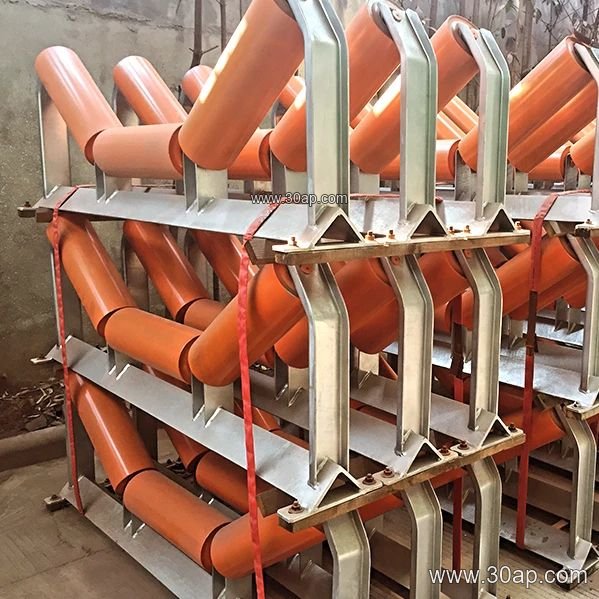
In a coal mining conveyor belt system, flame retardant conveyor belt and anti-static conveyor belt are common, and the bracket layout should follow the same trough profile along the whole run. In a power plant or steel plant, heat resistant conveyor belt may run beside hotter material, and the bracket steel should be checked for heat exposure. In a sand and gravel line, a chevron conveyor belt or corrugated sidewall conveyor belt may need a slightly different idler arrangement, so the bracket design should be confirmed with the belt supplier.
Brackets are also used in fertilizer plants, grain silos, and tunnel spoil handling, where dust and moisture affect steel. Galvanized or painted finishes are common, but the actual choice depends on the site.
Matching Belt Width, Trough Angle, and Roller Diameter
There is no single bracket size for all conveyors. The bracket length, mounting hole spacing, and height depend on the belt width, the trough angle, and the idler diameter. Common belt widths include B500, B650, B800, B1000, B1200, B1400, B1600, B1800, B2000, B2200. Common idler diameters include Ø89, Ø108, Ø133, Ø159, and Ø194. A bracket for B800, 35 degrees, Ø108 is a different part from one for B1200, 45 degrees, Ø133.
Do not assume that one belt width has only one matching trough angle or roller diameter. The same B1000 belt may run at 30 or 35 degrees depending on the material and the conveyor design. The mounting hole distance and crossbeam length should always be taken from the conveyor drawing, not guessed from belt width alone.
Buyer Checklist
- Confirm the belt width, trough angle, and idler diameter before ordering.
- State whether the bracket is fixed, adjustable, self-aligning, or an impact type.
- Give the mounting hole spacing and the stringer hole pattern.
- Specify the steel form (angle, channel, or folded plate) and the surface finish.
- Check that the bracket suits the belt type in use, whether EP conveyor belt, steel cord conveyor belt, or a fabric core conveyor belt.
- Ask for the load rating and the recommended idler spacing for the application.
A carrying bracket is a low-cost part, but it controls belt tracking and idler life. Ordering it with the correct dimensions is more important than choosing the heaviest steel available.