What a Conveyor Guide Idler Does
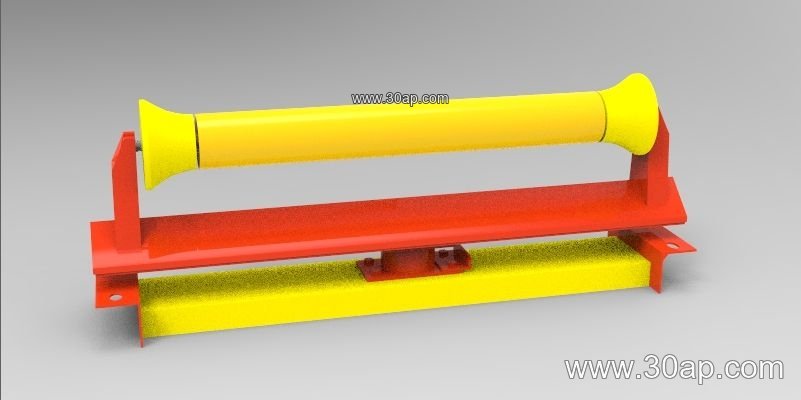
A conveyor guide idler is a training idler that keeps the conveyor belt centered on the carrying and return runs. In a quarry, a cement plant, or a coal handling system, even a small belt misalignment can cause spillage, edge damage, and short belt life. The guide idler corrects this by applying a gentle steering force to the belt edge or by using a pivoted frame that reacts to off-center running. It is not a drive pulley, tail pulley, or bend pulley; those are different components with different roles in the conveyor drive and path. The guide idler is a specialized idler roller, often mounted on a conveyor bracket that allows rotation or angular adjustment.
Construction and Common Configurations
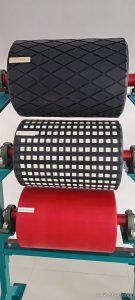
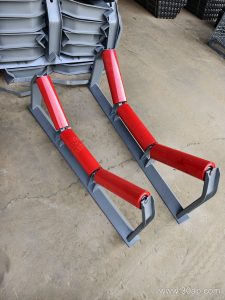
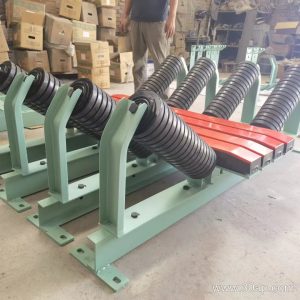
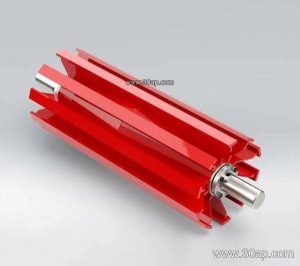
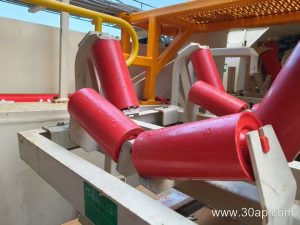
Most guide idlers use a steel tube shell with bearing housings at each end. Common roller diameters include Ø89, Ø108, Ø127, Ø133, and Ø159 mm, and the shaft and bearing selection depends on load and belt speed rather than belt width alone. Bearings such as 6205, 6305, or 6308 are frequently used in these idlers, but no single bearing is tied to one roller diameter. The roller face may be plain steel, nylon, rubber-covered, or ceramic-covered for extra grip or wear resistance. A guide idler can be supplied as a single roller, a two-roller assembly, or part of a three-roller training set with a pivot base. Trough angles for carrying idlers are commonly 20, 30, 35, or 45 degrees, and a slight forward tilt of about 1.5 to 2 degrees is sometimes used in training idlers to encourage self-centering.
Typical guide idler arrangements
- Single guide roller mounted vertically or at an angle to contact the belt edge.
- Pivoted training idler set that swings when the belt drifts.
- Return-side guide idler used with a V-return or flat return idler.
Roll length varies with belt width, trough angle, and idler arrangement. For reference, a three-roller trough set might use a roll length near 200 mm for B500, 315 mm for B800, 465 mm for B1200, and 600 mm for B1600. These are common examples only; side rollers and center rollers can differ, and the final length is set by the conveyor design.
Where Guide Idlers Are Used
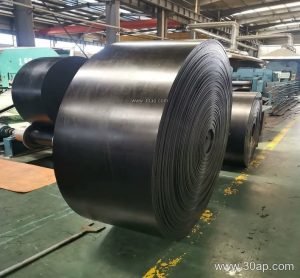
Guide idlers appear in bulk material handling where belt training is critical. In a limestone quarry or aggregate conveyor line, they help keep a 800mm or 1000mm conveyor belt centered after a crusher discharge. In a coal mining conveyor or underground mining conveyor, a flame retardant conveyor belt and a guide idler work together to reduce edge wear in confined spaces. Power plant coal handling and cement plant clinker transport also use training idlers on long runs. The guide idler is often paired with a rubber conveyor belt, an EP conveyor belt, or a steel cord conveyor belt depending on tension and impact. It should not be confused with a conveyor pulley, which transmits drive force or changes belt direction.
Selection Checks for Buyers
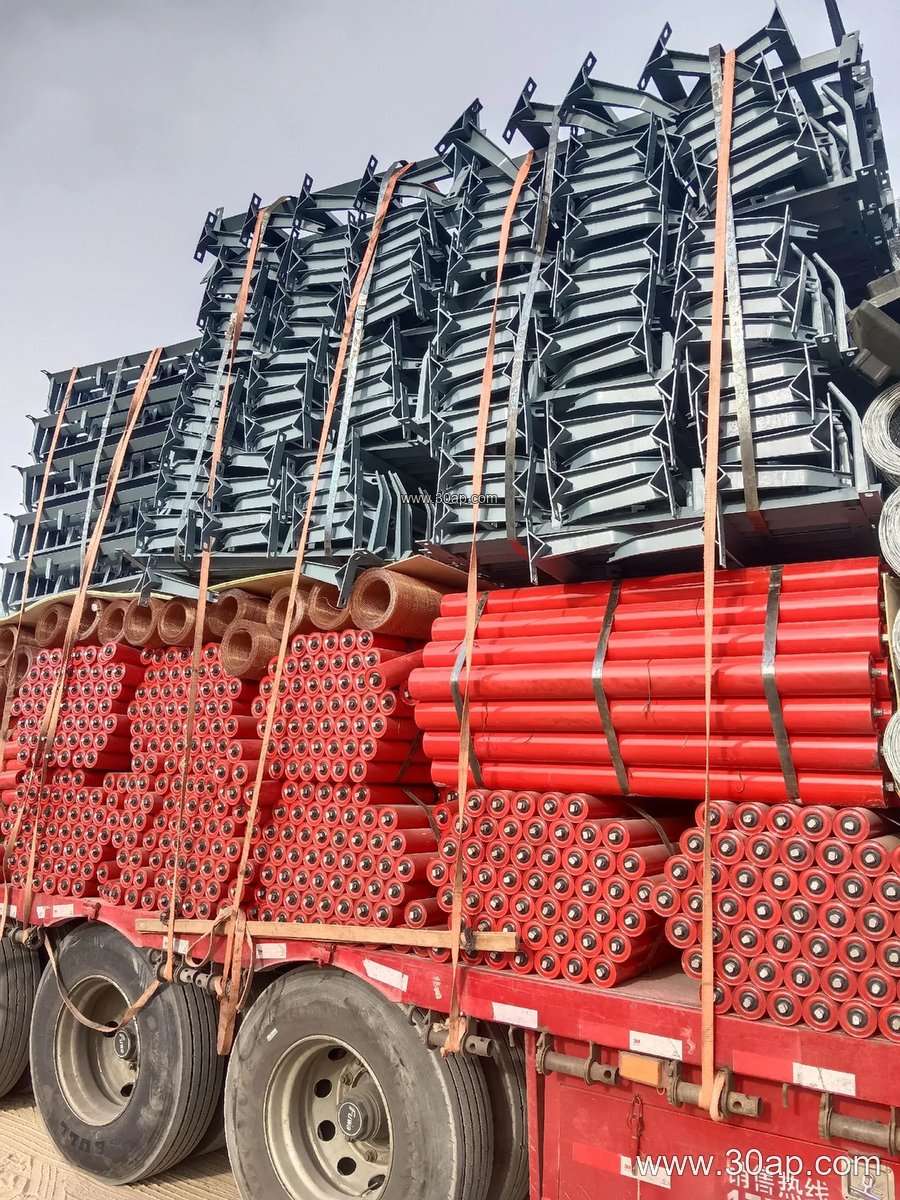
Buyers should confirm the belt width, the idler diameter, the mounting bracket pattern, and the available space before ordering. A guide idler for a 650mm conveyor belt may use a different bracket than one for a 1400mm belt, and the shaft diameter must be checked against the frame, not assumed from belt width. The roller surface should match the environment: rubber-covered rollers offer friction for training, while nylon or ceramic surfaces may suit different wear conditions. Bearing type and sealing should be reviewed for dust, water, and temperature. A heat resistant conveyor belt in a cement plant may need a guide idler with suitable bearing clearance, while an oil resistant conveyor belt in a recycling line may call for a different seal. The guide idler is a small part, but it should be selected with the same care as the idler roller and conveyor bracket around it.
Reference data to discuss with a supplier
- Belt width range from B400 to B2400, with common sizes such as 500mm, 800mm, 1200mm, and 1800mm.
- Roller diameter options including Ø63, Ø76, Ø89, Ø102, Ø108, Ø127, Ø133, Ø159, Ø178, Ø194, and Ø219 mm.
- Trough angle options of 20, 30, 35, and 45 degrees for related carrying idlers.
- Bearing options such as 6204, 6205, 6305, 6306, 6308, and 6310, matched to load and speed.
These values are reference data, not universal fixed combinations. A 1200mm wide conveyor belt can be served by more than one pulley or idler diameter, and the correct choice comes from the conveyor design, belt tension, and material load.
Maintenance and Troubleshooting
Check guide idlers for free rotation, seal condition, and frame alignment during routine inspections. A seized bearing can flat-spot the roller and damage the belt edge. If the belt continues to drift after the guide idler is adjusted, inspect the entire conveyor for off-center loading, damaged idlers, or a misaligned conveyor pulley. In a sand making plant or stone crushing line, dust ingress is common, so choose seals that suit the site. For a coal mining conveyor belt or an underground coal mining conveyor belt, flame retardant and anti-static properties of the belt are separate from the guide idler selection, but both matter for safe operation.
For bulk material conveyor belt systems, the guide idler is a low-cost component that protects a much more expensive belt. Matching the guide idler to the belt width, the bracket, and the operating environment is the practical way to reduce downtime in quarry, mining, power, and cement operations.