What a Surface Belt Conveyor Idler Does
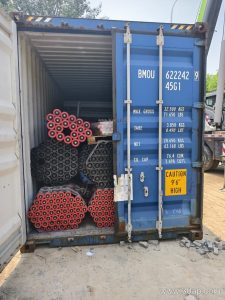
A surface belt conveyor idler is the rotating roller assembly that supports the conveyor belt along the carrying and return runs of an above-ground conveyor system. In everyday plant language it is often called a carrying idler, troughing roller, or simply an idler roller. It is not a drive, tail, or bend pulley; those components transmit power and change belt direction, while the idler only supports and guides the belt.
In quarries, coal preparation plants, cement lines, power plant coal yards, and aggregate crushing circuits, the idler set is one of the most numerous parts on the whole conveyor. Its condition directly affects belt tracking, rolling resistance, and the service life of the conveyor belt itself.
Construction and Surface Options
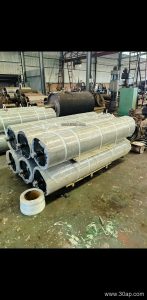
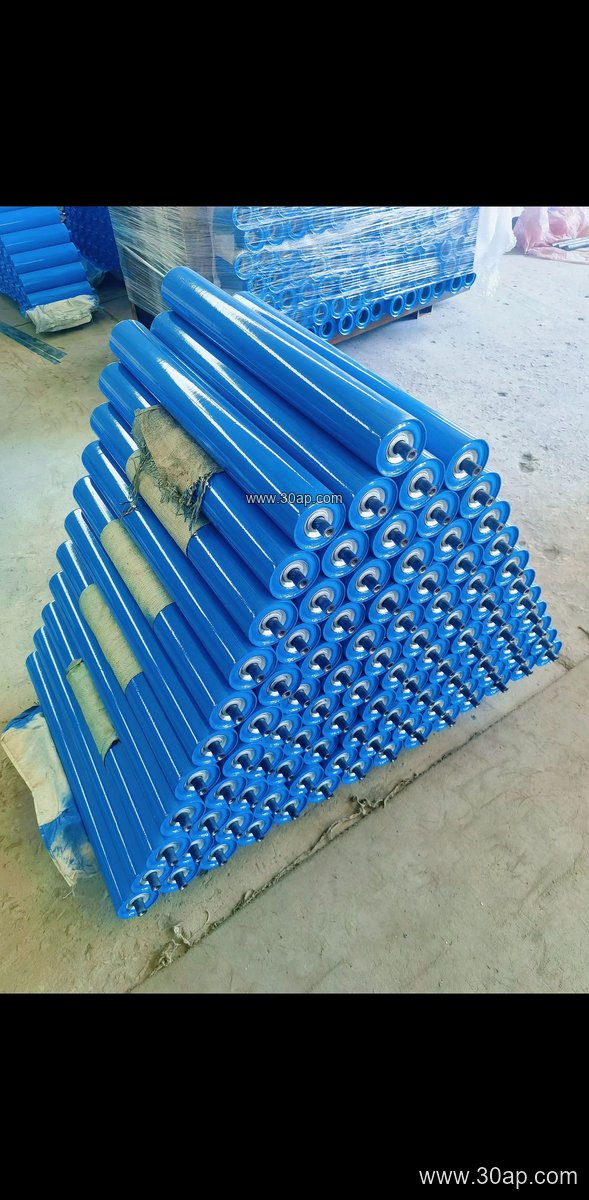
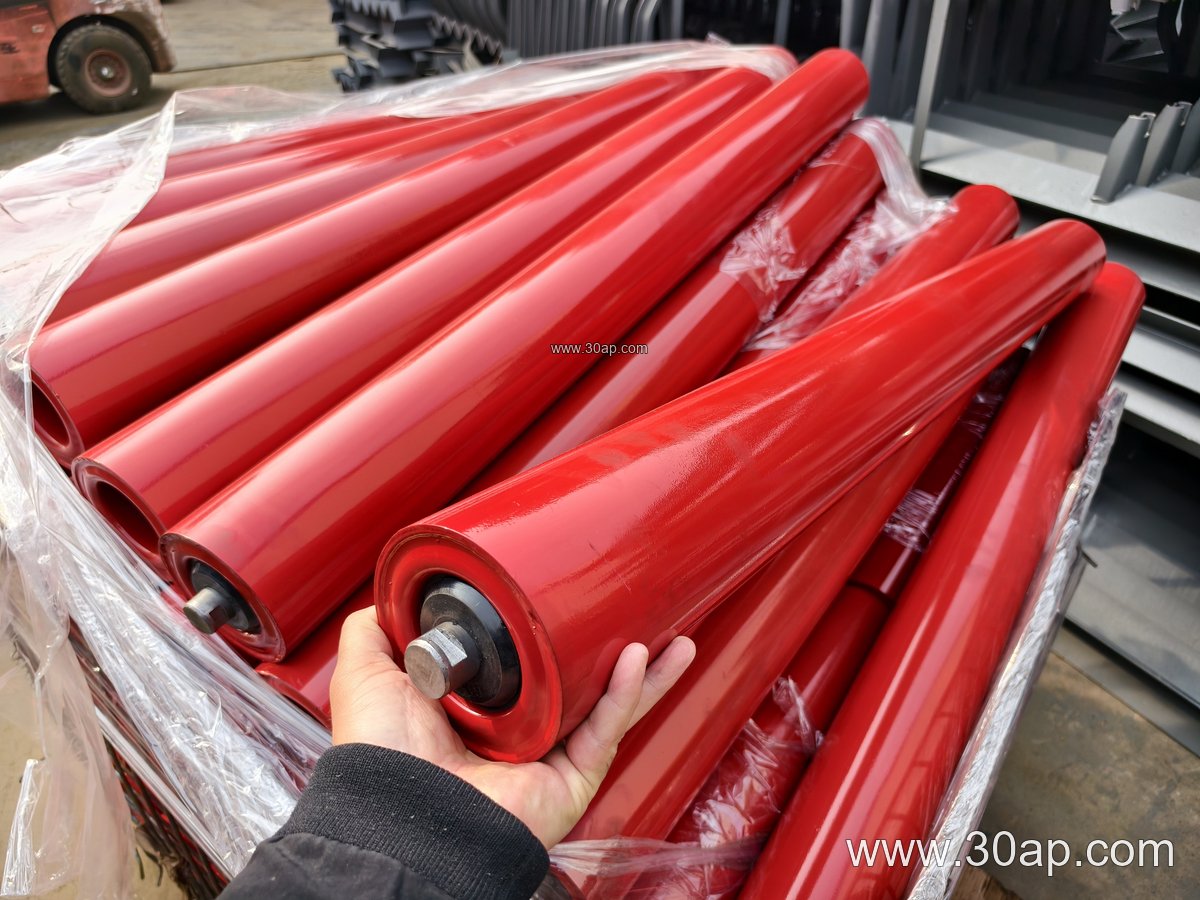
A typical idler consists of a steel tube shell, a shaft, bearing housings, seals, and a bearing set. The shell may be plain steel, nylon-coated, ceramic-lined, or fitted with rubber rings for impact absorption. Sealing quality matters more than many buyers expect, because fine dust and water ingress are the usual causes of premature bearing failure.
Common bearing sizes include 6204, 6205, 6305, 6306, 6308, and 6310, matched to load and shaft design rather than to one fixed roller diameter. Roller diameters are commonly selected from Ø63, Ø76, Ø89, Ø102, Ø108, Ø127, Ø133, Ø159, Ø178, Ø194, and Ø219 mm depending on belt width, load, and speed.
Common Types and Where They Sit
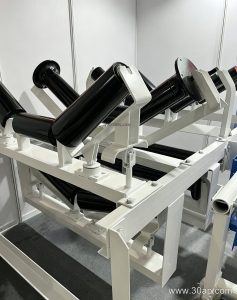
- Troughing idlers in two- or three-roll sets form the carrying side; common trough angles are 20°, 30°, 35°, and 45°.
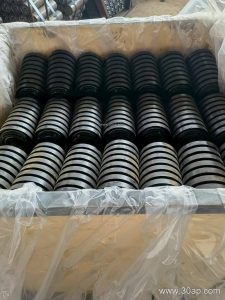
- Impact idlers with rubber rings are placed under loading points to cushion lump impact.
- Return idlers support the empty belt; flat and V-type forms are both used.
- Self-aligning idlers, including friction and tapered designs, help correct belt drift, often with about 1.5° to 2° forward tilt.
- Spiral and comb idlers are chosen where sticky material tends to build up on the roller surface.
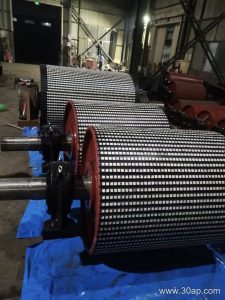
For comparison, a conveyor pulley at the head or tail does a different job entirely and should never be substituted for an idler in the support run.
Matching Roller Length to Belt Width
Roll length changes with belt width, trough angle, and idler arrangement. The values below are common reference examples for three-roll troughing sets, not fixed rules; side rollers and center rollers can differ.
| Belt width | Typical roll length (example) |
|---|---|
| B500 | about 200 mm |
| B650 | about 250 mm |
| B800 | about 315 mm |
| B1000 | about 380 mm |
| B1200 | about 465 mm |
| B1400 | about 530 mm |
| B1600 | about 600 mm |
| B1800 | about 670 mm |
| B2000 | about 750 mm |
Belt width and pulley diameter are independent choices; a 1200 mm belt does not dictate one pulley size, and shaft diameter must be calculated from load, span, and speed rather than guessed from belt width.
Buyer Checklist
Before ordering, confirm belt width, trough angle, idler spacing, load per roll, ambient conditions, and whether the belt carries abrasive ore, wet coal, or hot clinker. In a copper ore or iron ore line, abrasion resistance and seal quality deserve priority. In a power plant coal yard, flame-retardant and anti-static properties of the belt matter, and the idler should suit the same dusty, possibly wet environment.
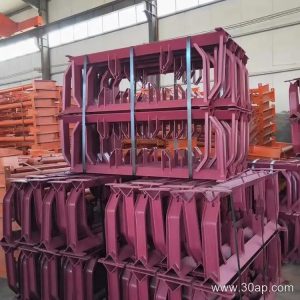
Ask for the bearing brand or grade, seal type, shell thickness, and surface finish. Specify whether you need a bare idler roller or a complete frame with conveyor bracket, and check that mounting dimensions match the existing conveyor structure. Keep a small stock of the most wearing positions, especially impact and return stations.
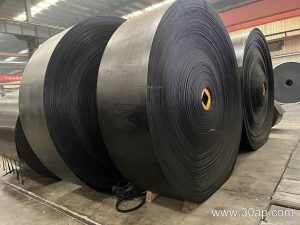
Related belt choices, such as EP conveyor belt, steel cord conveyor belt, or a heat resistant conveyor belt, should be reviewed together with the idler specification so that support spacing and roller load remain consistent across the whole conveyor.