What a Cement Plant Conveyor Pulley Does
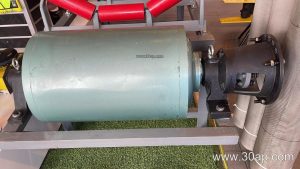
A cement plant conveyor pulley is the rotating drum that turns a conveyor belt, sets its tension, and keeps it tracking through the kiln feed, clinker, and additive circuits. In a cement plant, the pulley often works in hot, dusty, and abrasive conditions, so the drum body, shaft, bearing housing, and lagging all need to suit the duty. The same product is also called a conveyor drum or belt pulley, and these names describe the same assembly rather than different components.
Each pulley has a specific job. The drive pulley transmits torque from the gearbox to the belt. The tail pulley returns the belt and helps hold tension. The bend pulley changes belt direction without driving. These roles are not interchangeable, so a buyer should always state the position and function before discussing dimensions.
Construction and Surface Options
The basic build is a steel shell, a shaft, end discs, and bearing housings, usually mounted on a conveyor bracket or frame. Shell thickness and shaft diameter are chosen from torque, belt tension, and load, not from belt width alone. Common shaft sizes include Ø50, Ø60, Ø70, Ø80, Ø90, Ø100, Ø120, Ø140, and larger values up to Ø200, but the final figure is set by design calculation.
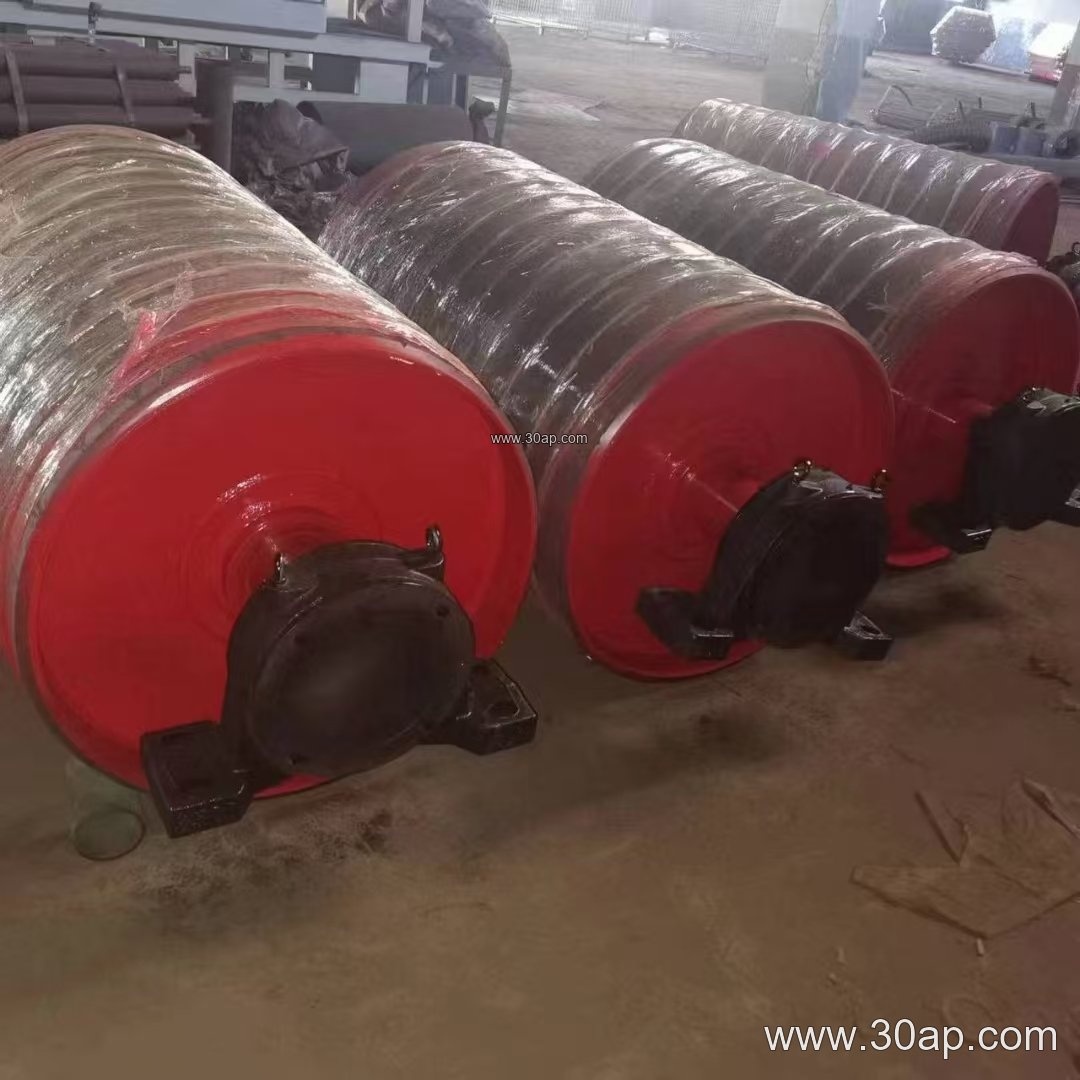
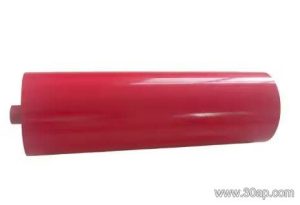
Surface treatment matters in cement service. Plain finish is used where material buildup is not a concern. Rubber lagging, applied by cold bonding or hot vulcanizing, improves grip on the drive pulley. Diamond and herringbone patterns help shed dust and water, while ceramic lagging suits high-wear drive positions. Lagging thickness is commonly 8, 10, 12, 15, or 20 mm.
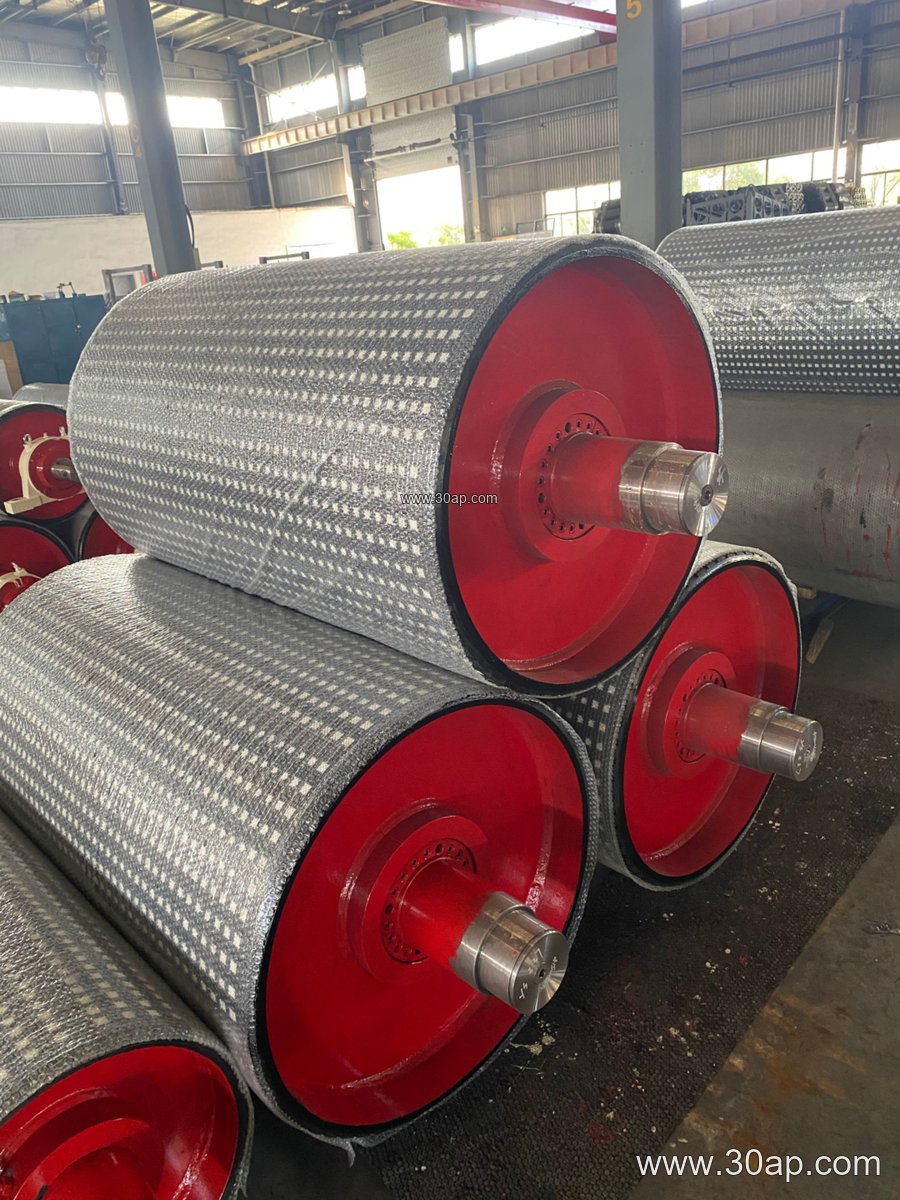
- Drive and head pulleys: lagged for grip and wear protection
- Tail and take-up pulleys: often plain or lightly lagged
- Bend and snub pulleys: selected for direction change and wrap angle
Where It Fits in the Cement Line
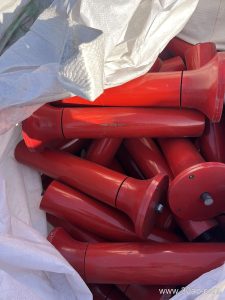
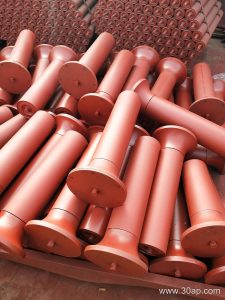
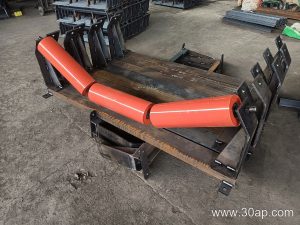
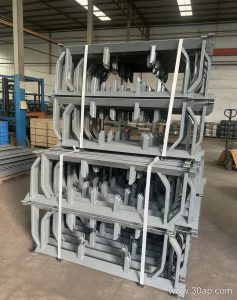
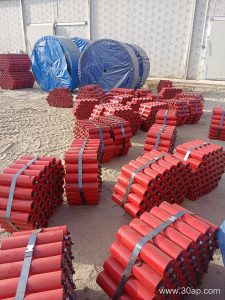
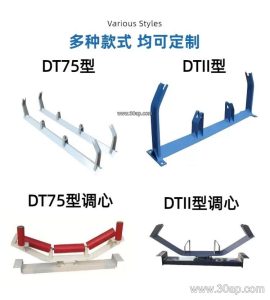
In the quarry and crushing stage, a cement plant conveyor pulley handles limestone and additives on belts that may be 800 mm to 1400 mm wide. In the clinker area, heat and fine dust are the main concerns, so a heat resistant conveyor belt may run alongside a pulley with suitable bearing protection. In the packing and bulk loading section, smaller drums on 650 mm or 800 mm belts are common. The pulley must match the belt, the idler roller set, and the conveyor bracket layout so the whole line tracks correctly.
| Parameter | Common Reference |
|---|---|
| Belt width | B400 to B2400 |
| Pulley diameter | Ø200 to Ø1800 |
| Face width | Usually wider than belt, e.g. B800 about 950 mm |
| Lagging thickness | 8, 10, 12, 15, 20 mm |
| Shaft diameter | Ø50 to Ø200, by torque and load |
Typical combinations such as B800 × Ø500 or B1200 × Ø1000 appear in plant layouts, but no single belt width fixes one diameter. The same belt may run on different drum sizes depending on tension, wrap angle, and space.
Buyer Checklist
Before ordering, confirm the pulley position, belt width, required diameter, shaft size, lagging type, and bearing arrangement. State the conveyed material and working environment, because a cement plant conveyor pulley in a clinker cooler area faces different conditions from one on a limestone stockpile belt. Ask for the face width and confirm it suits the belt, and check that the pulley matches the conveyor bracket and idler roller heights. A well-specified drum reduces belt slip, edge damage, and unplanned stops in the cement, quarry, or power plant line.