What a Steel Plant Conveyor Pulley Does
In a steel plant, raw materials such as iron ore, coke, limestone, and sintered ore move continuously between stockyards, crushers, screens, and furnaces. The steel plant conveyor pulley is the rotating drum that drives or redirects the conveyor belt carrying these heavy, often abrasive loads. Unlike a standard conveyor pulley in a light-duty warehouse, this component must tolerate dust, heat, and high tension while keeping the belt tracking true. It works together with the conveyor belt, idler roller, and conveyor bracket to form the backbone of the bulk handling line.
Drive pulleys transmit power from the gearbox to the belt through friction. Tail pulleys return the belt at the loading end, while bend pulleys change direction or adjust wrap angle around the drive. These roles are not interchangeable: a drive pulley needs high torque capacity and often lagging for grip, whereas a tail or bend pulley focuses on smooth rotation and alignment. Understanding this distinction helps maintenance teams avoid mismatched replacements.
Construction and Surface Options
A typical steel plant conveyor pulley is built from a rolled steel shell, welded end discs, a shaft, and bearing housings. The shell diameter and face width are matched to the belt width and the required belt wrap. Common face widths run slightly wider than the belt, for example B800 with about 950 mm face, B1200 with about 1400 mm, and B1400 with about 1600 mm. Diameters often range from Ø500 to Ø1250 for main drives, with smaller Ø320 to Ø630 units used for tail or bend positions. Shaft diameters are determined by torque and load—not by belt width alone—so a B1000 pulley might use a Ø120 or Ø140 shaft depending on the drive design.
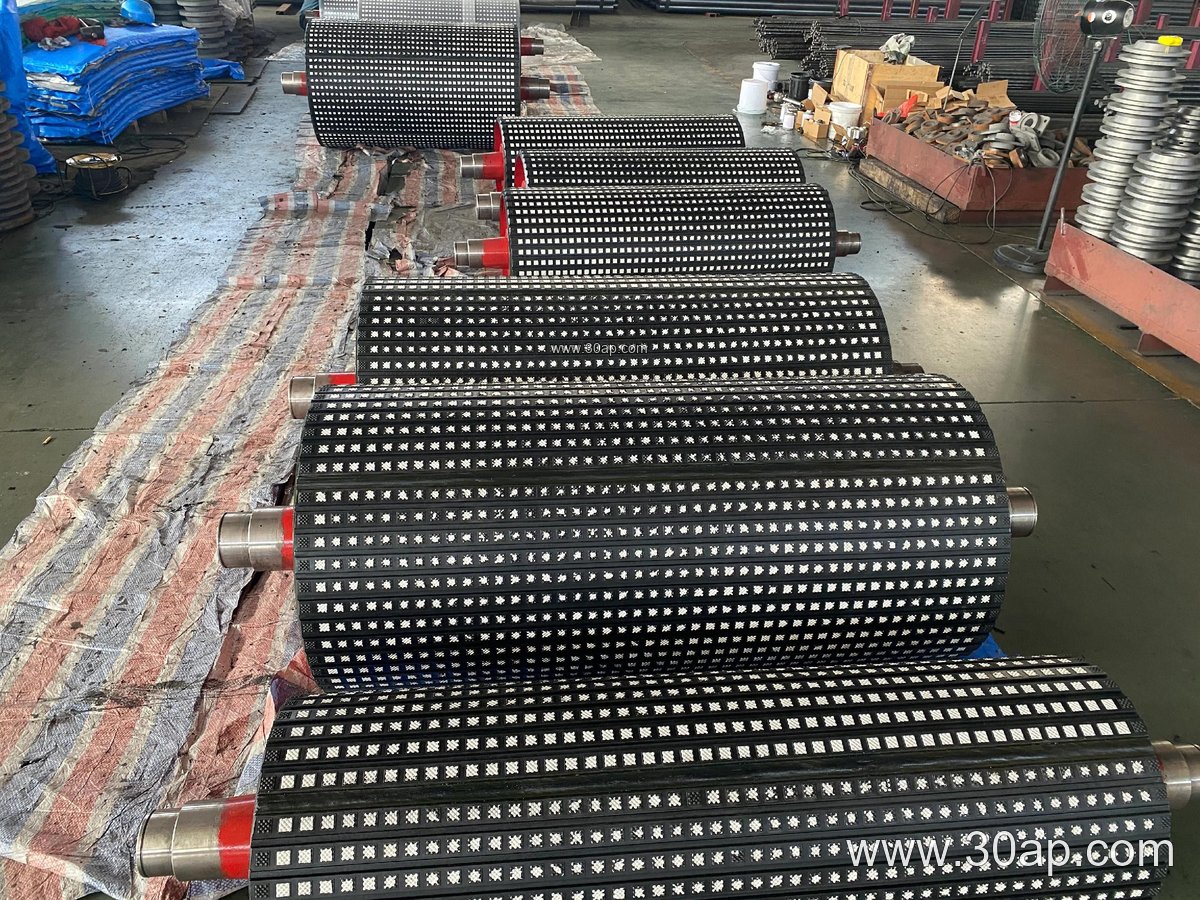
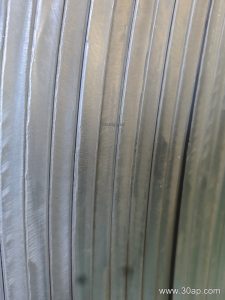
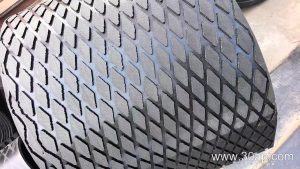
Surface treatment directly affects grip and wear life. Plain steel shells suit light loads or non-drive positions. Rubber lagging—applied by cold bonding or hot vulcanizing—improves friction and cushions impact. Diamond or herringbone grooving helps shed water and fines in dusty steel plant environments. Ceramic lagging offers high abrasion resistance for sinter and coke lines. Lagging thickness commonly falls between 8 mm and 20 mm, selected according to belt tension and material abrasiveness. The pulley works alongside a rubber conveyor belt or heat resistant conveyor belt, and the lagging choice should complement the belt cover rather than fight it.
Where It Fits in the Steel Plant Flow
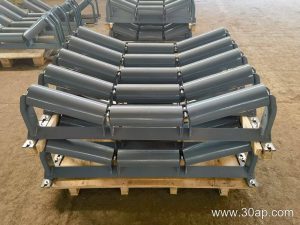
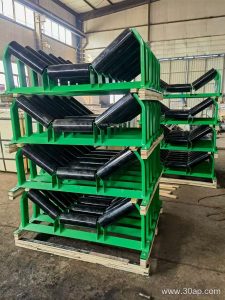
Steel plants use conveyor pulleys in several circuits: ore receiving, sinter plant feed, coke handling, and slag transport. In the sinter plant, heat resistant conveyor belt may carry hot material, so the pulley bearings and lagging must tolerate radiant heat. In the stockyard, a heavy-duty mining conveyor belt moves iron ore at high tension, demanding a drive pulley with robust shaft and bearing selection. The pulley also interacts with conveyor idler rollers that support the belt between pulleys; poor idler alignment can accelerate pulley lagging wear.
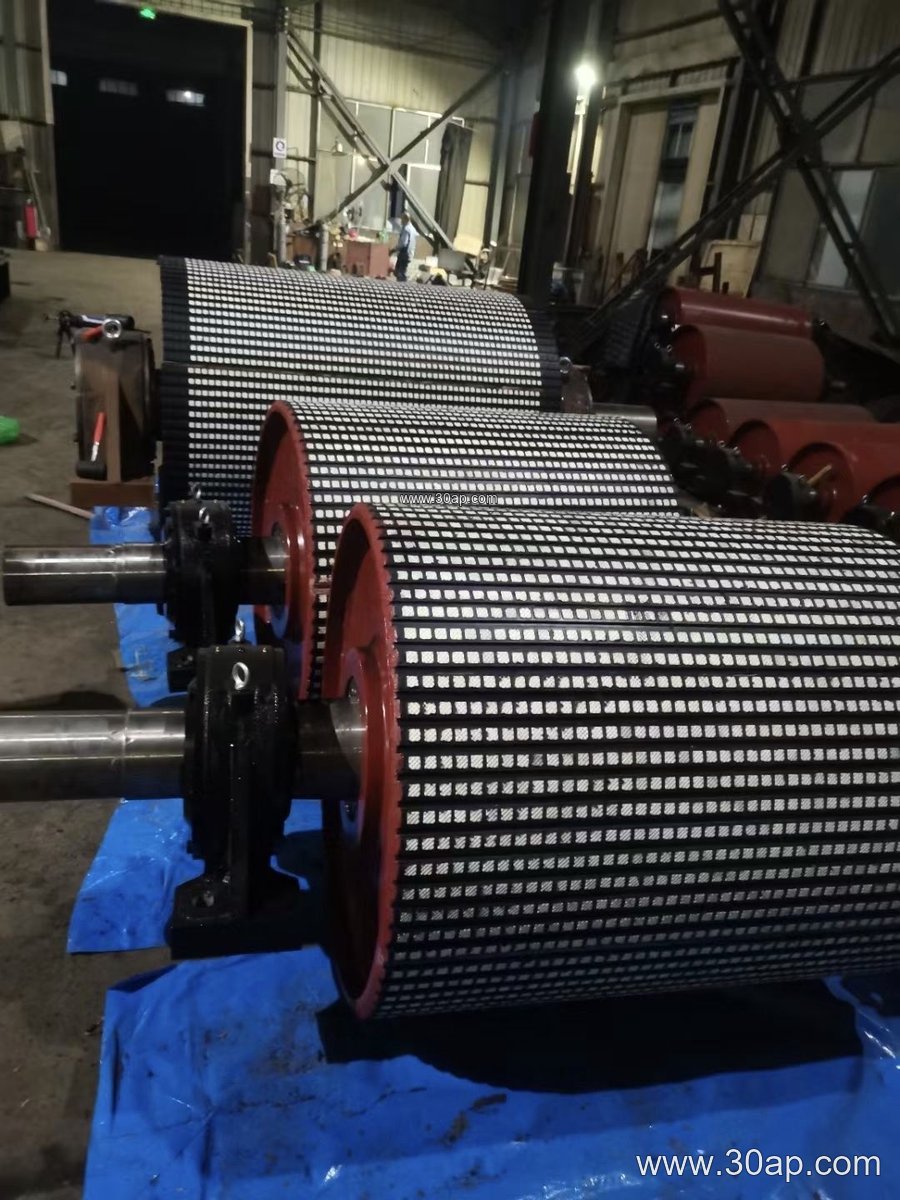
Bend pulleys are often found near tension take-ups or at transfer points where the belt changes direction. Tail pulleys at the loading zone may be fitted with wing-type or self-cleaning designs to prevent material buildup. Each position has its own demands, so a pulley ordered for one location should not be casually swapped to another without checking load and wrap angle.
Buyer Checklist for Steel Plant Conveyor Pulleys
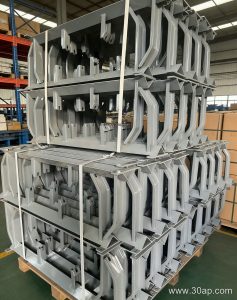
When specifying a steel plant conveyor pulley, gather the belt width, belt tension, pulley position, and material characteristics first. Then confirm the shell diameter, face width, shaft diameter, bearing type, and lagging specification. Ask for the balancing grade and runout tolerance, since vibration shortens bearing life. Verify that the lagging groove pattern suits the environment—diamond for wet or dusty conditions, plain for general dry service. Consider whether a conveyor bracket or mounting arrangement matches the existing structure. Finally, request dimensional drawings and material certificates for the shaft and shell; these documents matter more than a generic catalog number.
Maintenance teams should inspect lagging wear, bolt tightness, and bearing temperature regularly. A worn drive pulley lagging reduces grip and can cause belt slip, while a misaligned bend pulley leads to edge damage on the conveyor belt. Keeping spare lagging sheets and fasteners on hand reduces downtime in continuous steel plant operations.