What a Conveyor Idler Bracket Does on the Line
In a stone crushing circuit or a cement plant, the conveyor belt carries the load, but it never touches the structure directly. The conveyor idler bracket is the component that holds each idler roller at the correct height, angle and spacing so the belt runs true. Also called an idler frame or idler support bracket, this part bridges the conveyor stringer and the rotating roll. Get the bracket geometry wrong, and even a premium EP conveyor belt will misalign, spill material or wear its edges in weeks.
The bracket is not a passive shelf. It sets the trough profile, controls the transition from flat to troughed, and in some positions helps center the belt. That is why buyers in quarry, coal washing and power plant coal handling often treat the bracket as an engineered part, not a commodity.
How the Bracket Is Built
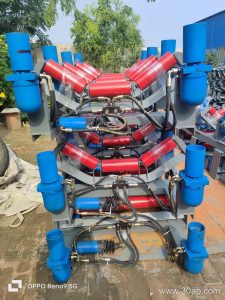
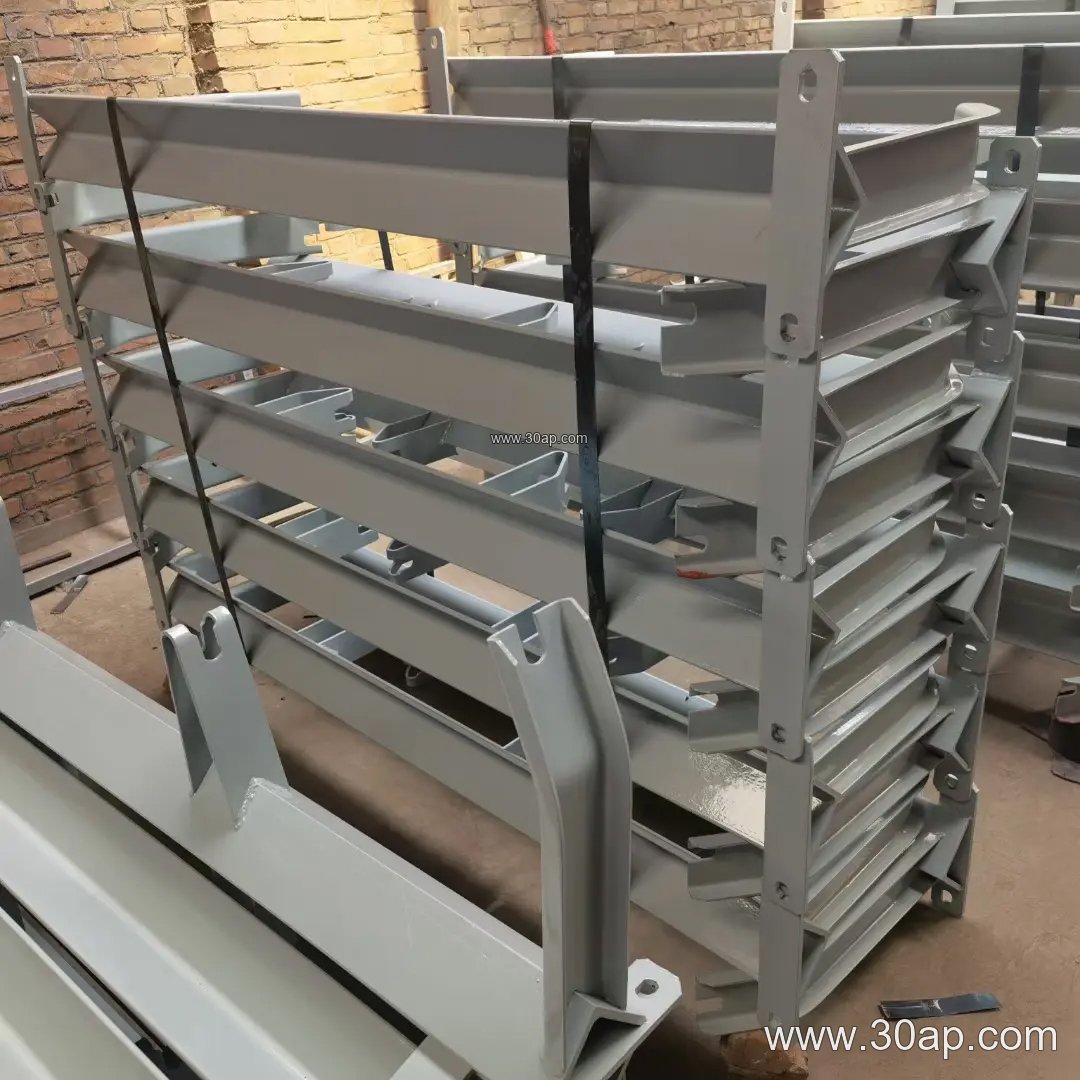
Most frames are fabricated from angle steel, channel steel or folded steel plate. A typical troughing bracket carries three idler rollers: one flat center roll and two side rolls set at a trough angle. The side arms are bent or welded to match that angle, and the mounting slots are punched to suit the idler shaft ends.
Common material choices include:
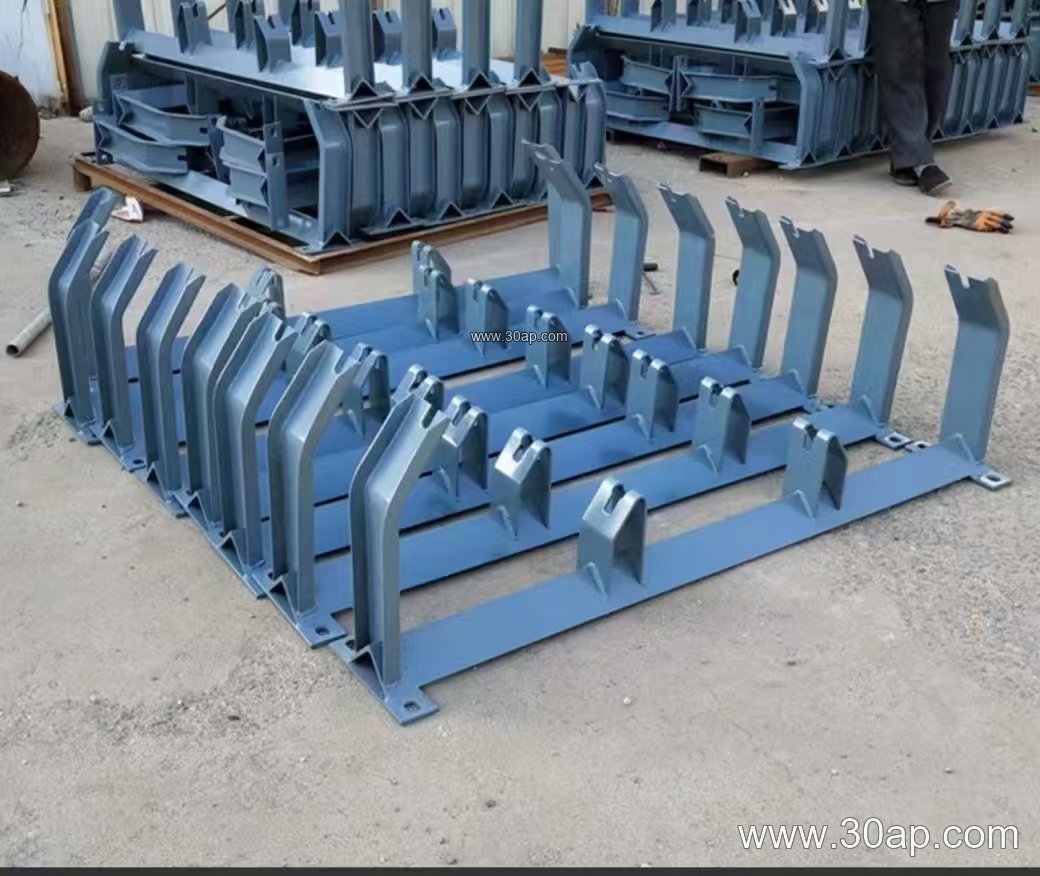
- Angle steel frames for light to medium duty lines
- Channel steel frames for wider belts and heavier loads
- Folded plate brackets for compact, stiff designs
Surface treatment is usually painted or galvanized. The bracket must resist vibration and corrosion without deforming, because a bent arm changes the trough angle and throws the belt off center. On a 1200mm wide conveyor belt running abrasive ore, a flimsy bracket is often the first part to fail.
Types and Where They Sit
Brackets are grouped by position and function. The main families are:
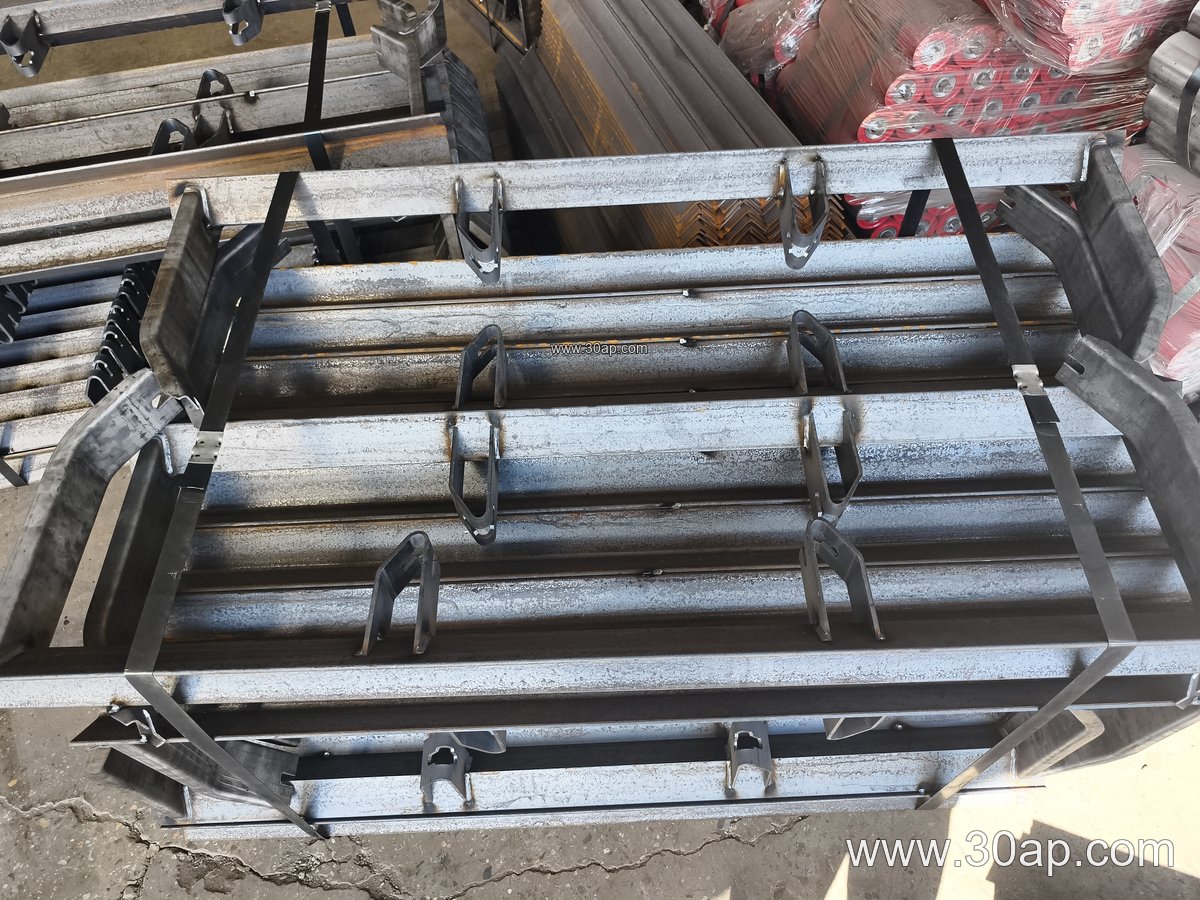
- Troughing brackets (carrying side)
- Transition brackets near pulleys
- Return brackets and V-return brackets (return side)
- Impact brackets under loading points
- Self-aligning brackets for belt training
- Adjustable brackets for varying trough angles
A transition bracket sits between the last full troughing station and the conveyor pulley. It gradually flattens the belt so it enters the pulley without stress. Return brackets support the empty belt, and V-return types use two rolls in a V to help center it. Impact brackets are reinforced and placed below the chute, where falling rock hits the belt. Self-aligning brackets pivot slightly to steer a drifting belt back on track.
Adjustable brackets allow the trough angle to be changed on site, usually between 20, 30, 35 and 45 degrees. Fixed brackets are welded or bolted at one angle. Forward-leaning brackets, often set at about 1.5 to 2 degrees, add a small lead angle that helps keep the belt centered.
Matching Bracket, Belt and Roll
Specifying a bracket means matching three things: belt width, trough angle and roller diameter. These are related but not locked together. A B800 belt might run at 30 or 35 degrees with Ø89 or Ø108 rollers, depending on load and speed. A B1200 line in a power plant coal yard often uses 35 or 45 degrees with Ø133 rollers. Wider belts such as B1400, B1600 or B1800 need longer cross beams and heavier frames.
The table below shows common reference combinations, not fixed rules:
| Belt width | Typical trough angle | Common roller diameter |
|---|---|---|
| B500, B650 | 20–30 degrees | Ø89 |
| B800, B1000 | 30–35 degrees | Ø108, Ø133 |
| B1200, B1400 | 35–45 degrees | Ø133, Ø159 |
| B1600, B1800 | 35–45 degrees | Ø159, Ø194 |
| B2000, B2200 | 35–45 degrees | Ø194 |
Installation hole spacing and cross beam length vary with belt width and trough angle, so they are always confirmed by design, not assumed. A bracket for a 1000mm conveyor belt will not fit a 1400mm frame.
Applications Across Bulk Handling
In a limestone quarry, troughing brackets support a high abrasion resistant conveyor belt through the primary crushing stage. In a coal washing plant, flame retardant conveyor belt and self-aligning brackets work together to keep the belt tracking through wet, sticky conditions. Cement plants use impact brackets under clinker chutes, while power plant coal handling relies on transition brackets near the drive and tail pulleys. Sand and gravel lines, fertilizer plants and grain silos all use the same basic bracket families, sized to their belt and load.
Where a corrugated sidewall conveyor belt or pipe conveyor belt is used, bracket layout changes, but the principle holds: the bracket positions the idler roller, and the roller supports the belt.
Buyer Checklist
- Confirm belt width and the required trough angle before ordering.
- Match bracket mounting slots to the idler shaft diameter.
- Check frame material and finish against the environment.
- Decide between fixed and adjustable brackets based on maintenance needs.
- Order transition and impact brackets together with standard troughing frames.
- Keep spare brackets for high-wear positions such as loading zones.
A well-chosen conveyor idler bracket is a small cost item that protects the belt, the rollers and the pulley. For more on matching belts and components, visit www.example.com/conveyor-idler-bracket or review our notes on conveyor belt selection.