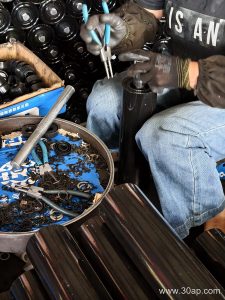
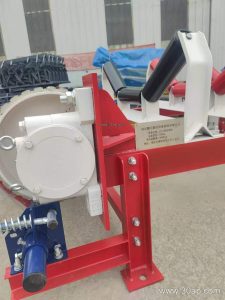
What a Discharge-End Pulley Does
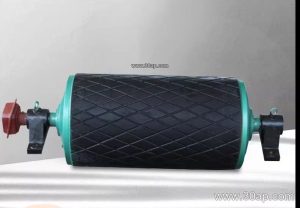
The discharge-end pulley, also called the head pulley or unloading pulley, is the driven component that turns the conveyor belt at the delivery point. It sets belt speed, supports the loaded belt as it rounds the terminal, and throws material into the chute or stockpile. In a quarry or aggregate line, this pulley often works with an abrasion resistant conveyor belt and a series of idler rollers to keep stone moving at a steady rate.
Because it sits at the head of the conveyor, its design must handle the full belt tension plus the impact of the load release. A discharge-end pulley is not a tail pulley or a bend pulley; those serve different positions and functions. When you see a conveyor pulley at the drive end of a bulk material conveyor, it is usually this head pulley type.
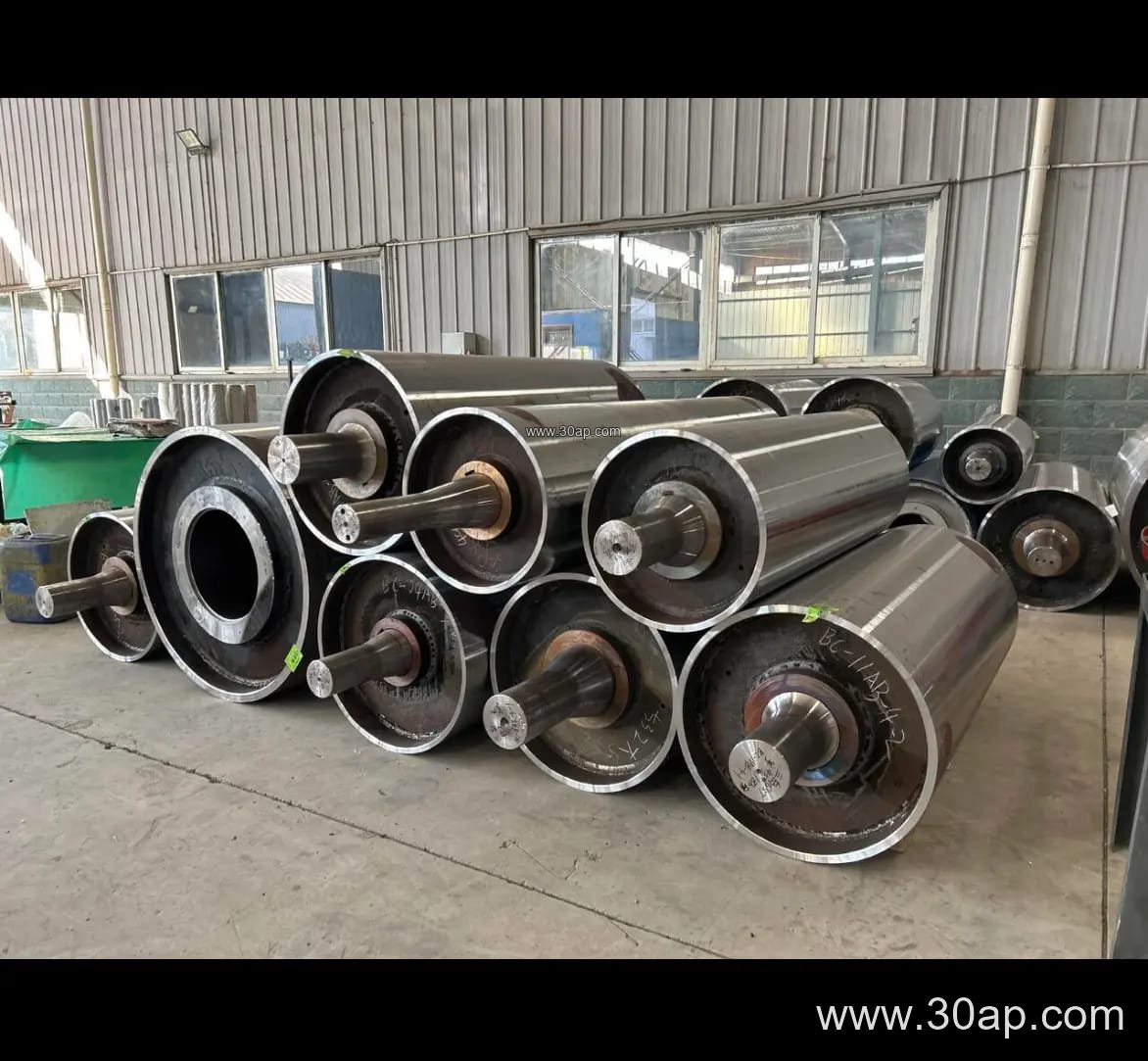
Construction and Surface Options
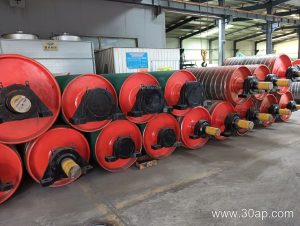
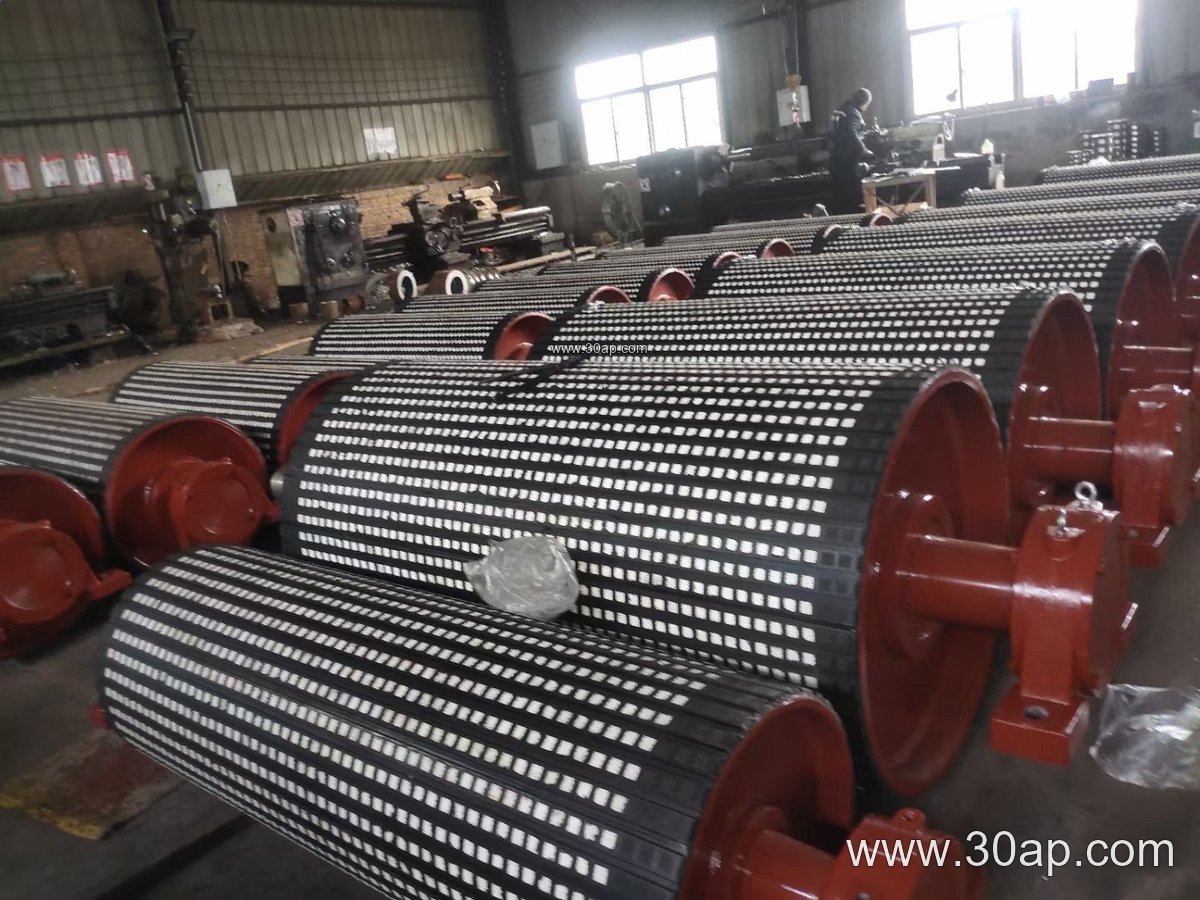
A typical discharge-end pulley is built from a steel drum with welded end discs and a shaft that transfers torque from the drive. The shell may be plain or covered with rubber, ceramic, or other lagging to improve grip and protect the belt. Common surface forms include smooth, diamond grooved, and herringbone lagging. Lagging thickness often falls in the 8 to 20 mm range, with 10 or 12 mm being common for general service.
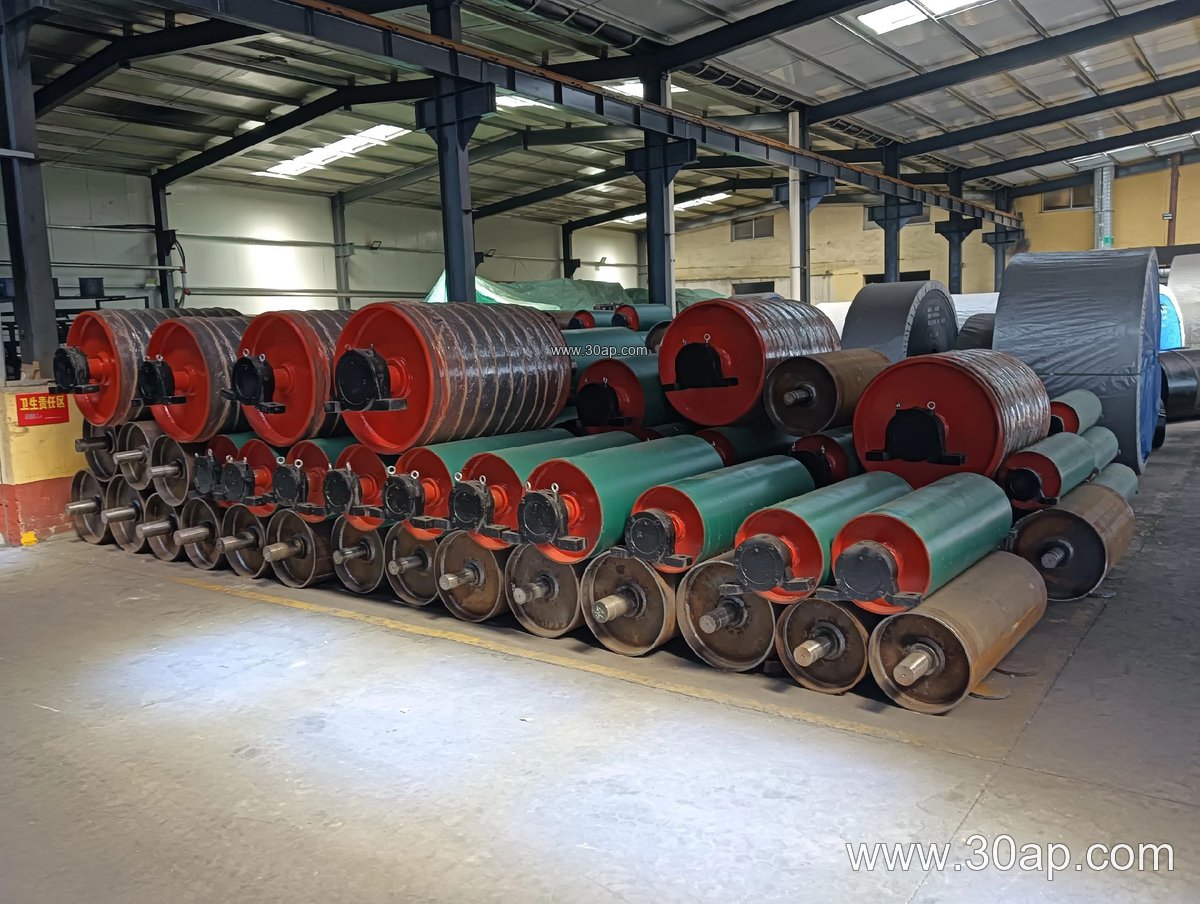
The pulley diameter and face width are selected together with the belt width and the duty. For example, a B800 conveyor might use a Ø500 discharge-end pulley, while a B1200 system could call for a Ø1000 unit. These are reference combinations, not fixed rules. The shaft diameter is determined by torque and load, with common sizes such as Ø80, Ø100, and Ø120 mm appearing in many designs. A discharge-end pulley does not have a standard shaft size tied to belt width alone.
Where It Fits in the Plant
You will find the discharge-end pulley at the delivery end of a conveyor in a limestone mine, a coal washing plant, or a cement plant clinker line. It works with the conveyor belt to discharge material into a crusher, a screen, or a stockpile. In a power plant coal handling system, a flame retardant conveyor belt may run over a lagged head pulley to reduce slip. In a port bulk terminal, a wide belt such as 1800 mm or 2000 mm may be used, and the pulley face width is normally wider than the belt to allow for misalignment.
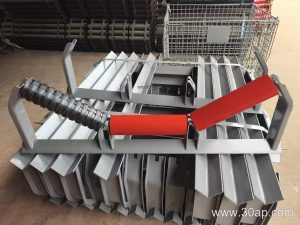
The pulley is supported by conveyor brackets and bearing housings, and it may be close to the take-up or tensioning arrangement. A discharge-end pulley is not interchangeable with a tail pulley or a bend pulley, even though all are conveyor pulleys. Each position has its own load and belt-tracking requirements.
Selection Notes for Buyers
When specifying a discharge-end pulley, start with the belt width, the belt type, and the expected belt tension. A steel cord conveyor belt or a heavy-duty mining conveyor belt may require a larger shaft and a stronger shell than a lightweight fabric core belt. The lagging choice matters too: diamond lagging is common for general grip, while ceramic lagging may suit high-wear areas. For coal mining or underground mining conveyors, flame retardant and anti-static properties are often requested for the belt, and the pulley should be compatible with the belt cover.
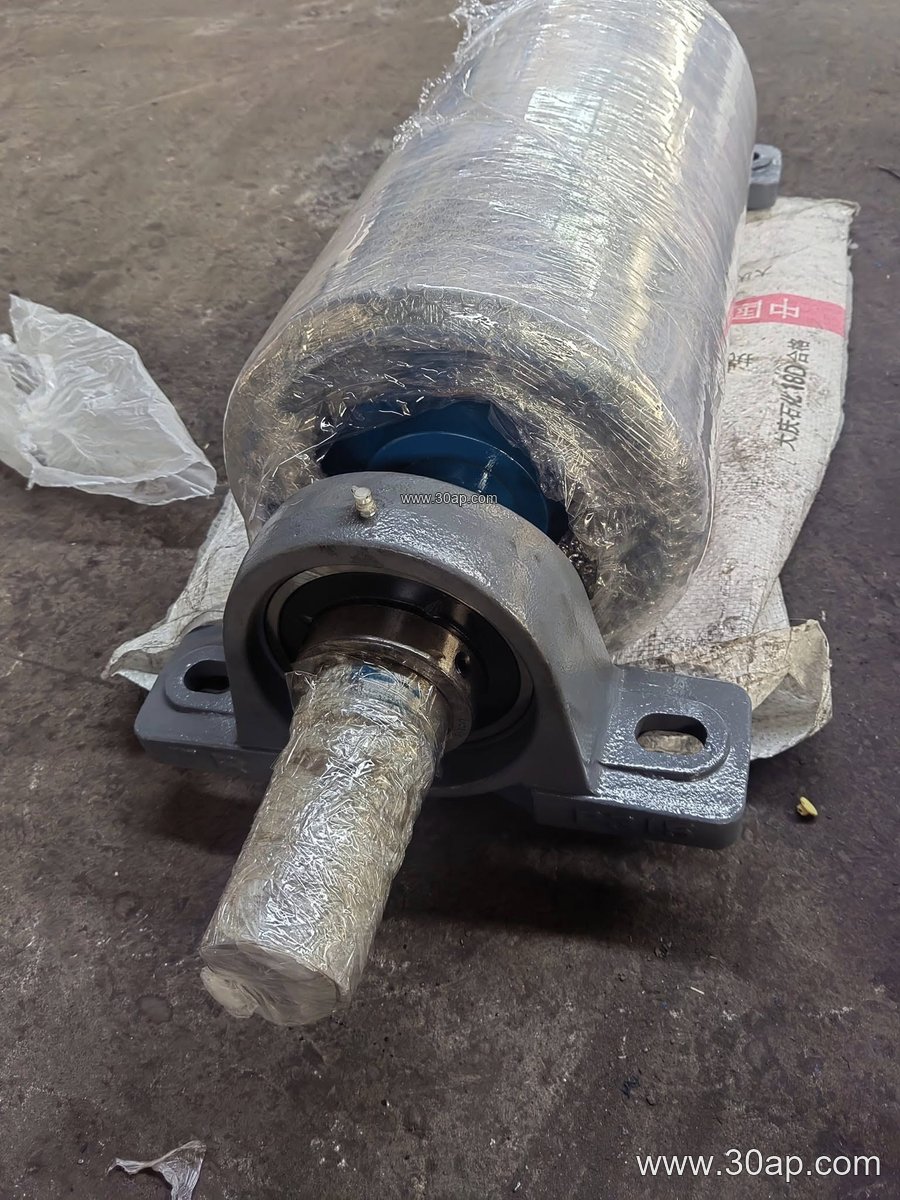
Ask for the pulley diameter, face width, shaft diameter, lagging type and thickness, and bearing size. A B650 system might use a Ø400 pulley with a 10 mm lagging, while a B1400 conveyor could use a Ø800 pulley with 15 mm lagging. These are examples, not universal specifications. The discharge-end pulley should be balanced and aligned with the conveyor frame, and the belt should track centrally as it leaves the pulley.
Maintenance and Belt Interaction
Inspect the discharge-end pulley for lagging wear, material buildup, and bearing condition. A worn lagging can cause belt slip and reduce discharge efficiency. Keep the pulley clean and check that the conveyor belt is not misaligned. In dusty operations such as a sand making plant or a stone crushing line, regular cleaning helps prevent premature wear. The pulley works together with the idler rollers and the conveyor bracket system, so a problem at the head end may show up as belt mistracking along the whole conveyor.
For replacement, match the pulley to the existing shaft and bearing arrangement, and confirm the lagging surface suits the material being handled. Whether the plant is a copper ore concentrator or a fertilizer granulation line, the discharge-end pulley remains the key transfer point at the head of the conveyor.