What a High-Capacity Trough Idler Does on a Conveyor
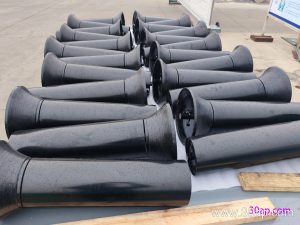
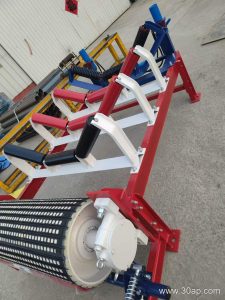
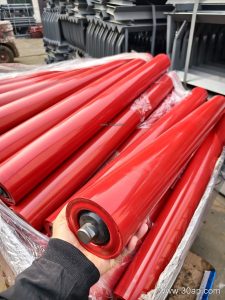
A high-capacity trough idler is the carrying roller assembly that supports the loaded run of a conveyor belt and forms it into a trough. The three-roll arrangement lifts the belt edges so bulk material sits in a stable pocket instead of spilling over the sides. In a quarry, a limestone mine, or a cement plant feed line, this is the part that takes the daily load, the dust, and the impact of falling rock. The same assembly is often called a heavy-duty trough idler or a heavy-duty carrying idler set, and those names describe the same product: a reinforced troughing station built for high tonnage and wide belts.
It is not a drive pulley, a tail pulley, or a bend pulley. Those are conveyor pulleys that transmit power or change belt direction. The trough idler only carries the belt and the material, and it is mounted on a conveyor bracket or frame that fixes the roll angles.
How the Assembly Is Built
A troughing set usually has three rolls: a center roll and two side rolls. The trough angle, commonly 20, 30, 35, or 45 degrees, sets how deep the belt sits. A steeper angle holds more material but increases the load on the belt edges. For high-capacity service, the rolls are made with thicker steel tube, larger shafts, and heavier bearings so they can run at higher loads without overheating.
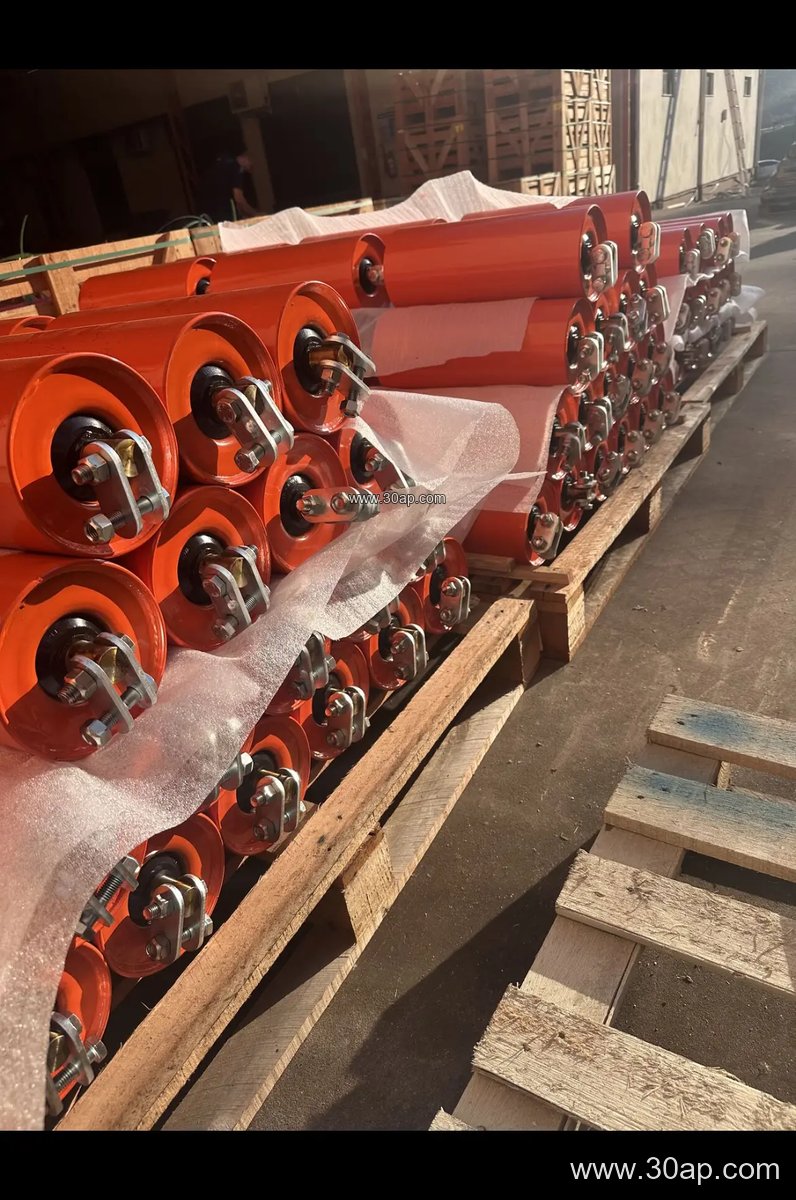
Roll surfaces vary by duty. Plain steel tube suits clean, abrasive-free material. Rubber rings absorb impact at transfer points. Nylon or ceramic covers help where sticky material builds up or where wear is severe. Seals matter as much as the tube: a good labyrinth seal keeps fines out of the bearing, which is where most idler failures begin.
Reference Dimensions and Bearing Options
The figures below are common reference values, not fixed rules. Final roll length depends on belt width, trough angle, and the roll arrangement, and the center roll may differ from the side rolls.
| Belt width | Typical roll length, three-roll trough | Common roll diameter |
|---|---|---|
| B500 | about 200 mm | Ø63 to Ø89 |
| B650 | about 250 mm | Ø76 to Ø102 |
| B800 | about 315 mm | Ø89 to Ø108 |
| B1000 | about 380 mm | Ø102 to Ø133 |
| B1200 | about 465 mm | Ø108 to Ø159 |
| B1400 | about 530 mm | Ø127 to Ø159 |
| B1600 | about 600 mm | Ø133 to Ø178 |
| B1800 | about 670 mm | Ø159 to Ø194 |
| B2000 | about 750 mm | Ø178 to Ø219 |
Bearings are usually chosen by load, speed, and shaft size rather than by belt width alone. Common sizes include 6204, 6205, 6305, 6306, 6308, and 6310. A larger roll does not automatically mean a larger bearing, and one belt width does not lock you to one pulley diameter or one shaft size.
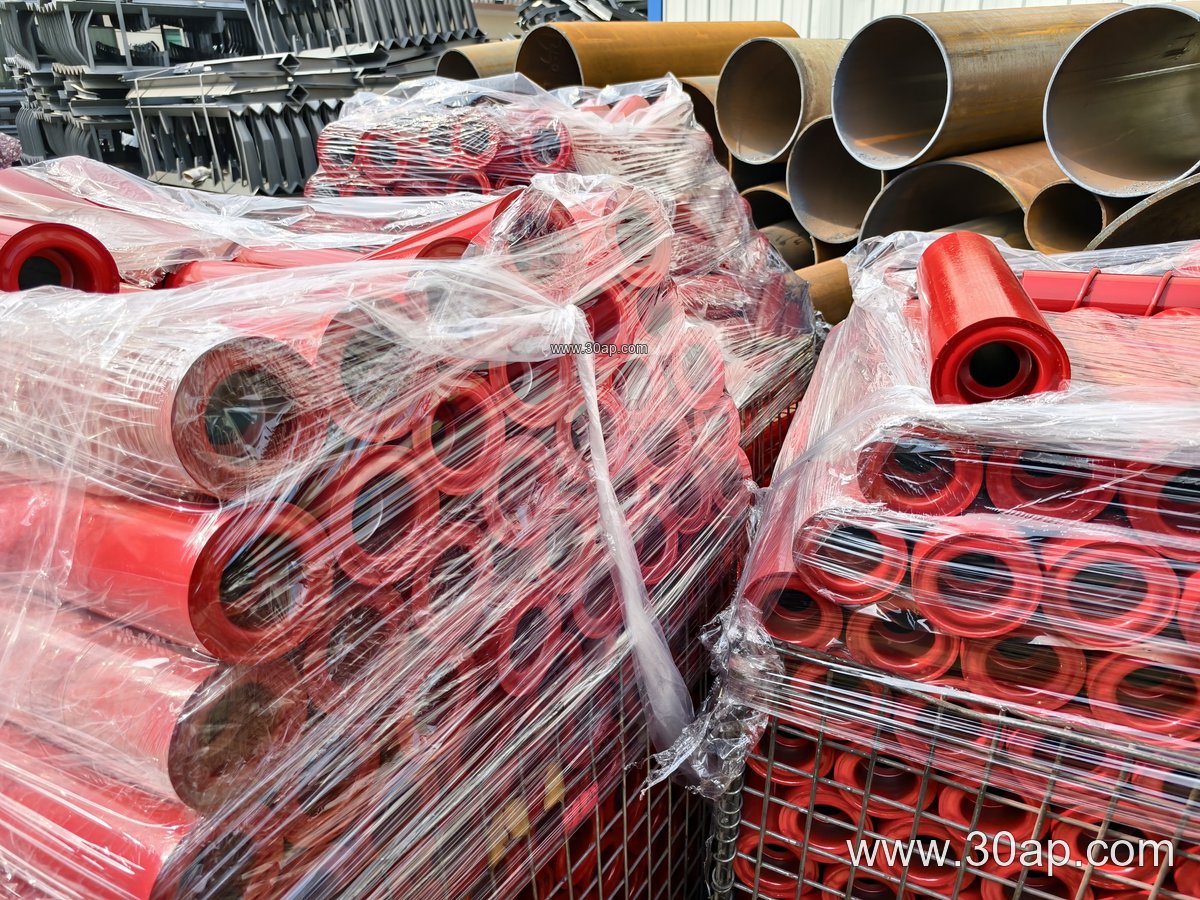
Where High-Capacity Trough Idlers Are Used
The heaviest duty is usually found in a coal mine or an underground coal mining conveyor, where the belt runs continuously and carries lump coal and rock. In a copper ore or iron ore line, the troughing stations see sharp, dense material that wears through light rolls quickly. Power plant coal yards and port ship loading conveyors also rely on wide, high-capacity troughing sets because the belt may be 1500 mm or 1800 mm wide and the tonnage is high.
The matching conveyor belt matters too. A steel cord conveyor belt or a heavy-duty fabric belt such as an EP400 or EP500 belt can carry more tension and needs troughing that holds its shape under load. Abrasion resistant conveyor belts and flame retardant conveyor belts are common choices in these lines, and the idler surface should be selected to match the belt and the material.
What Buyers Should Check Before Ordering
- Confirm the belt width and the actual trough angle, not just the nominal size.
- Ask for the roll diameter, shaft size, and bearing number together; do not assume one follows from the other.
- Check the seal design and the tube wall thickness for the expected dust and impact level.
- Match the roll surface to the material: rubber rings for impact, ceramic or nylon for sticky or abrasive loads.
- Verify that the conveyor bracket and frame spacing suit the roll length and the belt line.
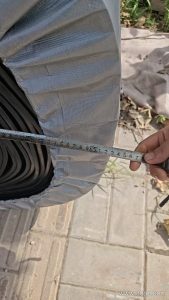
For a new line, the troughing layout should be checked against the conveyor pulley arrangement and the belt tension, since the trough shape affects belt tracking. For a replacement order, the fastest route is to measure the old roll, the shaft end, and the bracket hole spacing, then confirm the bearing number on the roll end. A high-capacity trough idler is a simple part, but getting the dimensions and the bearing right is what keeps a bulk handling line running through the next shift.