What the Tail Drive Pulley Does
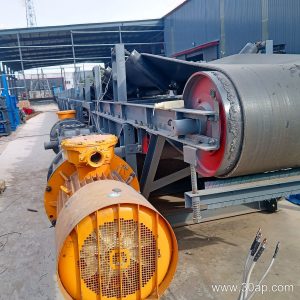
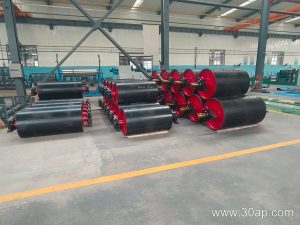
A tail drive pulley is a driven pulley mounted at the tail end of a belt conveyor, and it is the component that actually pulls the belt around its return path. In many installations this pulley is the drive source itself, working together with a gearbox and motor instead of relying on a separate head drive. The tail drive pulley (also called a tail-end drive drum) must transmit torque into the belt while keeping the belt centered, so its shell, shaft, lagging and bearings are chosen as a matched set.
This is not a bend pulley and not a conventional tail pulley in a head-drive arrangement. A bend pulley only changes belt direction, and a plain tail pulley simply redirects the return strand. On a tail drive pulley, the same location carries drive torque, so shaft size, keyway, bearing rating and lagging friction all matter more than they would on a non-driven drum.
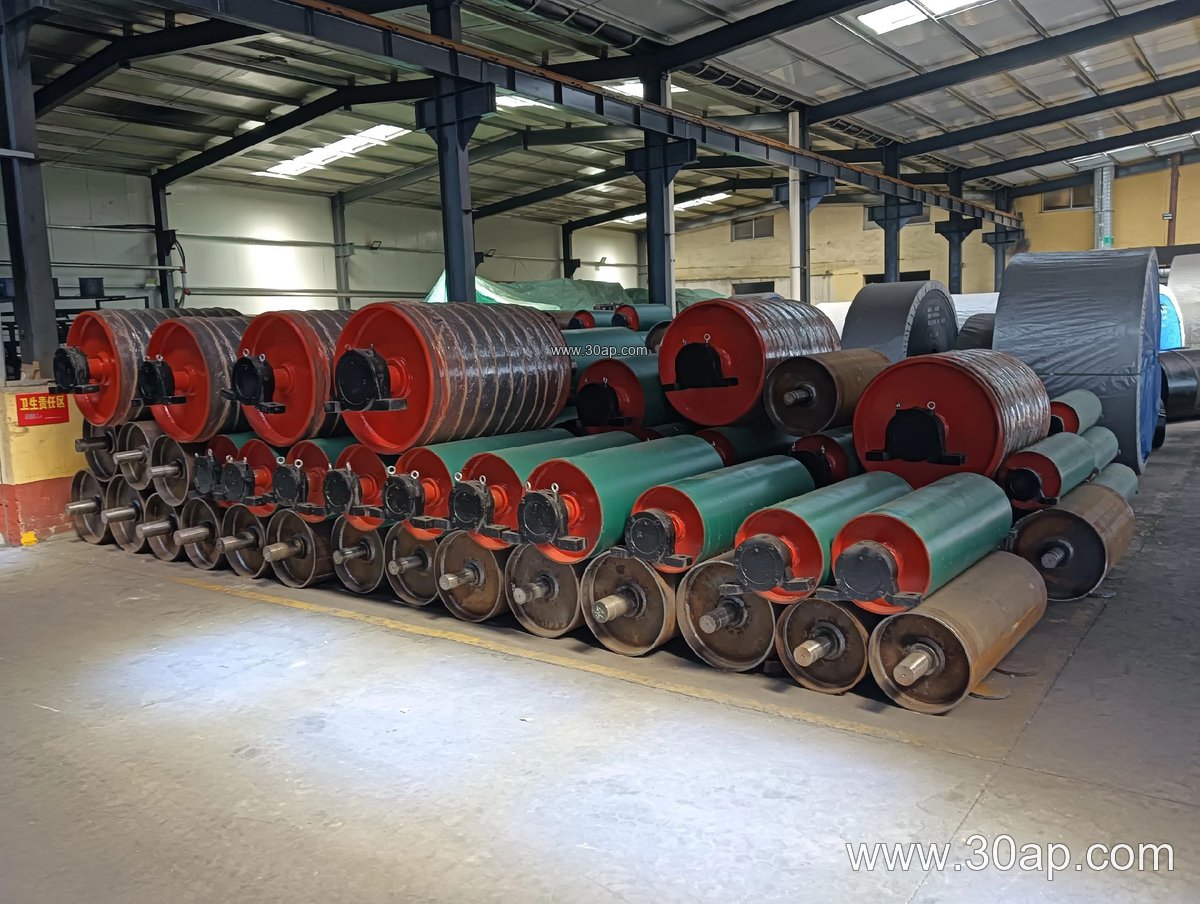
Construction and Surface Options
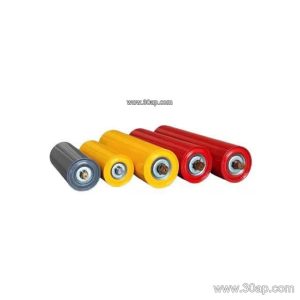
The body is usually a welded steel shell with machined end discs, a through shaft or stub shafts, bearing housings, and a lagged surface to raise friction between drum and belt. Lagging may be plain rubber, diamond pattern, herringbone, ceramic, hot-vulcanized or cold-bonded rubber, with common thicknesses of 8, 10, 12, 15 or 20 mm depending on the duty. Plain face is sometimes used where the belt underside is sensitive or where a snub arrangement already provides wrap angle.
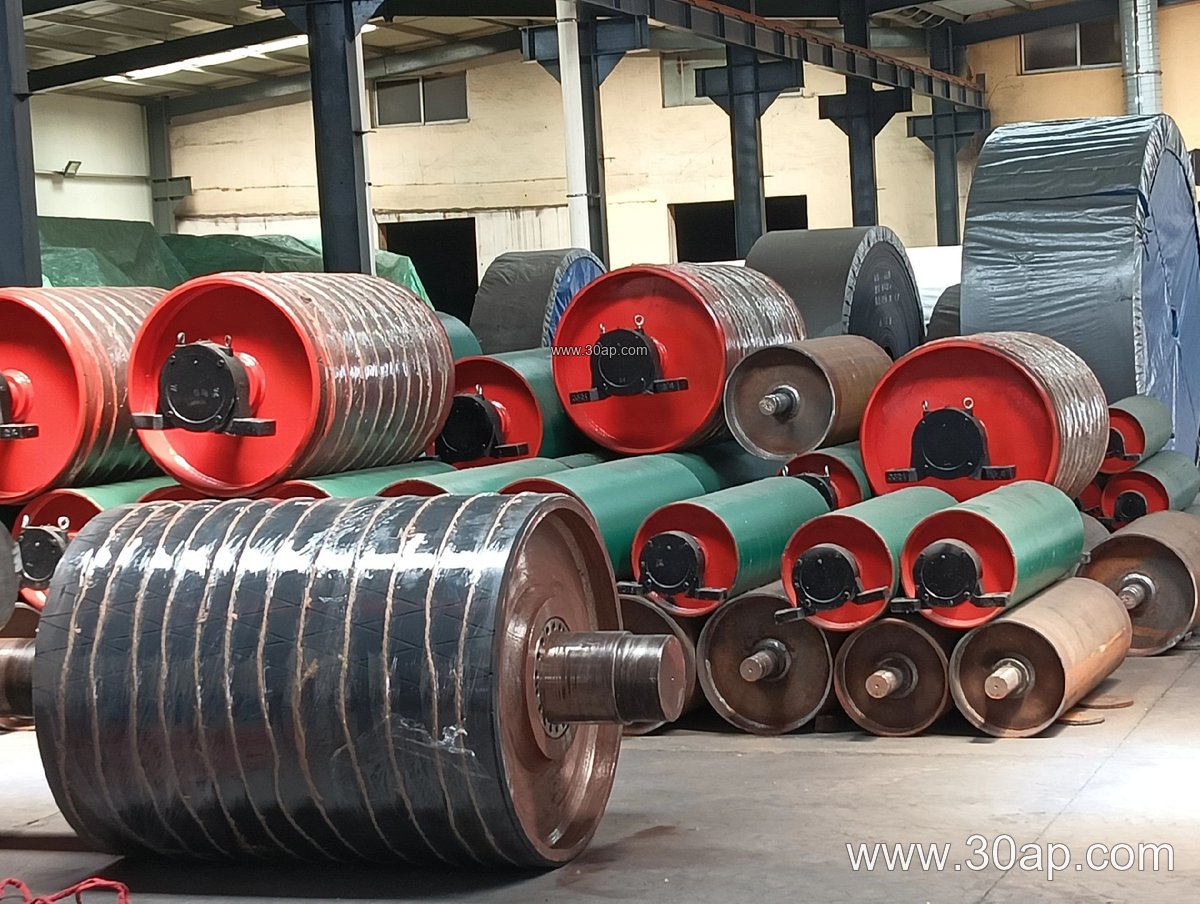
Because the tail drive pulley sees the belt on its dirty side, the lagging choice is often matched to the material being carried. A quarry or crusher line handling abrasive stone may favor high abrasion resistant lagging, while a coal preparation plant handling flame retardant conveyor belts will pay attention to antistatic behavior of the whole system, not only the belt. Shaft diameters are commonly in the range of Ø50 to Ø200 mm, but the final size follows torque and bearing load rather than belt width alone.
Typical Duty Points and Industries
Tail drive pulleys appear where a conveyor is short, where space at the head is tight, or where the layout favors pulling from the return end. You will find them in sand and gravel plants, limestone quarries, cement clinker lines, power plant coal handling, and port bulk terminals. In a crushing and screening circuit they often sit under a discharge chute, so dust and fines are a constant presence. In a fertilizer or grain silo installation, the same drum may be specified with a smooth or lightly lagged face to protect the belt.
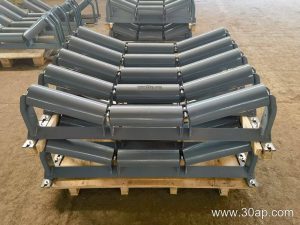
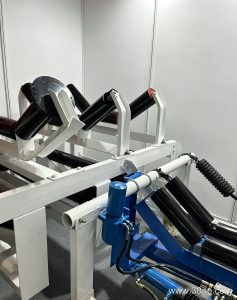
They also work alongside idler rollers, conveyor brackets and the conveyor belt itself, and the alignment of all four determines how long the lagging lasts. If the belt is a heavy-duty mining conveyor belt or a multi-ply fabric core conveyor belt, the drum diameter should be checked against belt construction to avoid excessive flexing at the splice.
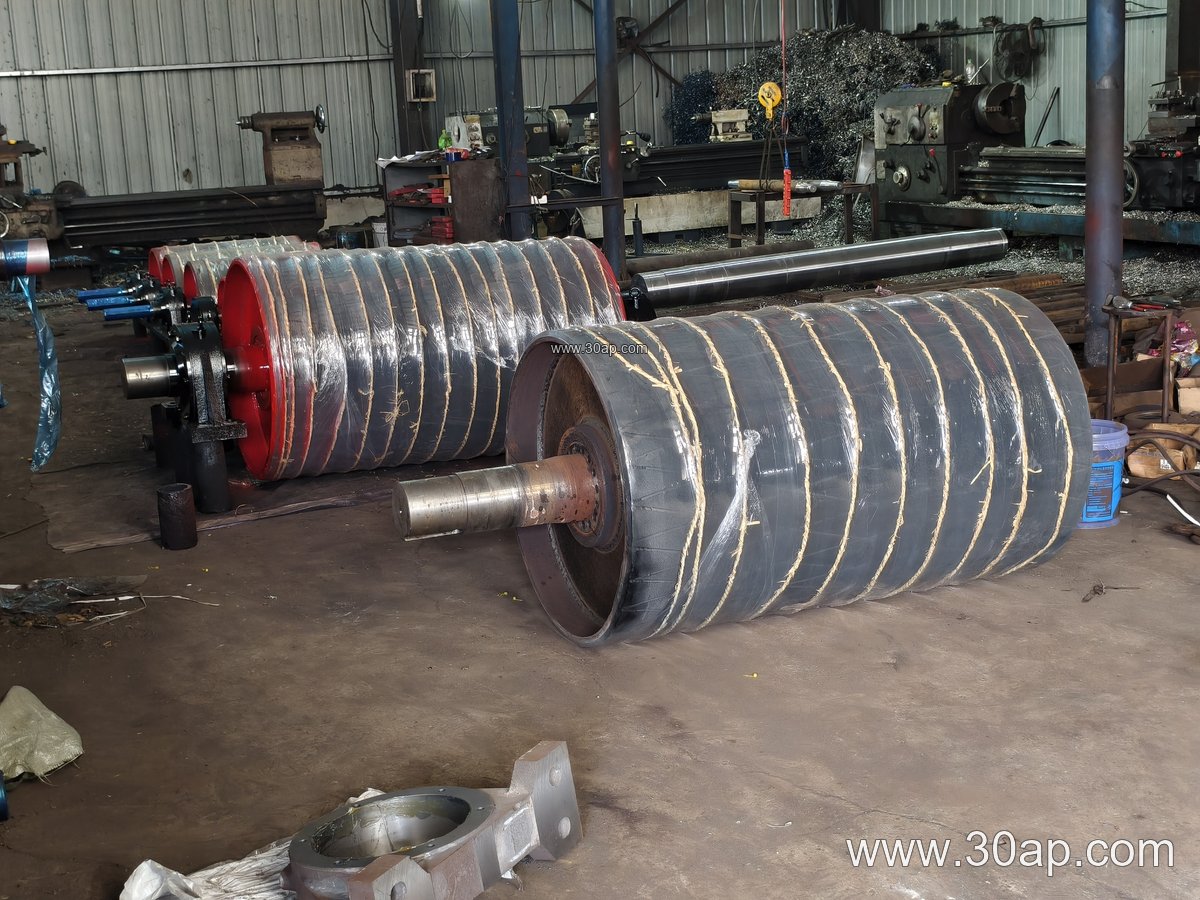
Sizing Reference for Buyers
The table below lists common reference ranges. These are typical values for discussion, not fixed combinations; a B1200 belt may run with Ø800 or Ø1000 depending on tension and wrap angle.
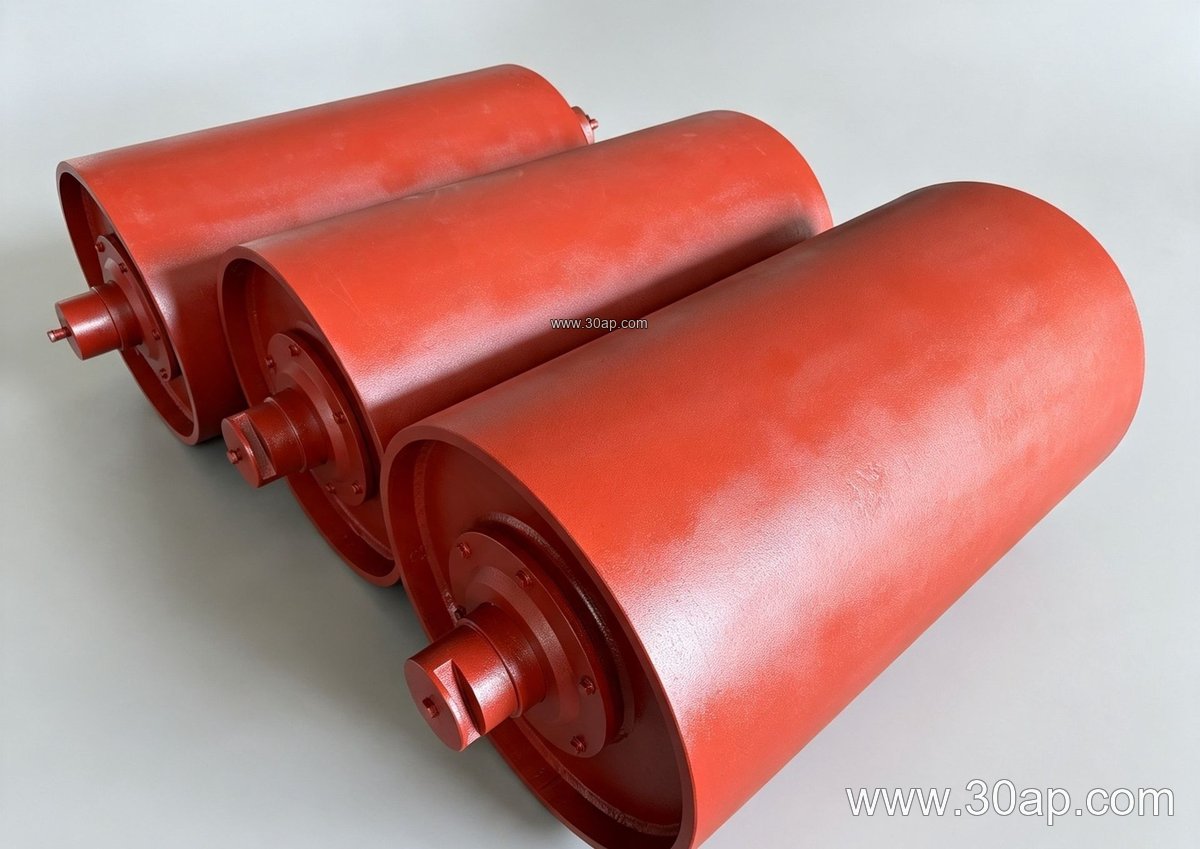
- Belt width B400 to B2400, with face width usually slightly wider, for example B800 about 950 mm and B1400 about 1600 mm.
- Drum diameter from Ø200 to Ø1800, selected by belt tension and required wrap.
- Shaft diameter Ø50 to Ø200, determined by torque and load, never by belt width alone.
- Lagging thickness 8 to 20 mm, with diamond or herringbone pattern for wet or dusty conditions.
When comparing a tail drive pulley with a head drive pulley, remember the drive position changes the tension distribution along the belt. A drive at the tail can reduce tension in the carrying strand but raises it on the return side, which affects take-up design and the choice of conveyor pulley bearings.
Selection and Maintenance Notes
Ask for the belt specification first: an EP conveyor belt, NN conveyor belt or steel cord conveyor belt each has its own minimum pulley diameter guidance. Then confirm the lagging type, the shaft and bearing assembly, and whether the drum will be supplied with a motorized drive or a separate gearbox. For hot material such as cement clinker, a heat resistant conveyor belt and a suitable lagging compound should be reviewed together. For underground coal mining conveyor belts, flame retardant and antistatic properties of the belt are usually the governing requirement, and the drum should be specified to match.
On site, check lagging wear, bolt tightness, bearing temperature and belt tracking at every scheduled stop. A worn tail drive pulley surface reduces grip and can cause slip, which in turn damages the belt cover. Re-lagging is often more economical than replacing the whole drum, provided the shell and shaft are still within tolerance.