What a Food Grade Conveyor Belt Is
A Food Grade Conveyor Belt is a belt designed for conveying food, food ingredients, and food-contact packaging where cleanliness and contamination control matter. It is not a single rubber compound but a product family: the cover, carcass, and any surface profile are chosen so the belt can be cleaned, resist oils and fats, and avoid transferring odors or harmful substances to the product. In a processing line, the belt usually runs on a conveyor pulley at the head and tail, supported by an idler roller or a slider bed, and is held in line by a conveyor bracket and frame.
Food Grade Conveyor Belt is the natural product name used across bakeries, meat and poultry plants, dairy lines, confectionery, fruit and vegetable packing, and prepared-food operations. An accurate equivalent name is hygienic food conveyor belting. Both refer to the same product; neither should be confused with heavy-duty mining belting such as a Mining Conveyor Belt or a Steel Cord Conveyor Belt, which serve different duties.
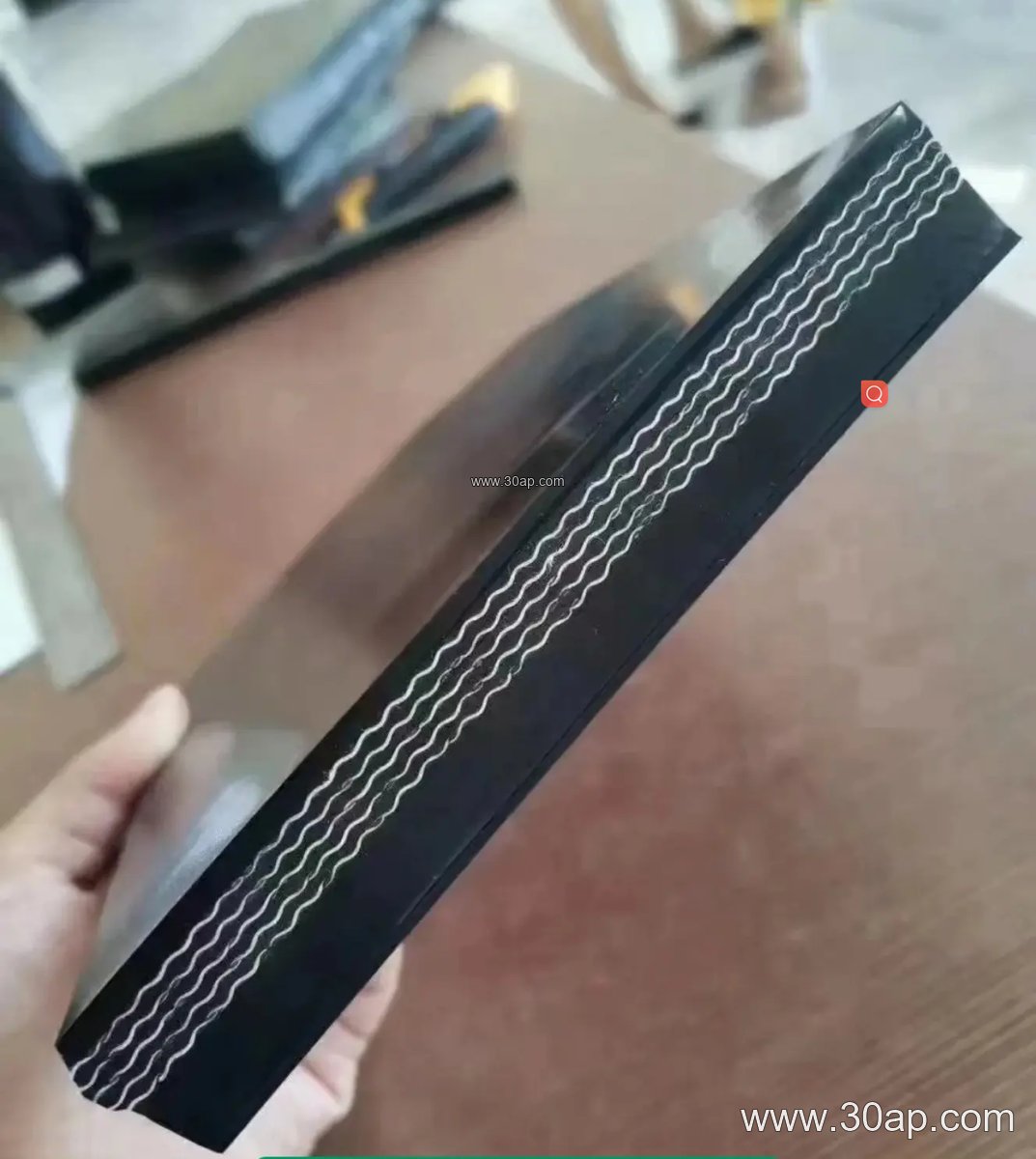
Construction and Surface Options
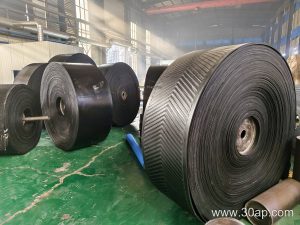
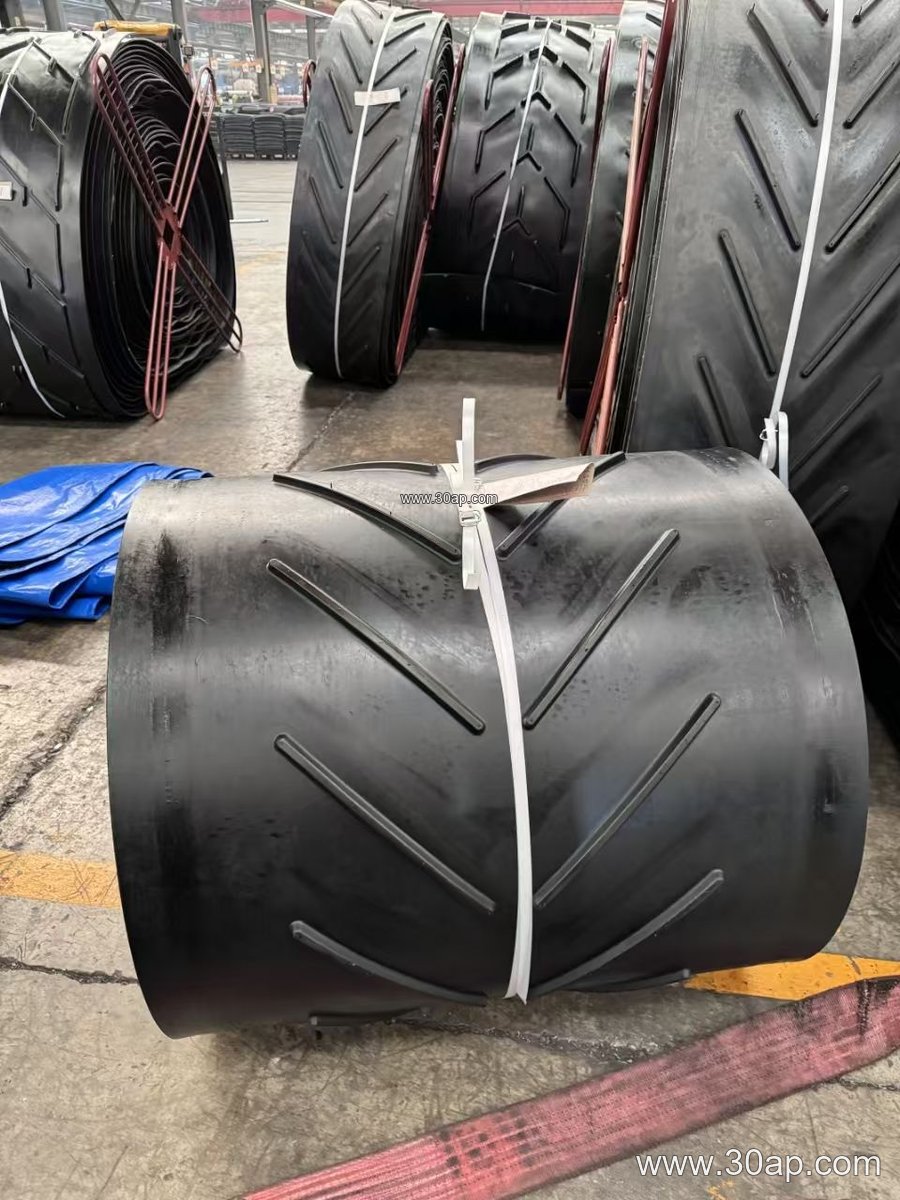
The belt body is typically a fabric core, often a Multi-Ply Fabric Core Conveyor Belt with two to four plies, though light single-ply constructions are common on smaller lines. Covers are usually based on PVC, polyurethane, or food-grade rubber, and the surface may be smooth, matte, or embossed. Where product needs to stay on an incline, a Chevron Conveyor Belt profile or a Corrugated Sidewall Conveyor Belt with cleats can be specified, but these are surface variants of the same food-grade product, not substitutes for it.
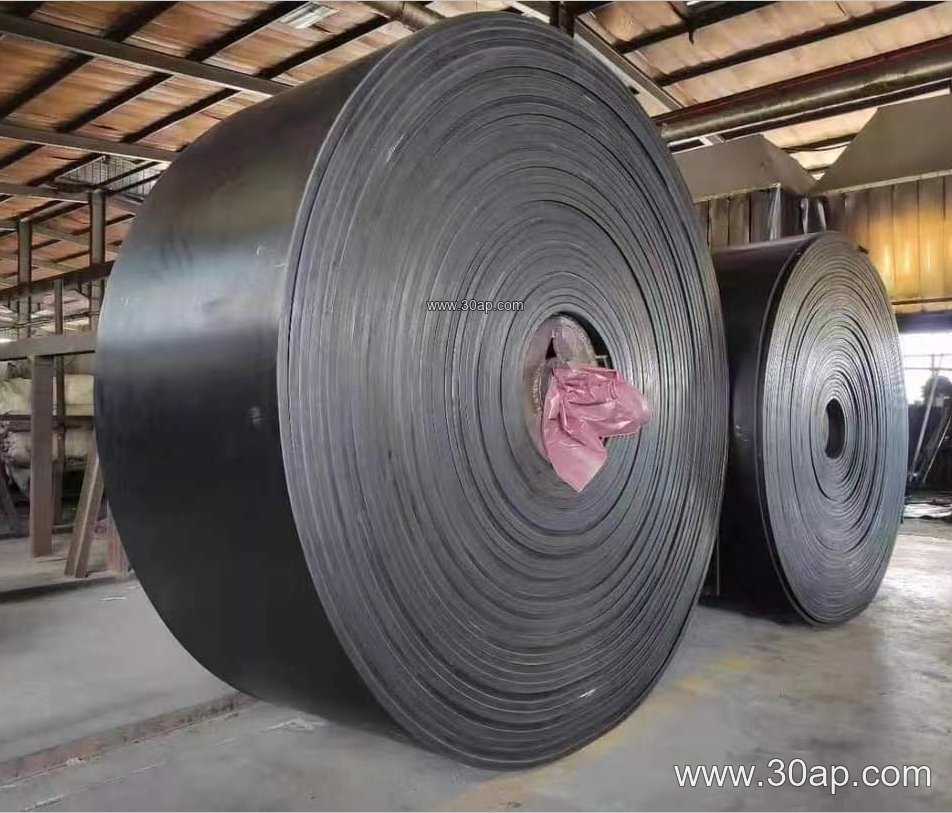
Typical construction reference values are shown below. These are common ranges, not fixed rules, and final selection is confirmed by design.
| Parameter | Common reference |
|---|---|
| Cover thickness | 3+1.5, 4+2, 5+2 mm |
| Carcass plies | 2 to 6 plies, depending on load |
| Belt width | B500, B650, B800, B1000, B1200 mm |
| Surface | Smooth, matte, embossed, cleated |
| Color | White, blue, green, or black |
White and blue covers are popular because they make cleaning verification easier. The carcass may be an EP Conveyor Belt style fabric for good strength-to-weight ratio, or an NN Conveyor Belt style where higher elongation is acceptable. A Food Grade Conveyor Belt is generally not built on steel cord; a Steel Cord Conveyor Belt belongs to long-haul bulk duties.
Where It Fits in the Plant
These belts appear at receiving, washing, sorting, slicing, weighing, cooling, and packing stations. They work alongside a conveyor pulley drive, transition idlers, and a snub or bend pulley, and they are often paired with stainless frames and washdown-rated bearings. In plants that also handle grain, sugar, or starch, dust control and static buildup may call for an Anti-Static Conveyor Belt grade. Where fryer or oven heat reaches the belt, a Heat Resistant Conveyor Belt variant may be needed, and where oily product is present an Oil Resistant Conveyor Belt cover helps.
Food plants are not the only users. Some recycling and packaging operations handling consumer goods also choose a Food Grade Conveyor Belt for its cleanability. Outside that environment, sectors such as mining, coal, cement, power, and sand and gravel rely on different products: a Flame Retardant Conveyor Belt or Fire Resistant Conveyor Belt for underground coal, an Abrasion Resistant Conveyor Belt for ore and rock, and a Pipe Conveyor Belt for dusty or enclosed routes. Those are relevant comparisons only; they do not replace the hygienic belt.
Buyer Checklist
- Confirm the actual food contact and cleaning regime, including washdown chemicals and temperature.
- Check whether the belt must be endless or open-ended; an Endless Conveyor Belt avoids a joint that can trap residue.
- Match cover hardness and friction to product weight and incline.
- Verify belt width against the pulley face and frame, not the other way round. A 600mm or 800mm belt does not dictate a single pulley diameter; shaft and pulley sizing follow the conveyor design.
- Ask for the belt’s food-contact documentation and confirm it matches your market requirements.
Maintenance Notes
Keep the return side clean, check the conveyor pulley lagging for wear, and inspect idler roller rotation so the belt tracks true. A mistracking belt often signals a misaligned conveyor bracket or a seized roller rather than a belt defect. Store spare rolls away from sunlight and oil, and splice only with methods suited to the chosen cover. For assistance matching a Food Grade Conveyor Belt to your line, contact us at www.example.com/food-grade-conveyor-belt and review our conveyor belt range at www.example.com/conveyor-belt.