What Pulley Machining Involves
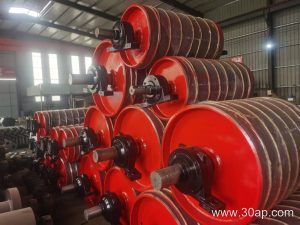
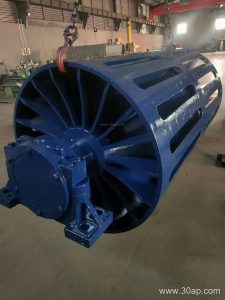
Pulley machining is the manufacturing process that turns a raw cylinder or drum into a precision conveyor pulley, ready to carry a conveyor belt and transmit torque. The work covers turning the shell to consistent diameter, boring and keying the shaft, machining end discs, and preparing the surface for lagging. In a quarry or a cement plant, the difference between a well-machined pulley and a rough one often shows up as belt tracking problems, vibration, or short lagging life.
Because every conveyor pulley is part of a conveyor system, the machining stage must match the actual duty. A drive pulley in a copper mine transfer station, for example, needs a different balance of grip and wear resistance than a bend pulley on a short aggregate line. Machining tolerances, weld preparation, and dynamic balancing are all decided at this stage, not after the pulley is installed.
From Shell to Finished Drum
The process usually starts with a rolled steel shell. The shell is cut to the required face width, then turned to establish concentricity with the shaft. End discs are machined and fitted, and the shaft is bored, keyed, or shrink-fitted depending on the design. After welding, the pulley is stress-relieved where required and machined again to correct any distortion.
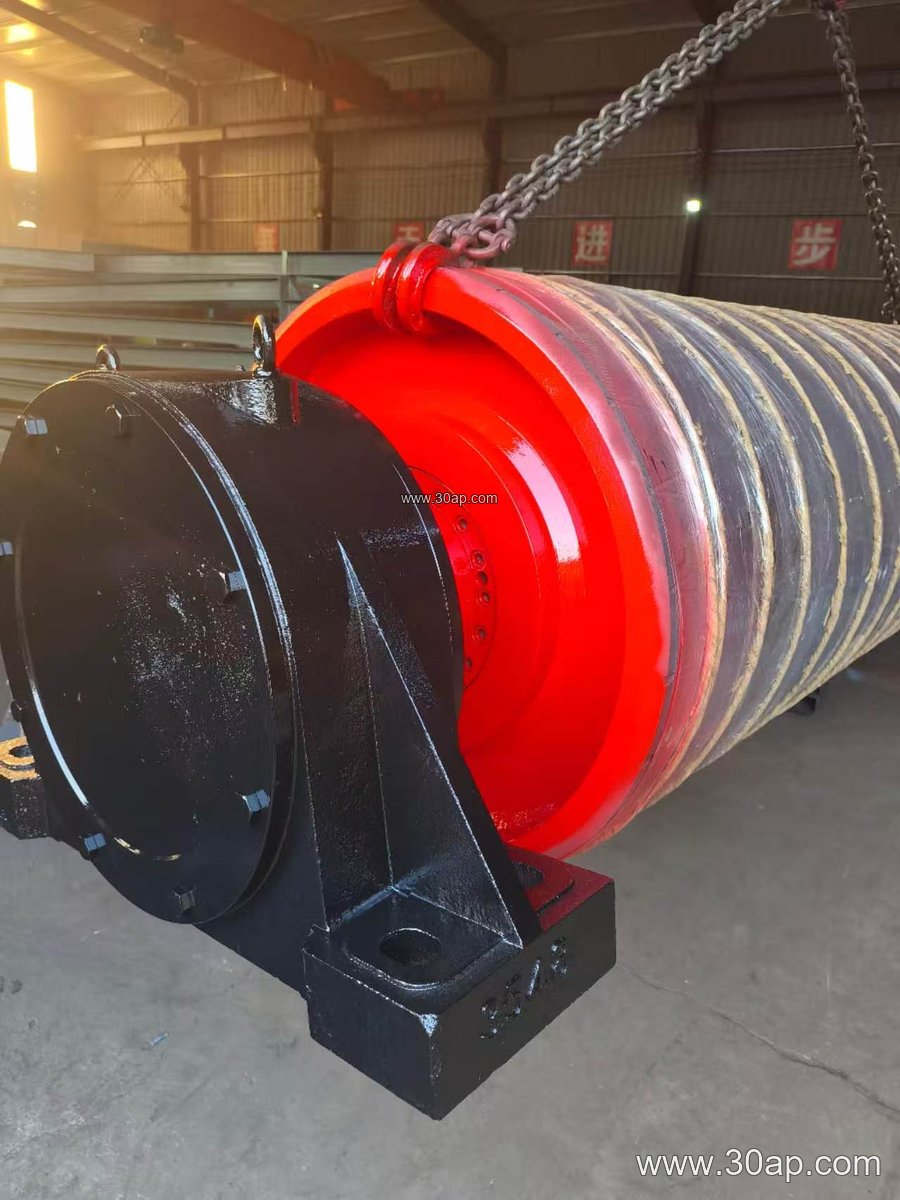
Surface preparation comes next. A plain machined face may be enough for some bend or tail pulley positions, but drive pulleys often receive lagging. Rubber lagging can be applied by hot vulcanization, cold bonding, or casting directly onto the shell. Diamond and herringbone patterns are machined or molded into the rubber to improve grip and shed water and fines. Ceramic lagging is another option for high-wear points.
Typical reference data for conveyor pulleys includes:
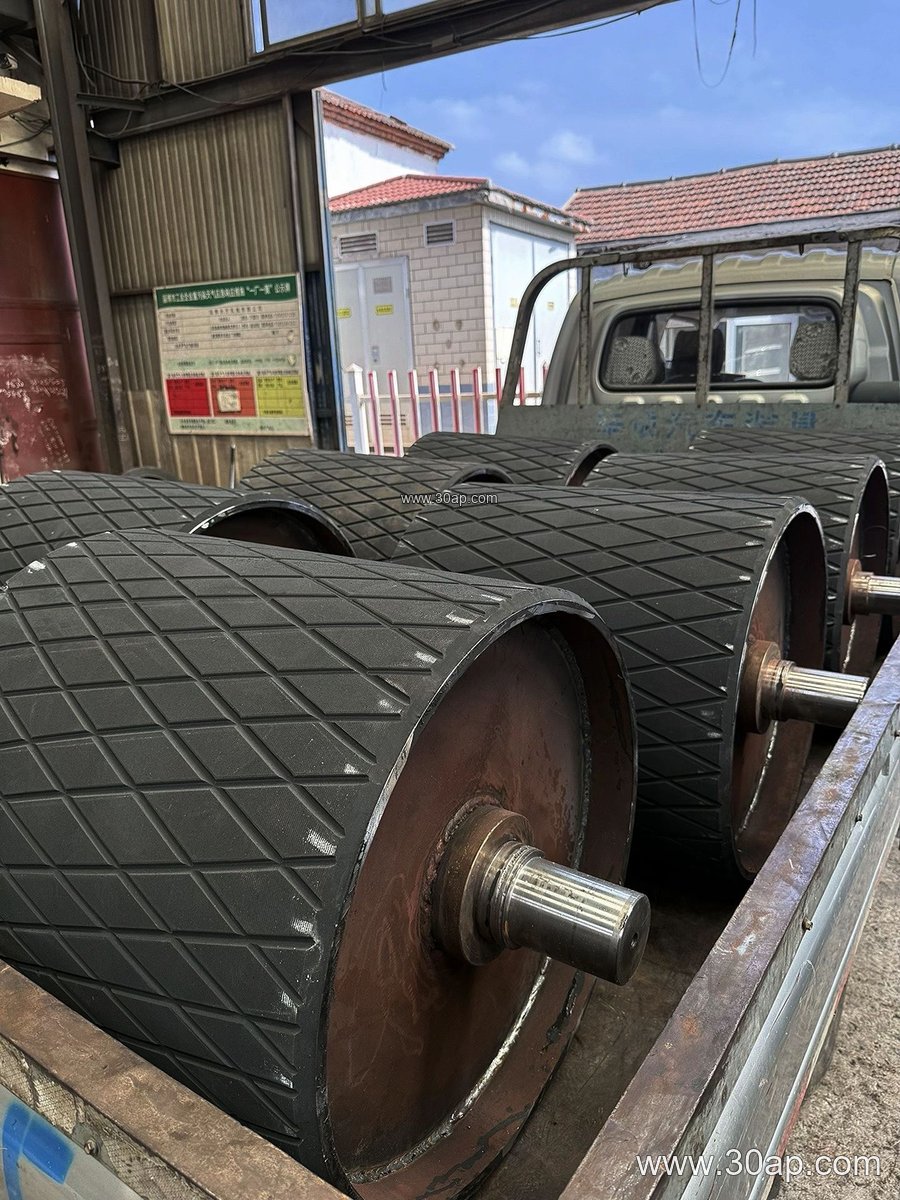
- Face width commonly 100 to 200 mm wider than the belt, e.g. B800 runs about 950 mm face
- Diameters from Ø200 up to Ø1800 depending on belt tension and space
- Shaft diameters from Ø50 to Ø200, sized by torque and radial load
- Lagging thicknesses of 8, 10, 12, 15, or 20 mm
These are reference ranges, not fixed pairings. A B1200 belt may run on a Ø1000 drive pulley, but the same belt width can also appear with other diameters when the conveyor layout calls for it.
Where Machined Pulleys Are Used
Pulley machining serves almost every bulk material handling line. In a coal washing plant, head and tail pulleys on a coal mining conveyor belt must cope with abrasive slurry and fines. In a power plant coal yard, a drive pulley on a steel cord conveyor belt may carry high tension over long distances. In a stone crushing line, bend pulleys keep the belt aligned around transfer points, while a tail pulley on a quarry conveyor belt handles constant grit.
Other common settings include cement plant clinker conveyors, port ship loading systems, and iron ore terminals. Each application pushes the machining priorities in a different direction. Abrasion resistant conveyor belt demands smooth, true-running pulley faces to avoid edge wear. Heat resistant conveyor belt used near sinter or clinker calls for pulleys that can tolerate thermal expansion without losing balance. Flame retardant conveyor belt in underground coal mining is paired with pulleys that meet the same safety expectations for the whole system.
Matching the Pulley to the Belt
Buyers often ask how belt width relates to pulley diameter. The honest answer is that belt width alone does not fix the diameter. Belt tension, wrap angle, shaft load, and available space drive the choice. A heavy-duty mining conveyor belt with high tension may need a larger diameter to keep belt stress within limits, while a short aggregate conveyor belt can use a smaller drum.
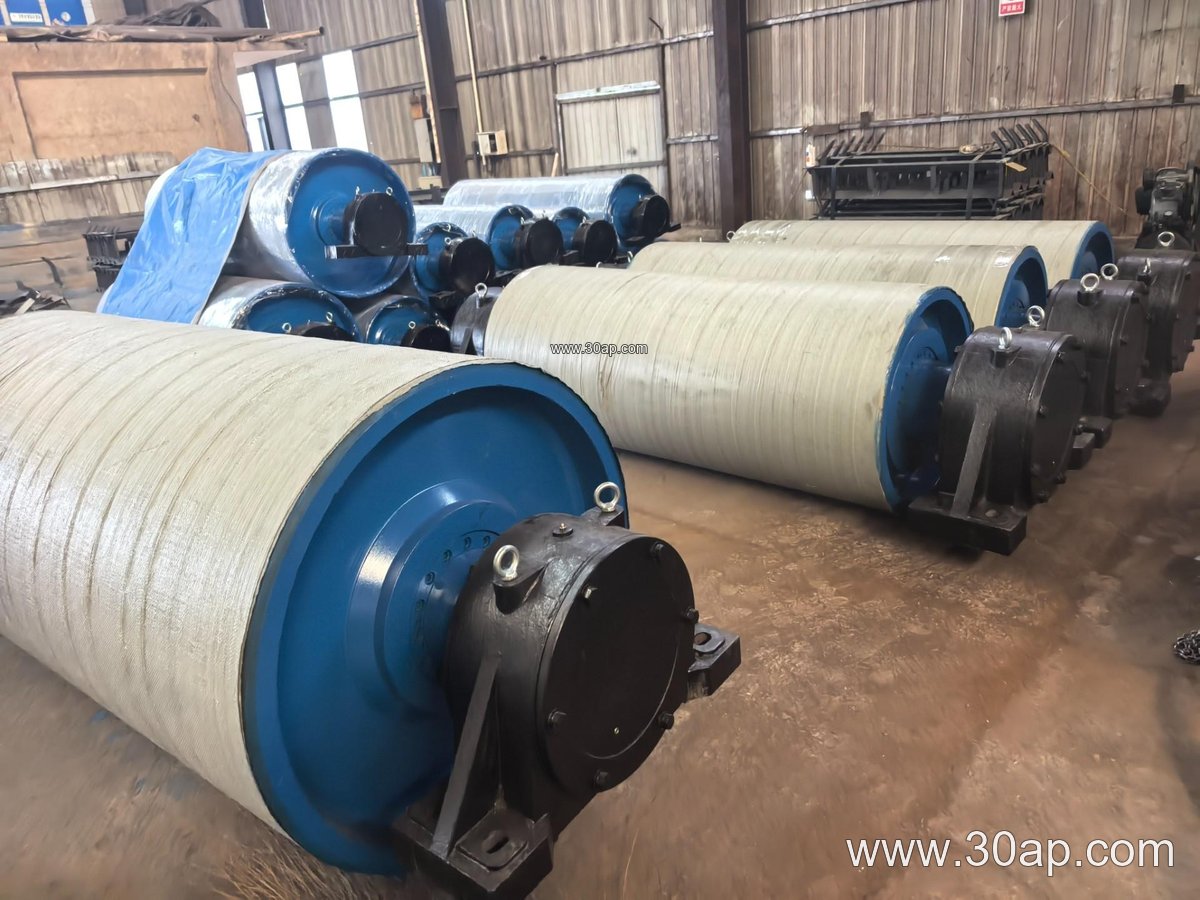
Surface choice matters just as much. A drive pulley with diamond lagging grips better in wet conditions. A bend pulley may use plain or lightly lagged surface to reduce buildup. Tail pulleys often use rubber lagging to protect the belt and improve tracking. For a pipe conveyor belt or a corrugated sidewall conveyor belt, pulley machining must respect the belt profile, so the face and edge treatment are planned around the belt shape rather than treated as a generic drum.
When specifying, share the belt type, belt width, expected tension, shaft load, and environmental conditions. Mention whether the pulley sits at the head, tail, tension, or bend position. That lets the machinist choose the right shell thickness, shaft size, and lagging without guessing.
Buyer Checklist for Pulley Machining
- Confirm the pulley position and duty: drive, tail, bend, or tension
- Provide belt data, including whether it is an EP conveyor belt, steel cord, or fabric core type
- State the required face width and confirm it clears the belt and frame
- Specify lagging pattern and thickness if grip or wear protection is needed
- Ask for dynamic balancing records where speed or load is high
- Check shaft diameter against torque and bearing selection, not only belt width
Good pulley machining is not a cosmetic step. It determines how long the pulley, the lagging, and the conveyor belt work together before maintenance is needed. Buyers who treat the pulley as a machined component, not a commodity drum, get fewer tracking problems and more predictable uptime.