What a Trough Idler Does
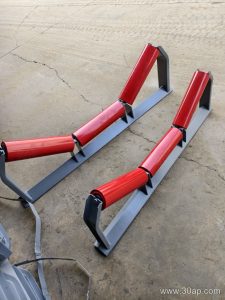
A trough idler is the carrying-side roller set that shapes a flat conveyor belt into a shallow trough. Three rollers, mounted in a frame at a fixed trough angle, support the loaded belt and keep bulk material centered as it travels. In a quarry, a coal washing plant, or a cement plant, this idler is the component that directly carries the weight of the material, so its build quality affects belt life more than most operators expect.
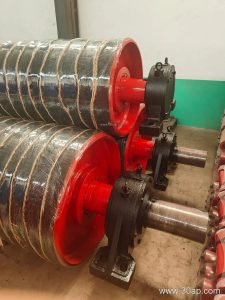
The same component is often called a troughing idler or troughing roller. Those names refer to the same product; they are not different items. On a typical conveyor, the trough idler works together with the conveyor belt, the conveyor pulley at the head and tail, the conveyor bracket that fixes the frame to the stringer, and the return idlers underneath.
How the Roller Set Is Built
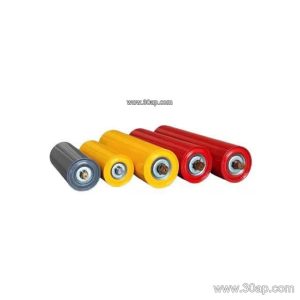
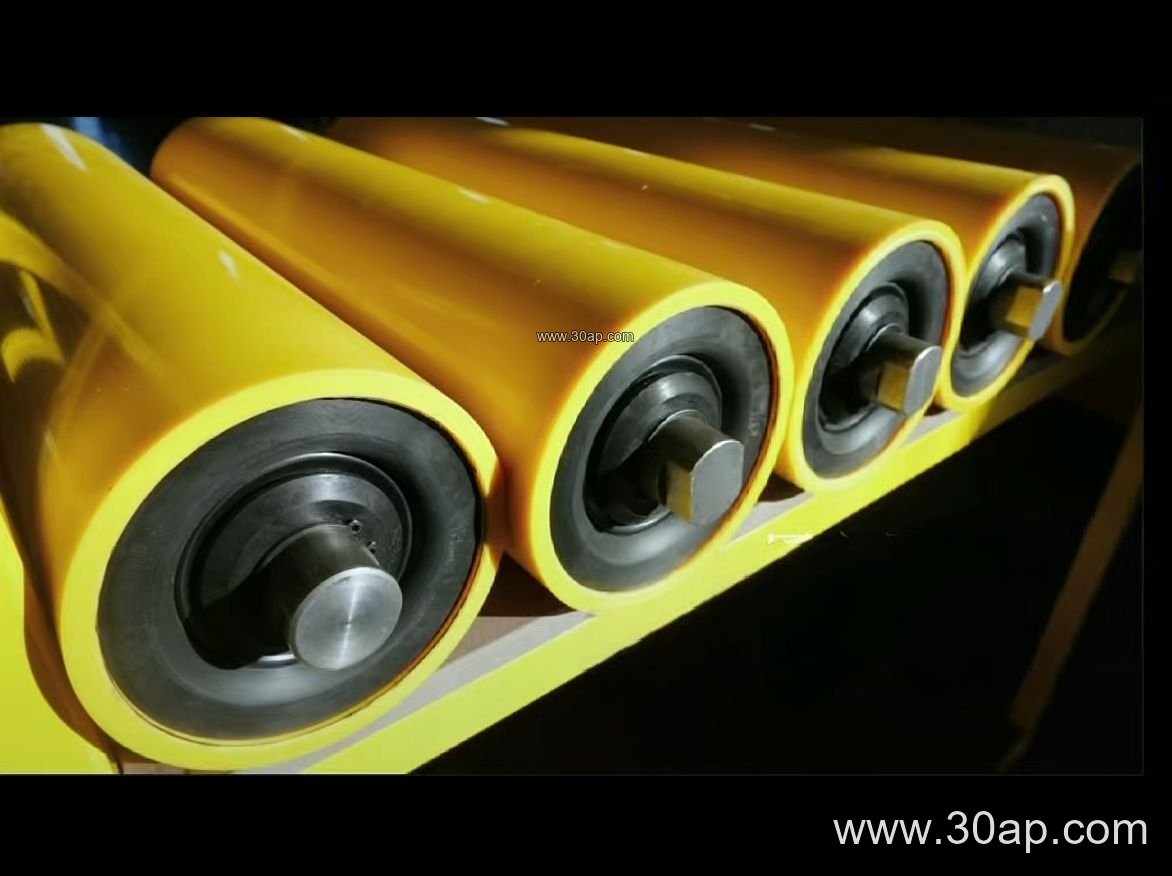
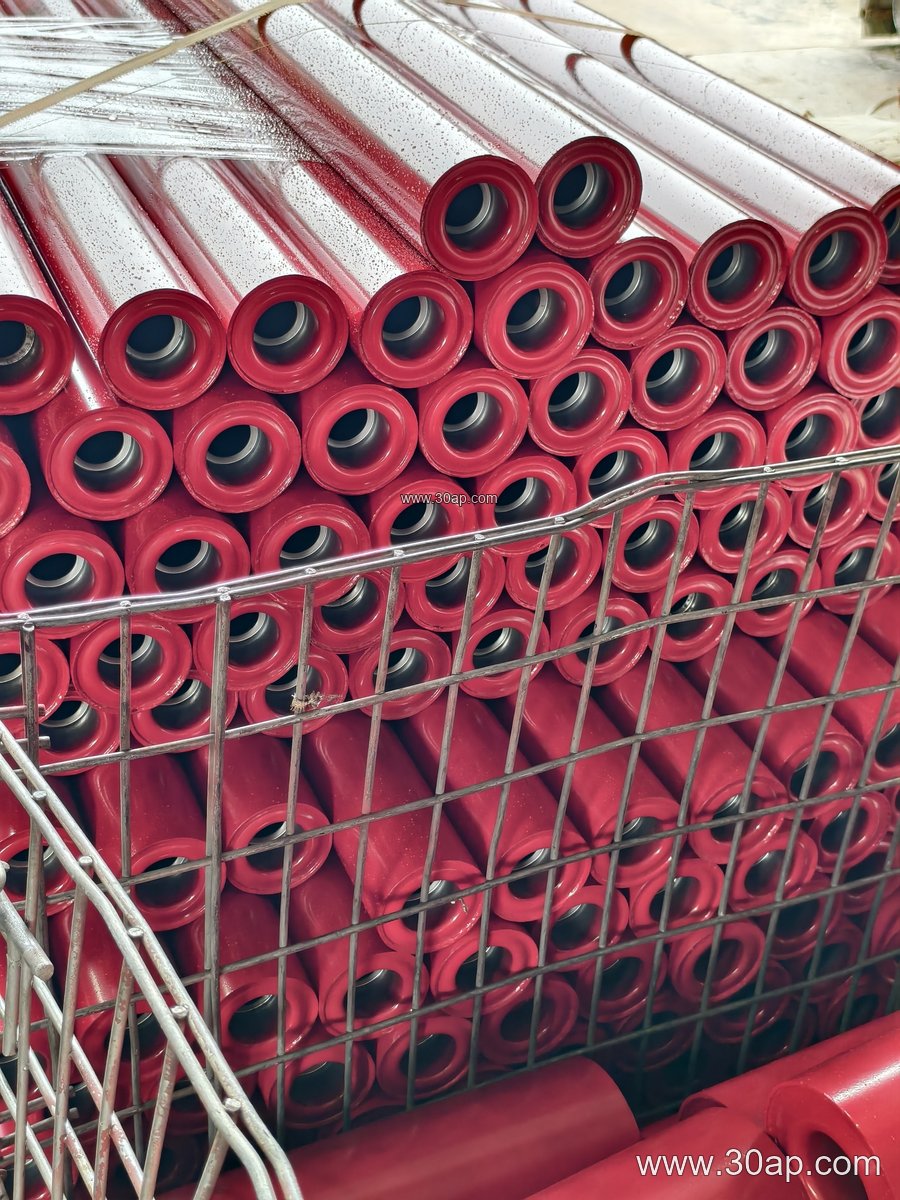
A standard trough idler group has three rolls: a center roll and two side rolls set at the trough angle. Each roll consists of a steel tube shell, a shaft, bearing housings at both ends, and a sealing arrangement. Common shell materials include steel tube, nylon, ceramic-coated tube, and rubber rings for impact positions. Bearings are usually deep-groove ball bearings in sizes such as 6204, 6205, 6305, 6306, 6308, or 6310, selected according to load and roll diameter rather than belt width alone.
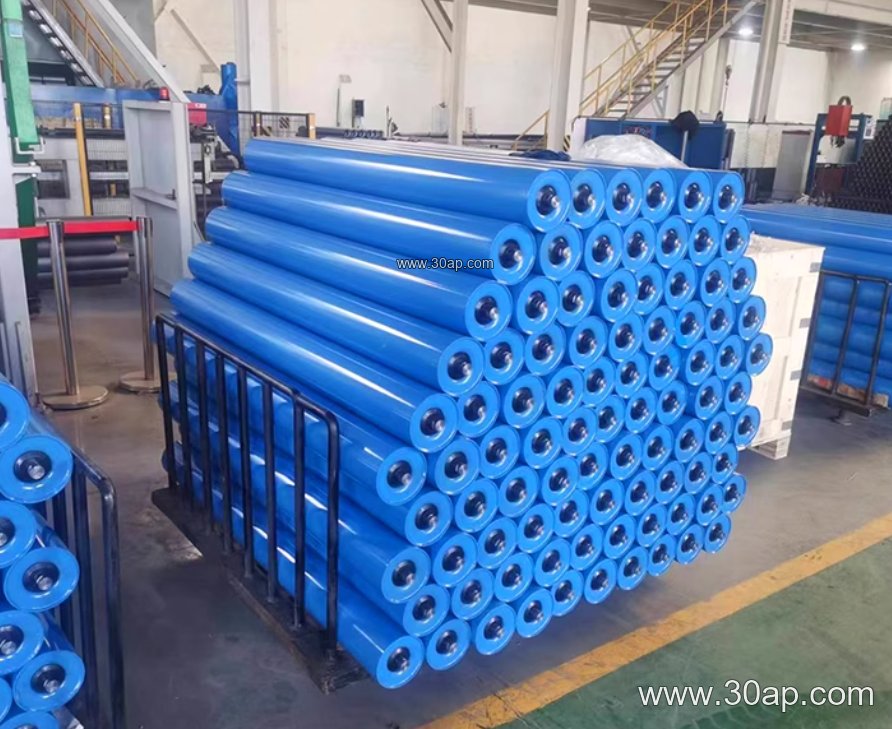
The frame may be fixed or have a slight forward tilt of about 1.5 to 2 degrees on the side rolls, which helps the belt track toward the center. Sealing is the detail that separates a long-service idler from a short one in dusty conditions such as a crusher discharge or a sinter plant.
Common Sizes and Configurations
Roll diameter and belt width are the two numbers buyers ask about first. The table below gives typical reference ranges; final values are set by the conveyor design, load, and speed.
| Parameter | Common reference values |
|---|---|
| Roll diameter | Ø63, Ø76, Ø89, Ø102, Ø108, Ø127, Ø133, Ø159, Ø178, Ø194, Ø219 mm |
| Belt width | B400, B500, B650, B800, B1000, B1200, B1400, B1600, B1800, B2000, B2200, B2400 |
| Trough angle | 20°, 30°, 35°, 45° |
| Roll set form | Single roll, two-roll, three-roll trough |
| Bearing | 6204, 6205, 6305, 6306, 6308, 6310 |
Roll length changes with belt width, trough angle, and group form. As a rough example, a three-roll trough group for B800 often uses side rolls around 315 mm long, while B1200 moves toward 465 mm and B1600 toward 600 mm. Center and side rolls can differ, so these figures are examples, not fixed pairings.
Where Trough Idlers Are Used
You will find them on almost every bulk handling line. In an iron ore or copper ore operation they carry heavy, abrasive loads, often paired with an abrasion resistant conveyor belt or a steel cord conveyor belt on the main haul. In a coal washing plant they run alongside flame retardant conveyor belt and fire resistant conveyor belt grades. In a cement plant or power plant coal yard, they support clinker, limestone, and coal on long inclined runs.
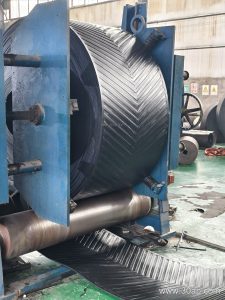
The trough angle matters here. A 20° or 30° set suits materials that should not be over-compressed, while 35° and 45° give deeper capacity for free-flowing aggregate. Steep sidewalls on a corrugated sidewall conveyor belt or a skirted conveyor belt change the clearance requirements, so the idler frame must match the belt profile.
Buyer Checklist
- Match roll diameter to load and belt speed, not to belt width alone.
- Confirm the trough angle and group form against the existing conveyor bracket spacing.
- Check bearing size and seal type for dust, water, or heat exposure.
- For impact zones below a crusher, consider a rubber ring impact idler rather than a standard steel shell.
- For long overland runs, verify that the idler rating suits the tension carried by the conveyor belt.
Return-side rollers are a separate matter. A V-return or flat return idler supports the empty belt and should not be substituted for a trough idler in the carrying position. Likewise, a self-aligning idler is added for tracking correction, not as a replacement for the standard trough set.
Before ordering, measure the existing frame, note the roll diameter and shell length, and record the belt width and trough angle. For reference on matching belts and rollers, see trough idler and conveyor belt guidance, and confirm the pulley and bracket dimensions with the original conveyor drawing.