What a Cement Plant Conveyor Belt Has to Handle
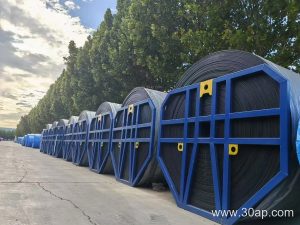
A cement plant is a chain of abrasive, hot, and dusty transfer points. Limestone arrives from the quarry, shale and clay are blended, raw meal is ground and preheated, clinker leaves the kiln glowing, and cement is finally moved to silos and loading bays. A cement plant conveyor belt is the continuous rubber or fabric-reinforced band that links these stages, often running for hundreds of meters across crusher houses, transfer towers, and clinker galleries.
The duty is rarely gentle. Limestone and clinker are sharp and heavy, kiln-adjacent sections see elevated temperatures, and coal or petcoke lines add fire and explosion concerns. That is why a single plant may use several belt constructions rather than one universal band.
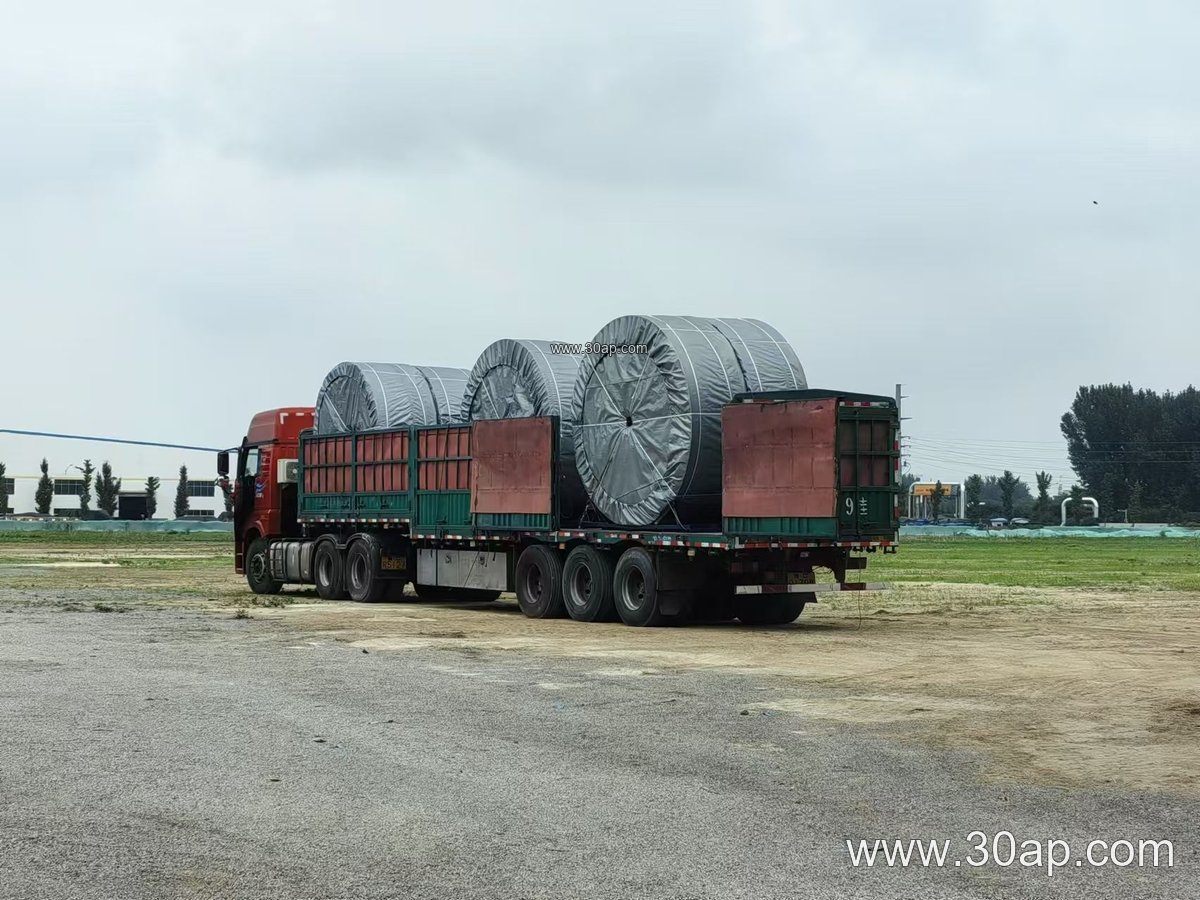
Construction and Common Belt Types
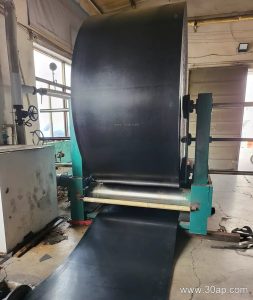
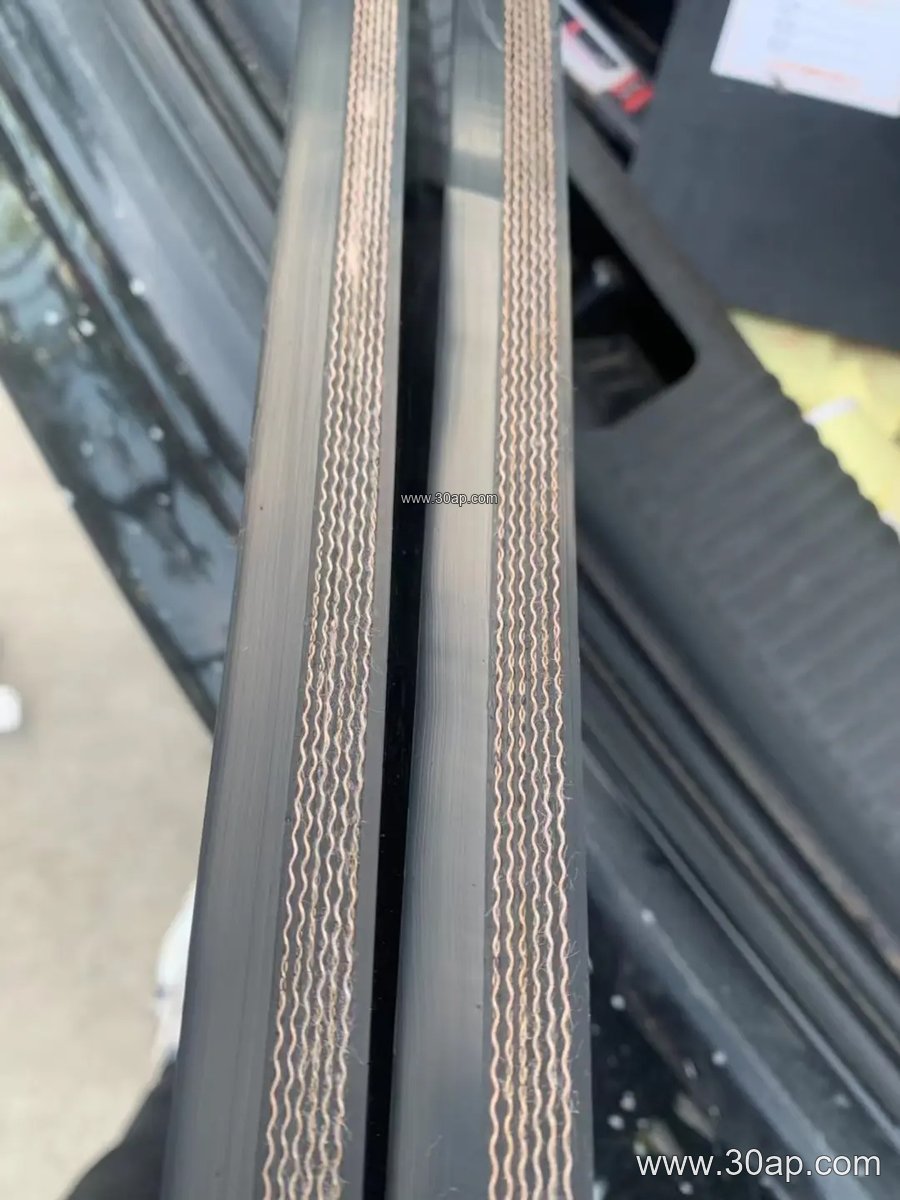
The belt body is a carcass of fabric plies or steel cords, wrapped in cover rubber on both faces. Fabric carcasses such as an EP conveyor belt with polyester warp and nylon weft are widely used on main raw material and cement lines because they resist fatigue and hold splice strength well. NN nylon belts are another common fabric option, especially where shock loading at the crusher discharge is heavy.
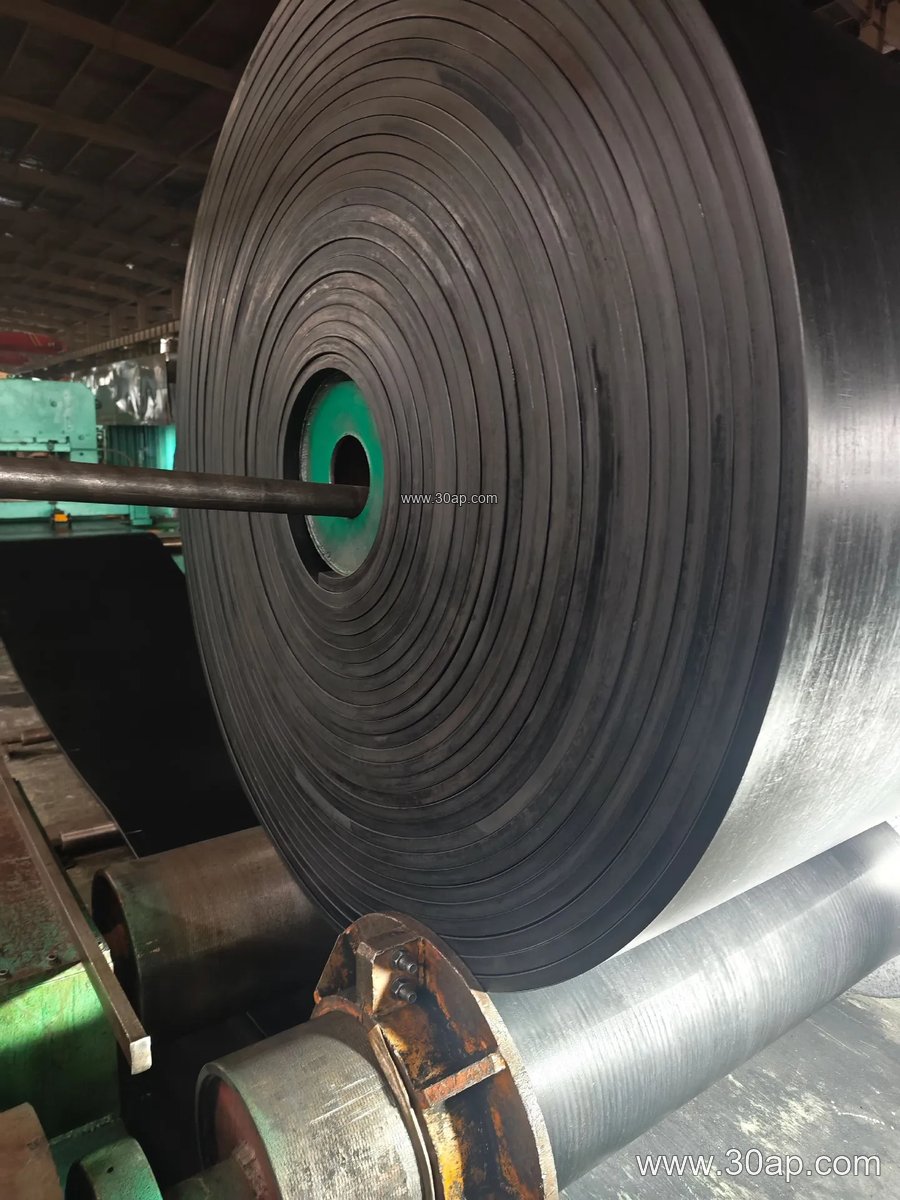
For the longest, highest-tension runs — typically raw mill feed or long overland sections — a steel cord conveyor belt is chosen. Where coal or petcoke is conveyed underground or in enclosed galleries, a PVG or PVC solid-woven construction with flame retardant properties is often specified. Clinker handling usually calls for a heat resistant grade, while wet or oily limestone may justify oil resistant covers.
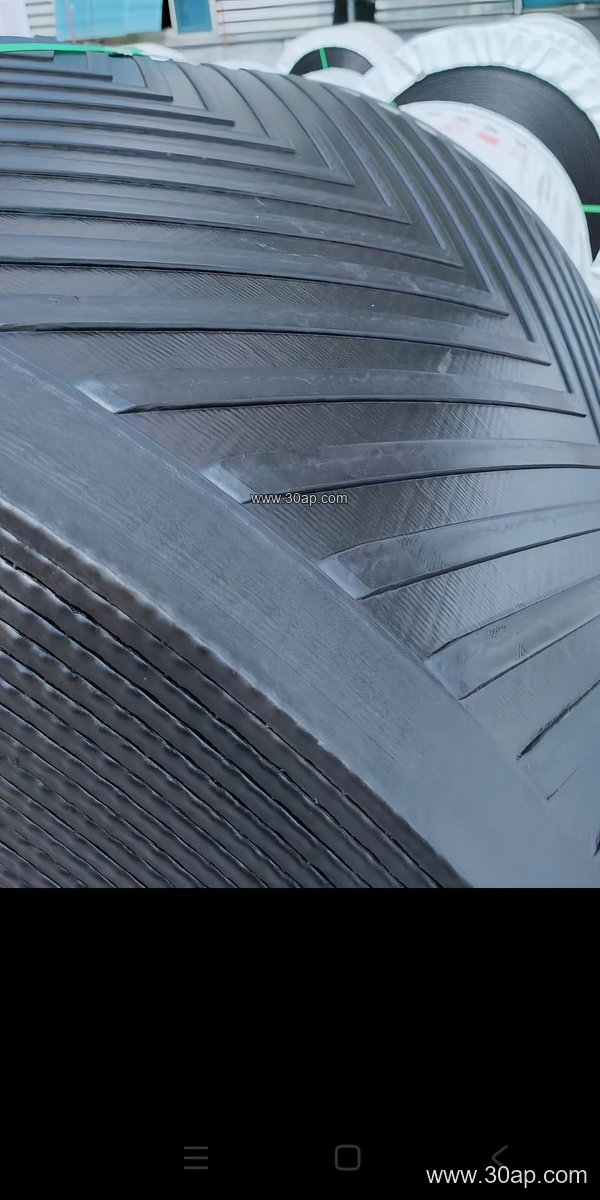
Other constructions appear where the layout demands them: a chevron conveyor belt for steep inclines, a corrugated sidewall belt at tight vertical transfers, and a pipe conveyor where dust control or route curvature matters.
Typical Specifications and Reference Values
The figures below are reference ranges, not fixed combinations. Final values are confirmed by the conveyor designer against tension, pulley size, and material conditions.
| Parameter | Common Reference Values |
|---|---|
| Belt width | B500, B650, B800, B1000, B1200, B1400, B1600, B1800, B2000 |
| Fabric strength grades | EP200, EP315, EP400, EP500, EP630, EP800, EP1000, EP1250, EP1600, EP2000 |
| Carcass plies | Usually 2 to 6 plies |
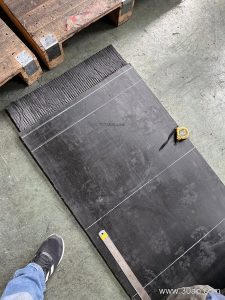
| Cover thickness (top + bottom) | 3+1.5, 4+2, 5+2, 6+2, 8+3 mm |
| Steel cord grades | ST1000, ST1250, ST1600, ST2000, ST2500, ST3150 |
| Special grades | Abrasion resistant, heat resistant, flame retardant, anti-static, oil resistant, cold resistant |
Cover thickness should follow the abrasion rate of the material: clinker and crushed limestone generally justify a thicker top cover than fine cement or raw meal. A 1200mm or 1400mm belt is common on main clinker lines, while narrower B650 and B800 belts often serve additive and dust-collection circuits.
Conveyor Components That Work With the Belt
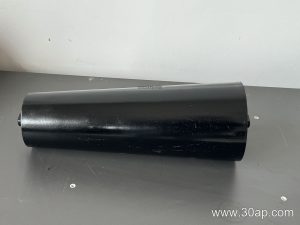
Belt life depends as much on the frame as on the carcass. A conveyor pulley at the drive and tail must be sized to the belt tension and not to the width alone — a wide, low-tension belt and a narrow, high-tension belt can call for very different pulley diameters. Drive, tail, and bend pulleys each have distinct roles and are not interchangeable.
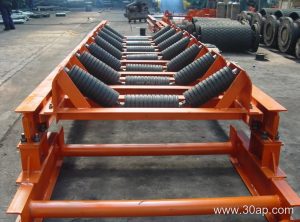
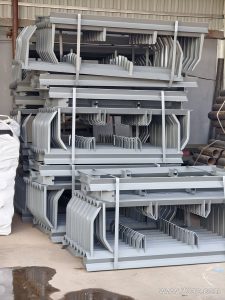
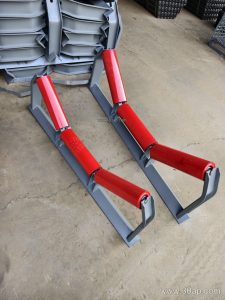
Idler rollers should be spaced according to belt sag limits at the loaded and return sides, with impact idlers under the crusher discharge and training idlers on long straight runs. A well-aligned conveyor bracket and stringer system keeps the belt tracking and reduces edge wear.
Selection and Maintenance Notes for Buyers
- State the material, lump size, temperature at the belt surface, and whether coal or petcoke is present, so flame retardant and anti-static requirements are not missed.
- Confirm the splice method early. Steel cord belts need a different splice than multi-ply fabric belts, and this affects delivery and downtime planning.
- Check cover grade rather than belt width alone. An abrasion resistant cover on a narrow belt can outlast a plain cover on a wider one.
- Keep spare idler rollers and at least one spare pulley matched to the installed frame so a failure does not stop the kiln feed.
- Inspect belt edges, splice zones, and pulley lagging on a fixed schedule; edge damage from misalignment is a leading cause of premature failure.
Where a route changes elevation sharply, compare a chevron or sidewall solution against a longer, flatter layout — the belt choice follows the plant layout, not the other way around.