What a Mining Trough Idler Does
A mining trough idler is the set of rollers that supports the carrying side of a conveyor belt and shapes it into a trough. In hard-rock mines, coal preparation plants, and aggregate crushing circuits, these idlers keep the belt aligned, reduce spillage, and carry the load smoothly from the loading point to the discharge. The trough idler is not a single roller but usually a group of two or three rolls mounted on a common frame, with the side rolls angled upward to form the trough. This arrangement centers the load and protects the belt from excessive sag between support points.
Because the belt is the most expensive wearing part of any conveyor, the idler set directly affects belt life. A well-matched trough idler group distributes the weight of ore, coal, or stone evenly and lets the belt run without pinching or edge damage. In dusty, wet, or abrasive conditions, the idler also has to keep its bearings clean and its shell wearing evenly.
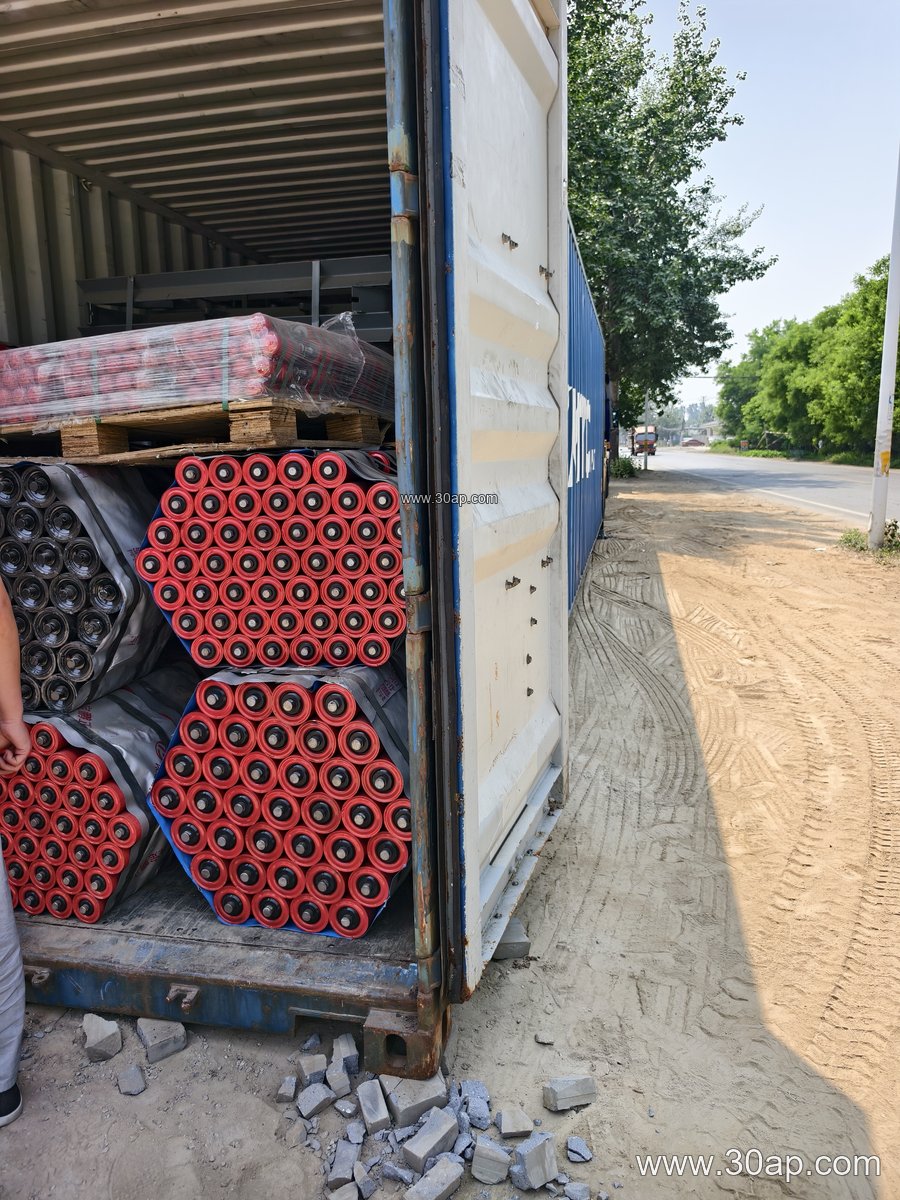
Construction and Common Configurations
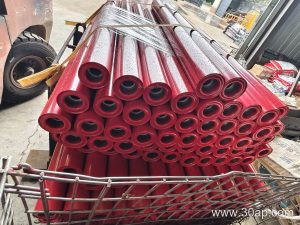
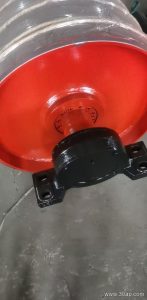
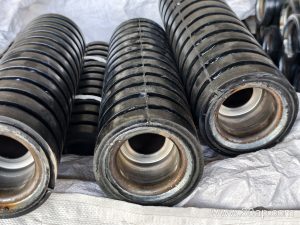
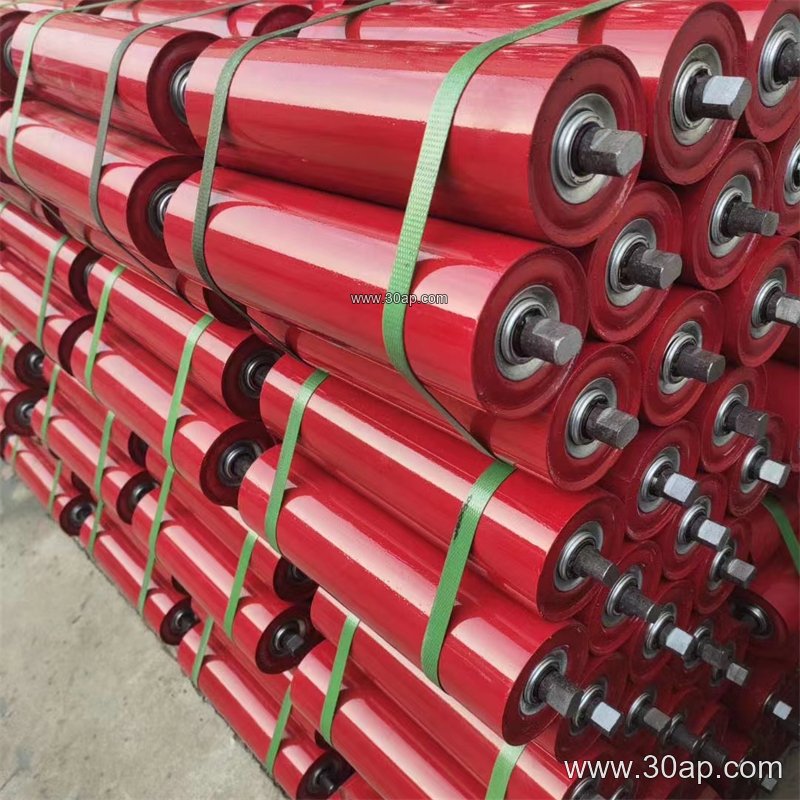
A typical trough idler consists of steel tubes with bearing housings at each end, sealed to keep out dust and water. The roller surface may be plain steel, nylon, ceramic, or rubber rings, depending on the material being carried and the environment. Bearing sizes such as 6204, 6205, 6305, 6306, 6308, and 6310 are common, but the bearing is selected to match the load and speed rather than a single fixed roller diameter.
Trough idler groups are usually supplied as single-roll, two-roll, or three-roll assemblies. Three-roll troughing sets are the most common on heavy-duty mining conveyors because they give a deeper trough and better load containment. The trough angle is often 20, 30, 35, or 45 degrees; a steeper angle helps hold a deep bed of material, while a shallower angle suits wider belts or more free-flowing loads. Some designs include a slight forward tilt of about 1.5 to 2 degrees to help the belt track centrally, especially on long overland or underground runs.
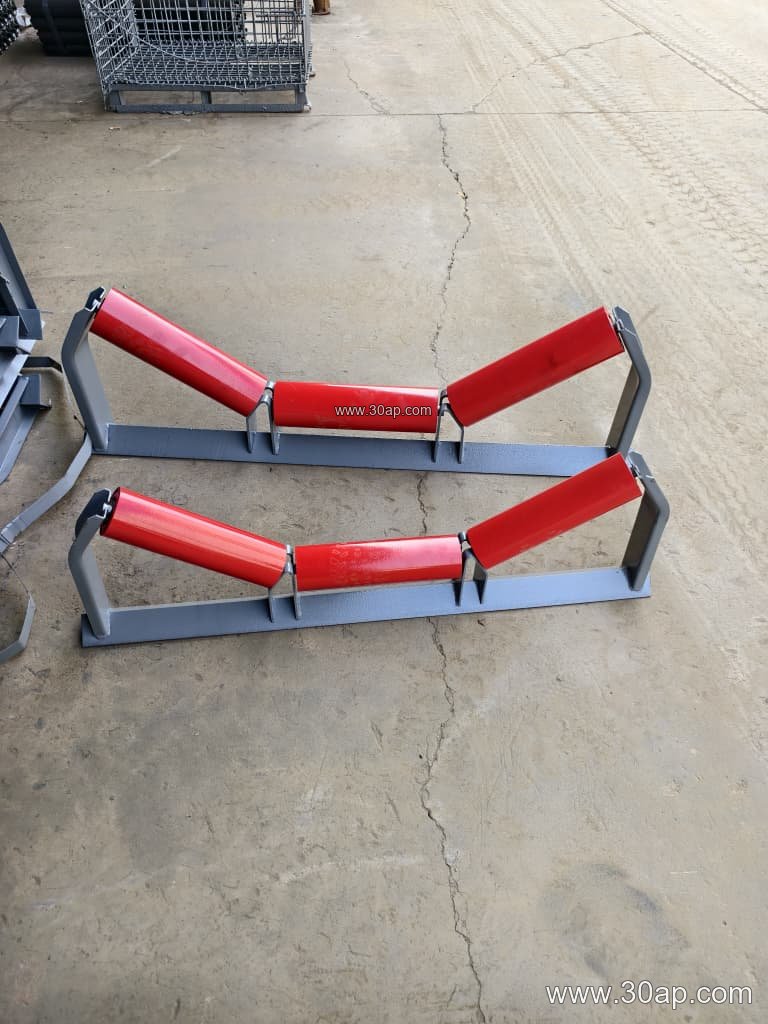
Roller diameters for mining trough idlers commonly range from about Ø63 mm up to Ø219 mm. The diameter is chosen together with belt width, belt speed, and load. Roll length changes with belt width and trough angle: for example, a three-roll troughing set might use rolls around 200 mm long for a B500 belt, 315 mm for B800, 465 mm for B1200, and 600 mm for B1600. These are typical examples only, and side rolls and center rolls can differ. The idler frame, often called a conveyor bracket, must match the conveyor stringer spacing and the belt width.
Where Trough Idlers Are Used
In a coal mine or coal preparation plant, trough idlers carry raw coal and washed coal on flame retardant conveyor belt and fire resistant conveyor belt where safety requires it. In a limestone quarry or sand and gravel line, they support abrasive stone on a heavy-duty abrasion resistant conveyor belt. At a power plant coal yard, trough idlers handle continuous fuel feed on wide belts, sometimes 1200 mm or 1400 mm wide. In a cement plant, they carry clinker and raw meal, and in a copper or iron ore concentrator they move crushed ore to the grinding circuit.
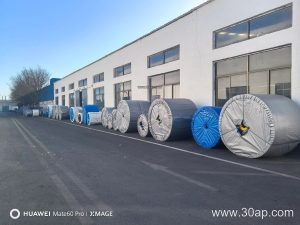
The same trough idler principle applies on EP conveyor belt and steel cord conveyor belt installations, but the idler spacing and roll diameter must be adjusted to the belt stiffness and load. A steel cord belt may tolerate wider idler spacing, while a fabric belt may need closer support to avoid sag. The trough idler does not replace the conveyor pulley at the drive or tail; those are separate components with different duties. Likewise, a return idler or impact idler is a different subtype and should be selected for its own position on the conveyor.
Buyer Checklist for Trough Idlers
Before ordering, confirm the belt width, the trough angle, and the number of rolls in each set. Check the roller diameter and wall thickness against the load and the belt speed. Ask how the bearing housing is sealed, because dust ingress is a common cause of idler seizure in mining and quarry work. Verify the shaft diameter and the mounting dimensions of the conveyor bracket so the set fits the existing stringer. For abrasive or wet conditions, consider a rubber ring or ceramic surface, and for coal mines confirm that the idler and belt combination suits the required fire safety level.
Also consider maintenance access. Idlers that can be replaced without lifting the belt save time during shutdowns. Keep a small stock of the most wearing positions, such as the loading zone and the first few idlers after the feed point. A trough idler is a simple component, but matching it to the belt, the material, and the conveyor structure is what keeps a mining conveyor running steadily.