What a V-Type Return Idler Does
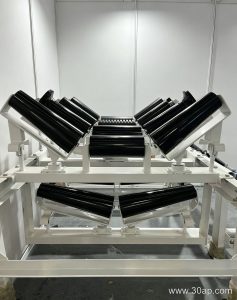
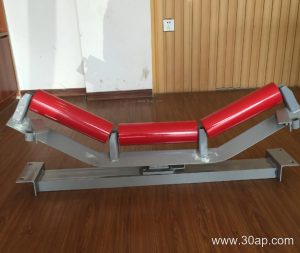
A V-type return idler is a two-roll idler set mounted under the carrying run of a conveyor belt, with the two rolls arranged in a shallow V. The belt rests in the V and is guided toward the center of the structure as it travels back to the tail. In a quarry, a coal washing plant, or a cement plant, this return idler set is a practical way to support the empty side of the belt while resisting the drift that tends to develop on long runs.
The same product is also called a V-return idler or V-shaped return roller. These are equivalent names for the same return-side assembly; they are not the same as a flat return idler or a training idler of another design, though the functions can overlap.
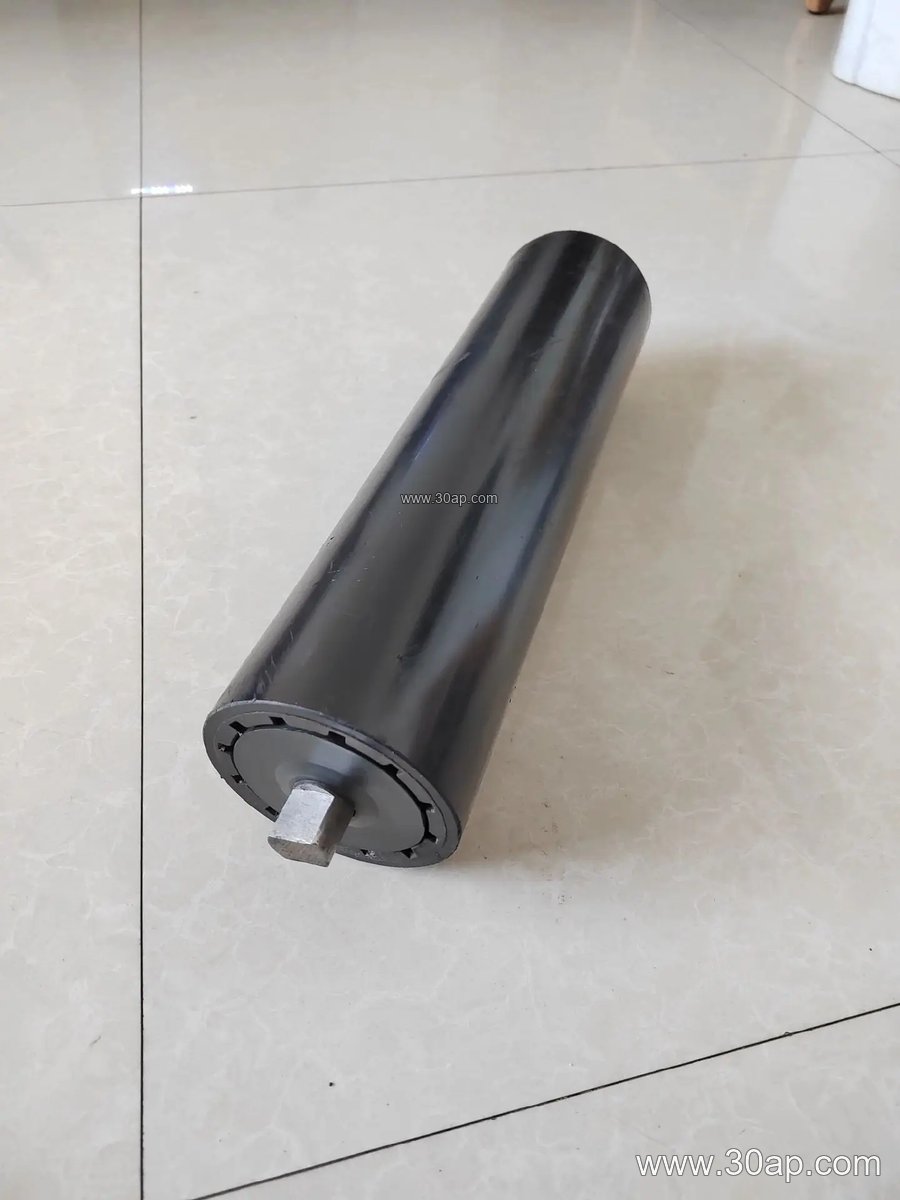
Construction and Typical Parts
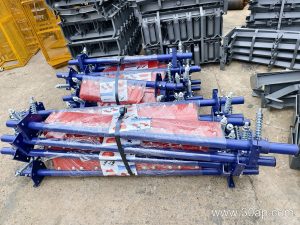
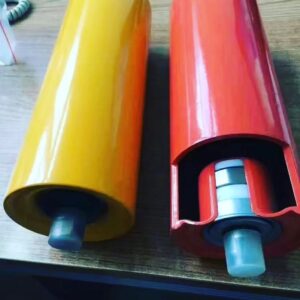
Each V-type return idler usually consists of two idler rollers joined by a central hinge or a fixed frame, with shafts carried in bearing housings at the outer ends. The rolls are commonly steel tube, and the surface may be plain steel, nylon, or rubber-covered depending on the duty. Bearings such as 6204, 6205, 6305, 6306, 6308, or 6310 appear in common idler ranges; the bearing is selected with the shaft and load, not by belt width alone.
- Two return rolls with a V angle, typically modest, so the belt is supported without sharp creasing.
- Central pivot or fixed center bracket, with end brackets that bolt to the conveyor stringers.
- Sealed bearing housings and, on better designs, labyrinth or contact seals to keep out dust and water.
- Roll surface options including steel, nylon, and rubber, chosen for abrasion, build-up, or noise.
The frame should match the conveyor bracket spacing and the belt width. A V-type return idler is not a substitute for a drive pulley, tail pulley, or bend pulley; those are conveyor pulleys that transmit motion or change belt direction, while this item supports and centers the returning conveyor belt.
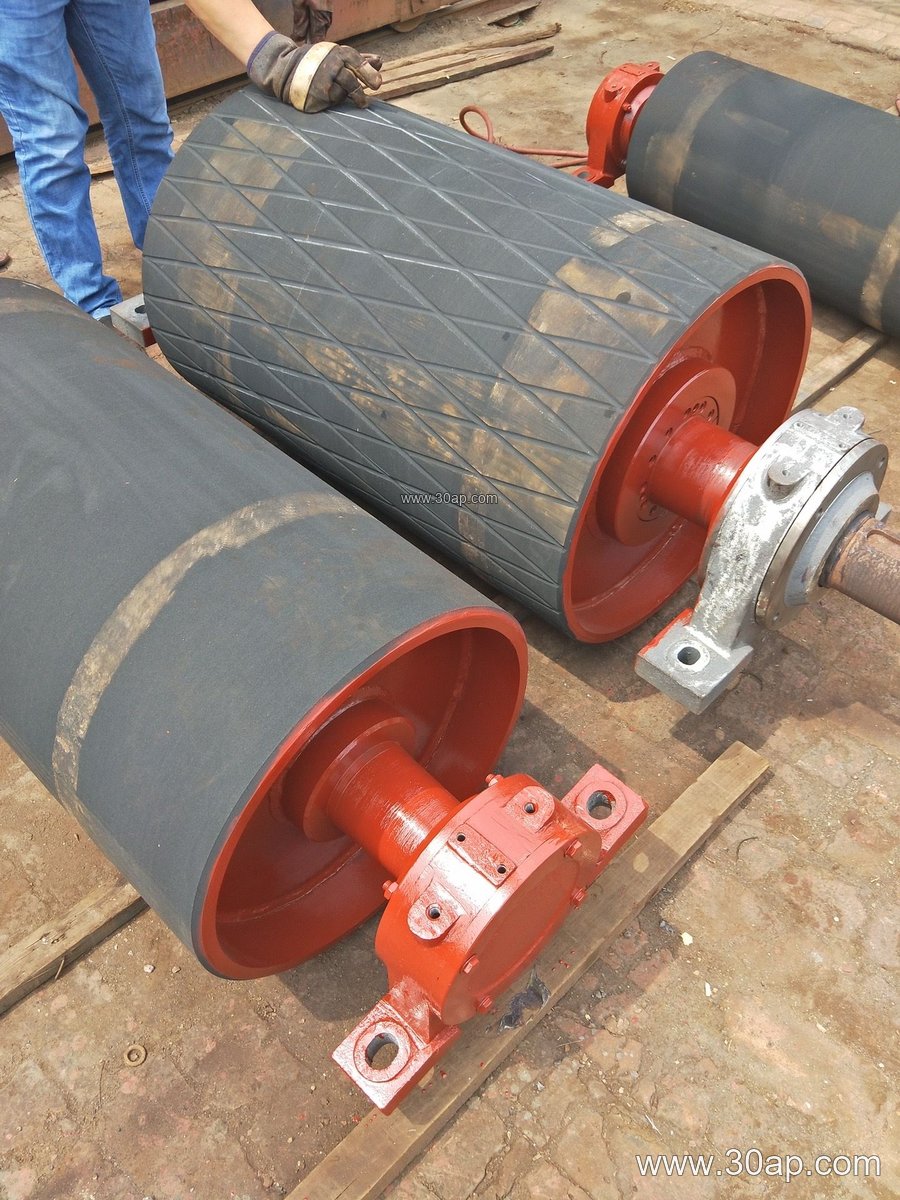
Sizes and Common Reference Data
Roll diameter and belt width are the first two numbers a buyer usually exchanges. The table below gives common reference values, not a fixed catalog promise; final selection follows the conveyor design, belt tension, and loading.
| Reference item | Common values |
|---|---|
| Return roll diameter | Ø63, Ø76, Ø89, Ø102, Ø108, Ø127, Ø133, Ø159, Ø178, Ø194, Ø219 mm |
| Belt width | B400, B500, B650, B800, B1000, B1200, B1400, B1600, B1800, B2000, B2200, B2400 |
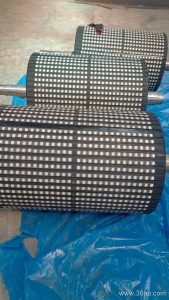
| Roll surface | Steel tube, nylon, ceramic, rubber ring |
| Bearing examples | 6204, 6205, 6305, 6306, 6308, 6310 |
Roll length changes with belt width and frame design. For a three-roll carrying set, common roll lengths are around 200 mm at B500, 250 mm at B650, 315 mm at B800, 380 mm at B1000, 465 mm at B1200, 530 mm at B1400, 600 mm at B1600, 670 mm at B1800, and 750 mm at B2000. These are examples for the carrying side; a V-return set uses its own two-roll geometry, and the buyer should confirm the mounting dimensions rather than assume a pairing.
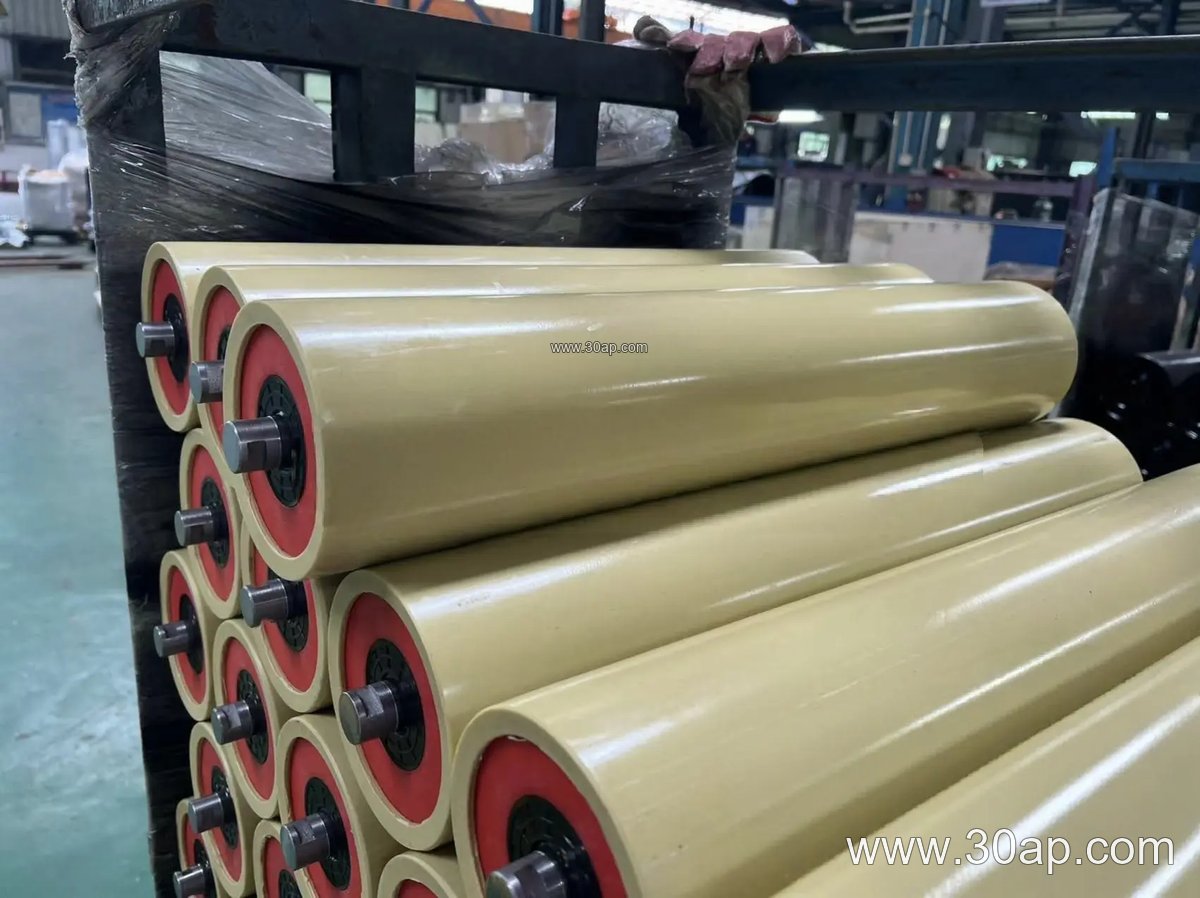
Where It Fits on the Conveyor
The V-type return idler belongs on the return strand, between the head and tail, spaced with other return idlers. It is especially useful where the belt is wide, the run is long, or the structure is exposed to side wind and uneven loading. In a limestone mine or a power plant coal yard, a belt that wanders on the return side can rub the stringer and wear its edge; the V shape encourages the belt to settle in the middle.
It is not a replacement for a troughing idler set on the carrying side, nor for a transition idler near a pulley, nor for a impact idler under a loading chute. Each of those has a different job, and mixing them up leads to poor belt support.
Buyer Checklist
- Confirm the belt width, the return strand height, and the conveyor bracket hole pattern.
- State the roll diameter, shaft ends, and bearing size expected by the existing conveyor.
- Choose the roll surface for the environment: dusty, wet, abrasive, or sticky.
- Ask about seal type and grease access, because return rolls are often neglected during maintenance.
- Check the V angle and frame stiffness so the belt is guided, not pinched.
- Order spares with the same mounting dimensions so replacement does not require re-drilling.
During inspection, look for a worn roll surface, a loose bearing housing, a bent frame, and material build-up between the rolls. A V-type return idler that no longer turns freely can flat-spot the belt and add drag to the whole conveyor. Replacing a damaged return roller early is usually cheaper than repairing the belt edge it wears.