What a Conveyor Belt Support Frame Does
At its core, a conveyor belt support frame is the structural element that holds the idlers in precise alignment beneath the belt. It is not just a piece of steel—it is the foundation that determines belt tracking, load distribution, and the overall stability of the conveyor line. In a quarry, a cement plant, or a coal handling facility, the frame keeps the belt from sagging and ensures material moves smoothly from the load point to the discharge. Without a properly designed support frame, even the best conveyor belt and idler roller will underperform.
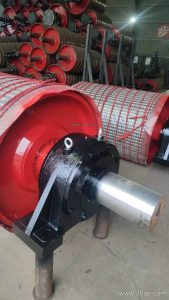
The frame works in concert with conveyor pulleys at the head and tail, but it is the intermediate support that carries the bulk of the material load. Whether you are running a short transfer conveyor in a sand and gravel line or a long overland system at a power plant, the support frame is a critical link in the chain.
How the Frame Is Built
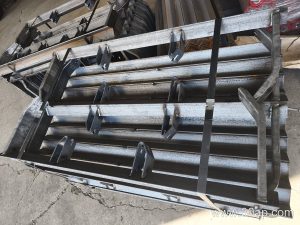
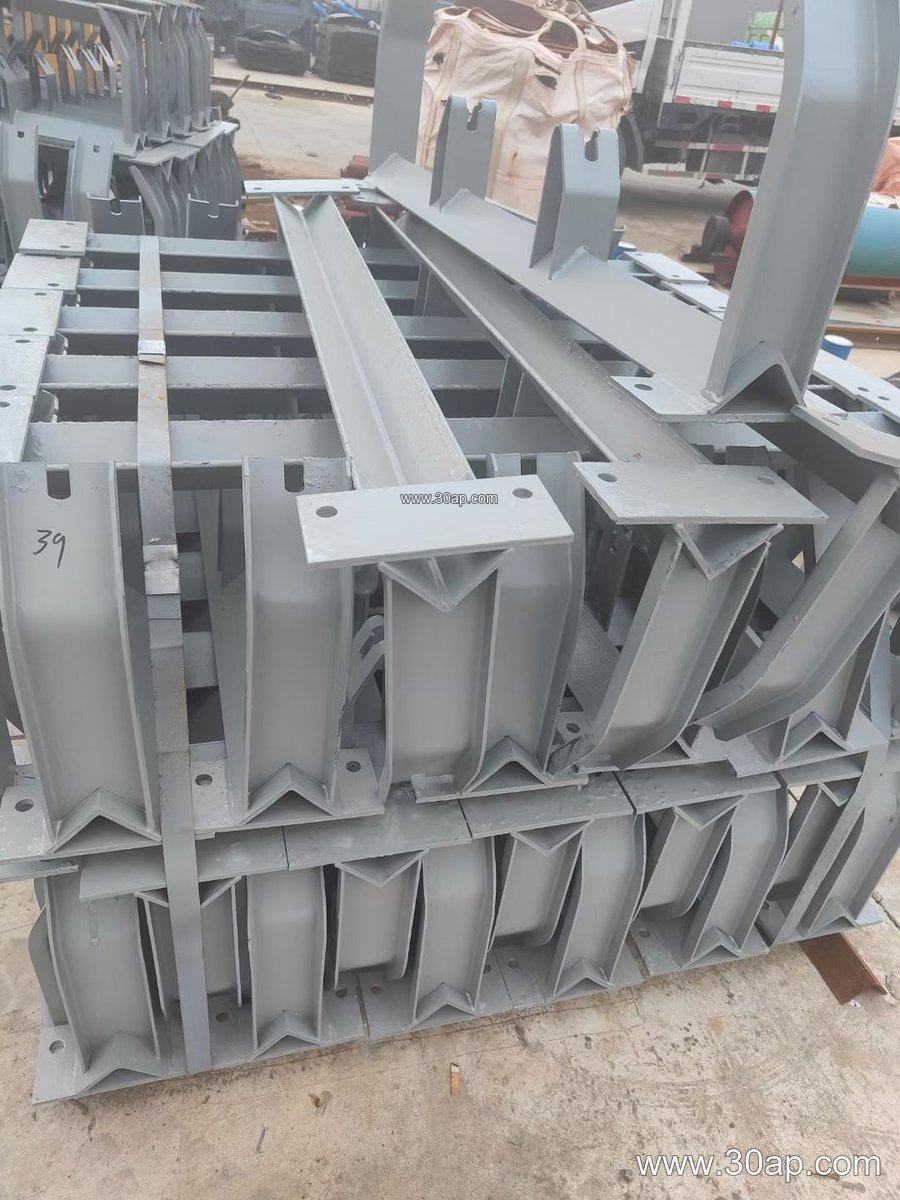
Most support frames are fabricated from angle steel, channel steel, or folded steel plate. The choice of material depends on the load and the environment. For example, a frame in a wet wash plant may use galvanized or painted steel to resist corrosion, while a frame in a dry crushing circuit might use heavier channel sections to handle impact and vibration.
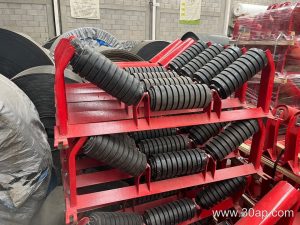
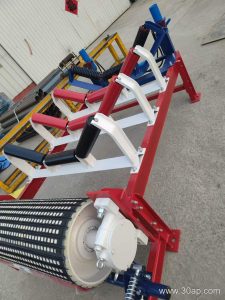
The frame typically consists of two longitudinal beams connected by cross members. The idlers are mounted on the cross members at a specific trough angle. Common trough angles are 20, 30, 35, and 45 degrees. The frame may be fixed or adjustable; adjustable frames allow the trough angle to be changed to suit different material characteristics or belt speeds.
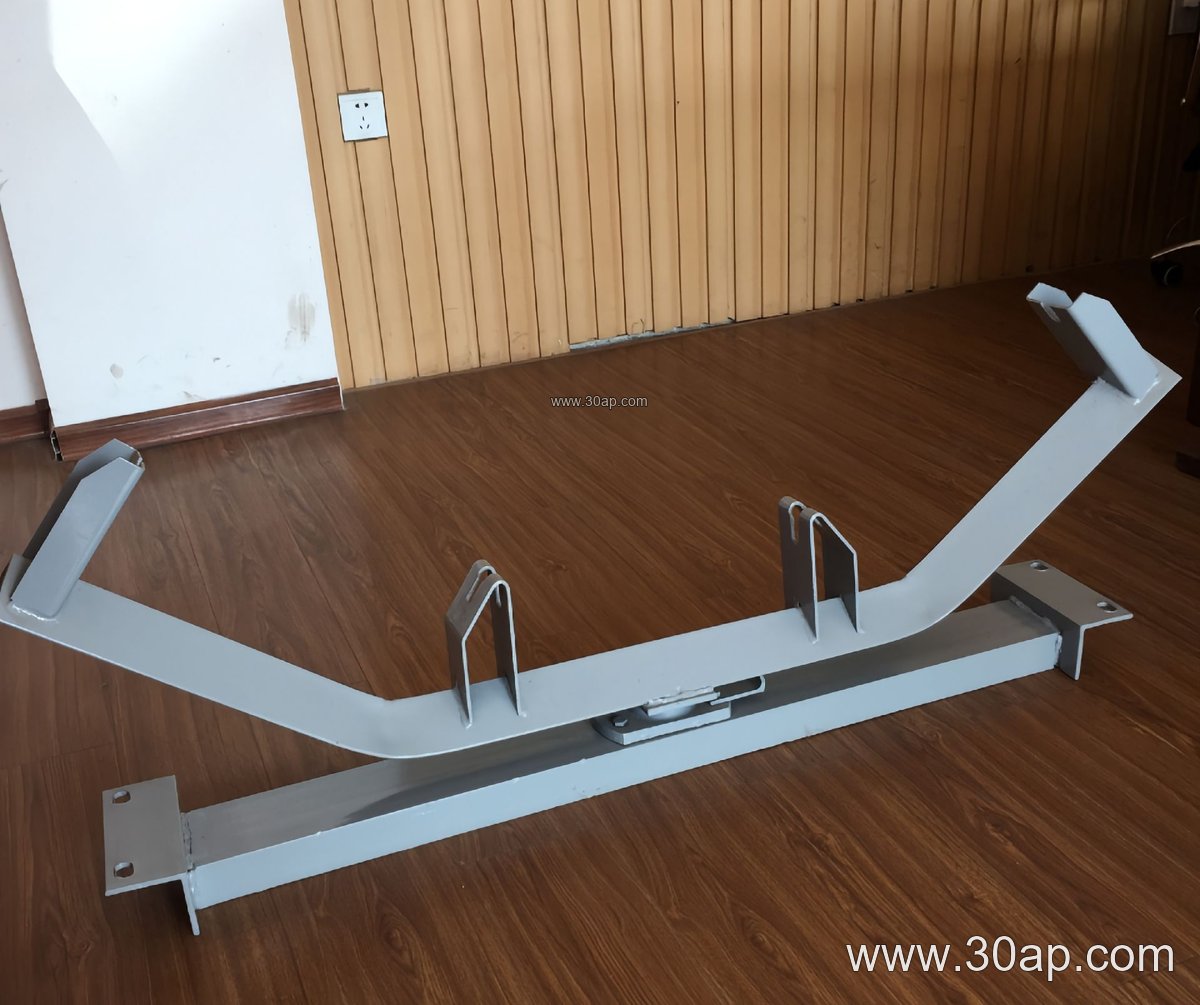
Key components include:
- Main beams (angle or channel)
- Cross brackets for idler mounting
- Mounting plates or bolt holes for connection to the conveyor stringers
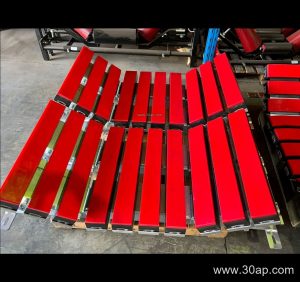
- Optional impact bars or cushioning for loading zones
Installation hole spacing and beam length are not universal; they vary with belt width, trough angle, and the specific idler diameter. A frame for a B800 belt with 35-degree trough and Ø108 idlers will have different dimensions from a frame for a B1200 belt with 45-degree trough and Ø133 idlers.
Types and Configurations
Support frames come in several configurations to match the task. The carry-side frame, often called a troughing frame, supports the loaded belt. The return-side frame supports the empty belt and may use flat or V-return idlers. Transition frames are used near pulleys to gradually change the belt from flat to troughed. Impact frames are reinforced to absorb the shock of material loading. Self-aligning frames incorporate training idlers to correct belt misalignment.
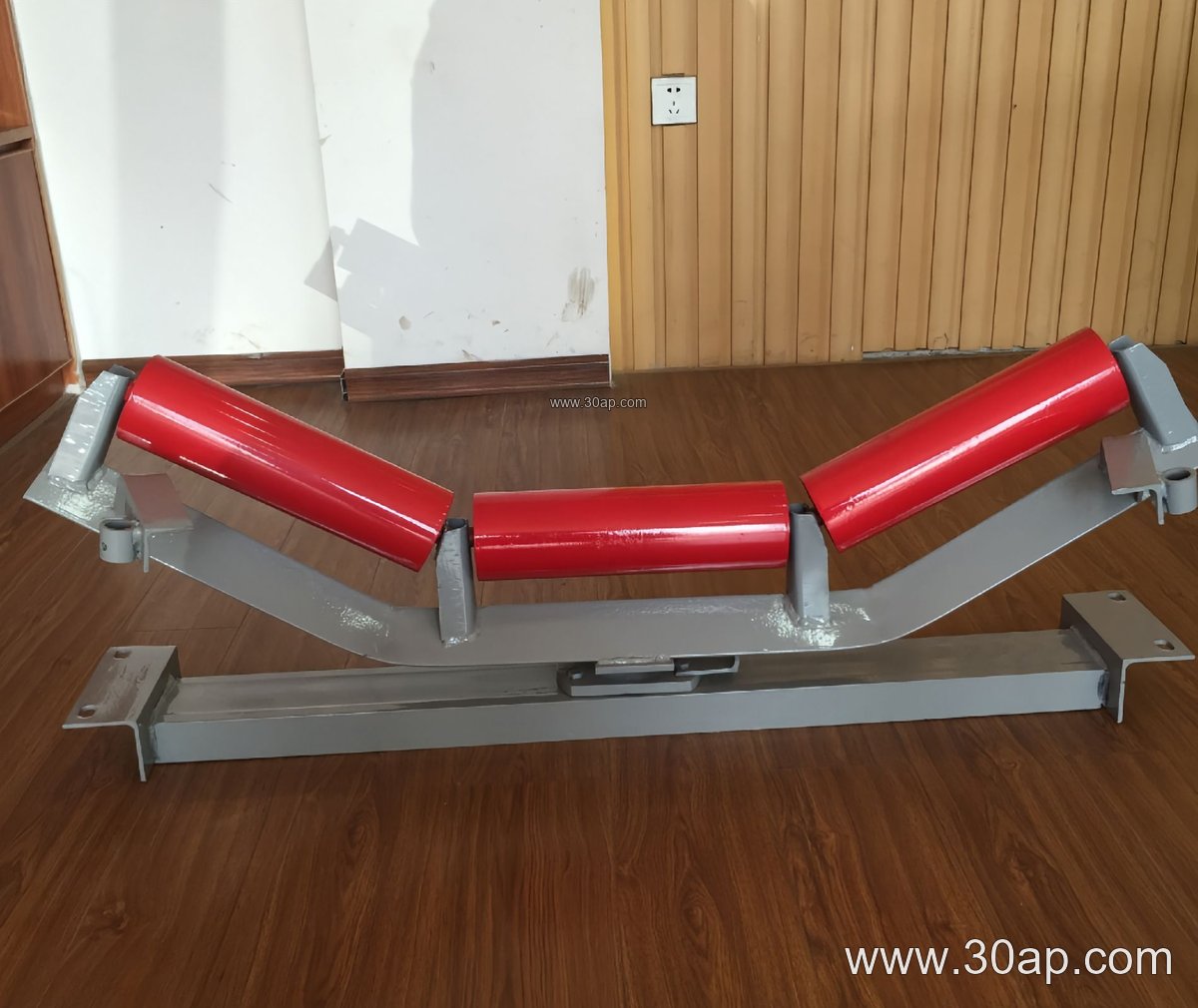
For a typical coal mine conveyor, a 35-degree troughing frame with Ø133 idlers might be standard. In a cement plant, a 45-degree frame with Ø159 idlers could be used for high-capacity clinker transport. In a sand and gravel operation, a 20-degree frame with Ø89 idlers might suffice for a narrow belt. These are examples, not fixed rules—the right combination depends on the belt width, material, and load.
Where It Is Used
Conveyor belt support frames are found wherever bulk materials move on a belt. In a limestone mine, they support the belt through the crushing and screening circuit. In a coal-fired power plant, they carry coal from the stockpile to the boiler. In a port terminal, they handle iron ore or fertilizer at high tonnages. In a concrete mixing plant, they keep aggregate flowing to the batching system. Even in tunnel excavation, support frames guide the belt that removes spoil.
The environment dictates the design. A frame in a dusty cement plant may need extra protection for the idler bearings, while a frame in a wet coal washery may be built from corrosion-resistant steel. In all cases, the frame must be sturdy enough to withstand the dynamic loads of the belt and material without deflection.
What a Buyer Should Know
When specifying a conveyor belt support frame, start with the belt width. Common widths include B500, B650, B800, B1000, B1200, B1400, B1600, B1800, B2000, and B2200. The frame must match the belt width and the idler diameter. Roller diameters such as Ø89, Ø108, Ø133, Ø159, and Ø194 are typical, but the choice depends on load and speed.
Trough angle is another critical factor. A 30-degree frame is common for general bulk handling, while a 45-degree frame is used for higher capacity or materials that need deeper troughing. Adjustable frames offer flexibility if the material or operating conditions change.
Consider the mounting arrangement. Will the frame bolt to existing stringers? Are the hole spacings compatible with your conveyor structure? Check the frame’s load rating and whether it includes any reinforcement for impact zones. Also, think about maintenance: can idlers be replaced without removing the frame? A well-designed frame simplifies upkeep.
Finally, remember that the support frame is part of a system. It must work with the conveyor belt, idler rollers, and conveyor pulleys to deliver reliable performance. A frame that is too light will flex and cause belt misalignment; one that is too heavy adds unnecessary cost. Balance is key.
By understanding the role and construction of the support frame, buyers can make informed decisions that keep their conveyor lines running smoothly in the toughest industries.