What Pneumatic Belt Tracker Response Time Really Means
Pneumatic belt tracker response time is the interval between the moment a conveyor belt begins to drift off its intended path and the moment the pneumatic tracking device applies a correcting movement to the belt. On a belt conveyor carrying bulk material, this delay decides whether a small wander is quietly corrected or grows into edge damage, spillage, and unscheduled downtime. The pneumatic belt tracker, also called a pneumatic conveyor belt alignment device or air-actuated belt tracking unit, uses compressed air to move a steering roller or frame that nudges the belt back toward center.
Response time is not a single number printed on a catalog page. It is the sum of several stages: sensing the misalignment, transmitting the signal through the pneumatic circuit, building pressure in the actuator, and physically moving the tracking roller. Buyers who understand these stages can ask better questions during selection and avoid surprises after installation.
How the Device Is Built and Why It Reacts Quickly or Slowly
A typical pneumatic tracking unit includes a sensing element such as an edge roller or paddle, a pneumatic valve or servo mechanism, an air cylinder or diaphragm actuator, and a steering frame carrying a roller that contacts the belt. Compressed air supply, filtration, and tubing complete the circuit. Some designs act directly through mechanical linkage with an air-assist boost, while others use a small pilot signal to control a larger air flow.
Several factors shape how fast the unit responds:
- Sensor geometry and the gap between the belt edge and the sensing roller
- Valve flow capacity and tubing diameter, which limit how quickly pressure reaches the actuator
- Actuator stroke and the mass of the moving steering frame
- Air pressure stability and the quality of filtration
- Belt speed, because a faster belt travels farther during the same delay
- Friction and stiffness of the pivot points and linkages
A sluggish response often traces back to undersized air lines, contaminated filters, or a steering frame that has become stiff through dust and corrosion. In a quarry or cement plant, fine dust ingress is a common cause of delayed action.
Where the Response Time Matters in Real Plants
In a coal mining conveyor or underground coal mining conveyor, a delayed correction can let a flame retardant conveyor belt or PVG conveyor belt rub against the structure, damaging the cover and creating a safety concern. At a power plant handling coal, a slow pneumatic tracker may allow a steel cord conveyor belt on a long overland run to drift during start-up before tension stabilizes. In aggregate operations, a quarry conveyor belt or crusher conveyor belt with an off-center load benefits from prompt correction to protect the idler roller and conveyor pulley from uneven wear.
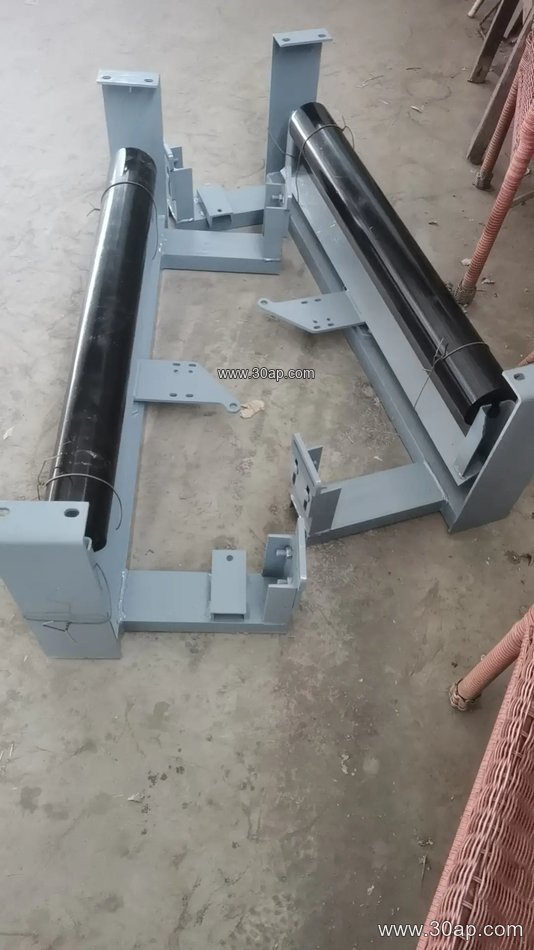
Response time also interacts with the belt itself. A heavy-duty mining conveyor belt with high transverse rigidity may need a longer steering movement to shift, while a thinner EP conveyor belt or NN conveyor belt may respond to smaller corrections. The tracking device works alongside the conveyor pulley, idler roller, and conveyor bracket, but it cannot compensate for a misaligned drive pulley or a badly skewed tail pulley. Those components must be set correctly first.
Selection and Maintenance Points for Buyers
When specifying a pneumatic belt tracker, provide the belt width, belt speed, running direction, load condition, and whether the unit mounts on the carrying or return side. Belt widths such as 800 mm, 1000 mm, 1200 mm, and 1600 mm are common references, but width alone does not define the roller diameter or shaft size. Share the conveyor drawing so the supplier can confirm mounting dimensions.
Ask how the response time was measured and under what air pressure. A realistic discussion covers sensor actuation threshold, valve reaction, and full stroke time. It is reasonable to request a bench demonstration rather than accept a single headline figure.
Maintenance directly affects response. Keep air filters clean, check tubing for kinks and leaks, lubricate pivot points per the manufacturer’s schedule, and inspect the sensing roller for buildup. During shutdowns, verify that the steering frame moves freely. Never inspect or adjust a moving tracker while the belt is running; isolate energy and lock out first.
For plants using输送带纠偏器 alongside fabric core conveyor belt or steel cord conveyor belt systems, matching the pneumatic tracker to the actual belt behavior is more valuable than choosing the fastest claimed reaction. A well-matched unit corrects early drift without oversteering, protecting the belt, the conveyor pulley, and the idler roller over the long run.