What a High-Strength Pulley Does on a Conveyor
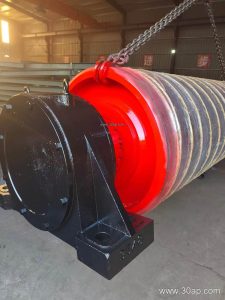
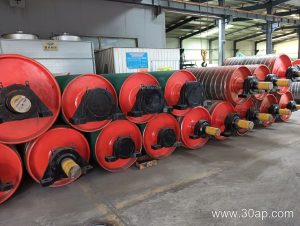
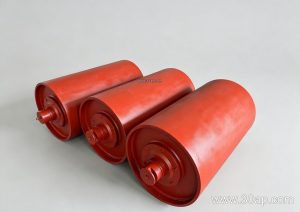
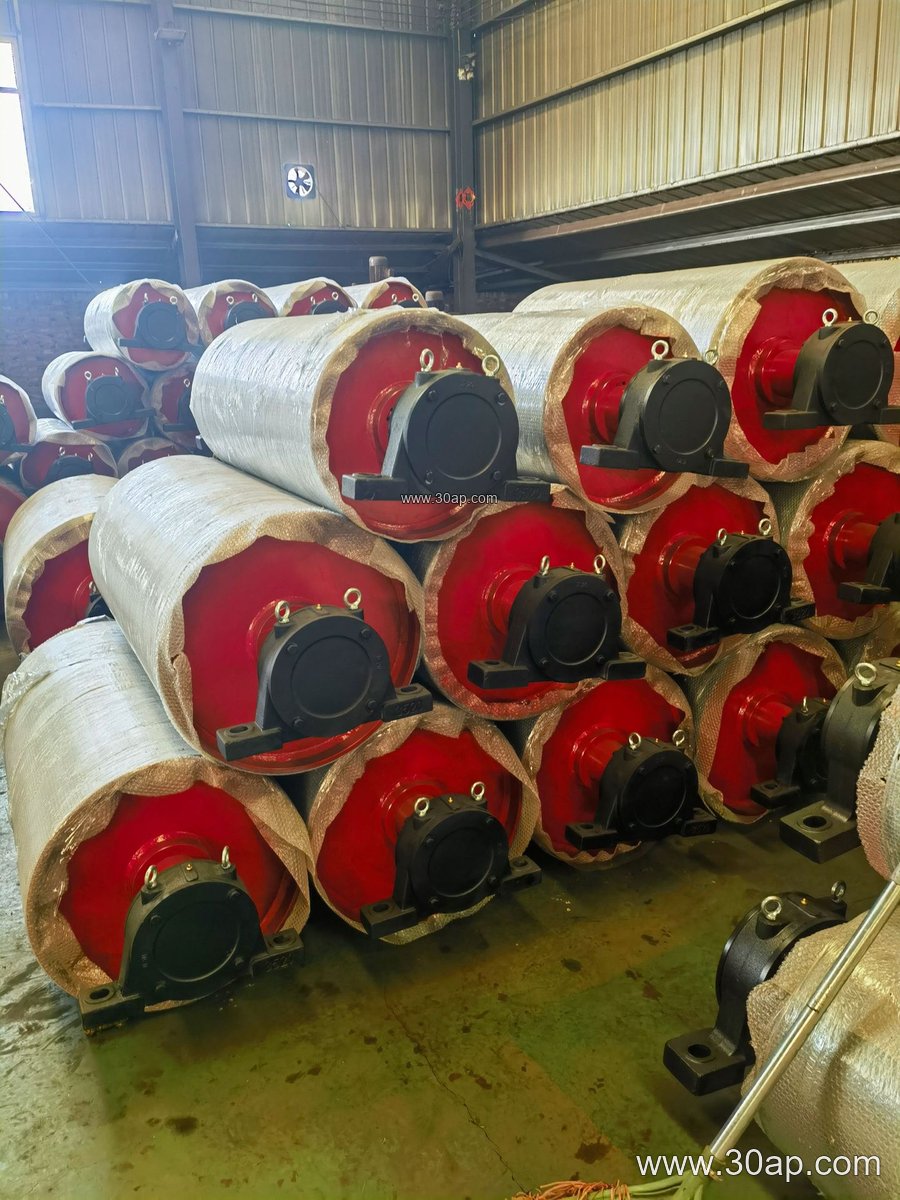
A high-strength pulley is the heavy-duty drum that carries and drives the conveyor belt at the head, tail, or intermediate points of a bulk handling line. In a quarry, a limestone mine, or a crushing and screening plant, the pulley has to transmit torque, hold belt tension, and survive constant grit and impact. The same component is often called a heavy-duty conveyor pulley, and both names describe the same product: a robust drum assembly built for high loads rather than light duty.
It is not a single part but a system. The shell, shaft, hubs, bearing housings, and locking elements work together. When buyers ask about a high-strength pulley, they are usually comparing shell thickness, shaft diameter, bearing type, and surface treatment, not just the drum diameter.
Construction Details That Matter
Most high-strength pulleys use a rolled steel shell with machined end discs and a through shaft or stub shafts. Welds are continuous and stress-relieved where design allows. The shaft is sized by torque and load, not by belt width alone, so a B1200 conveyor may use different shaft diameters depending on the drive arrangement and belt tension.
Surface options change how the pulley grips the belt. Plain finish suits some non-drive positions, while cast rubber, cold-bonded rubber, hot-vulcanized rubber, diamond grooving, herringbone grooving, or ceramic lagging improve traction on drive pulleys. Lagging thickness is commonly 8, 10, 12, 15, or 20 mm, selected according to duty.
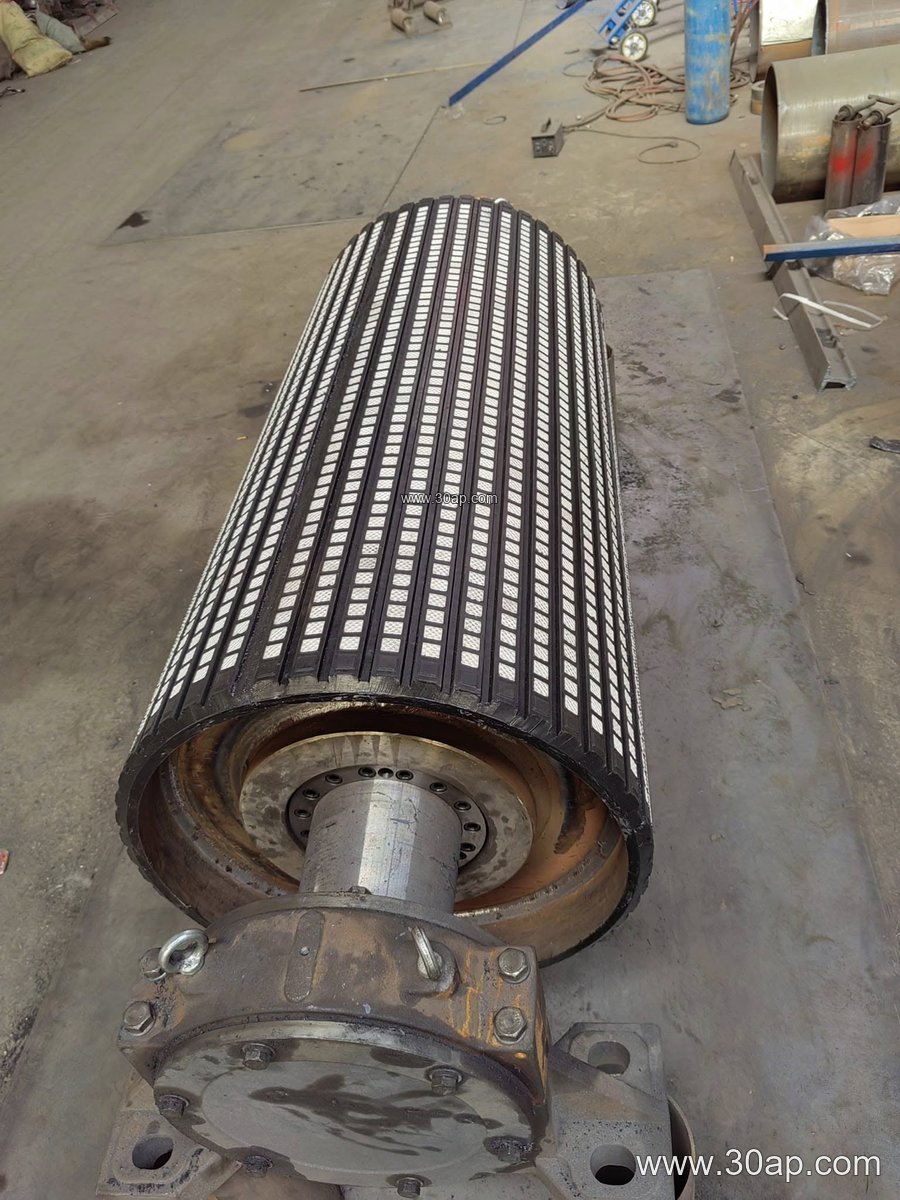
- Shell and end disc thickness matched to radial and axial loads
- Bearing housings designed for easy greasing or sealed-for-life bearing units
- Lagging bonded or vulcanized to resist slipping and wear
- Balanced drums for higher belt speeds
Common Sizes and Reference Data
Pulley diameters are usually chosen together with belt width and tension. Typical drum diameters include Ø200, Ø250, Ø315, Ø400, Ø500, Ø630, Ø800, Ø1000, Ø1250, Ø1400, Ø1600, and Ø1800. Belt widths range from B400 up to B2400 in large plants. The table below shows common face width references, not fixed rules.
| Belt width | Typical pulley face width | Example combination |
|---|---|---|
| B400 | about 500 mm | B400 x Ø250 |
| B500 | about 600 mm | B500 x Ø315 |
| B650 | about 750 mm | B650 x Ø400 |
| B800 | about 950 mm | B800 x Ø500 |
| B1000 | about 1150 mm | B1000 x Ø630 |
| B1200 | about 1400 mm | B1200 x Ø1000 |
| B1400 | about 1600 mm | B1400 x Ø800 |
| B1600 | about 1800 mm | B1600 x Ø1000 |
| B1800 | about 2000 mm | B1800 x Ø1250 |
Shaft diameters are commonly Ø50, Ø60, Ø70, Ø80, Ø90, Ø100, Ø120, Ø140, Ø160, Ø180, and Ø200. These values are reference points; the final shaft size should follow torque, bearing life, and load calculations. No single belt width can only match one pulley diameter.
Where High-Strength Pulleys Are Used
In a coal preparation plant or a power plant coal yard, the drive pulley must handle dusty, abrasive conditions and often a flame retardant conveyor belt. In an iron ore or copper ore terminal, the same drum may face heavy impact and wet material. A high-strength pulley is also used at the tail position, where it supports the belt and helps maintain tracking, and at bend or take-up points where space is tight.
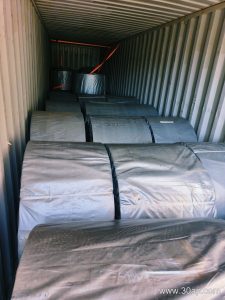
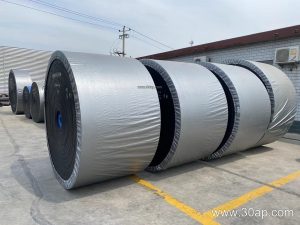
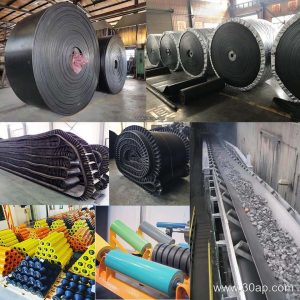
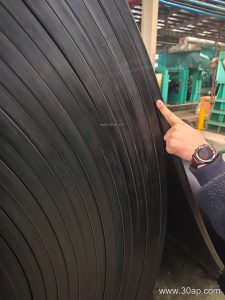
The pulley does not work alone. It runs with a conveyor belt, idler roller sets, and conveyor bracket assemblies that keep the belt aligned. A mismatch between pulley lagging and belt cover grade can cause slip or premature wear, so the belt and drum should be selected as a pair. For abrasive bulk material, an abrasion resistant conveyor belt and a properly lagged pulley usually last longer together.
Buyer Checklist Before Ordering
Start with the belt width, belt speed, and the working tension at the pulley. Then confirm the drum diameter and shaft size with the conveyor designer. Specify the position, because a drive pulley and a tail pulley are not interchangeable, and a bend pulley has different load demands from a tension pulley.
- Belt width and pulley face width, for example B1200 with about 1400 mm face
- Drum diameter such as Ø800 or Ø1000, and shaft diameter by calculation
- Lagging type and thickness, from plain to ceramic or diamond grooving
- Bearing type, lubrication method, and sealing for dusty sites
- Belt cover grade, such as heat resistant or oil resistant, matched to the environment
Ask for a drawing showing key dimensions, lagging details, and bearing arrangement. For a cement plant or a port bulk terminal, confirm corrosion protection and access for maintenance. A high-strength pulley is a long-life component, and the right specification at the start avoids unplanned stops on the conveyor line.