What a Side Roller Does on a Belt Conveyor
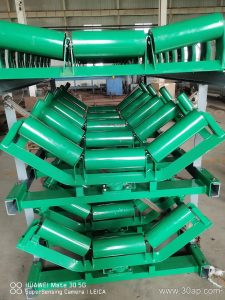
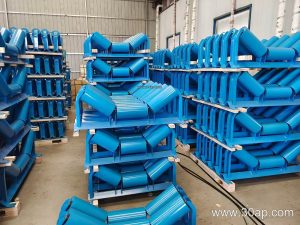
A side roller is the angled outer roll in a troughing idler set, the roll that lifts the belt edges and helps form the material bed. On a three-roll set, the two side rollers sit at an incline on either side of a shorter center roll; together they cradle the conveyor belt and keep bulk material from spilling. Because it contacts the belt edge region rather than the center, the side roller often carries a different load pattern from the middle roll and deserves attention on its own.
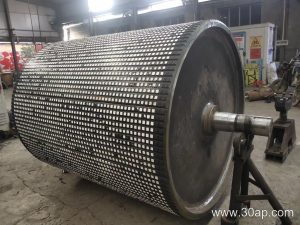
Buyers sometimes confuse the part with a conveyor pulley, but the two work differently. A conveyor pulley is a driven or directional drum at the head, tail or bend of the machine, while a side roller turns freely on its shaft as the belt passes over it. Drive, tail and bend pulleys are not interchangeable with idler rolls, and the side roller is a distinct position within the idler assembly.
How the Roll Is Built
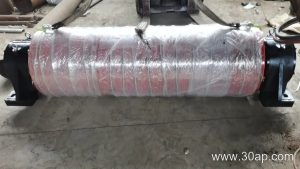
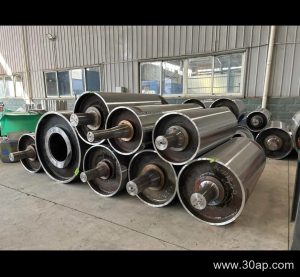
Most side rollers share a common structure: a steel tube shell, a shaft, bearing housings at each end, and a sealing arrangement to keep dust and water out. The shell may be plain steel, or it may be fitted with a rubber ring, nylon sleeve or ceramic covering where extra grip or wear protection is useful. Bearings are commonly 6204, 6205, 6305, 6306, 6308 or 6310 depending on the roll diameter and duty, though no single bearing is tied to one shell size.
The roller length is not a fixed number pulled from the belt width alone. It follows the belt width, the trough angle and the geometry of the idler set, and the side roll can differ from the center roll. As a rough reference, three-roll troughing sets are often built around roll lengths near 200 mm at B500, 250 mm at B650, 315 mm at B800, 380 mm at B1000, 465 mm at B1200 and 530 mm at B1400, with the side rollers sized to suit the frame.
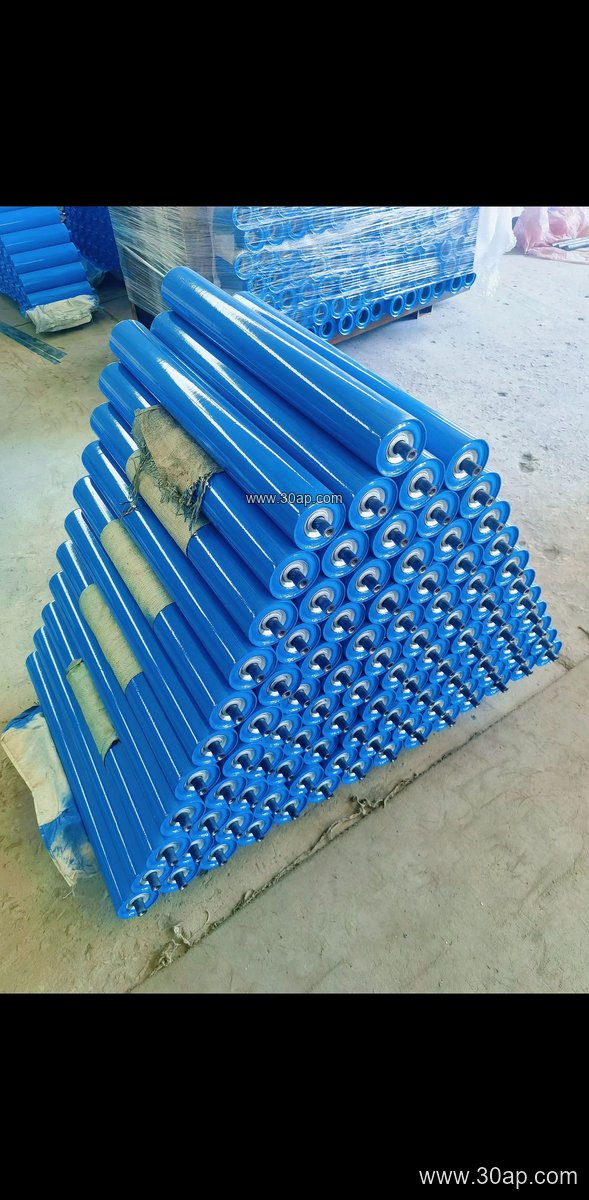
Trough Angle and Roller Position
The trough angle is one of the main choices a buyer faces. Common arrangements use 20, 30, 35 or 45 degrees. A steeper angle deepens the trough and holds more material, which suits high-capacity lines, but it also increases the load on the side roller and can affect belt training. A shallower angle is gentler on the belt and easier on the roll. Some designs add a small forward tilt of about 1.5 to 2 degrees to help center the belt.
The side roller is also where transitional geometry matters. Near a transfer point, a transition idler set gradually changes the belt from flat to troughed, and the side rollers in that zone see changing contact. Getting this arrangement right reduces edge stress and premature wear.
Where Side Rollers Are Used
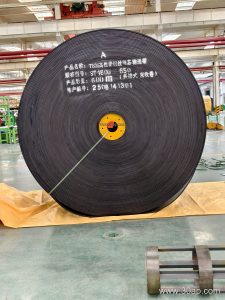
These rolls appear wherever a belt is troughed to carry bulk material. In a quarry or aggregate line they support crushed stone on the way to screening; in a coal handling system at a power plant they keep fuel moving from stockpile to bunker. Cement plants, iron ore and copper ore operations, port loading systems and crusher discharge conveyors all rely on troughing sets with side rollers. The belt above them may be a rubber conveyor belt, an EP conveyor belt, an abrasion resistant conveyor belt or a heavy-duty mining conveyor belt, and the roll specification should match that duty.
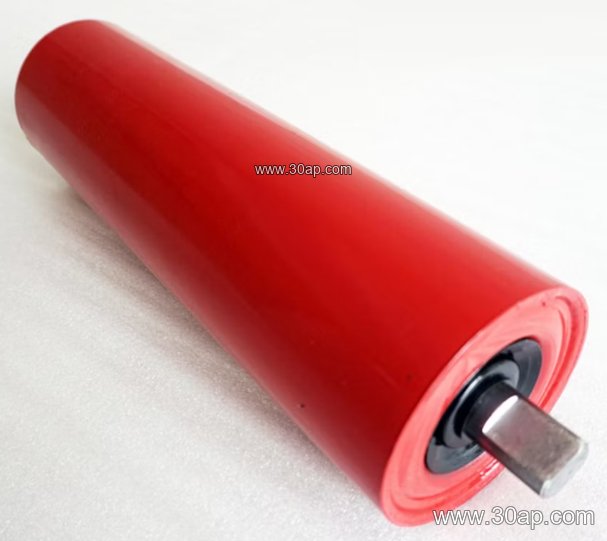
Where the belt carries hot clinker or sinter, heat resistant roll covers and suitable bearing grease matter. On dusty coal lines, a flame retardant conveyor belt is common, and the sealing on the side roller should be chosen for fine, abrasive dust.
Choosing the Right Side Roller
A buyer should confirm the belt width, the trough angle, the idler set form and the roll diameter before ordering. Common roll diameters include Ø63, Ø76, Ø89, Ø102, Ø108, Ø127, Ø133, Ø159, Ø178, Ø194 and Ø219 mm, and the choice depends on belt speed, load and frame design rather than on width alone. The shaft diameter follows the idler frame and bearing selection, not a rule derived from belt width.
Also check the roll surface: plain steel for general service, rubber rings for impact and grip, ceramic for severe abrasion. Sealing quality and bearing clearance are worth asking about, since a failed side roller can damage the belt edge. Matching the roll to the conveyor bracket and frame avoids misalignment.
Maintenance Notes
Inspect side rollers for seizure, wobble and shell wear, particularly on the loaded side of a curve or after a transfer point. Replace a damaged roll promptly; a locked side roller can scuff the belt edge and shorten the life of an otherwise sound belt. Keep spare rolls in the common diameters used on the site so a shutdown does not wait on delivery.