What an HDPE Idler Is and Where It Fits
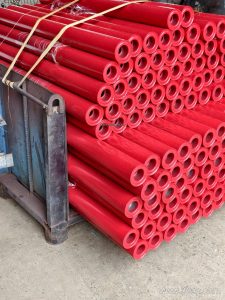
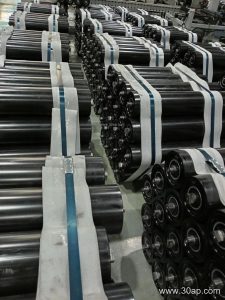
An HDPE idler is a conveyor idler roller whose shell is made from high-density polyethylene rather than steel tube. It sits under the belt on the carrying side or beneath the return strand, supporting the conveyor belt and keeping it tracking along the structure. In a limestone quarry or a tunnel spoil line, water, fines and mildly corrosive dust are constant companions, and this is exactly where a polymer-shell idler roller earns its place. The same reasoning applies in fertilizer handling and in some food or grain operations where a non-metallic, non-sparking roller surface is preferred.
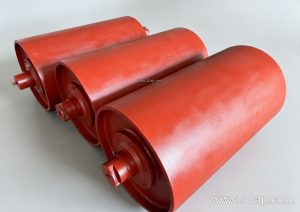
An HDPE idler is sometimes described as a plastic idler roller or a polymer conveyor idler. Those are acceptable short forms for the same product. It should not be confused with a conveyor pulley: drive, tail and bend pulleys are completely different components and are never interchangeable with an idler.
How the Roller Is Built
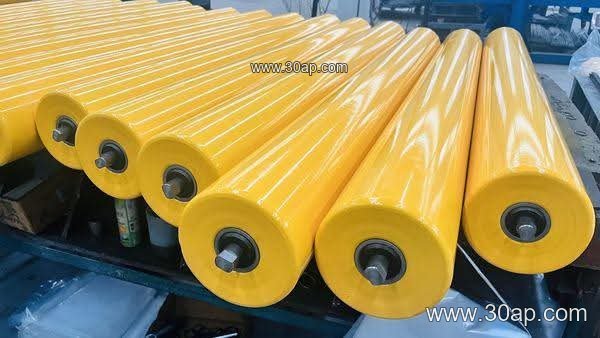
The usual construction pairs an HDPE tube with steel or polymer end caps and a bearing housing. The shell is lighter than an equivalent steel roller, which reduces the rotating mass and makes manual replacement easier on long galleries. Because polyethylene does not rust, the outer surface stays smooth even when the conveyor is washed down or exposed to humid air. Bearings are typically selected to suit the load and speed of the station rather than the tube alone.
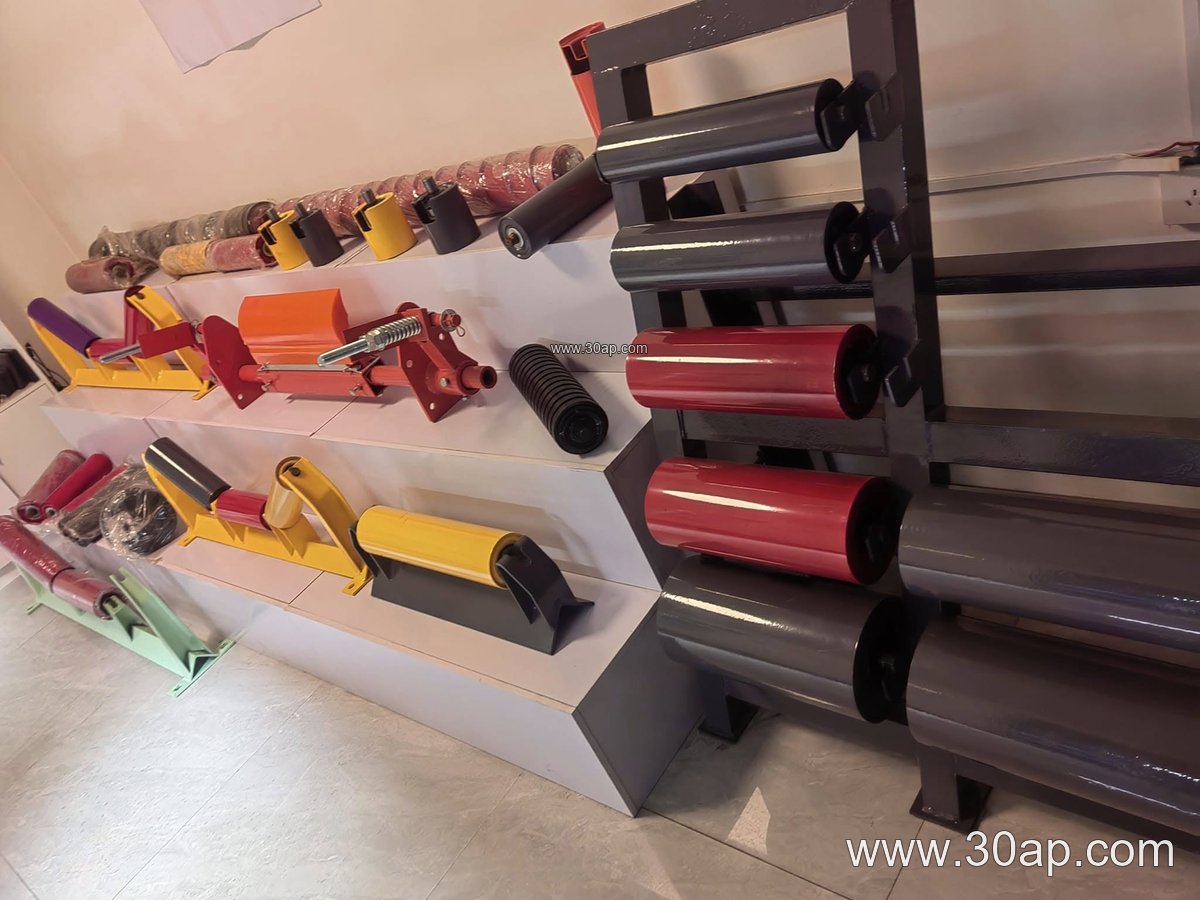
Common bearing choices include 6204, 6205, 6305, 6306, 6308 and 6310, matched by the idler manufacturer to shaft and housing dimensions. A plastic shell does not mean a plastic shaft; most designs still use a steel shaft running through the roller body.
Typical Diameters and Belt Widths
Roller diameter is chosen from belt speed, load and the space available in the conveyor bracket. HDPE idlers are often produced in the familiar idler sizes, so replacement on an existing frame is straightforward. The table below gives reference values only; actual selection follows the conveyor design.
| Item | Reference values |
|---|---|
| Roller diameter | Ø63, Ø76, Ø89, Ø102, Ø108, Ø127, Ø133, Ø159 mm |
| Belt width | B400, B500, B650, B800, B1000, B1200, B1400, B1600 mm |
| Trough angle | 20°, 30°, 35°, 45° |
| Roller surface | HDPE tube, plain or with rubber rings for impact stations |
Roller length varies with belt width, trough angle and the idler set arrangement. For a three-roll troughing set, common examples are around 200 mm for B500, 250 mm for B650, 315 mm for B800, 380 mm for B1000, 465 mm for B1200 and 530 mm for B1400. Side rollers and centre rollers can differ, and a single belt width does not dictate one fixed roller length or shaft diameter.
Where It Performs Well
Two settings suit this roller particularly well. The first is a wet quarry or sand and gravel line, where steel shells tend to corrode at the ends and where sticky fines build up. The second is a coal preparation plant or power plant coal handling gallery, where a lightweight, corrosion-resistant idler roller simplifies maintenance on elevated structures. In both cases the belt itself still does the heavy work, so the idler must be matched to the conveyor belt load and speed.
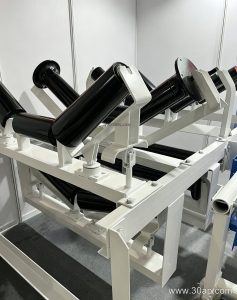
On a troughed carrying run, HDPE troughing idlers support the loaded belt at the selected trough angle. On the return run, HDPE return idlers or V-type return rollers keep the belt off the structure. At transfer points, a rubber-ring version can be used as an impact idler, though the shell material remains the same family of product.
Buyer Checklist
- Confirm roller diameter, roller length and shaft end type against the existing conveyor bracket.
- State the belt width and trough angle so the idler set geometry is correct.
- Describe the environment: wet, dusty, corrosive or high temperature. HDPE suits many wet and corrosive duties but is not a substitute for a heat resistant roller in hot clinker or sinter service.
- Check bearing size and sealing arrangement for the actual speed and load.
- Remember that the belt specification matters too. A heavy-duty mining conveyor belt, an abrasion resistant conveyor belt or a flame retardant conveyor belt each imposes different demands on the idler line.
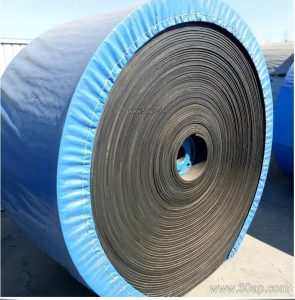
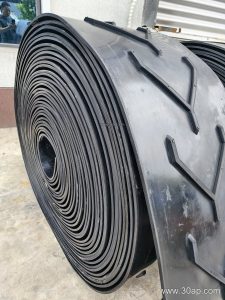
Matching the roller to the belt is a system decision. A steel cord conveyor belt on a long overland run, an EP conveyor belt on a secondary crusher line, or a chevron conveyor belt on an incline all run over idlers, but the load profile differs. Buyers should share belt type, width and speed with the idler supplier rather than ordering from a single dimension. For coordinated supply of conveyor belt, idler roller, conveyor pulley and conveyor bracket, it helps to plan the whole station together. See more at https://www.example.com/hdpe-idler and https://www.example.com/conveyor-idler.