What an idler bracket does on a conveyor
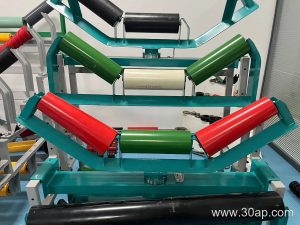
An idler bracket is the stationary support that holds a conveyor idler roller in the position the belt profile needs. It is a deceptively simple part: a frame made from angle steel, channel steel or folded plate, drilled for mounting and shaped to carry one roller or a group of rollers at a set angle. In a quarry, a coal washing plant or a cement kiln feed line, the bracket determines whether the belt sits in a stable trough, whether the return strand is supported, and whether the load is transferred into the stringer instead of into the roller shaft. A conveyor bracket that fits poorly will show up quickly as roller wobble, belt edge damage and spillage.
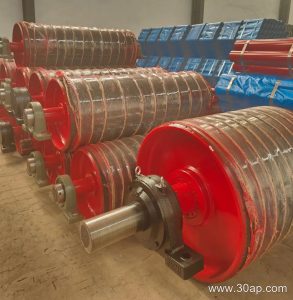
The bracket is not a pulley. A drive pulley, tail pulley or bend pulley transmits motion or changes belt direction, while an idler bracket only locates carrying or return rollers. Keeping that distinction clear matters when ordering, because the two product families have different interfaces, loads and inspection routines.
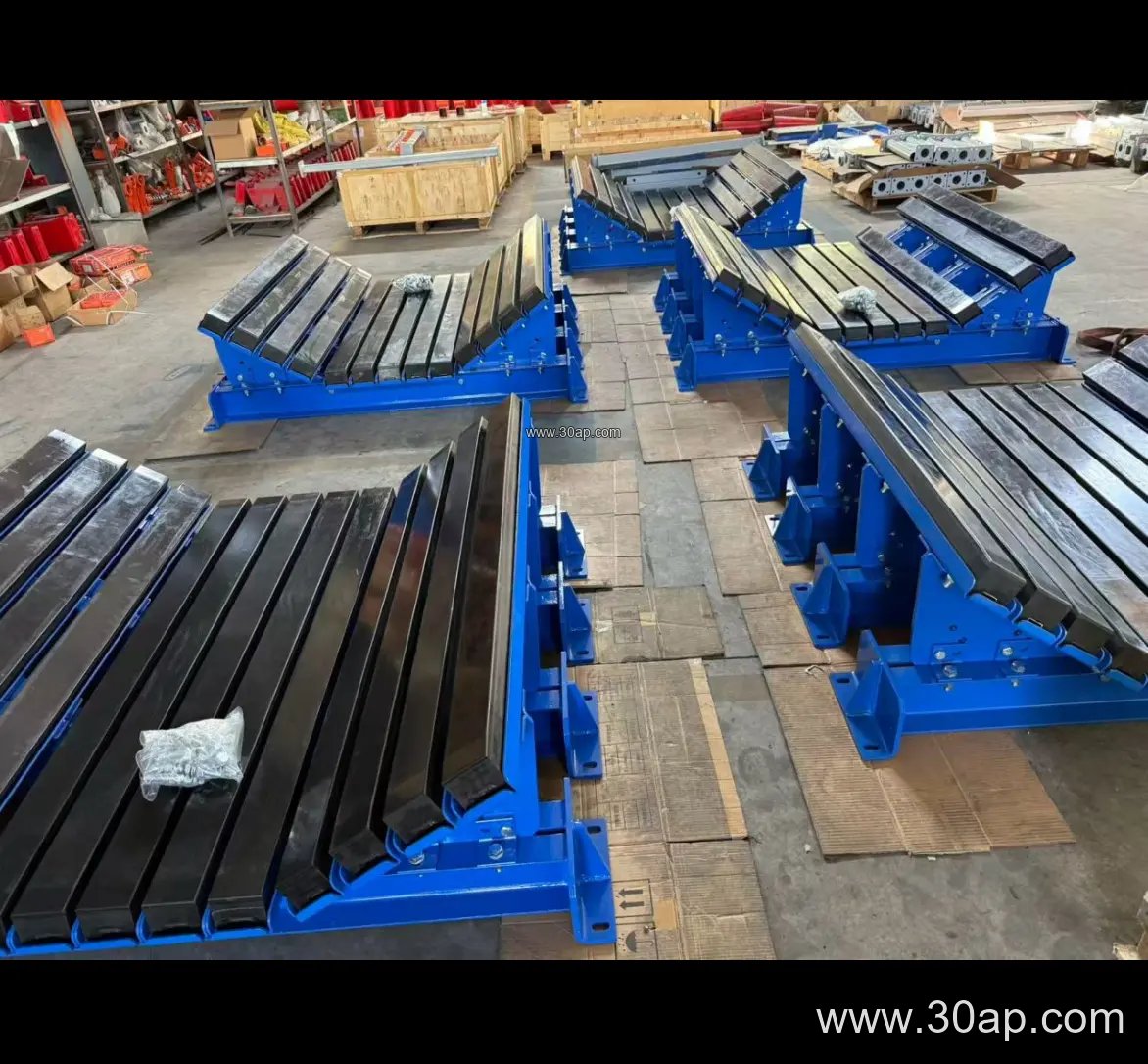
Construction and common configurations
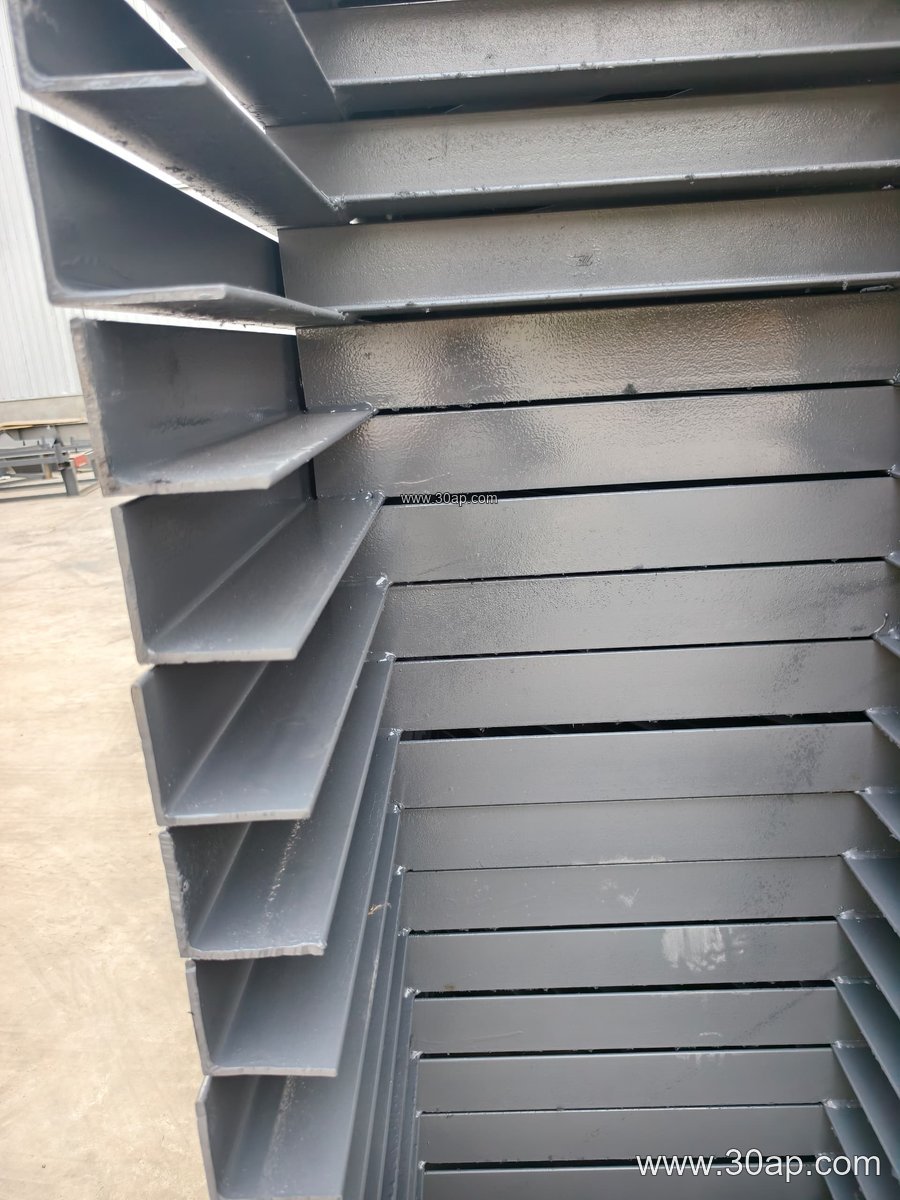
Most brackets are fabricated rather than cast. The frame is cut and welded, then punched or drilled so the roller shaft can drop into slots or bolt to the frame. Galvanized or painted finishes are common for outdoor installations, and the steel thickness is usually chosen from the belt width and the expected load rather than from a single catalogue rule.
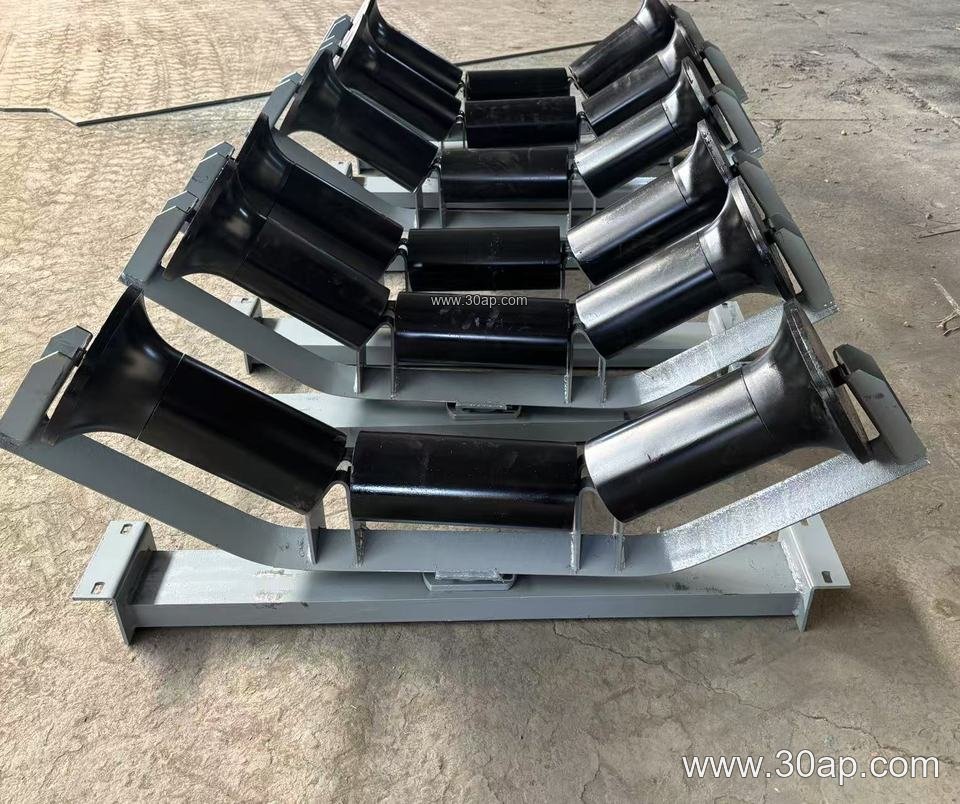
- Troughing bracket for the carrying side, setting rollers at a trough angle.
- Transition bracket placed near a pulley to ease the belt from flat to troughed.
- Return bracket or V-return bracket supporting the empty strand.
- Impact bracket with cushioning rollers under a loading point.
- Self-aligning and forward-leaning brackets for tracking control.
- Adjustable bracket allowing the trough angle to be changed on site.
The trough angle is the parameter most often discussed. Common values are 20, 30, 35 and 45 degrees, and an adjustable bracket can move between these positions. Forward-leaning designs are typically set at about 1.5 to 2 degrees to help centre the belt. Roller diameter is a separate decision: Ø89, Ø108, Ø133, Ø159 and Ø194 are all used, and the correct match depends on belt width, belt speed and load, not on belt width alone. Typical combinations might read B800, 35 degrees, Ø108 or B1200, 45 degrees, Ø133, but these are examples of how a specification is written, not fixed pairings. Hole spacing and crossbeam length change with belt width and trough angle, so they should be confirmed from the drawing.
Where the bracket sits in the line
In a stone crushing and screening circuit, troughing brackets carry the loaded belt after the crusher discharge, while impact brackets absorb the drop at the transfer chute. In a power plant coal yard, return brackets keep the empty strand off the ground and away from build-up. In an underground coal mine, flame retardant conveyor belt and anti-static conveyor belt are specified for safety, and the brackets must be robust enough for confined, dusty conditions. A port ship loading line may use a wide conveyor belt on heavy brackets, while a fertiliser or grain silo installation usually needs a cleaner, corrosion-aware finish.
Bracket choice also interacts with the belt itself. A steel cord conveyor belt is stiff and needs a gentler transition, so transition brackets are spaced to avoid over-stressing the splice. A chevron conveyor belt or corrugated sidewall conveyor belt may require more careful roller contact at the edges. Abrasion resistant conveyor belt, heat resistant conveyor belt and oil resistant conveyor belt each bring their own operating conditions, but none of them changes the basic job of the bracket: hold the roller firmly and at the right angle.
Buyer checklist
Before ordering, confirm the belt width, the trough angle, the roller diameter and the mounting interface with the stringer. Ask for the drawing that shows hole centres and crossbeam length rather than assuming a standard. State the environment: a wash plant, a cement plant and an iron ore stockyard place different demands on coating and steel thickness. Check that the bracket is compatible with the roller end type actually being used, and confirm whether adjustment is needed for tracking.
During maintenance, inspect for loose bolts, bent frames, elongated holes and corrosion at the weld toes. A worn bracket is often the hidden cause of repeated roller failure. Replacing it with a correctly specified unit is cheaper than repeatedly changing rollers on a frame that no longer holds alignment. For buyers sourcing through a supplier of conveyor components, it helps to send the belt width, angle, roller diameter and a photo of the existing mounting point so the idler bracket can be matched to the line rather than guessed from a table.