What This Belt Is Built to Do
A High Abrasion Resistant Conveyor Belt is a rubber conveyor belt engineered so that its cover compound resists wear from sharp, hard, and fast-moving bulk materials. Rather than a single product family, the term describes a performance class: the belt keeps its carrying cover intact for longer when it hauls crushed rock, ore, clinker, sinter, or sand. Buyers often meet it under the shorter name abrasion resistant conveyor belt, and the two names refer to the same product. In a quarry, cement plant, or iron ore terminal, the belt is usually the first component to show wear, so the cover grade matters as much as the tensile strength.
How the Belt Is Constructed
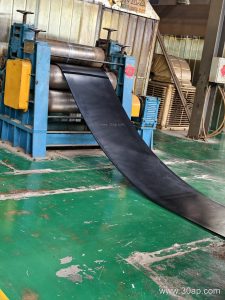
The abrasion resistance comes mainly from the top cover compound, which is formulated with a tough rubber base and reinforcing fillers. The carcass provides tensile strength and carries the load. Common carcass options include an EP conveyor belt (polyester warp, nylon weft), an NN conveyor belt (nylon both ways), and a multi-ply fabric core conveyor belt. Steel cord conveyor belt constructions are chosen where very high tension and long center distances are involved. A typical build for a high abrasion resistant conveyor belt looks like this:
| Element | Typical options | Notes |
|---|---|---|
| Cover compound | Abrasion resistant grade | Top cover does the wear duty |
| Cover thickness | 4+2, 5+2, 6+2, 8+3 mm | Top + bottom; confirm per design |
| Carcass | EP, NN, multi-ply fabric | Usually 2 to 6 plies |
| Strength class | EP200 to EP2000 | Selected by tension calculation |
| Width | B500 to B2000 | Matched to tonnage and lump size |
Edge quality, splice design, and cover thickness all influence service life. A thicker top cover usually extends wear life, but it adds weight and stiffness that the conveyor pulley and idler roller set must tolerate.
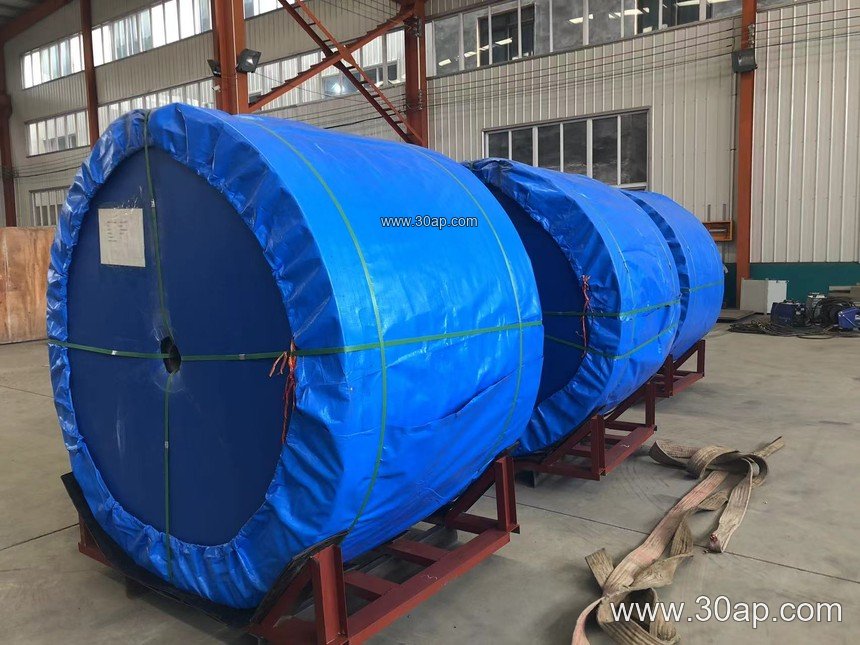
Where It Earns Its Keep
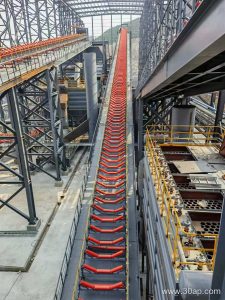
Wear is worst where the material is hard, angular, and delivered at speed. Primary crusher discharge lines in a stone crushing plant, transfer points in a coal mining conveyor system, and clinker transport in a cement plant are classic duties. The same belt class suits aggregate conveyor lines, copper ore and gold mining circuits, and ship loading conveyors at ports. In a power plant, coal conveyor runs and ash handling benefit from a wear-resistant cover. For underground coal mining, a flame retardant conveyor belt with abrasion resistant cover is often specified so that both wear and fire safety are addressed in one belt.
Related Belt Types and When They Differ
Abrasion is only one demand. Heat resistant conveyor belt grades handle hot clinker and sinter, while oil resistant conveyor belt covers resist hydrocarbon attack. A chevron conveyor belt or corrugated sidewall conveyor belt solves incline and material spillage rather than wear alone. A pipe conveyor belt encloses the material for dust control. These are separate subtypes chosen for different problems; they do not replace a high abrasion resistant belt where the main enemy is sliding rock. In practice, a single conveyor line may use more than one belt type along its length.
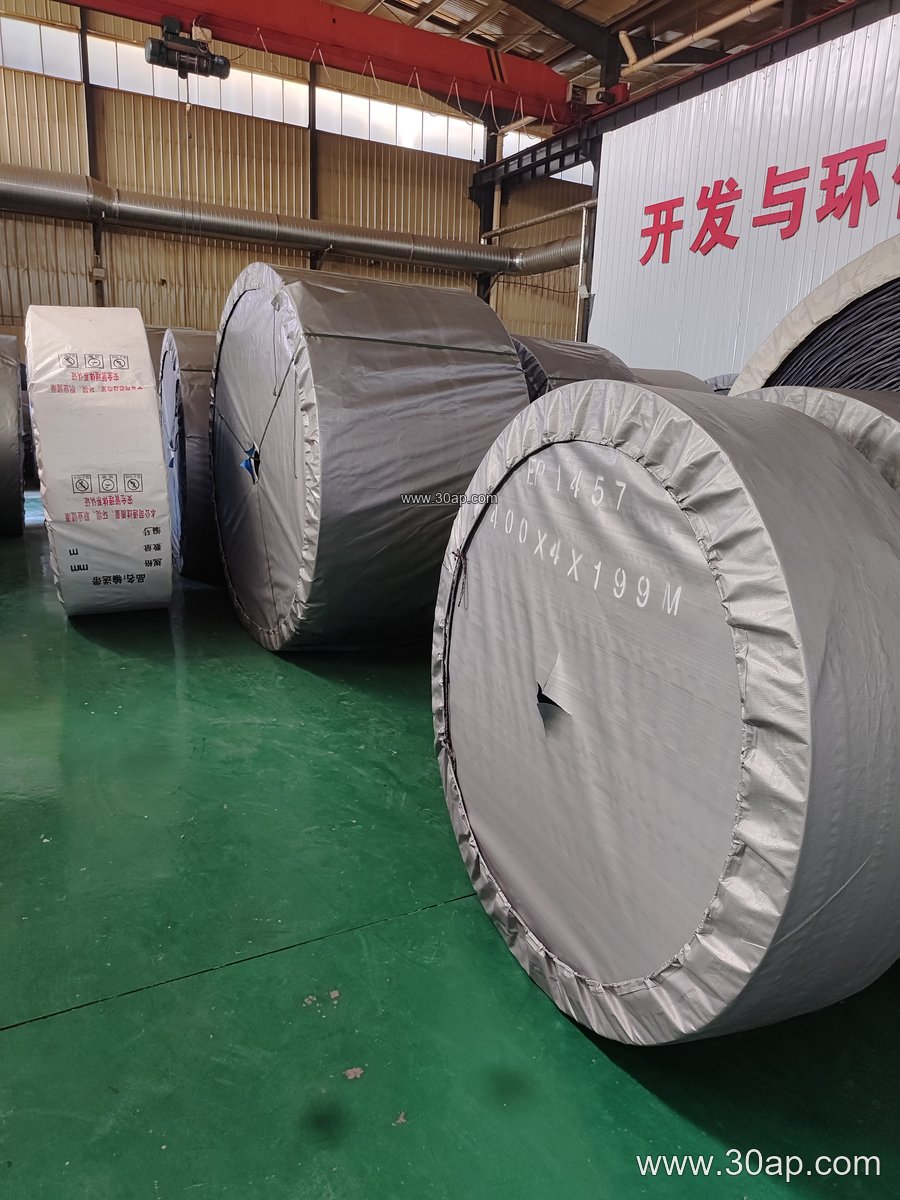
Specification and Selection Points
- Tension class: match the belt to the calculated working tension, not to habit. EP315, EP630, and EP1000 are common steps, but the required class comes from the conveyor design.
- Cover thickness: a 6+2 or 8+3 mm cover is often used at high-wear transfer points; lighter 4+2 mm covers suit cleaner, lower-impact duty.
- Width: belts from B650 to B1400 cover many plant duties, while B1800 and B2000 appear on high-capacity main lines.
- Impact: at crusher outlets, an impact resistant conveyor belt or extra cushioning at the loading point protects the carcass.
- Environment: cold resistant, anti-static, and fire resistant variants may be needed in the same plant.
Ask for the cover grade, carcass type, ply count, and thickness in writing. Values such as 10 mm total thickness or an EP1000 1200mm belt are reference points, not universal rules, and suppliers differ.
Installation and Maintenance Notes
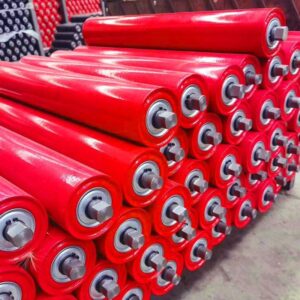
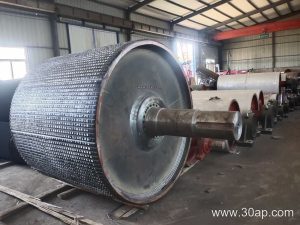
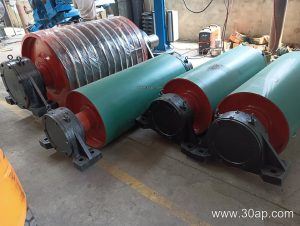
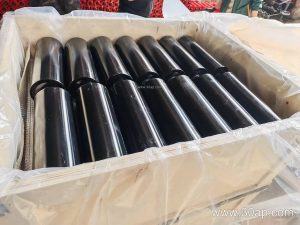
Wear life depends on the whole conveyor, not the belt alone. Keep the conveyor pulley aligned and the lagging in good condition so the belt does not slip. Check the idler roller set for seized rollers, which scuff the bottom cover. Clean skirt rubber and transfer chutes to avoid trapping lumps. Use a conveyor bracket and frame that hold the belt square, because misalignment pushes material against one edge and accelerates cover loss. Inspect splices for edge separation, and rotate or repair belts before damage reaches the carcass. For more belt, idler, and pulley guidance, visit conveyor belt reference pages and drum pulley technical notes at www.beltconveyorsolution.com; our abrasion resistant conveyor belt and mining conveyor belt pages give further detail.
Choosing a high abrasion resistant conveyor belt is ultimately a matching exercise: the cover must suit the rock, the carcass must suit the tension, and the conveyor hardware must keep the belt running true. Get those three right, and the belt will spend less time in the maintenance schedule.