What a Sand and Gravel Conveyor Idler Does
A sand and gravel conveyor idler is the rotating roller that supports the conveyor belt along a handling line. In a pit, a crushing circuit, or a concrete batch plant, these rollers carry the weight of damp sand, crushed stone, and fines while keeping the belt tracking in a stable path. The idler roller itself is a simple assembly, but its condition decides how much power the drive needs and how often maintenance crews visit the line. On an aggregate conveyor belt, grit and water are constant companions, so the idler has to cope with abrasion and contamination rather than just load.
The same item is often called a belt conveyor idler or a troughing roller, depending on the plant and the section of the conveyor. Drive pulleys, tail pulleys, and bend pulleys are different components that transmit and redirect belt tension; they are not idlers and cannot be swapped for one. A conveyor pulley does the pulling, while the idler roller only supports.
Construction and Common Forms
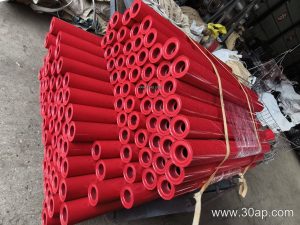
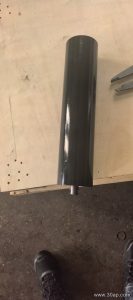
Most units combine a steel tube shell, a shaft, bearing housings, and a sealing arrangement. The shell may be plain steel, nylon-coated, ceramic-covered, or fitted with rubber rings for impact zones. Bearings such as 6204, 6205, 6305, 6306, 6308, or 6310 appear across the range, but a given bearing is not tied to one roller diameter.
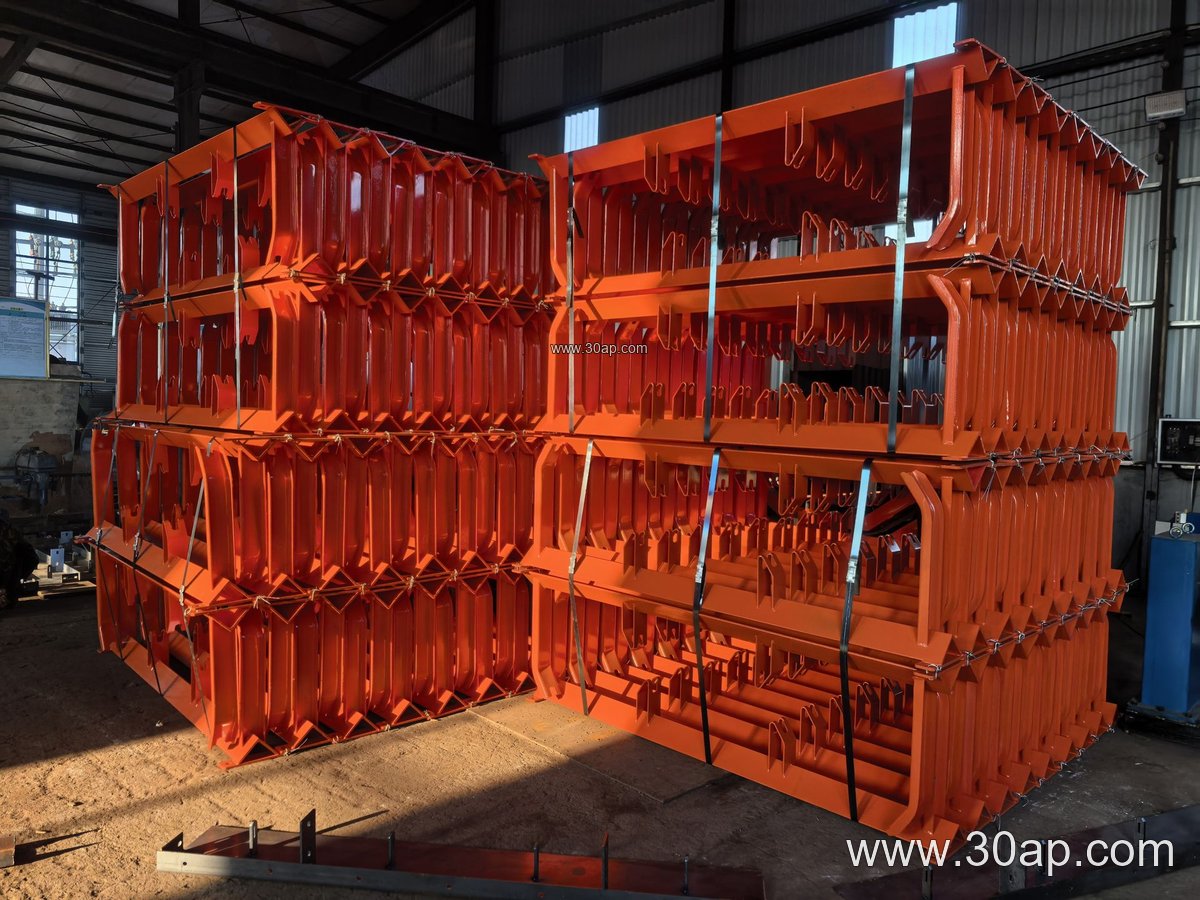
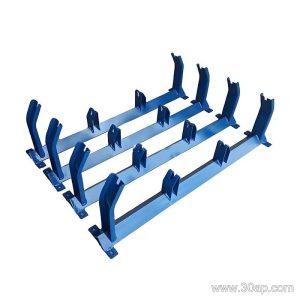
Troughing sets are usually built as single-roller, two-roll, or three-roll arrangements. The three-roll troughing idler is the workhorse on a sand and gravel conveyor belt, with a trough angle commonly set at 20, 30, 35, or 45 degrees. A small forward tilt of about 1.5 to 2 degrees is used on some training idlers to help the belt stay centered.
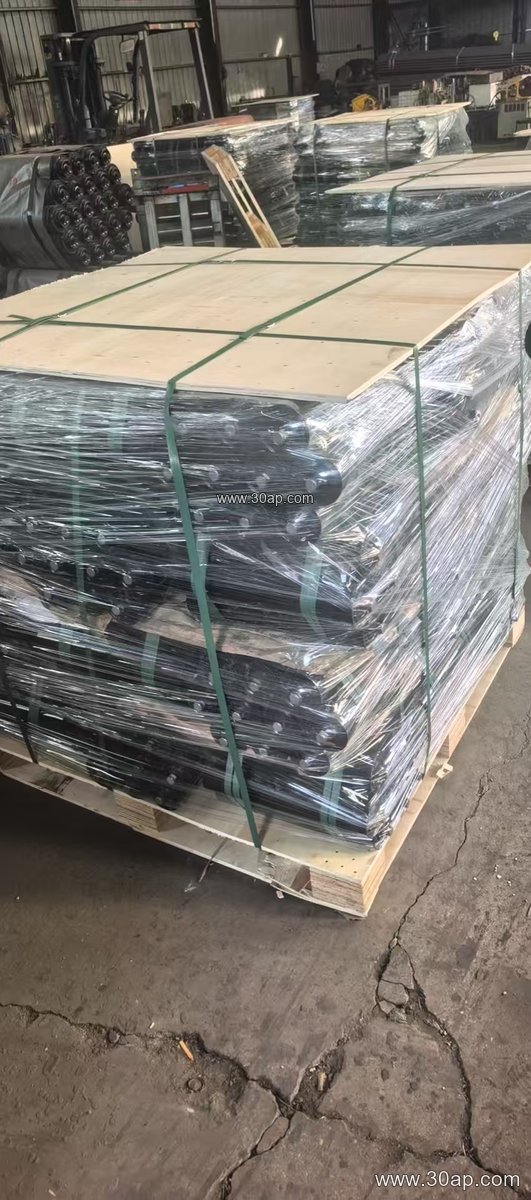
- Troughing and carrying idlers support the loaded strand.
- Impact idlers with rubber rings sit under crusher discharge and transfer points.
- Return idlers and V-return rollers support the empty strand and shed spillage.
- Transition idlers ease the belt from flat to troughed profile near pulleys.
- Self-aligning idlers correct minor belt wander on long runs.
Matching Roller Diameter, Belt Width, and Roll Length
Roller diameter and belt width are chosen together with belt speed, load, and the space available under the belt. Common diameters include Ø63, Ø76, Ø89, Ø102, Ø108, Ø127, Ø133, Ø159, Ø178, Ø194, and Ø219 mm. A wider, heavier belt generally calls for a larger shell and shaft, but the relationship is set by design calculations, not by a single rule. Belt widths in aggregate work often fall between B400 and B2400.
Roll length changes with belt width, trough angle, and the idler set form. The figures below are common examples for three-roll troughing sets, not fixed matches.
| Belt width | Typical roll length (example) |
|---|---|
| B500 | about 200 mm |
| B650 | about 250 mm |
| B800 | about 315 mm |
| B1000 | about 380 mm |
| B1200 | about 465 mm |
| B1400 | about 530 mm |
| B1600 | about 600 mm |
| B1800 | about 670 mm |
| B2000 | about 750 mm |
Side rollers and center rollers may differ in length on the same set. The shaft diameter should come from the load calculation, never from belt width alone.
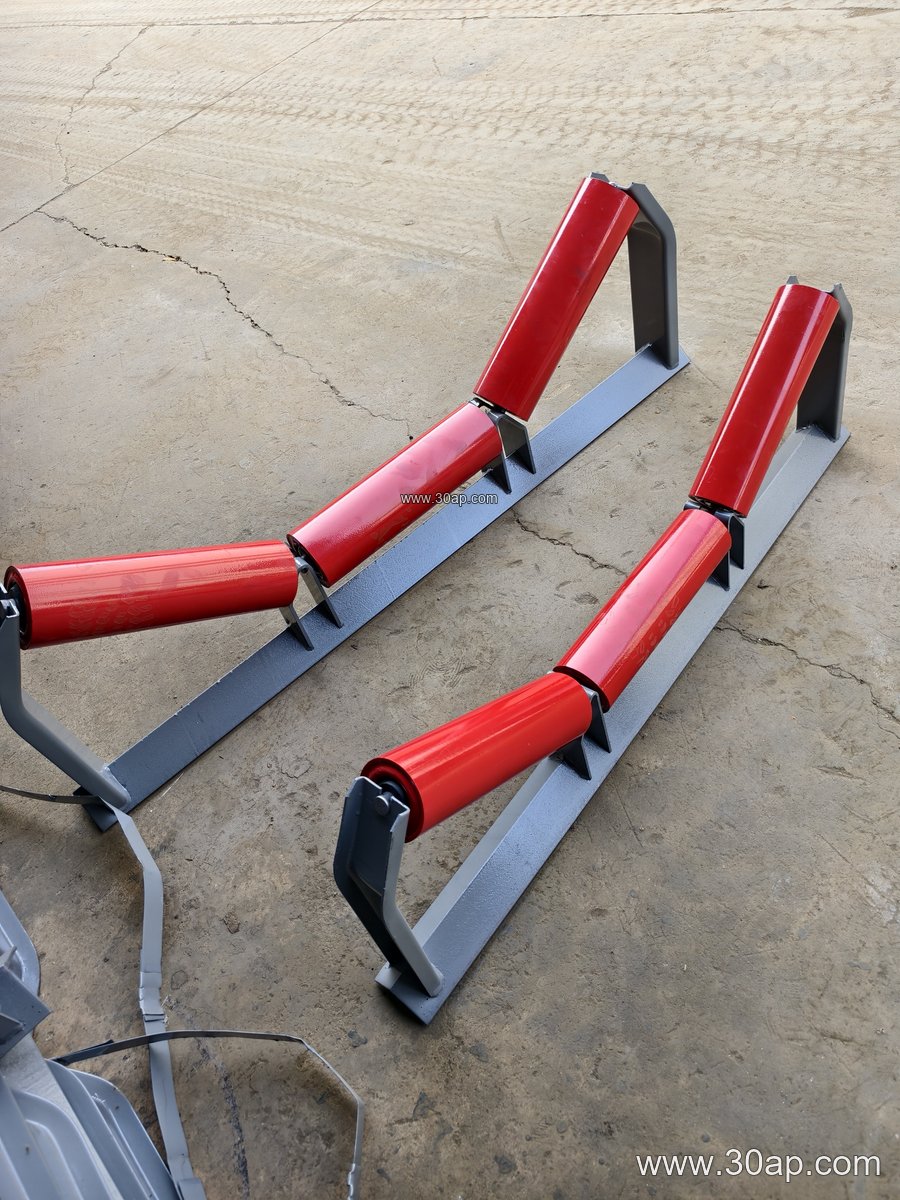
Where These Idlers Are Used
In a sand and gravel plant, troughing idlers handle the primary and secondary crushing streams, while impact rollers protect the belt below the crusher. In a concrete mixing station, they keep aggregate moving from the hopper to the batching area. Similar units appear in cement plants, power plant coal yards, and port loading lines, where an abrasion resistant conveyor belt and a well-sealed idler roller work as a pair. A quarry conveyor belt may also run with a chevron conveyor belt on an incline, and the idler spacing there follows the belt’s cleat pattern.
In a washing plant, water and fine sand demand good sealing. In a tunnel or underground operation, flame retardant conveyor belt and anti-static conveyor belt choices go together with idlers that resist dust ingress. For long overland runs, a steel cord conveyor belt or an EP conveyor belt may be used; the idler selection still follows the same load and alignment logic.
What Buyers Should Check
- Sealing and bearing quality. Grit enters through poor seals and shortens bearing life quickly.
- Shell material and thickness. Abrasive stone wears thin walls; rubber rings help at transfer points.
- Roller diameter versus belt speed. Higher speeds need attention to balance and bearing selection.
- Mounting compatibility. Confirm the frame, conveyor bracket, and shaft ends fit the existing structure.
- Spacing along the line. Idler spacing affects belt sag and should follow the conveyor design.
Ask for the drawing, the bearing designation, and the seal type before ordering. A sand and gravel conveyor idler is inexpensive compared with downtime, so the specification details deserve a careful look.