What an EP Conveyor Belt Is
An EP Conveyor Belt is a fabric-core rubber belt built around polyester warp and nylon weft plies. The initials stand for the two fibre types, which is why the same product is also sold as an EP rubber conveyor belt or an EP fabric core conveyor belt. In a typical construction, two to six fabric plies are bonded under heat and pressure between a top cover and a bottom cover. The polyester warp gives the belt low stretch under load, while the nylon weft helps it absorb shock at loading points.
This belt family sits between ordinary cotton or NN fabric belts and steel cord belts. It is a common choice for bulk material conveyor belts in mines, cement plants, power stations, quarries, sand and gravel yards, and port loading lines, where a balance between strength, troughability, and cost matters.
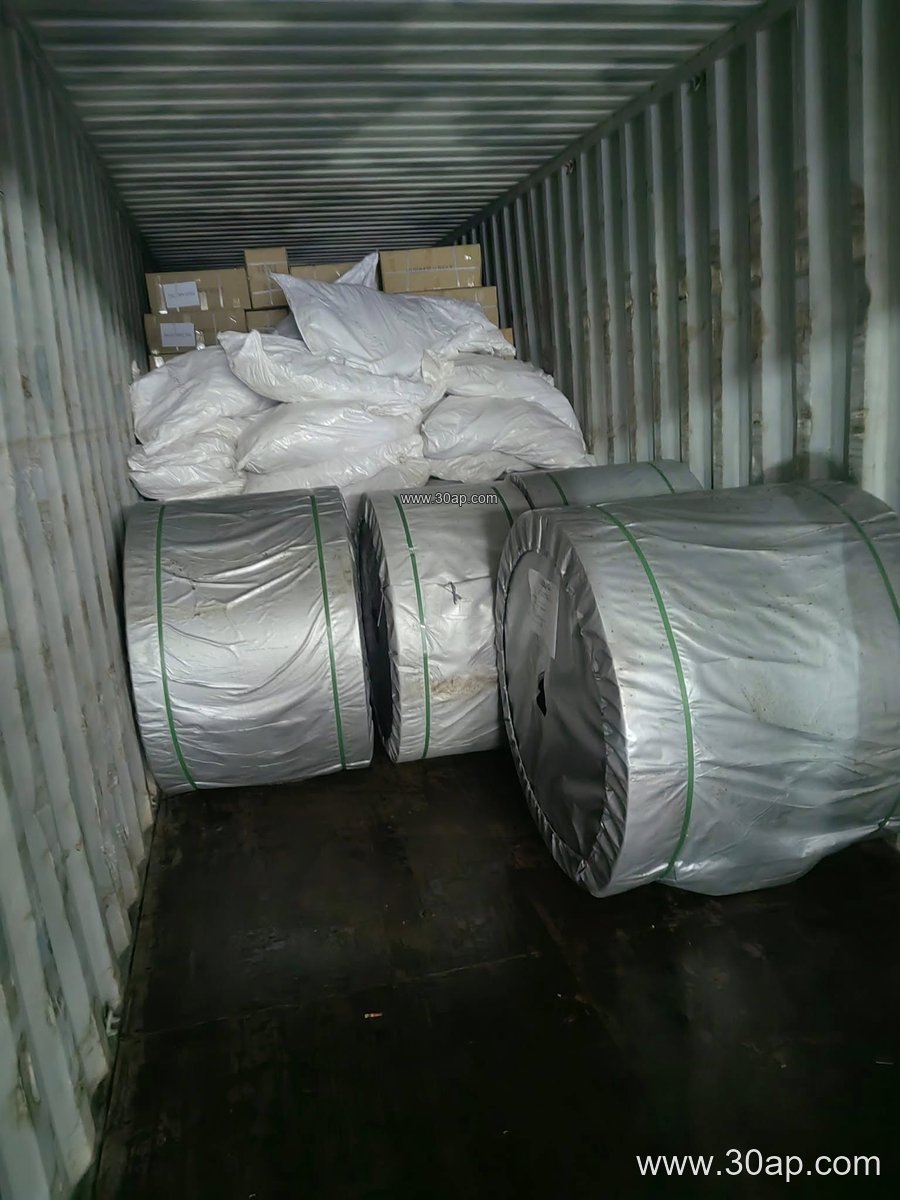
How the Belt Is Built
The carcass is the load-bearing part. Fabric plies are calendered with rubber skim, laid up, and then covered with abrasion resistant rubber on the carrying side and a thinner cover on the pulley side. Buyers usually describe the cover as a pair, for example 4+2 mm or 6+2 mm, meaning top cover plus bottom cover thickness. Common carcass builds range from 2 to 6 plies depending on the duty.
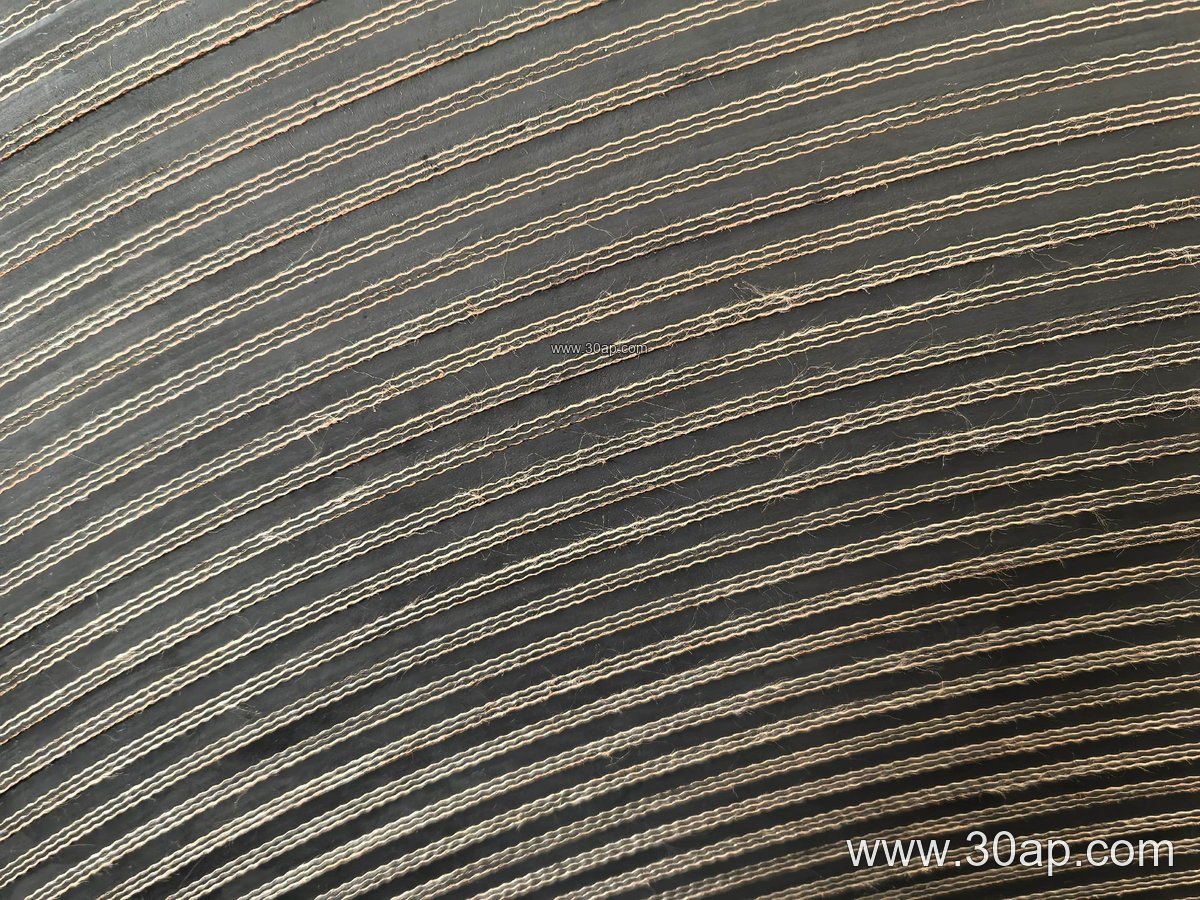
- Top cover: protects the carcass from material impact, cutting, and abrasion.
- Bottom cover: runs against idler rollers and pulleys.
- Fabric plies: carry tension and resist flex fatigue.
- Edge protection: keeps moisture and grit out of the carcass.
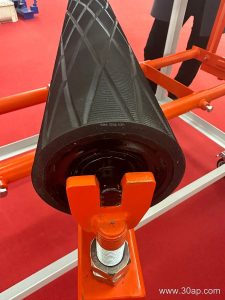
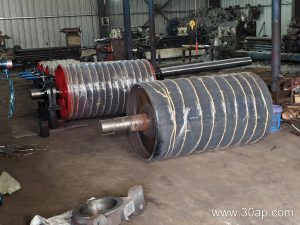
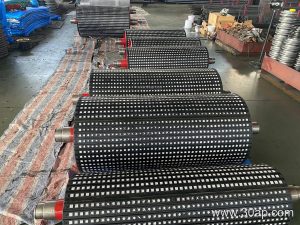
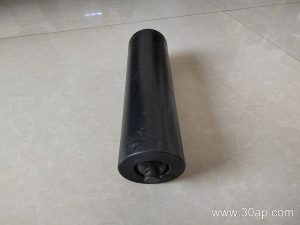
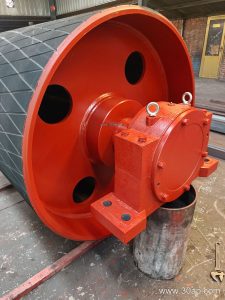
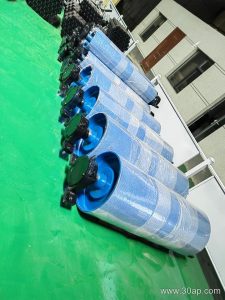
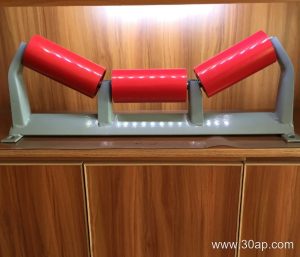
The belt runs on a conveyor frame supported by idler rollers, trained by a conveyor pulley at the head and tail, and held by conveyor brackets and stringers. Drive, tail, and bend pulleys each do a different job, so they are specified separately rather than treated as one item.
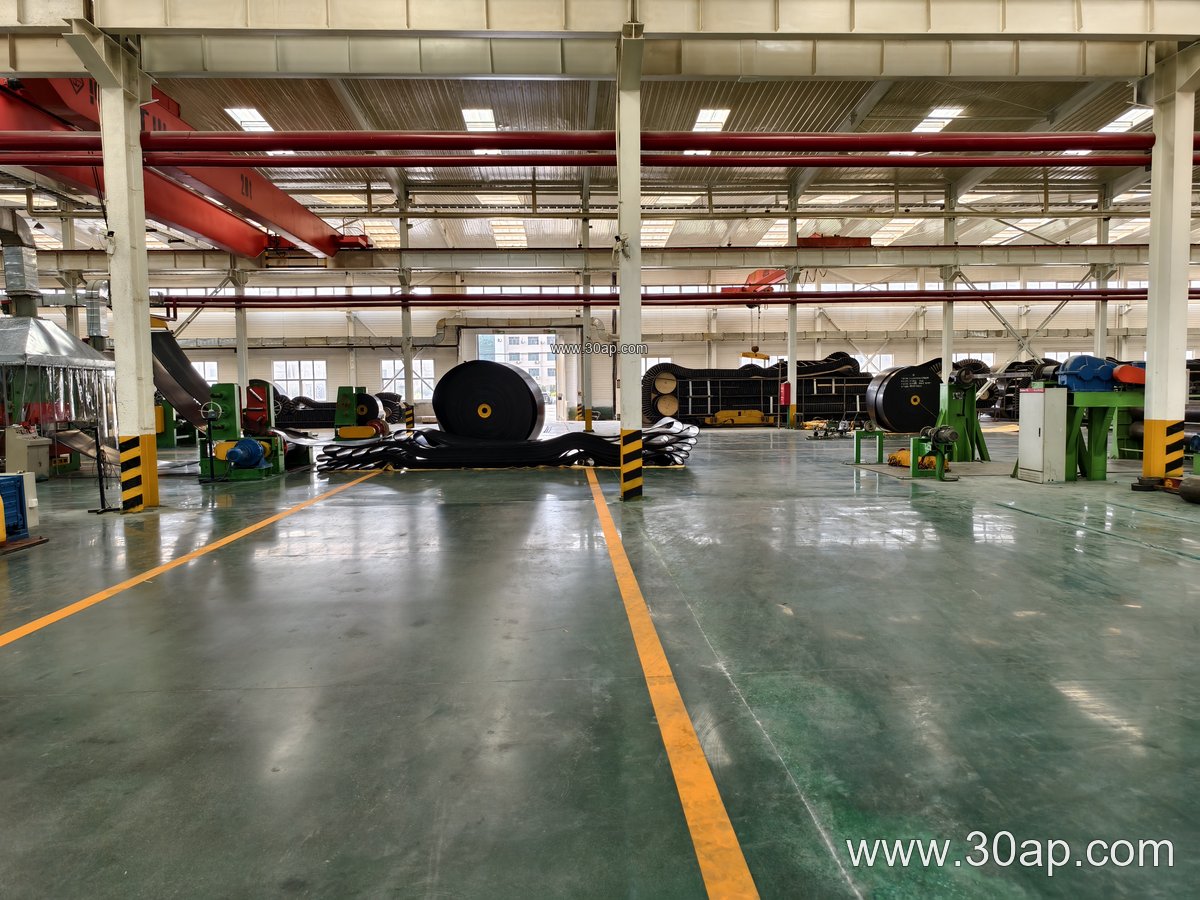
Strength Grades and Common Sizes
EP belts are graded by breaking strength in newtons per millimetre of width. The table below lists values often quoted in catalogues; actual supply should be confirmed with the manufacturer.
| Grade | Typical Strength | Common Use |
|---|---|---|
| EP200 | 200 N/mm | Light duty, short runs |
| EP400 | 400 N/mm | General plant conveyors |
| EP630 | 630 N/mm | Aggregate and cement lines |
| EP800 | 800 N/mm | Medium mining duty |
| EP1000 | 1000 N/mm | Heavy plant and quarry duty |
| EP1250 | 1250 N/mm | Long overland runs |
| EP1600 | 1600 N/mm | High tension mainlines |
Widths usually follow the conveyor design and are commonly quoted as B500, B650, B800, B1000, B1200, B1400, B1600, B1800, and B2000. Cover thickness is chosen from the material being carried, with 3+1.5, 4+2, 5+2, 6+2, and 8+3 mm among the usual combinations. A wider belt does not by itself dictate a pulley diameter; belt thickness, ply count, and tension determine the minimum pulley size, so both should be checked together.
Where It Fits in Real Plants
In coal mining and underground coal mining, flame retardant and anti-static versions are often required, and an EP conveyor belt with these covers can be used alongside PVC or PVG belts depending on the local rule set. In cement plants and power plants, heat resistant grades handle clinker and hot ash, while abrasion resistant covers suit limestone and coal. Quarries and stone crushing lines favour heavy-duty mining conveyor belts with thick top covers, and crusher conveyor belts need impact resistant rubber at the feed point.
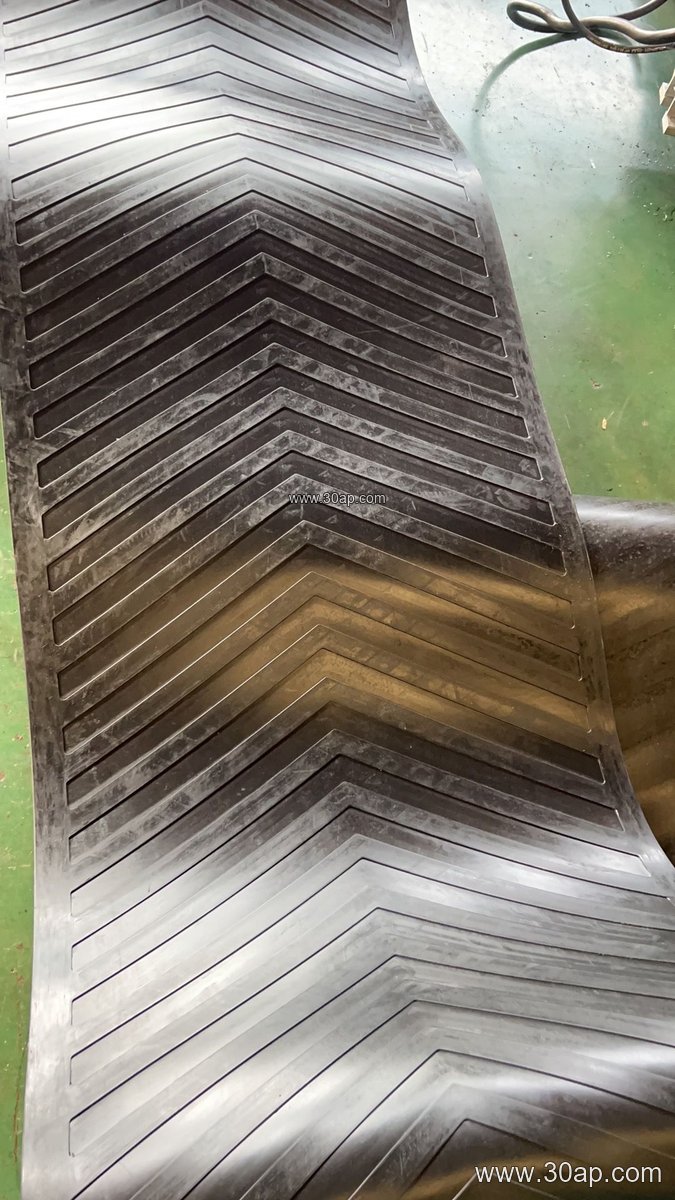
Other industries use the same carcass with different covers: oil resistant for recycled material, cold resistant for northern yards, and food grade for clean handling. Chevron, skirted, corrugated sidewall, and pipe conveyor belt designs are separate constructions and should be specified as such rather than as substitutes for a flat EP belt.
Buyer Checklist
- Confirm the required strength grade and whether EP1000 or EP1250 is really needed.
- State belt width, ply count, and cover thickness as a set, not separately.
- Describe the material, lump size, temperature, and moisture so the cover compound can be chosen.
- Ask for the minimum pulley diameter for the selected belt build.
- Check whether the joint will be vulcanised or mechanical, and allow extra length.
- For underground work, confirm flame retardant and anti-static requirements in writing.
An EP conveyor belt is a practical workhorse, but it only performs well when the carcass, cover, pulleys, and idler rollers are matched to the duty. For more on belt, roller, and pulley selection, visit conveyoridlerroll.com and review the conveyor belt options before ordering.