What a Rubber Conveyor Belt Is
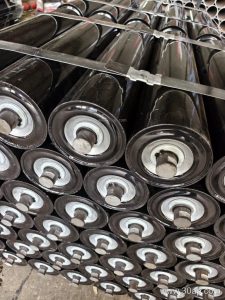
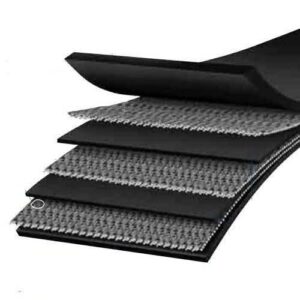
A rubber conveyor belt is the load-carrying element of a belt conveyor. Its rubber cover protects the carcass from abrasion, impact, moisture and heat, while the carcass carries the tension. In mines, quarries, cement works, power stations and sand and gravel plants, the belt runs over idler rollers and turns around conveyor pulleys, with conveyor brackets holding the structure together. When buyers talk about a rubber belt, they usually mean a fabric-core or steel-cord construction with rubber covers, not a lightweight PVC food belt.
Construction and Common Specifications
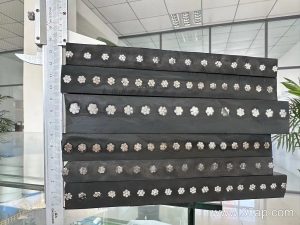
The carcass can be EP (polyester-nylon), NN (nylon-nylon) or steel cord. Cover grade and thickness are selected for the duty. Typical cover combinations include 3+1.5, 4+2, 5+2, 6+2 and 8+3 mm, and fabric carcasses commonly run from 2 to 6 plies. Belt widths are often quoted as B500, B650, B800, B1000, B1200, B1400, B1600, B1800 and B2000. These are reference points, not fixed rules; final construction is set by the conveyor design.
| Item | Common reference values |
|---|---|
| Fabric core grades | EP200, EP315, EP400, EP500, EP630, EP800, EP1000, EP1250, EP1600, EP2000 |
| Steel cord grades | ST1000, ST1250, ST1600, ST2000, ST2500, ST3150 |
| Belt width | B500 to B2000 |
| Cover thickness | 3+1.5, 4+2, 5+2, 6+2, 8+3 mm |
| Carcass plies | 2 to 6 layers, typical for fabric core |
Types by Duty and Profile
An abrasion resistant conveyor belt suits crusher discharge, quarry and aggregate duty. A heat resistant conveyor belt is used after kilns and in cement plants, while a flame retardant conveyor belt or fire resistant conveyor belt is common in coal mining and underground coal mining. Oil resistant and chemical resistant belts appear in recycling and processing lines. Cold resistant grades serve open yards in winter, and anti-static belts help where static buildup is a concern.
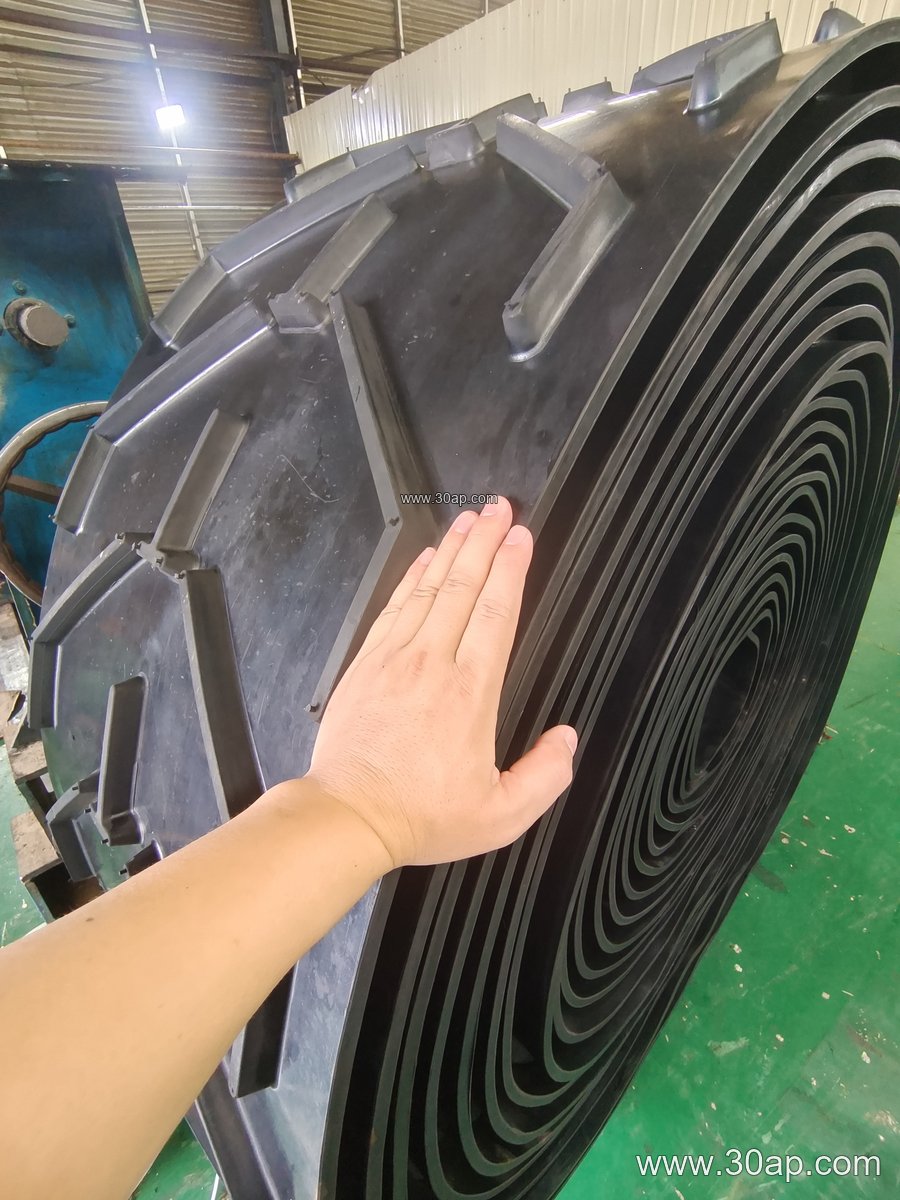
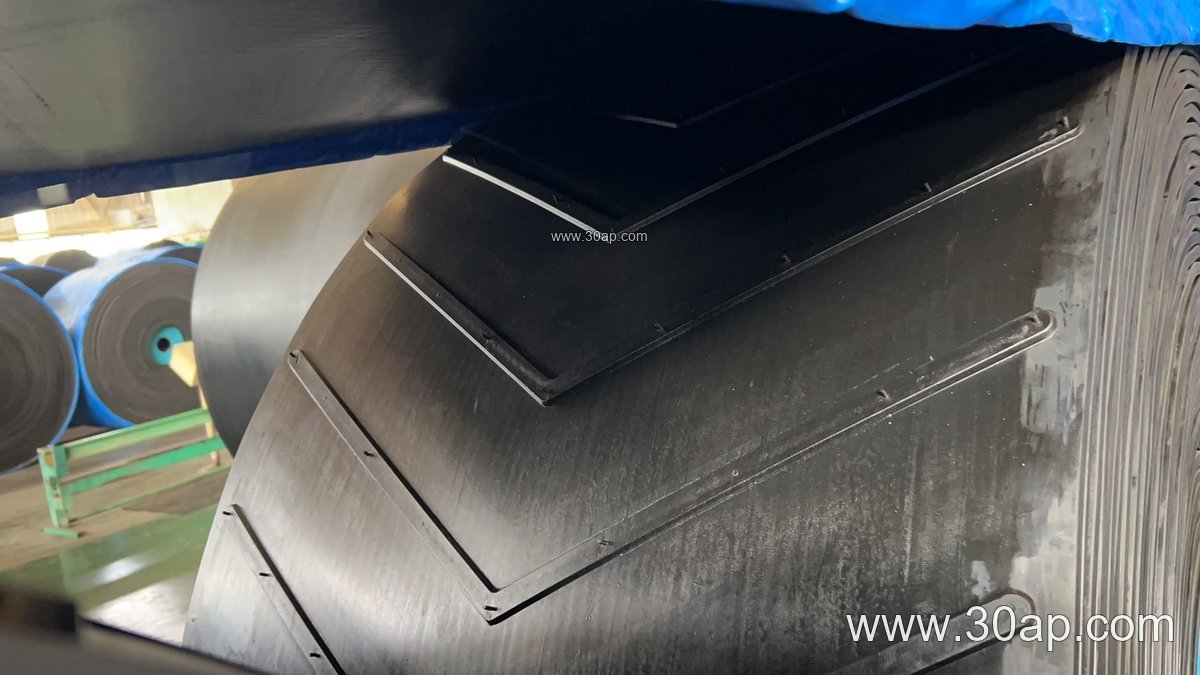
Profile belts solve specific transport problems. A chevron conveyor belt (人字纹) holds material on inclines, a corrugated sidewall belt with skirts contains loose bulk material, and a pipe conveyor belt encloses the load on curved routes. An endless conveyor belt is joined at the factory for long, stable runs. A steel cord conveyor belt such as ST2000 or ST2500 is chosen for high strength and long center distances, while an EP conveyor belt or NN conveyor belt remains a practical choice for many plant conveyors.
Where These Belts Work
In a coal mining conveyor line, the belt, idler roller, conveyor pulley and frame must tolerate dust, moisture and sometimes flame-retardant requirements. Cement plants combine heat resistant and abrasion resistant covers on clinker and limestone routes. Power plants handle coal with flame retardant and anti-static properties. Sand and gravel plants and stone crushing lines rely on heavy-duty rubber belts under impact from large lumps. Ports and ship loading systems use wide belts, sometimes 1200mm to 2000mm, to move bulk material at high capacity. Iron ore, copper ore and gold mining operations often specify high strength or steel cord belts for long hauls. Visit beltproducer.com for conveyor belt reference information, and pulleyproducer.com for matching conveyor pulley data.
Selection and Maintenance Notes
- Match cover grade to the actual material: sharp rock, hot clinker, oily scrap and coal dust each need different rubber compounds.
- Check the pulley diameters, trough angle and idler roller spacing with the belt supplier; belt width alone does not determine shaft size or pulley diameter.
- Confirm the splice method for the selected carcass, especially for steel cord and endless belts.
- Keep training idlers and bend pulleys aligned to reduce edge wear.
- Store spare belts away from sunlight, ozone sources and sharp objects.
For a complete conveyor package, review the belt together with the conveyor pulley and idler roller selection at rollerproducer.com, and confirm the conveyor bracket layout before ordering. A rubber conveyor belt performs best when cover, carcass, pulley and roller choices are treated as one system rather than separate parts.