What a High-Strength Conveyor Idler Is
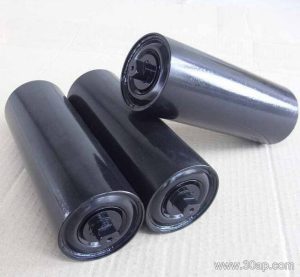
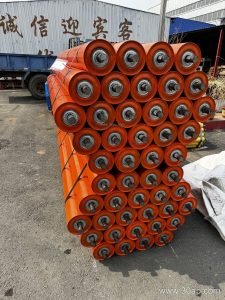
A high-strength conveyor idler is a load-bearing roller built to carry heavy belts and abrasive bulk materials without early fatigue. It is not simply a thicker tube; the design combines a reinforced shell, robust bearing arrangement, and sealed end caps to resist shock, misalignment, and dust ingress. In a quarry or a cement plant, these idlers sit under a fully loaded conveyor belt and keep the trough shape stable as rock, clinker, or gravel moves along the line. On a coal mining conveyor belt, the same idler must also tolerate fine dust and occasional impact at transfer points.
The product is often called a heavy-duty carrying roller or a reinforced troughing roller. Those names describe the same high-strength conveyor idler; they do not refer to a drive pulley, tail pulley, or bend pulley, which are separate components. A conveyor pulley drives or redirects the belt, while the idler supports it along the run.
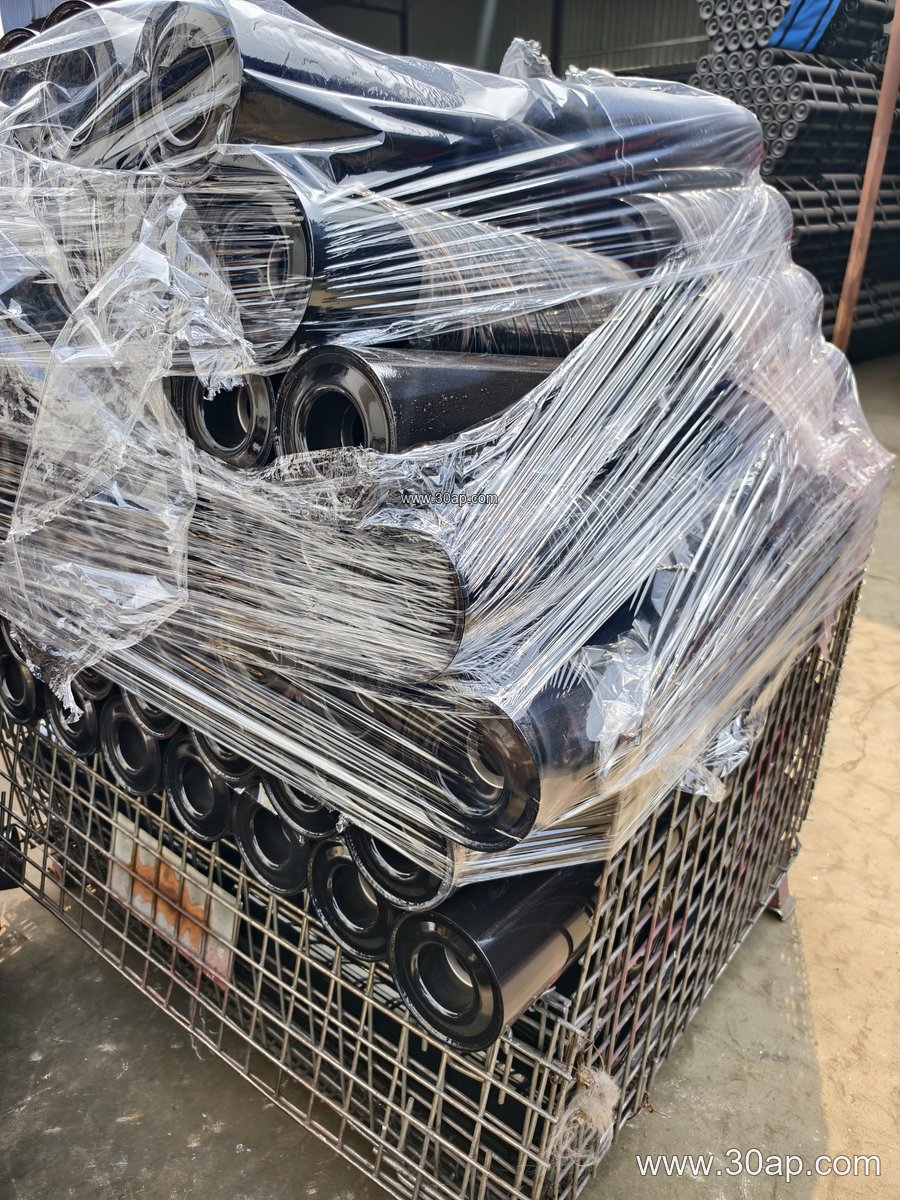
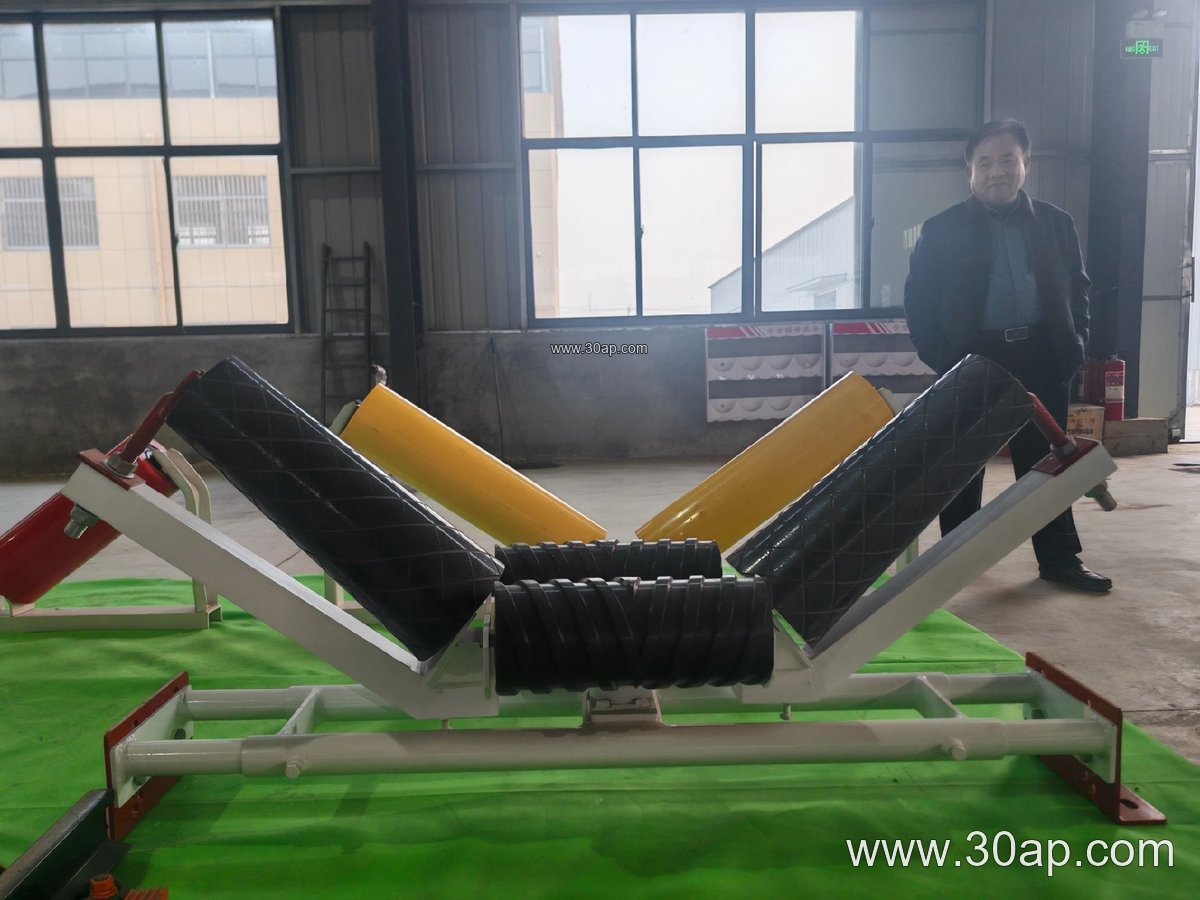
How It Is Built
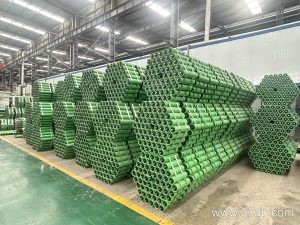
The shell is usually a thick-walled steel tube, sometimes fitted with rubber rings at impact zones. Bearing seats are machined to keep the shaft aligned, and the seal package is the real differentiator: multi-labyrinth seals, dust guards, and grease retention features keep contaminants out of the bearing cavity. Common bearing sizes include 6205, 6305, 6306, and 6308, selected according to load and speed rather than tied to one roller diameter. Roller diameters such as Ø89, Ø108, Ø127, Ø133, Ø159, and Ø178 appear in heavy-duty troughing sets, but final selection depends on belt width, load, and support spacing.
Troughing Geometry and Roll Length
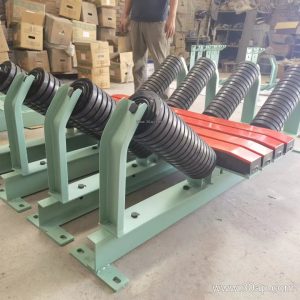
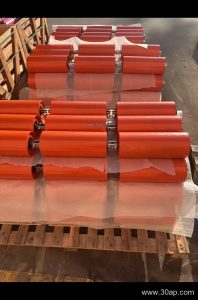
Three-roll troughing sets are common for high-capacity lines. The trough angle is often 30 or 35 degrees, with 45 degrees used where material containment matters. Roll length changes with belt width and trough angle; for reference, a three-roll set on B800 may use rolls around 315 mm long, B1000 around 380 mm, and B1200 around 465 mm. These are typical examples, not fixed pairings. The center roll and side rolls can differ, and a conveyor bracket must match the actual roll geometry.
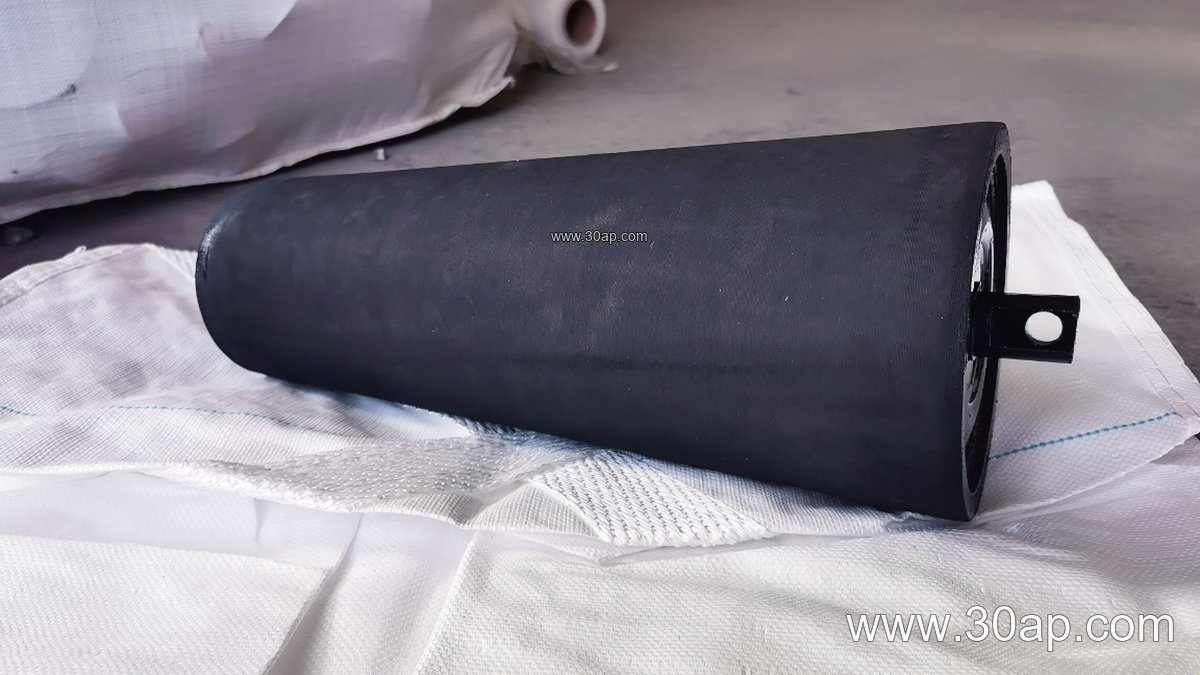
Where It Fits on the Conveyor
High-strength idlers are mostly used as carrying idlers on the loaded side, especially after a crusher discharge or at a transfer chute where impact and off-center loading occur. In a limestone mine or aggregate conveyor line, they help maintain the belt profile through long horizontal runs. In a power plant coal yard, they work alongside a flame retardant conveyor belt and a conveyor pulley to keep the system stable. Return-side support may use a flat return idler or a V-return idler; those are different positions, not substitutes for the carrying idler described here. A self-aligning idler may be added on curves, but the main subject remains the high-strength carrying roller.
Buyer Checklist
- Confirm the belt width, trough angle, and idler group type before choosing roll length.
- Check the bearing size and seal design for dust, water, and fine grit exposure.
- Ask for the shell wall thickness and shaft diameter as separate data points, not assumed from belt width.
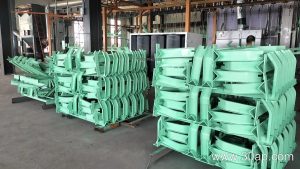
- Match the conveyor bracket dimensions to the actual idler frame.
- For abrasive ore or coke, consider a rubber-disc impact idler at the loading point while keeping high-strength troughing idlers along the run.
Because a high-strength conveyor idler works with the belt, the pulley, and the frame as a system, buyers should review the whole support layout. A heavy-duty mining conveyor belt may need closer idler spacing and larger roll diameters than a lighter aggregate line. The same applies in a steel plant or port terminal, where continuous operation and dust make seal quality more important than a single headline number. Use the product data sheet for final dimensions and treat catalog examples as reference values only.