What a Tail Bend Pulley Does
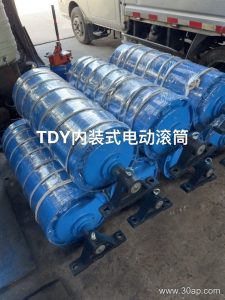
A tail bend pulley is a direction-changing roller mounted near the tail of a conveyor, where the belt returns after discharging. Unlike the tail pulley itself, which often serves as the tensioning or redirecting drum at the loading end, the tail bend pulley guides the returning belt into the correct path toward the take-up system. It is a specific subtype of bend pulley, and it should not be confused with a drive pulley or a plain tail pulley. In quarry and aggregate lines, this component helps maintain belt alignment on the return strand, especially when space at the tail end is limited.
Construction and Surface Options
Most tail bend pulleys are built with a welded steel shell, a shaft sized by torque and load rather than belt width alone, and bearing housings that fit the conveyor bracket. The shell face is usually slightly wider than the belt: for example, a B800 belt commonly runs on a pulley face around 950 mm, while a B1200 belt may use a face near 1400 mm. These are reference relationships, not fixed rules.
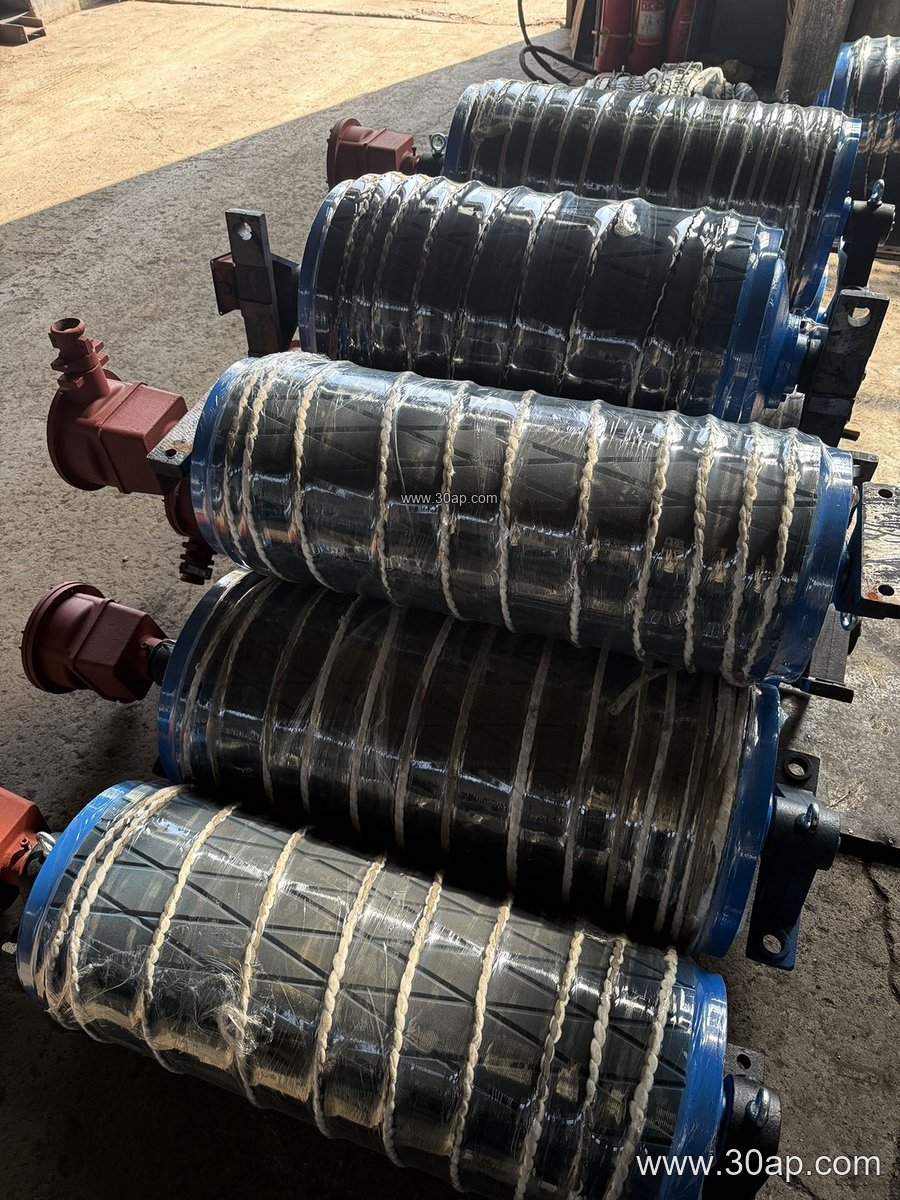
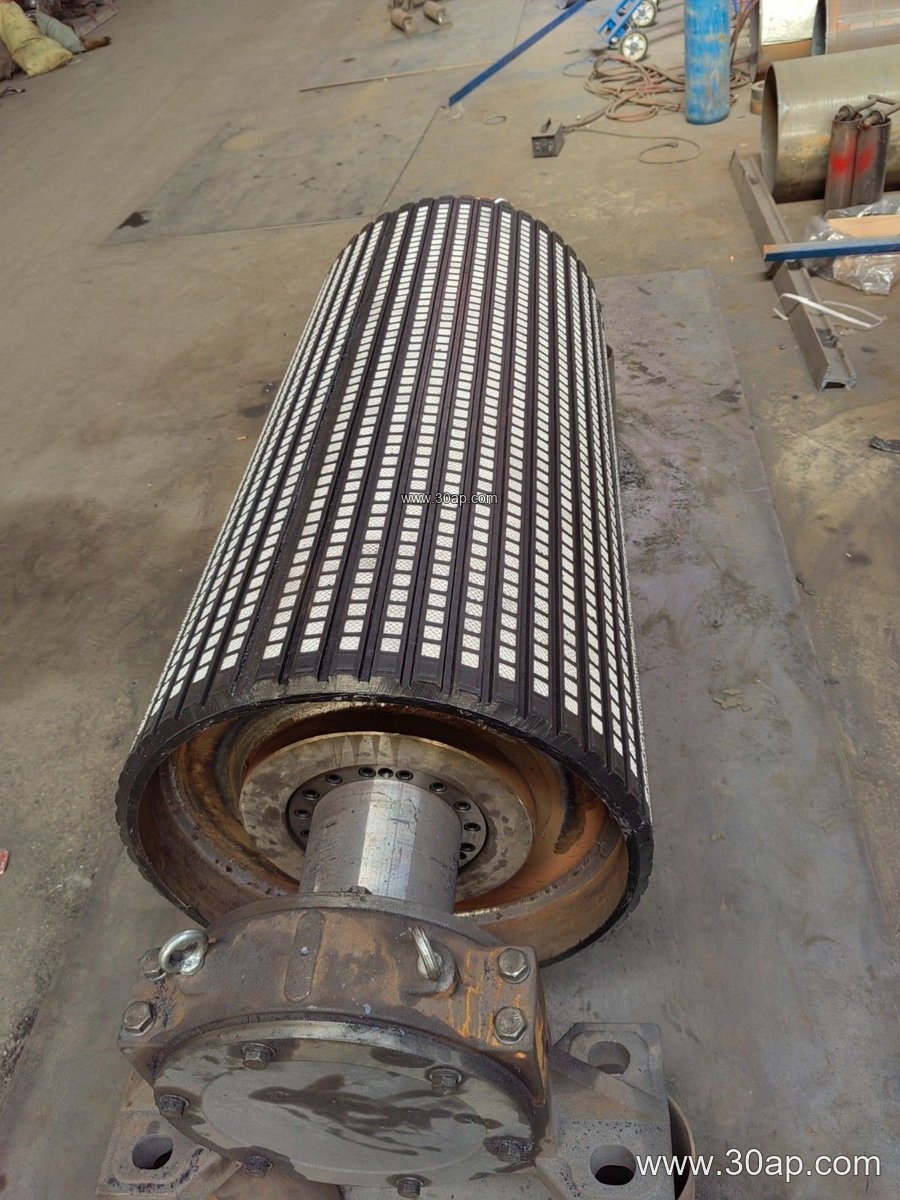
Surface treatment depends on the duty. Plain finish is common in clean, low-tension return positions. Rubber lagging—applied as cold-bonded or hot-vulcanized sheet—improves grip and reduces slip when the return belt carries residual material. Diamond or herringbone grooving can help shed water and fines. Ceramic lagging is chosen in heavy abrasive service such as iron ore or copper ore circuits. Lagging thickness commonly ranges from 8 mm to 20 mm, with 10 mm and 12 mm frequent in general aggregate duty.
Where It Fits in the Conveyor
The tail bend pulley is typically installed after the tail pulley to route the empty belt upward or around an obstruction before it reaches the take-up pulley. In a coal mining conveyor or a power plant coal handling line, this arrangement allows the take-up to sit in a more accessible location. In a cement plant clinker line, a tail bend pulley may be used to clear structural steel near the transfer point. Because it carries only the return strand, its load is lower than a drive pulley, but misalignment here can still cause edge wear on the conveyor belt and uneven tracking through the idler roller sets.
Matching the Pulley to the Belt and Duty
Buyers should consider belt type, belt width, return tension, and environmental conditions. A heavy-duty mining conveyor belt or a steel cord conveyor belt used in a long overland system may require a larger diameter and a more robust shaft than a short aggregate conveyor. The table below lists common reference combinations; final dimensions are determined by the conveyor designer.
| Belt Width (mm) | Typical Pulley Face (mm) | Common Diameter Range (mm) | Typical Lagging |
|---|---|---|---|
| B500 | 600 | Ø250–Ø400 | Plain or 8–10 mm rubber |
| B650 | 750 | Ø315–Ø500 | 10 mm rubber |
| B800 | 950 | Ø400–Ø630 | 10–12 mm rubber |
| B1000 | 1150 | Ø500–Ø800 | 12 mm rubber or diamond |
| B1200 | 1400 | Ø630–Ø1000 | 12–15 mm rubber |
| B1400 | 1600 | Ø800–Ø1250 | 15 mm rubber or ceramic |
Shaft diameter is often selected from a range such as Ø80, Ø100, Ø120, or Ø140, based on calculated torque and bearing life. A B1200 belt does not automatically require a Ø150 shaft, nor does a B800 belt limit the pulley to one diameter. The designer should confirm the combination with the conveyor frame and the conveyor bracket dimensions.
Buyer Checklist
- Confirm the return strand tension and whether the pulley is a bend, take-up, or snub position.
- Match the pulley face to the belt width with adequate margin, and verify the lagging type against the material carried.
- Check shaft size against the actual load case, not against belt width alone.
- For underground coal mining or dusty quarry service, consider flame retardant and anti-static properties in the belt, and ensure the pulley bearing seals suit the environment.
- Review the interface with the conveyor bracket and adjacent idler roller to avoid interference and tracking problems.
Whether the plant handles coal, clinker, sand, or metallic ore, the tail bend pulley is a small but decisive part of the return-side layout. Selecting it by function and load, rather than by habit, keeps the belt running true and extends the service life of the whole conveyor. For related components such as the conveyor pulley, conveyor bracket, and idler roller, work with a supplier who can confirm dimensions against your actual conveyor design.