What Is a Belt Conveyor Idler Frame
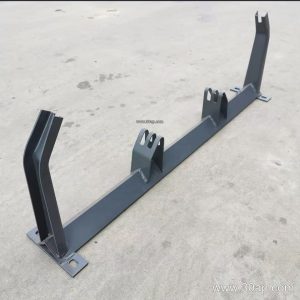
A belt conveyor idler frame is the structural support that holds the idler rollers in position along the carrying and return sides of a conveyor. It keeps the conveyor belt at the correct profile, maintains the trough angle, and transfers the load from the belt and material into the conveyor stringer. In a typical bulk handling line, the frame works together with the idler roller, conveyor pulley, and conveyor bracket to keep the belt tracking smoothly. The design may look simple, but the frame geometry has a direct effect on belt life, energy use, and spillage control.
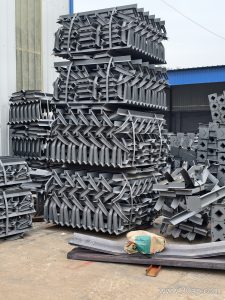
Frames are usually fabricated from angle steel, channel steel, or folded steel plate. The material and thickness are chosen according to the load, belt width, and operating environment. In a quarry or aggregate plant, a heavier frame helps resist shock loading from large rock. In a cement plant or power plant coal yard, corrosion protection and dust resistance often matter just as much as strength.
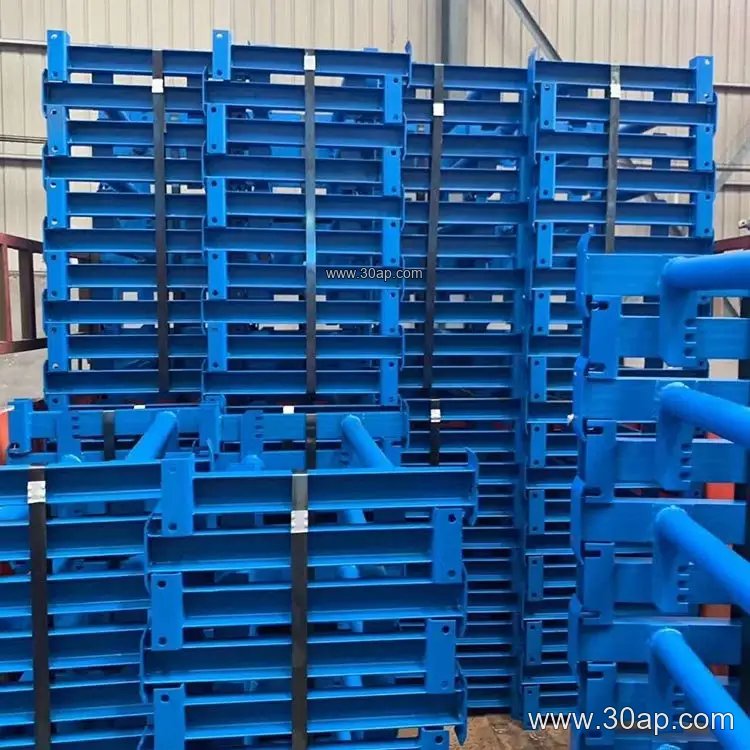
Main Types and Where They Sit
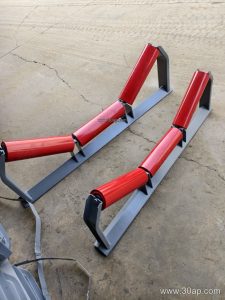
The carrying side commonly uses a troughing idler frame, often called an upper troughing bracket or troughing set frame. It supports three or more idlers arranged in a trough to give the belt a stable profile. The return side may use a flat return frame or a V-return frame to support the empty belt and help with self-cleaning. Transition frames are placed near the head and tail to guide the belt from flat to troughed shape without stressing the edges.
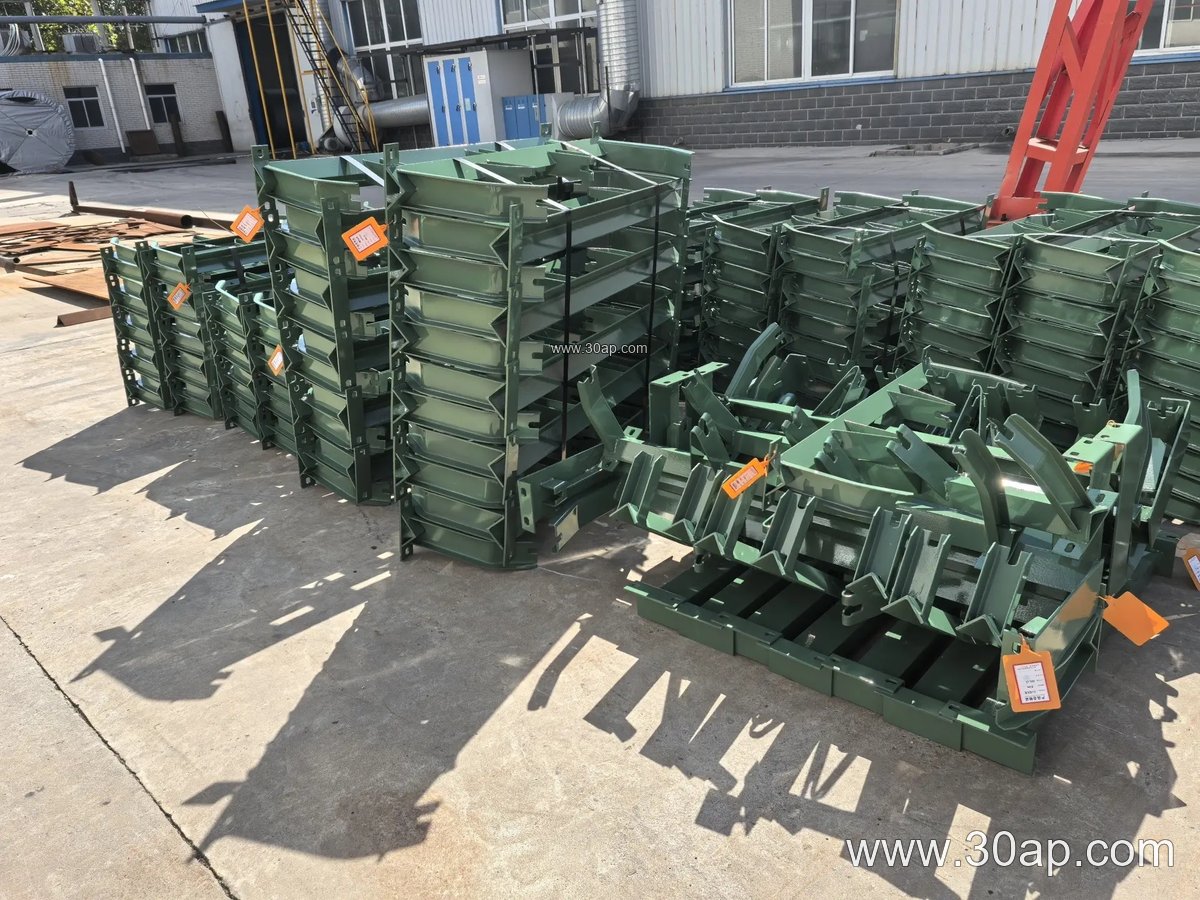
Other versions include impact frames under the loading point, self-aligning frames that help correct belt misalignment, and suspended frames for special structures. An adjustable frame allows the trough angle to be set or changed within a range. Fixed frames are simpler and are used where the conveyor profile is already defined. The belt conveyor idler frame should not be confused with a drive pulley, tail pulley, or bend pulley; those are separate components with different functions.
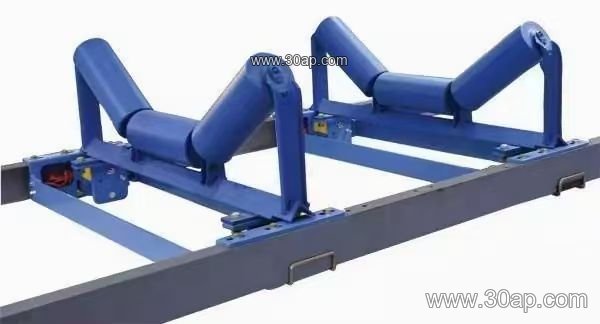
Trough Angle, Belt Width, and Roller Diameter
Common trough angles are 20, 30, 35, and 45 degrees. A 20 or 30 degree frame is often used for lighter materials or where the belt is wide and the load is moderate. A 35 degree frame is a common choice for general bulk material. A 45 degree frame gives a deeper trough and is used where the material is fine and the conveyor needs a higher capacity, but it also increases belt edge stress. Adjustable frames can be set between these angles, which helps during commissioning or when the material changes.
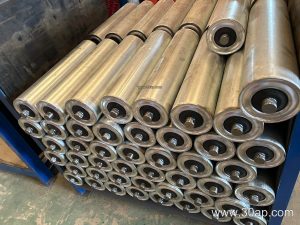
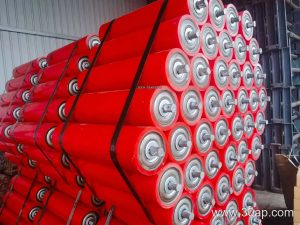
Belt width and roller diameter are selected together with the frame. Typical belt widths include B500, B650, B800, B1000, B1200, B1400, B1600, B1800, B2000, B2200. Typical idler diameters include Ø89, Ø108, Ø133, Ø159, and Ø194. A common combination might be B800 with a 35 degree frame and Ø108 idlers, or B1200 with a 45 degree frame and Ø133 idlers. These are examples, not fixed rules. The same belt width can work with different trough angles and roller diameters depending on load, speed, and design. Installation hole spacing and beam length usually change with belt width and trough angle, so they should be confirmed from the conveyor drawing.
| Belt Width | Common Trough Angle | Common Idler Diameter |
|---|---|---|
| B500 | 20–30° | Ø89 |
| B650 | 30–35° | Ø89–Ø108 |
| B800 | 30–35° | Ø108 |
| B1000 | 35–45° | Ø108–Ø133 |
| B1200 | 35–45° | Ø133 |
| B1400 | 35–45° | Ø133–Ø159 |
| B1600 | 35–45° | Ø159 |
| B1800 | 35–45° | Ø159–Ø194 |
In a coal mining conveyor or underground mining conveyor, flame retardant conveyor belt and anti-static properties are important for the belt itself, while the frame must be robust enough to hold the idler roller under continuous load. In a sand and gravel line, an abrasion resistant conveyor belt may be used together with impact frames at the transfer point. The frame does not replace the belt’s own properties, but it helps the belt run in the intended shape.
Installation and Buyer Checklist
During installation, check that the frame is square to the conveyor centerline and that the mounting holes match the stringer. A frame that is twisted or misaligned can cause the belt to run off and wear the edges. For adjustable frames, set the trough angle according to the design and tighten all bolts evenly. For self-aligning frames, allow enough free movement for the frame to respond to belt deviation. Keep the frame clear of spilled material, especially in a quarry or crusher conveyor where fines can build up.
Buyers should confirm the belt width, trough angle, idler diameter, frame material, surface treatment, and mounting dimensions. It is also useful to state the application, such as a cement plant, steel plant, port, or tunnel muck line, because dust, moisture, and impact conditions affect the choice. A frame that suits a light aggregate conveyor may be too light for a heavy-duty mining conveyor. The goal is to match the belt conveyor idler frame to the conveyor’s actual duty, not to copy a size from another line.