What an Anti-Slip Ceramic Lagged Pulley Does
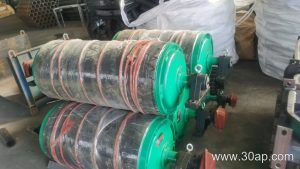
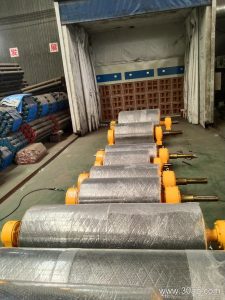
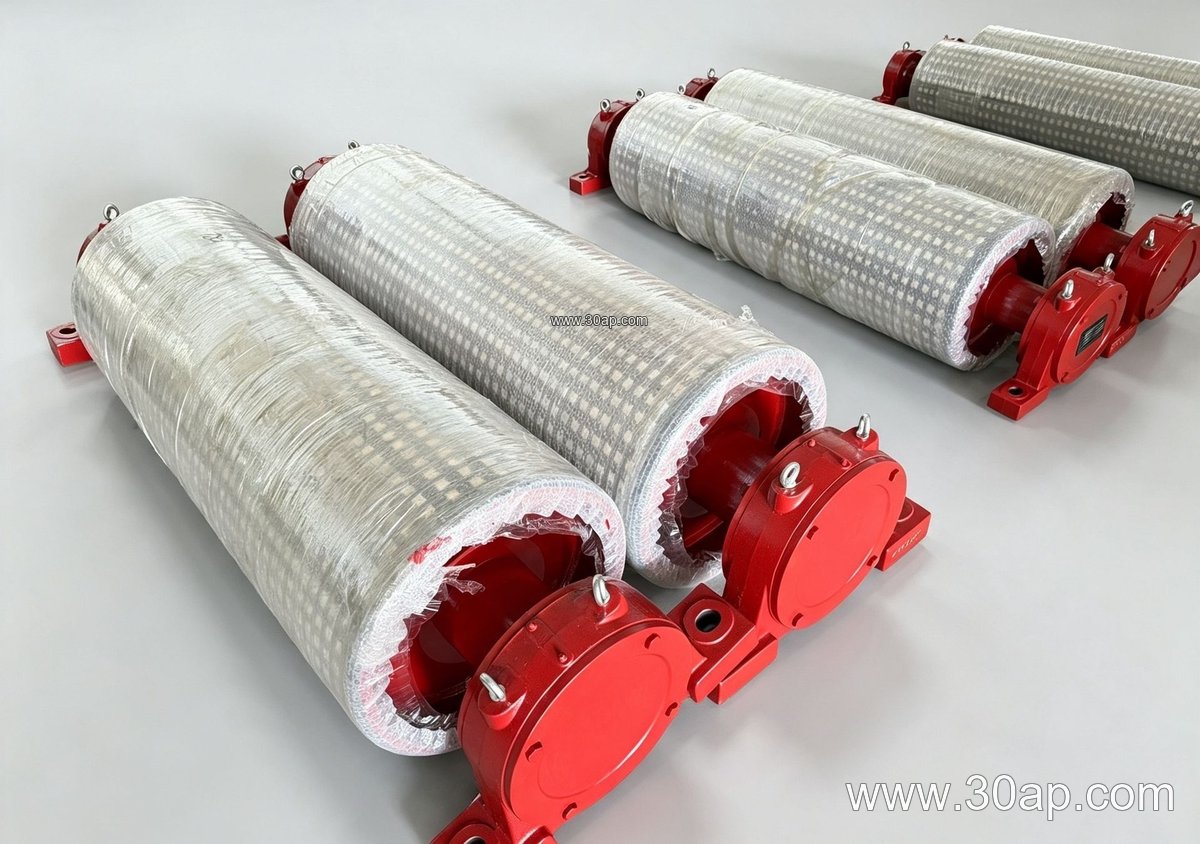
An anti-slip ceramic lagged pulley is a conveyor pulley whose shell is covered with rubber lagging embedded with ceramic tiles. The ceramic chips sit slightly proud of the rubber surface and bite into the underside of the conveyor belt, raising the coefficient of friction at the drive interface. In practice, this ceramic lagged pulley is specified where a plain or rubber-lagged shell would slip: wet, muddy, dusty, or oily conditions, and drives that transmit high torque through a small arc of contact.
The purpose is simple. Slip erodes lagging, heats the belt cover, and eventually stalls the drive. A ceramic tile surface keeps grip even when the rubber between the tiles wears back, because the ceramic remains exposed and continues to grip the belt cover.
How the Lagging Is Built
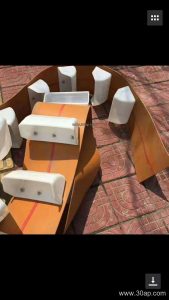
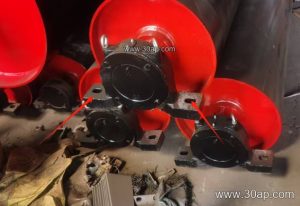
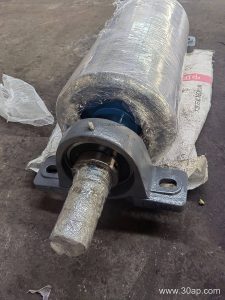
The pulley body is usually a welded steel shell with end discs and a shaft, machined and balanced before lagging. Lagging is applied in one of two ways: vulcanized directly onto the shell, or supplied as ceramic lagging strips bonded and then vulcanized in place. Ceramic tiles, often 20–25 mm across and set in a staggered pattern, are embedded so that only the tips protrude. Grooves between tiles let water and fines escape instead of building a hydroplane layer under the belt.
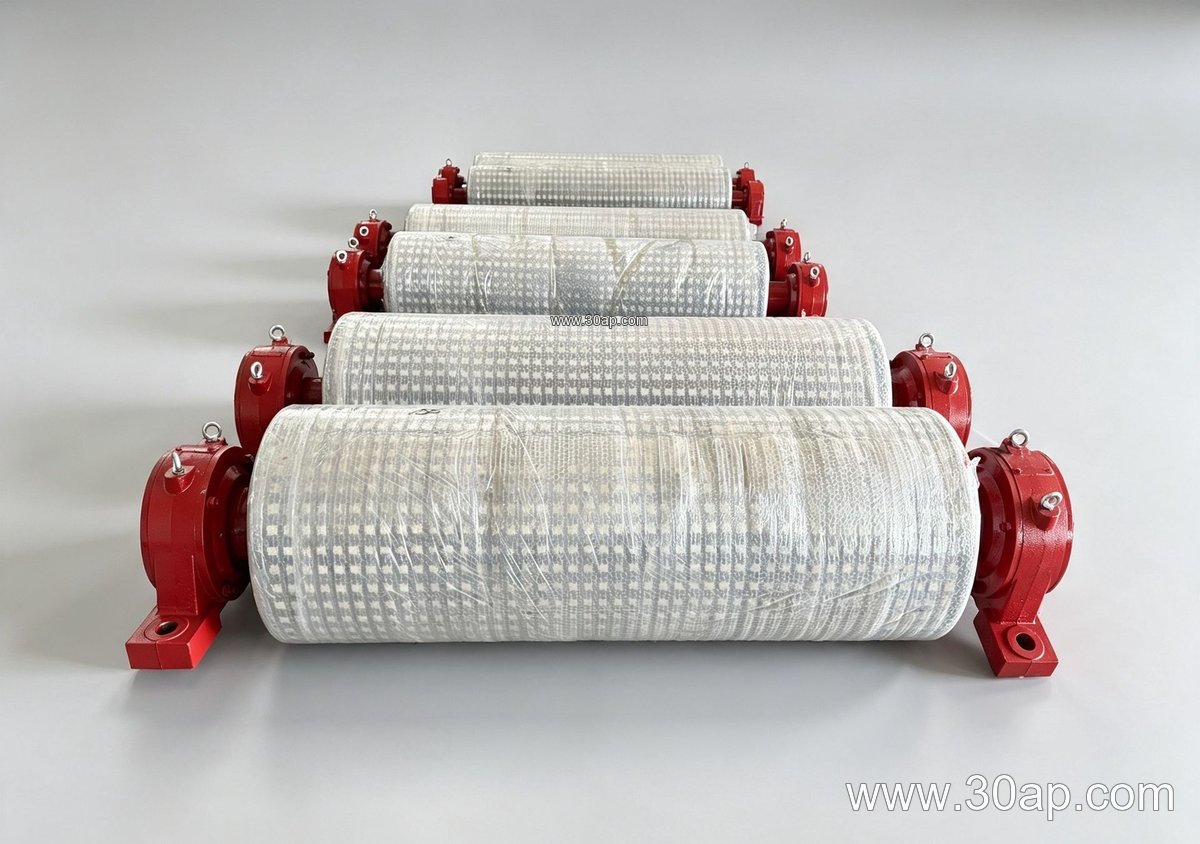
Typical surface options and reference dimensions are shown below. These are common ranges, not fixed combinations; final sizing follows drive torque, belt tension, and shaft load.
| Item | Common Reference Values |
|---|---|
| Lagging type | Ceramic lagging, diamond ceramic, plain rubber, hot-vulcanized rubber |
| Lagging thickness | 8, 10, 12, 15, 20 mm |
| Pulley diameter | Ø200, Ø315, Ø400, Ø500, Ø630, Ø800, Ø1000, Ø1250, Ø1400 |
| Belt width | B400, B500, B650, B800, B1000, B1200, B1400, B1600, B1800, B2000 |
| Shell face width | Usually wider than belt, e.g. B800 about 950 mm, B1200 about 1400 mm, B1600 about 1800 mm |
| Shaft diameter | Ø50 to Ø200, determined by torque and load |
Combinations such as B800 × Ø500 or B1200 × Ø1000 are everyday references. A given belt width does not lock the pulley to one diameter; the drive layout and wrap angle decide that.
Where It Fits on the Conveyor
Most ceramic lagged pulleys are drive pulleys at the head, but the same surface is useful on a bend pulley in a wet wash plant or a tension pulley that sees poor grip. On a long overland system feeding a cement plant clinker line or a power plant coal yard, the head pulley does the heavy work and benefits most from ceramic grip. A tail pulley rarely needs it unless the return side is wet and dirty. Do not treat drive, tail, and bend positions as interchangeable; each has its own load and wrap conditions.
The belt matters too. A heavy-duty mining conveyor belt with a thick abrasion resistant cover tolerates ceramic grip well. Thin covers, especially on an EP conveyor belt running at high speed, need a gentler ceramic pattern to avoid cover wear. Where the duty is hot, a heat resistant conveyor belt may call for a different lagging compound rather than standard ceramic rubber.
Buyer Checklist
- Confirm the pulley position, drive torque, and wrap angle before choosing diameter and lagging thickness.
- Match lagging to the belt cover: abrasive ore and quarry duty tolerate aggressive ceramic; food or light goods do not.
- Check shaft diameter against actual torque and bearing load, not belt width alone.
- Ask how the ceramic is bonded and whether the lagging is vulcanized or cold-bonded.
- Plan inspection: worn rubber between tiles is normal, but missing tiles mean replacement.
For a wet aggregate line or an underground coal mining conveyor, ceramic lagging is often the difference between steady production and repeated belt slip. Pair it with correctly sized conveyor pulleys, idler rollers, and conveyor brackets, and the drive stays reliable. More pulley and belt details are available at beltconveyorpulley.com and conveyoridlerroll.com.