What a Heavy-Duty Conveyor Bracket Does
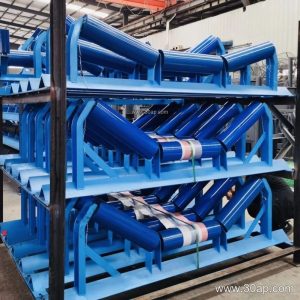
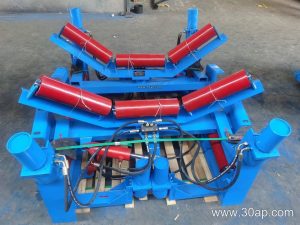
In a quarry or a cement plant, the conveyor structure takes a constant beating from falling rock, abrasive dust, and nonstop vibration. The heavy-duty conveyor bracket is the component that holds the idler roller in precise alignment while absorbing those loads. Often called a heavy-duty conveyor support bracket or heavy-duty idler bracket, this part is not a simple piece of bent steel. It is the interface between the rotating idler and the stationary conveyor frame, and its stiffness directly affects belt tracking, idler life, and downtime.
A standard bracket might be fine for a light package line, but a primary crusher discharge or a coal mining conveyor needs more. Here, a heavy-duty conveyor bracket is built to resist deformation under high belt tension and impact from large lumps. That extra strength keeps the idler at the correct height and angle, which in turn protects the conveyor belt from edge damage and mistracking.
Construction and Mounting Positions
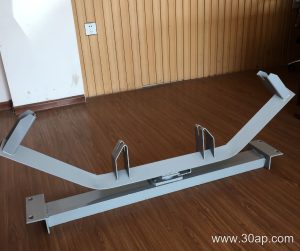
Most heavy-duty conveyor brackets are fabricated from angle steel, channel steel, or formed steel plate. The material thickness and weld size are chosen for the load case, not for appearance. A common design uses a folded plate body with reinforced gussets and slotted mounting holes so the bracket can be adjusted during installation.
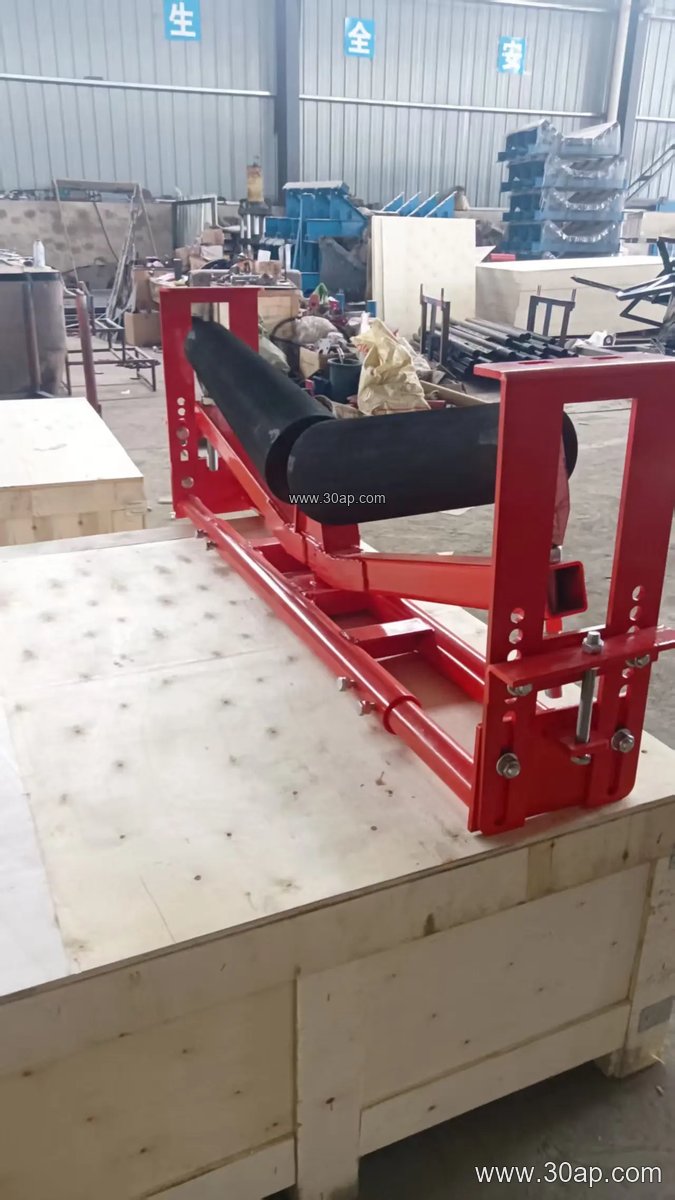
Brackets appear in several positions along the conveyor:
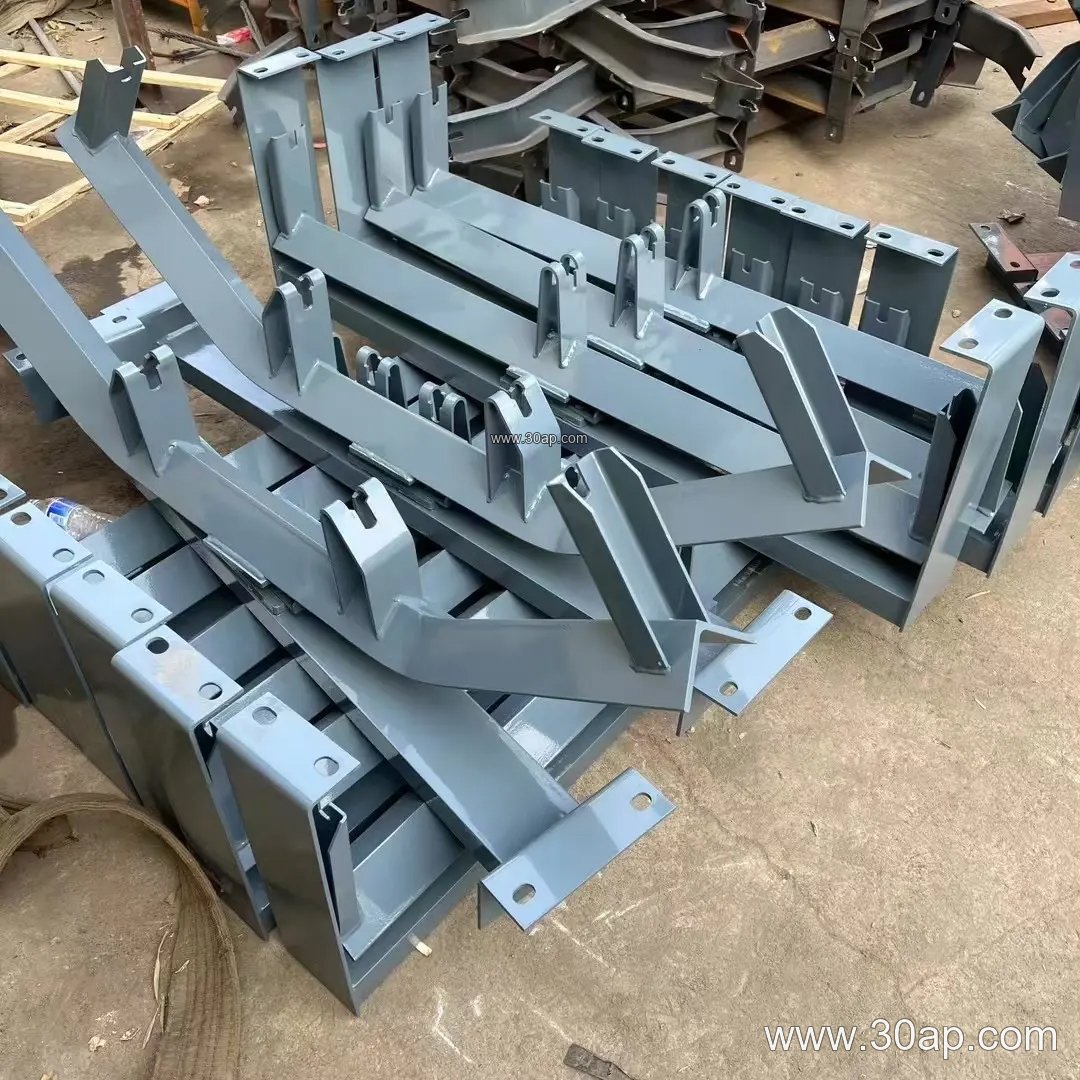
- Carrying side brackets, usually with a trough angle to support the loaded belt
- Return side brackets, either flat or V-shaped, to support the empty belt
- Impact brackets near loading points, often paired with impact idlers
- Transition brackets where the belt changes from flat to troughed
- Self-aligning brackets that allow slight rotation to correct belt wander
For a heavy-duty conveyor bracket, the mounting hole spacing and crossbeam length are not fixed numbers. They are determined by belt width, trough angle, and idler diameter. A bracket for a B1200 conveyor with a 35-degree trough and Ø133 idler will not interchange with one for a B650 conveyor using a 30-degree trough and Ø89 idler.
Trough Angle, Belt Width, and Idler Diameter
Selecting a heavy-duty conveyor bracket starts with the belt and the load. The trough angle affects material capacity and belt stress. Common trough angles are 20, 30, 35, and 45 degrees. Adjustable brackets can be set within a range, while fixed brackets are welded or bolted at one angle.
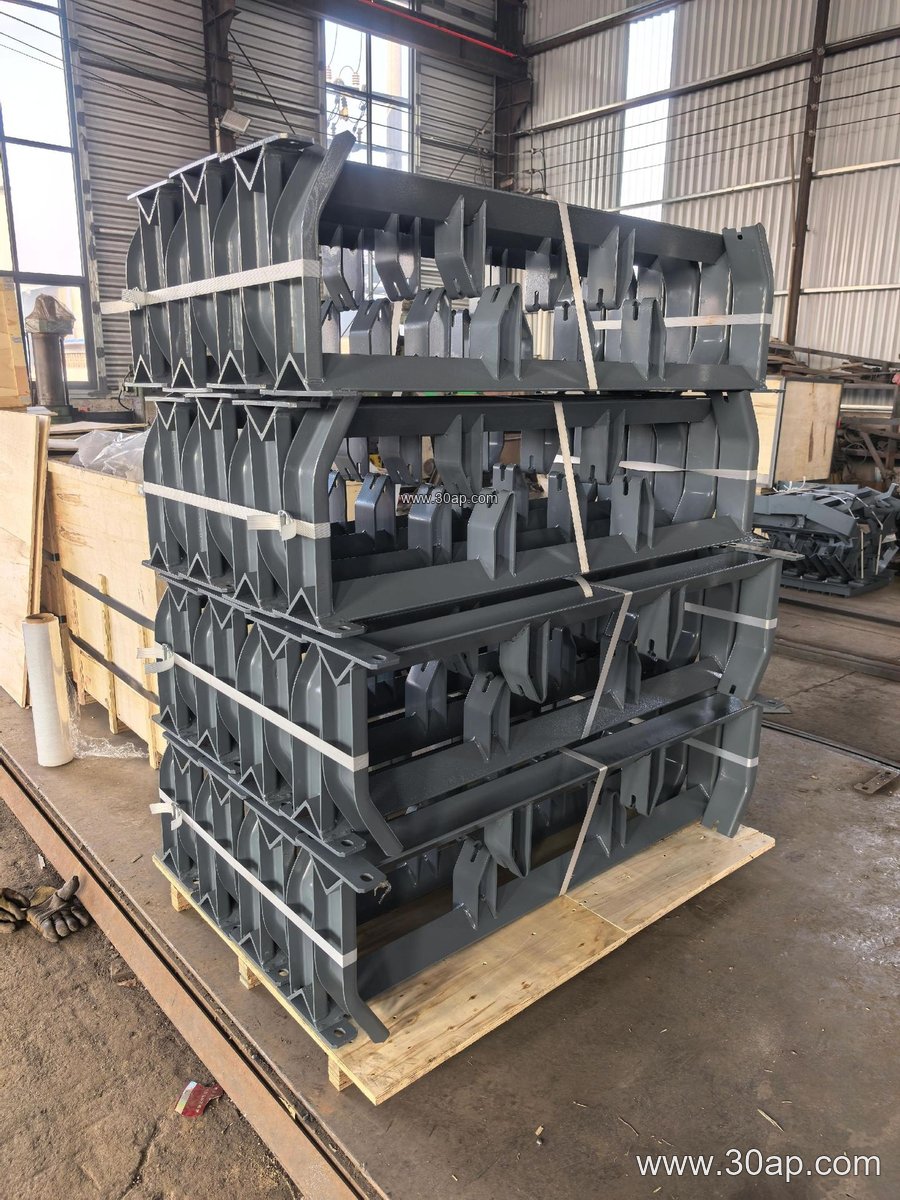
Idler diameter must match the bracket’s mounting height. Typical idler diameters include Ø89, Ø108, Ø133, Ø159, and Ø194. A larger idler is often used on wider belts or where impact loads are high. Belt widths from B500 to B2200 are common in bulk handling, and the bracket dimensions scale with the width. For example, a B800 conveyor might use a 35-degree trough with Ø108 idlers, while a B1400 conveyor in an iron ore plant could use a 45-degree trough with Ø159 idlers. These are reference combinations, not mandatory pairings. The final choice depends on the conveyor design, belt tension, and material characteristics.
Where Heavy-Duty Brackets Are Used
These brackets are common in abrasive and high-load environments. In a limestone quarry or a sand and gravel line, they support the conveyor belt through primary and secondary crushing. In a coal washing plant, flame retardant conveyor belts and heavy-duty brackets work together to handle wet, sticky material. Cement plants use them on clinker and raw meal conveyors, where heat and abrasion are present. Power plant coal handling systems rely on sturdy brackets to keep idlers aligned through continuous operation.
Other industries include steel plants, fertilizer granulation lines, and tunnel spoil removal. In each case, the heavy-duty conveyor bracket helps maintain belt contact with the idler, reducing vibration and extending the service life of the conveyor pulley and the belt itself.
Buyer Checklist for Heavy-Duty Conveyor Brackets
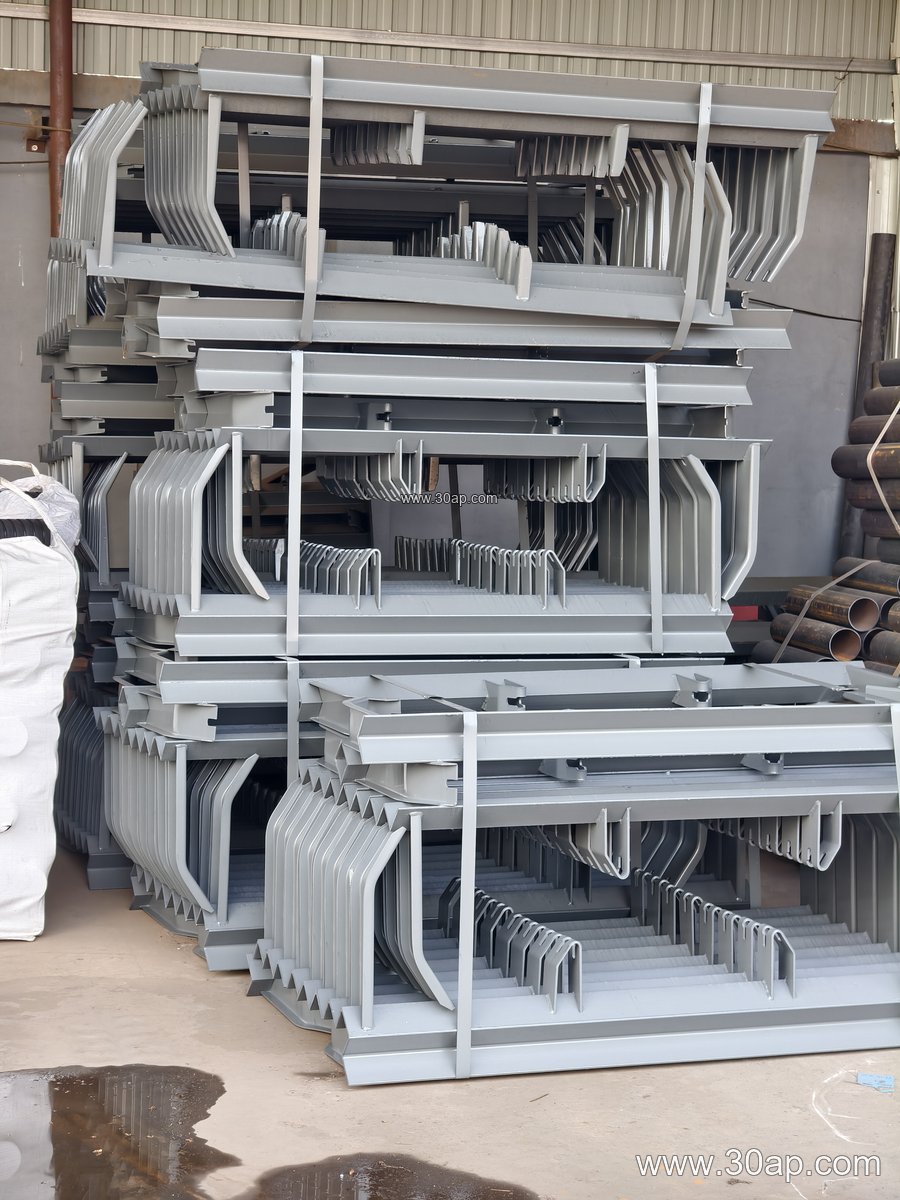
Before ordering, confirm the following:
- Belt width and trough angle required for the carrying side
- Idler diameter and mounting dimensions
- Material and thickness of the bracket, especially for corrosive or wet conditions
- Whether fixed or adjustable brackets are needed
- Mounting hole pattern and crossbeam length
- Compatibility with the existing conveyor frame and idler roller type
Also consider the environment. A cold-resistant conveyor belt may be used in a freezer or winter quarry, but the bracket steel should still be suitable for low-temperature impact. In a food grade or chemical plant, surface finish and material selection matter more than raw strength alone.
For more information on matching brackets with conveyor belts and idler rollers, visit our site at conveyoridler.com and explore the heavy-duty conveyor bracket range.