What a Non-Standard Conveyor Bracket Is
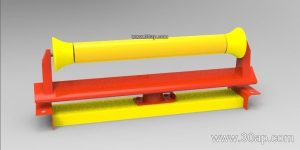
A Non-Standard Conveyor Bracket is a support component made to fit a conveyor frame that does not follow common catalog dimensions. Instead of forcing a standard idler frame onto an existing structure, the bracket is produced to match the actual belt width, trough angle, roller diameter and mounting hole pattern of the line. In practice this custom conveyor bracket often serves as the interface between the conveyor belt, the idler roller and the steel frame, so its geometry matters as much as its strength.
Plants in quarrying, limestone mining, iron ore handling, coal washing, cement production, power plant coal feeding and port bulk terminals regularly meet frames that were built on site, modified over the years or imported from another supplier. In those cases a made-to-fit bracket is often the practical choice.
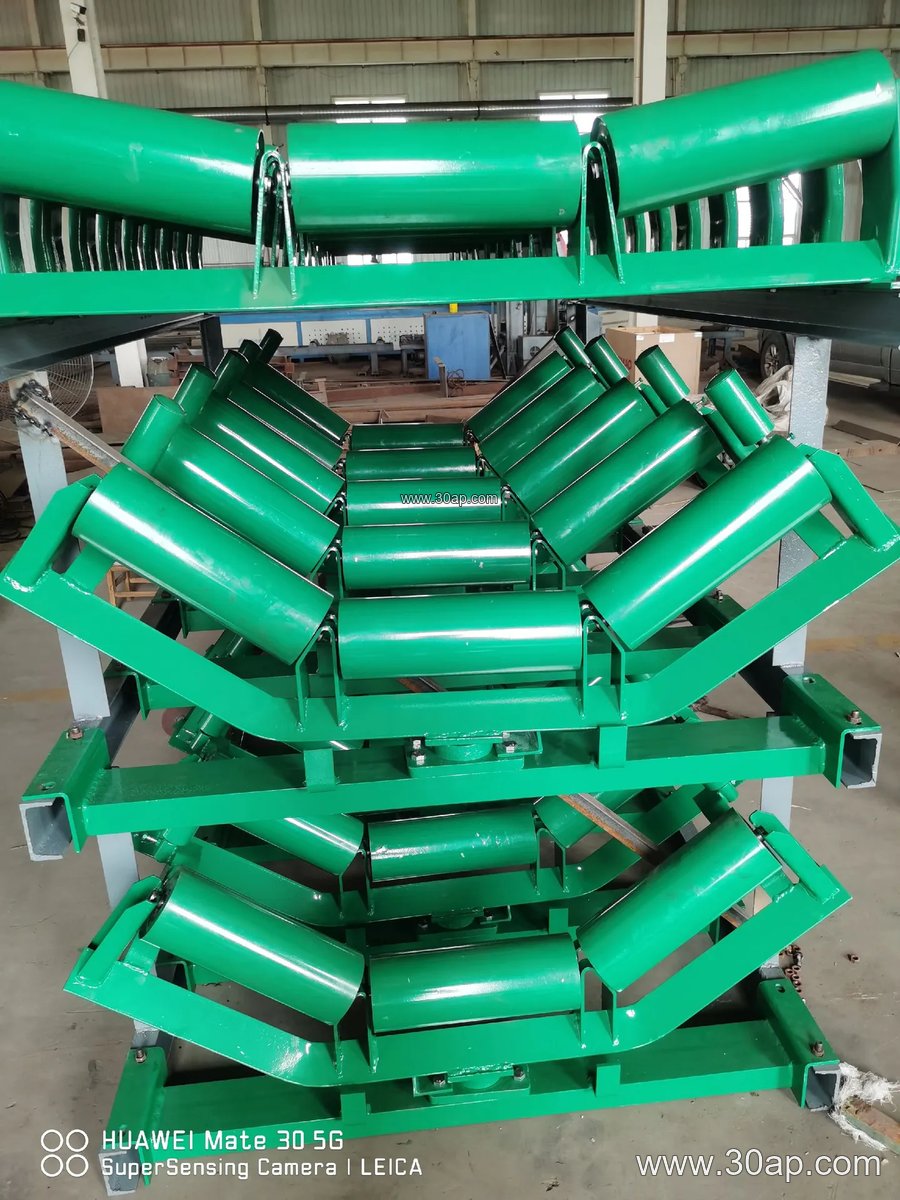
How the Bracket Is Built
Most units are fabricated from angle steel, channel steel or folded steel plate, then drilled or punched to the required hole spacing. A typical Non-Standard Conveyor Bracket carries the troughing idlers on the carrying side or the return rollers underneath, and it may include a small forward tilt of about 1.5 to 2 degrees where belt training is needed.
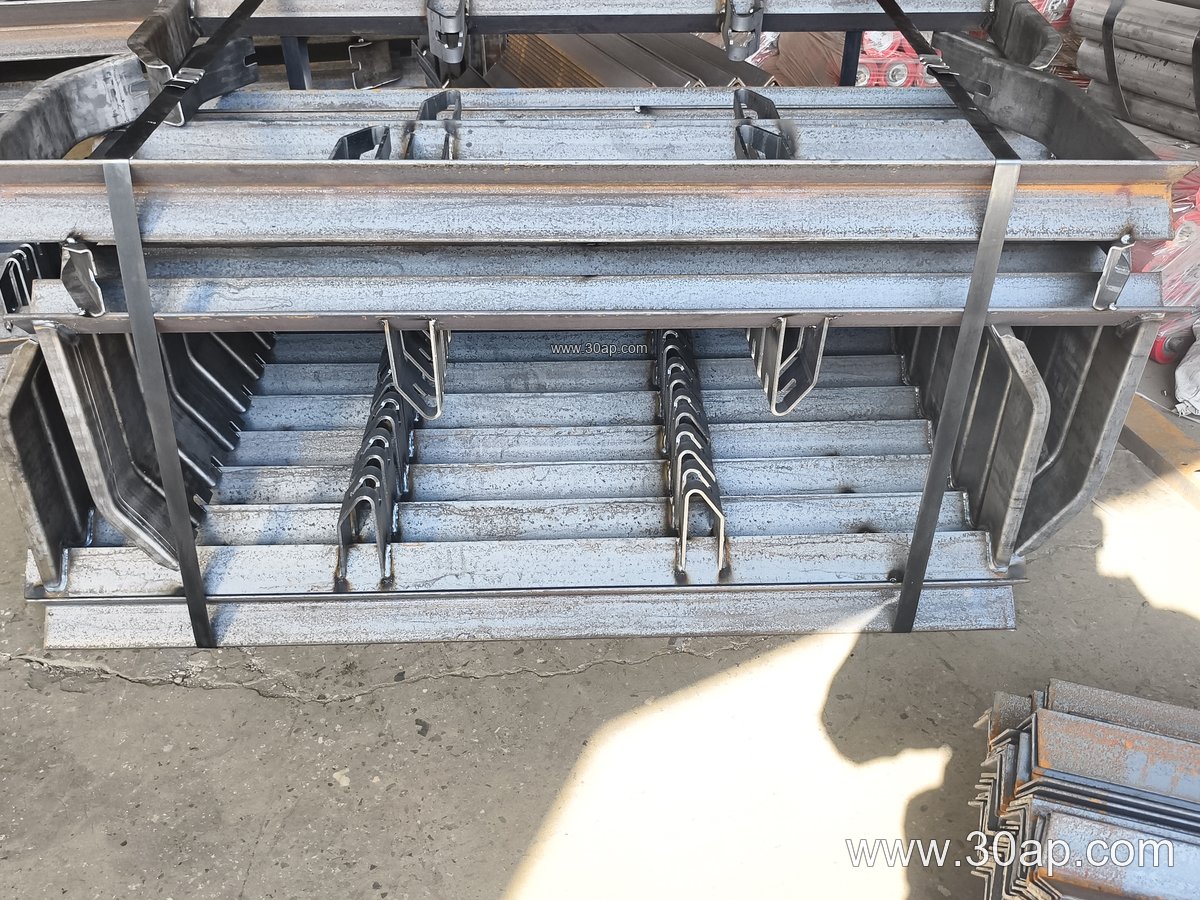
Because the frame is unique, the横 beam length and hole pitch are usually confirmed against a drawing or a site measurement rather than taken from a fixed table. Common belt width references range from B500 and B650 up to B2000 and B2200, with trough angles of 20, 30, 35 or 45 degrees and roller diameters such as Ø89, Ø108, Ø133, Ø159 and Ø194. A combination like B800, 35 degrees, Ø108 or B1200, 45 degrees, Ø133 is a normal starting point for discussion, not a rule that limits other pairings.
Typical Reference Combinations
| Belt width | Trough angle | Roller diameter | Common bracket form |
|---|---|---|---|
| B500 | 20–30 degrees | Ø89 | Troughing bracket |
| B650 | 30 degrees | Ø89 / Ø108 | Troughing or transition bracket |
| B800 | 30–35 degrees | Ø108 | Troughing bracket |
| B1000 | 35 degrees | Ø108 / Ø133 | Troughing or impact bracket |
| B1200 | 35–45 degrees | Ø133 | Troughing bracket |
| B1400 | 35–45 degrees | Ø133 / Ø159 | Troughing or return bracket |
| B1600 | 35–45 degrees | Ø159 | Troughing bracket |
| B1800–B2000 | 35–45 degrees | Ø159 / Ø194 | Heavy troughing bracket |
These values are reference data only. Final dimensions should follow the confirmed drawing and the actual frame.
Where It Fits on the Conveyor
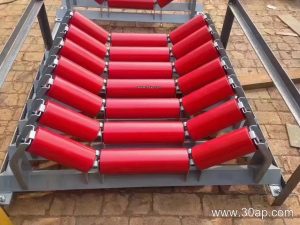
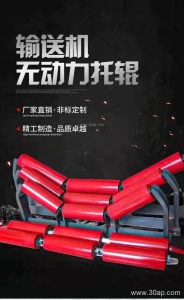
The bracket appears at several points along a line. Troughing brackets hold the three-roller set under the loaded belt; transition brackets ease the belt from flat to troughed shape near a conveyor pulley; return brackets and V-return brackets support the empty strand; impact brackets sit below a loading point and work with impact idlers. Adjustable versions allow the trough angle to be changed between, for example, 30 and 45 degrees during commissioning.
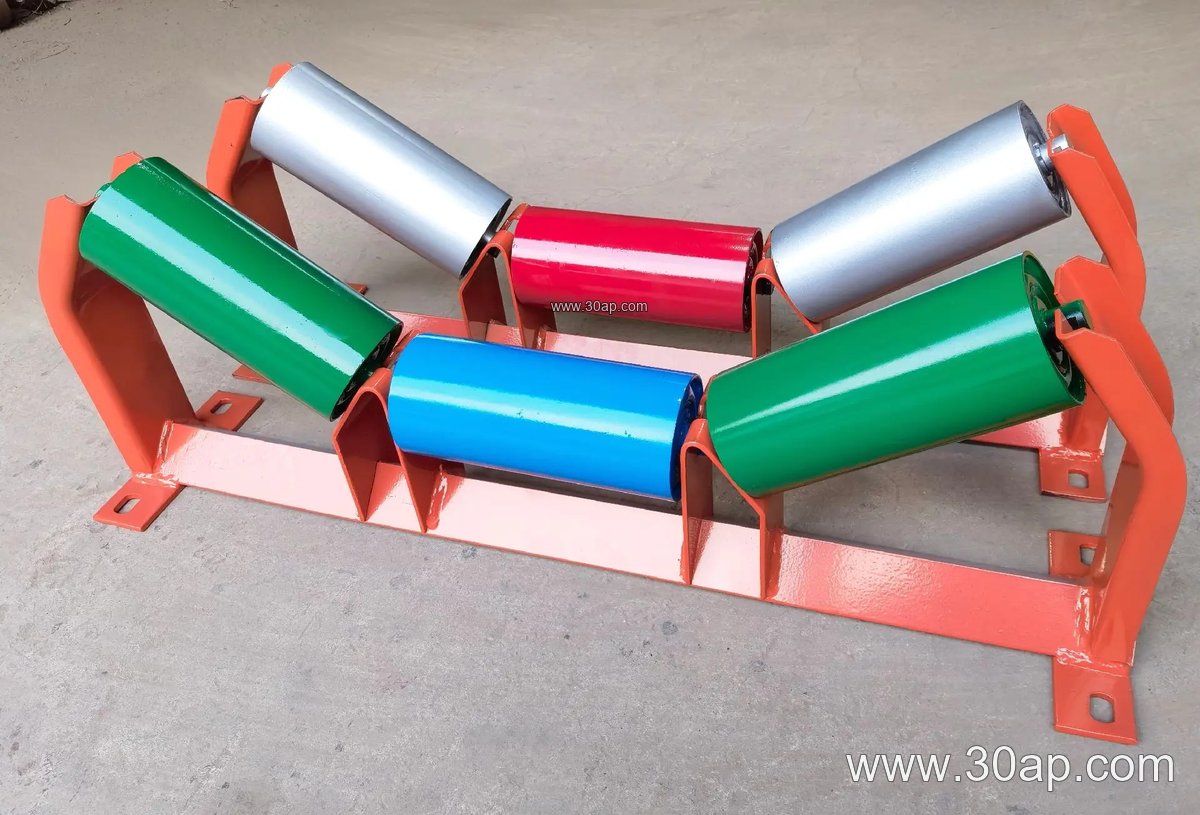
On a crusher discharge or a transfer point in a sand and gravel line, a custom bracket may also be combined with skirt rubber to control spillage. Where the belt is a chevron conveyor belt or a corrugated sidewall conveyor belt, the bracket height and clearance need extra attention so the cleats or sidewalls do not rub the frame.
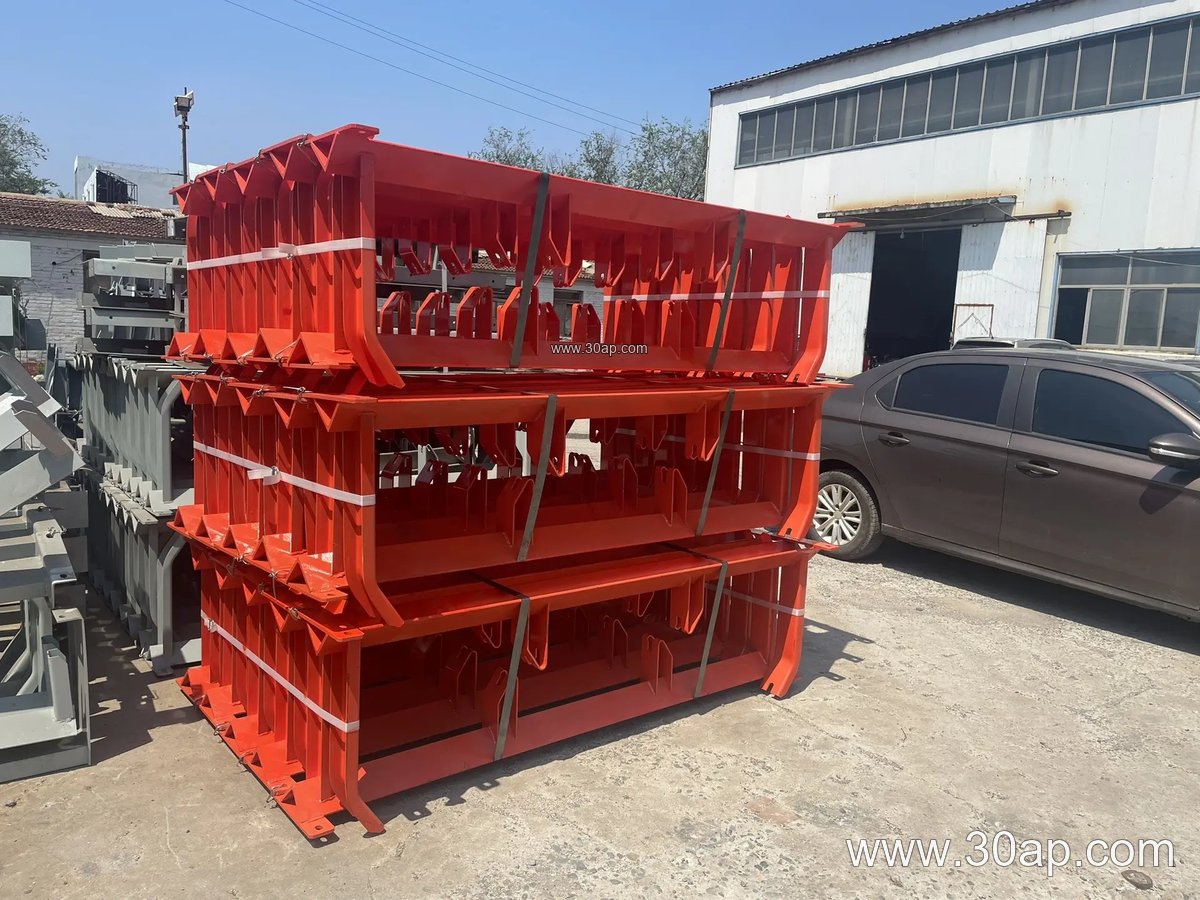
Selection and Buyer Checklist
Before ordering, gather the belt width, required trough angle, roller diameter, mounting hole spacing, beam length and the material of the existing frame. Confirm whether the position is carrying side or return side, and whether adjustment is needed. Ask for a dimension drawing for approval, and check that the bracket will accept the idler roller series already stocked on site.
- Confirm belt width and trough angle against the actual frame.
- Match roller diameter to the existing idler set.
- State the mounting hole pattern and beam length.
- Specify material and surface treatment for the working environment.
- Request an approval drawing before production.
For harsh duty such as iron ore or coal mining conveyors, a heavier folded plate bracket is often preferred, while lighter aggregate lines may use angle steel. Buyers comparing suppliers on www.hzconveyorbelt.com often ask for the bracket together with the matching conveyor idler and conveyor pulley data, so the whole support assembly can be checked as one system. More reference information is also available at www.hzconveyorbelt.com/conveyor-bracket.
Maintenance Notes
Inspect brackets after the first weeks of running, since vibration can loosen bolts. Check for bent beams, elongated holes and corrosion at the base, especially in wash plants and fertilizer or grain silo environments. Replacing a worn Non-Standard Conveyor Bracket before it distorts the idler alignment helps protect the conveyor belt and keeps the line tracking correctly.