What a Driving Pulley Does on a Conveyor
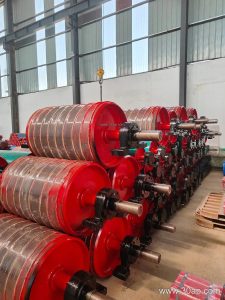
The driving pulley, also called the head pulley or drive pulley, is the component that transmits motion to the conveyor belt. It is connected to the gearbox or motor and rotates to pull the belt forward, carrying material from the loading point to the discharge end. In a typical bulk handling system, the driving pulley works together with the conveyor belt, idler rollers, and conveyor brackets to keep production moving. Whether you are running a quarry conveyor belt, a coal mining conveyor belt, or a cement plant conveyor belt, the driving pulley is the heart of the drive system.
Unlike a tail pulley or a bend pulley, the driving pulley is the only one that inputs power. Tail pulleys and bend pulleys serve different purposes—redirection and tension—and are not interchangeable with the drive pulley. This article focuses on the driving pulley: its construction, common configurations, and what buyers should consider.
Construction and Surface Options
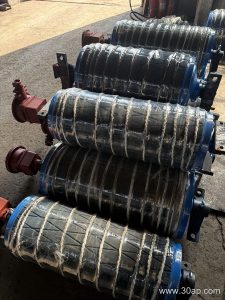
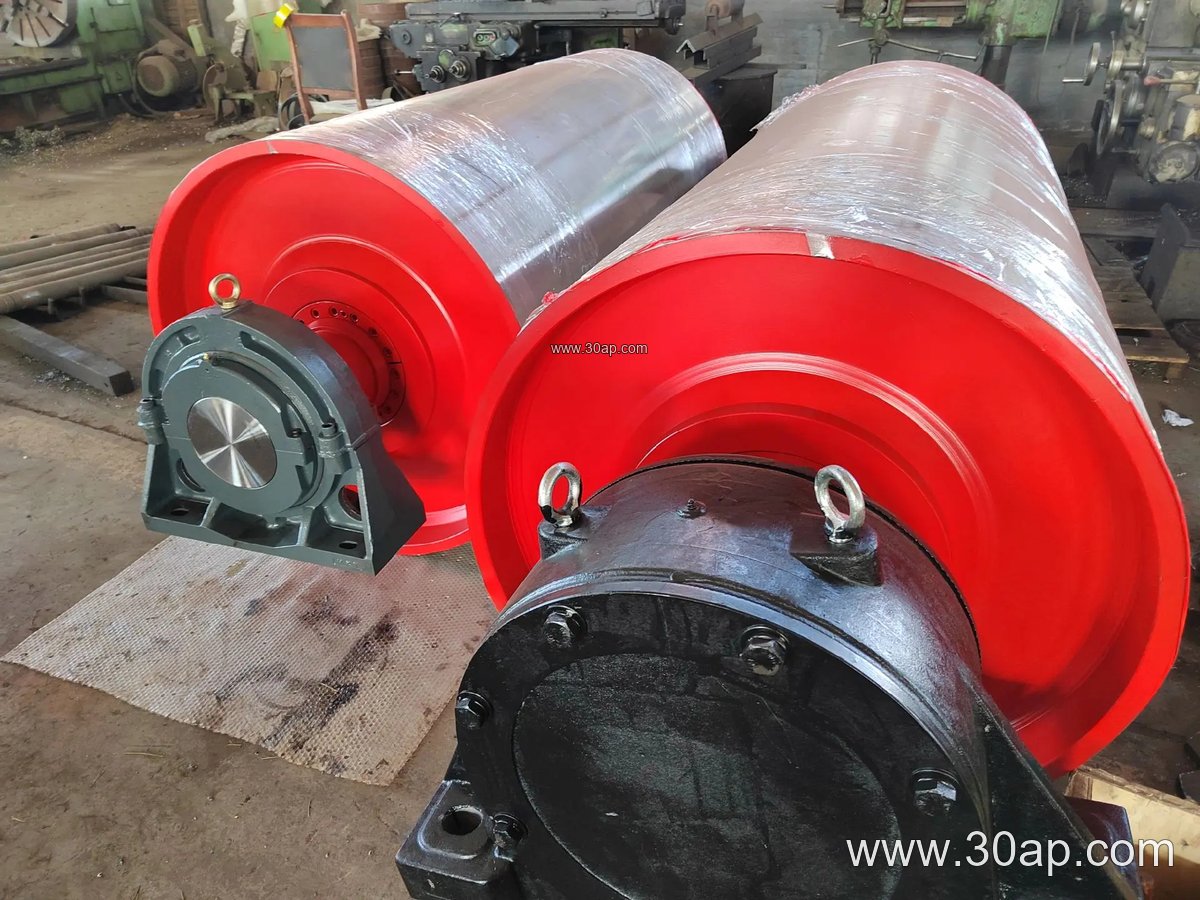
A driving pulley is usually built with a steel drum, a shaft, and bearing housings. The drum shell is often covered with rubber or ceramic lagging to increase friction between the pulley and the belt. Common surface forms include smooth, cast rubber, cold-bonded rubber, hot-vulcanized rubber, diamond lagging, herringbone lagging, and ceramic lagging. Lagging thickness commonly ranges from 8 mm to 20 mm, depending on the duty. For high-traction applications, diamond or ceramic lagging helps reduce slip, especially when the belt is wet or carrying abrasive materials.
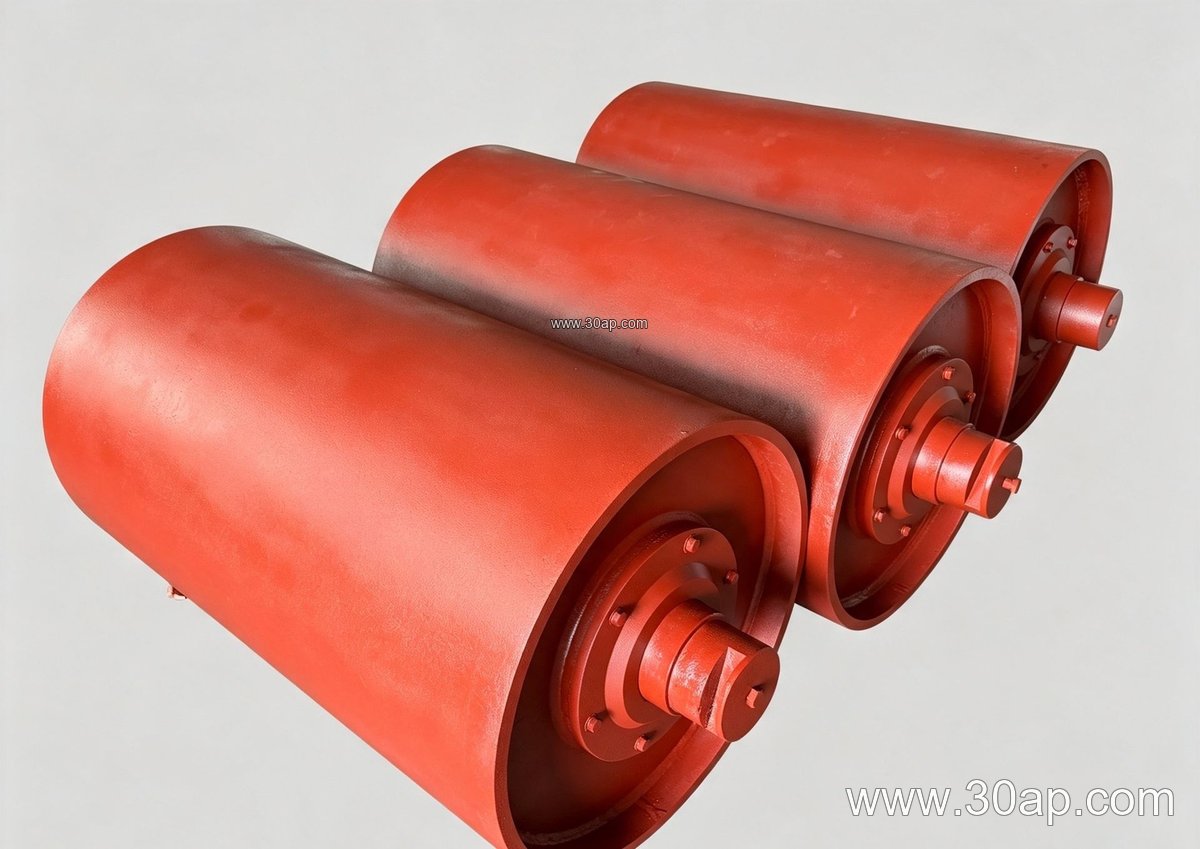
The pulley diameter and face width are matched to the belt width and the required torque. Common belt widths include B500, B650, B800, B1000, B1200, B1400, B1600, and B1800. The pulley face width is usually slightly wider than the belt—for example, a B800 belt often uses a pulley face around 950 mm, and a B1200 belt may use about 1400 mm. Diameters commonly range from Ø200 to Ø1800, but the final choice depends on the belt tension, speed, and space available. Shaft diameters are typically Ø50 to Ø200 and are determined by torque and load, not by belt width alone.
Where Driving Pulleys Are Used
Driving pulleys appear in many industries. In a limestone quarry or sand and gravel plant, they drive aggregate conveyor belts and crusher conveyor belts. In coal mining, they are part of underground mining conveyor belts and coal mining conveyor belts, often paired with flame retardant conveyor belts for safety. Cement plants use them on clinker and raw material lines, while power plants rely on them for coal handling. Port bulk terminals use large driving pulleys on ship loading conveyors, and steel plants use them for ore and sinter transport.
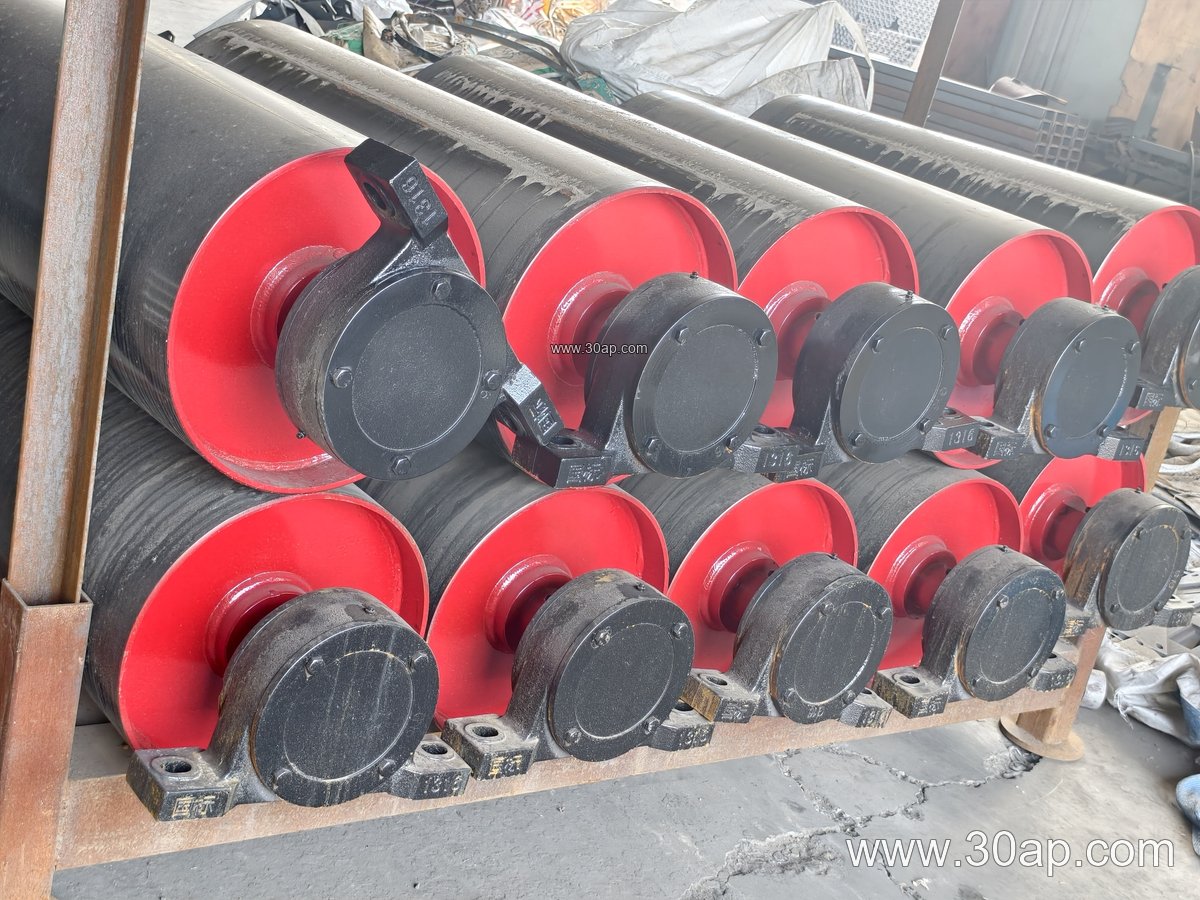
Other common settings include concrete mixing plants, tunnel muck removal, fertilizer plants, and grain silos. In each case, the driving pulley must match the belt type—whether it is an EP conveyor belt, NN conveyor belt, steel cord conveyor belt, or a specialty belt such as a heat resistant conveyor belt or oil resistant conveyor belt. The pulley lagging and diameter should be selected to handle the belt’s tension and the material’s abrasiveness.
Key Parameters and Selection Tips
Buyers should consider several parameters when specifying a driving pulley. The table below lists common reference values; these are typical ranges, not fixed rules.
| Parameter | Common Range / Example |
|---|---|
| Belt width (B) | B500, B650, B800, B1000, B1200, B1400, B1600, B1800 |
| Pulley diameter (Ø) | Ø200, Ø315, Ø400, Ø500, Ø630, Ø800, Ø1000, Ø1250 |
| Pulley face width | B500 ≈ 600 mm; B800 ≈ 950 mm; B1200 ≈ 1400 mm; B1600 ≈ 1800 mm |
| Shaft diameter | Ø50, Ø80, Ø100, Ø120, Ø160, Ø200 (based on torque) |
| Lagging thickness | 8 mm, 10 mm, 12 mm, 15 mm, 20 mm |
| Surface type | Smooth, diamond, herringbone, ceramic, rubber lagging |
Do not assume that one belt width matches only one pulley diameter. For example, a B800 belt might work with a Ø500 pulley in a light-duty application or a Ø800 pulley in a high-tension system. The shaft diameter should be calculated from the actual torque and radial load, not chosen solely from the belt width.
When selecting a driving pulley, also consider the belt type. An EP conveyor belt or NN conveyor belt may require different lagging than a steel cord conveyor belt. For abrasive materials, an abrasion resistant conveyor belt paired with ceramic lagging can extend pulley life. In cold climates, a cold resistant conveyor belt may be used, and the pulley should be designed to avoid slip at low temperatures. For food or clean applications, a food grade conveyor belt may require a smooth, easy-to-clean pulley surface.
Maintenance and Compatibility
Regular inspection of the driving pulley helps prevent unplanned downtime. Check lagging wear, belt tracking, and bearing condition. Misalignment between the driving pulley and the conveyor belt can cause edge damage and reduce belt life. Keep the pulley clean and ensure that the conveyor brackets and idler rollers are properly aligned. If the belt slips, verify lagging condition and tension before changing the pulley.
Remember that the driving pulley is not a substitute for a tail pulley or bend pulley. Each has a distinct role. For a reliable conveyor system, match the driving pulley to the belt specifications and the operating environment, whether in a mine, a cement plant, a power station, or a port.