What a Heavy-Duty Conveyor Bracket Actually Does
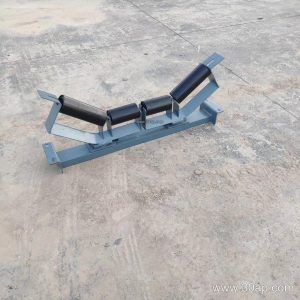
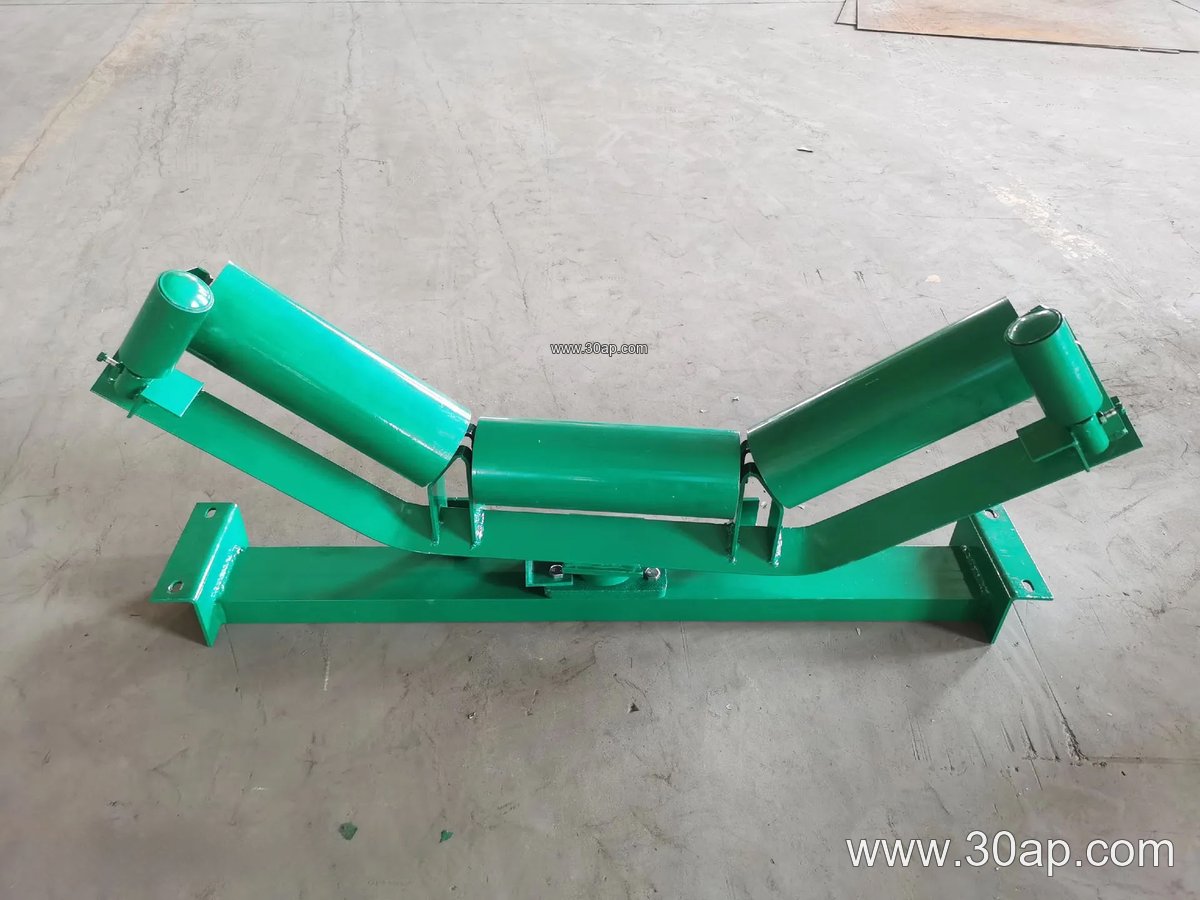
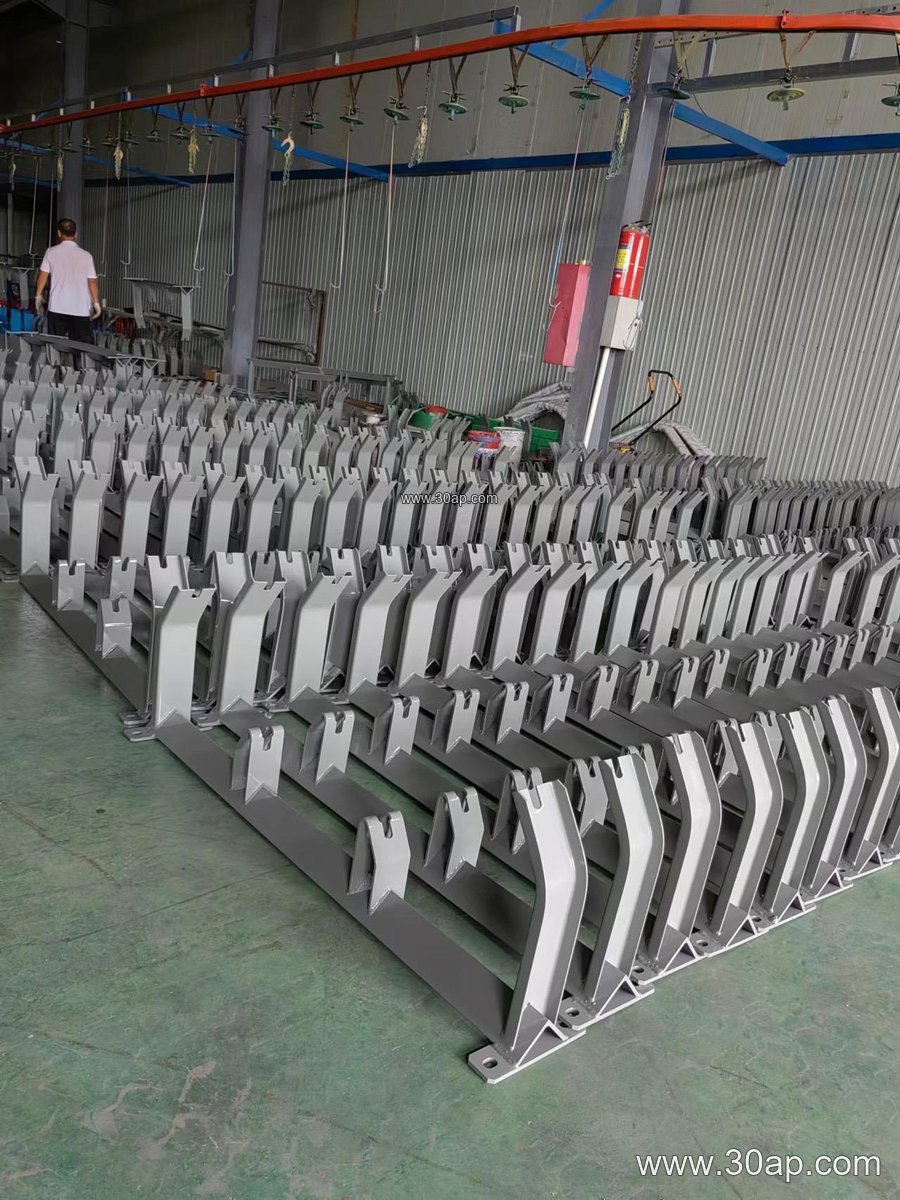
A heavy-duty conveyor bracket is the structural element that holds a troughing roll assembly at the correct angle and height along the carrying side of a belt conveyor. It is not a wear part in the same sense as the belt itself, yet it decides how evenly the load sits, how the belt tracks, and how quickly rolls can be replaced during a shutdown. In a quarry, a coal preparation plant, or a cement kiln feed line, a bent or loose bracket shows up fast as belt wander, spillage, and edge wear.
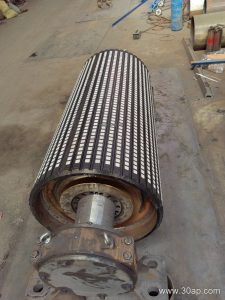
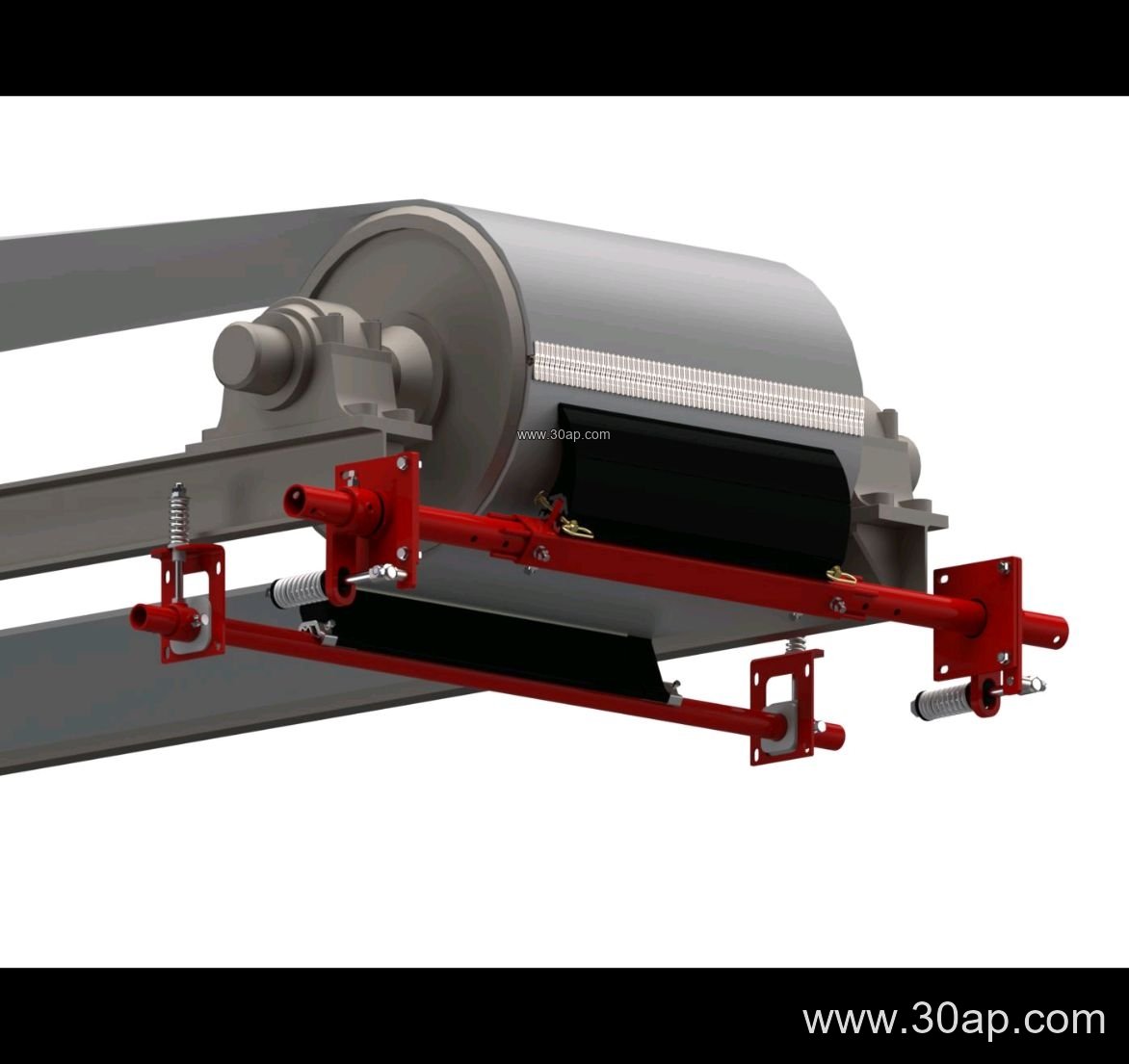
Most plants simply call it a conveyor bracket or a roller support frame. The accurate equivalent name is a heavy-duty conveyor idler support bracket, and that is the product discussed here. It is distinct from the pulleys that drive and redirect the belt: a drive pulley, a tail pulley, and a bend pulley are separate components with their own bearing housings and lagging. The bracket belongs to the carrying run, not to the drive station.
How the Frame Is Built
Fabrication usually starts from angle steel, channel steel, or folded steel plate. A heavy-duty variant uses thicker sections and reinforced gussets at the joints so the frame resists vibration from large lump sizes and repeated impact at the loading point. Welds are ground where the roll shaft seats, and mounting slots are punched or drilled to suit the specified hole spacing.
Because hole pitch and crossbeam length change with belt width and trough angle, no single dimension fits all conveyors. A bracket ordered for B800 at 35 degrees will not bolt onto a B1200 frame at 45 degrees without modification. Buyers should supply the belt width, the required trough angle, the roll diameter, and the existing hole centers before ordering.
| Parameter | Typical reference values |
|---|---|
| Belt width | B500, B650, B800, B1000, B1200, B1400, B1600, B1800, B2000, B2200 |
| Trough angle | 20, 30, 35, 45 degrees; adjustable frames cover a range |
| Roll diameter | Ø89, Ø108, Ø133, Ø159, Ø194 |
| Material | Angle steel, channel steel, folded plate |
| Common variants | Troughing, transition, return flat, V-return, impact, self-aligning, forward-leaning, suspended, adjustable |
Trough Angle and Roll Matching
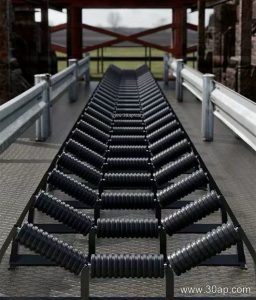
The trough angle shapes the material cross-section. A 20 degree frame suits light, free-flowing cargo, while 35 or 45 degrees contains a fuller load on high-capacity lines. Adjustable brackets let maintenance crews fine-tune the angle between these positions when a belt is replaced or a product changes. Forward-leaning frames, usually set around 1.5 to 2 degrees, help centralise the belt on long runs.
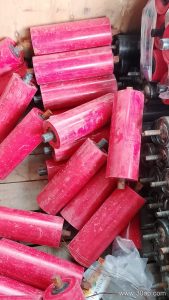
Roll diameter is chosen together with belt width and load, not from width alone. A B650 line at 30 degrees might run Ø89 rolls, while a B1200 line at 45 degrees often uses Ø133 or larger. Shaft diameter follows the roll and bearing selection, so it should never be assumed from belt width. On a heavy-duty conveyor belt carrying iron ore or crushed rock, the bracket and the roll set must be sized as one system.
Where These Frames Are Used
Aggregate plants and stone crushing lines place them under the crusher discharge, where impact is severe and dust is constant. Power plant coal handling uses them along the transfer houses and bunker feed. In each case the frame works alongside the conveyor belt, the idler roller, and the conveyor pulley, and a single weak bracket can disturb the whole run.
Return-side frames are a different subtype. A V-return bracket guides the belt on the lower strand and helps remove carryback; it is not a substitute for a troughing frame on the carrying side. Impact brackets with rubber cushions belong at the load point, and self-aligning frames belong where belt wander is a known problem.
Buyer Checklist
- Confirm belt width, trough angle, roll diameter, and existing hole spacing.
- State the material handled, since abrasive ore and hot clinker demand different steel thickness and coating choices.
- Ask whether the frame is fixed or adjustable, and whether it is a troughing, transition, or return type.
- Check that replacement rolls match the bracket seats.
- Plan inspection intervals around the loading zone, where vibration loosens fasteners first.
For a plant running an abrasion resistant conveyor belt in a sand and gravel line, or a flame retardant belt underground, the bracket is a low-cost item that protects far more expensive components. Specify it with the same care as the belt and the rolls, and the conveyor will track straighter and last longer.