What a Heavy-Duty Steel Conveyor Bracket Does
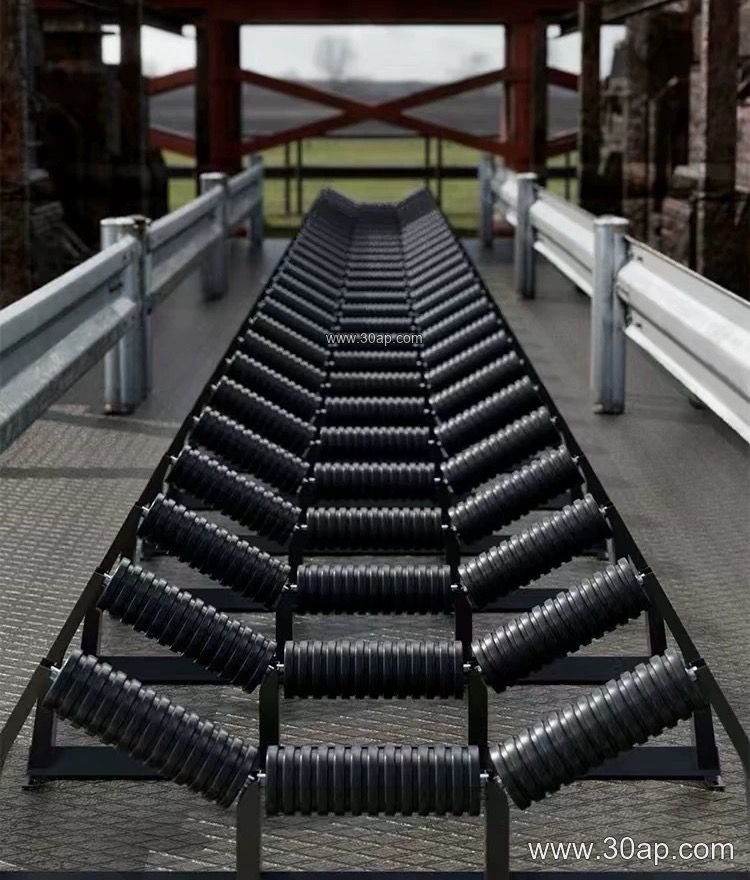
A heavy-duty steel conveyor bracket is the structural interface between a conveyor’s idler roller and the main frame. It carries the idler at the correct angle and elevation, keeps the belt profile stable, and absorbs the vibration and shock loads that come with continuous bulk handling. In a quarry, a coal preparation plant, or a cement kiln feed line, the bracket is often the part that decides whether an idler stays in alignment after months of service.
Unlike a general-purpose support, this bracket is built from heavier sections and reinforced joints so it can hold its shape under high belt tension and uneven loading. It is not a pulley: drive pulleys, tail pulleys, and bend pulleys perform different functions, and none of them can substitute for a properly mounted idler bracket.
Construction and Materials
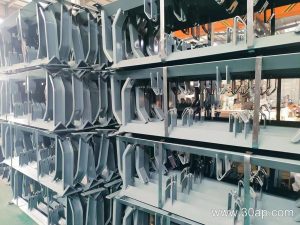
Most heavy-duty brackets are fabricated from angle steel, channel steel, or folded steel plate. The choice depends on the load path and the mounting method. Welded gussets and stiffening ribs are common where the bracket meets the conveyor stringer. Bolt holes are usually slotted or elongated to allow field adjustment.
Surface treatment matters in wet or abrasive settings. Hot-dip galvanizing and heavy epoxy coatings are typical for port and aggregate applications, while underground coal mining conveyors often require coated or stainless hardware to resist corrosion from wash-down and humidity.
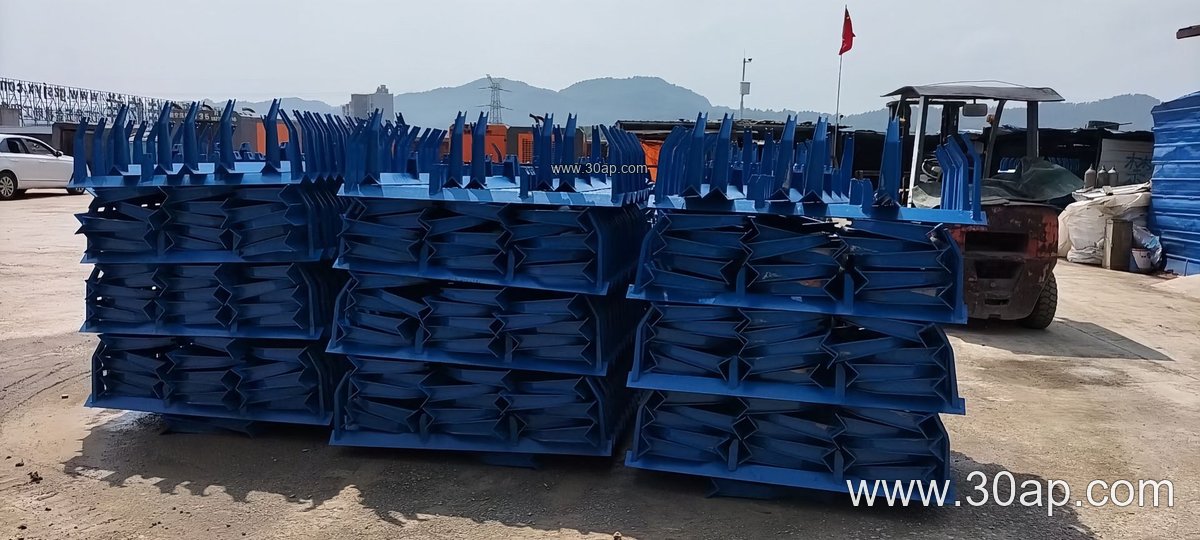
Common bracket forms
- Troughing bracket for carrying idlers
- Transition bracket near pulleys
- Return bracket and V-return bracket
- Impact bracket under loading points
- Self-aligning bracket for belt tracking
- Adjustable bracket with variable trough angle
Each form is a distinct subtype with its own mounting geometry. A troughing bracket cannot be swapped for a return bracket, and a self-aligning bracket should not be used as a replacement for a fixed bracket in a stable straight section.
Matching Belt Width, Trough Angle, and Roller Diameter
The bracket must fit the belt width, the intended trough angle, and the idler roller diameter. Typical belt widths range from B500 to B2200, with B800, B1000, and B1200 being common in aggregate and cement plants. Trough angles of 20, 30, 35, and 45 degrees are widely used; adjustable brackets can move between these angles to fine-tune the belt profile. Roller diameters such as Ø89, Ø108, Ø133, Ø159, and Ø194 are selected according to load and belt speed.
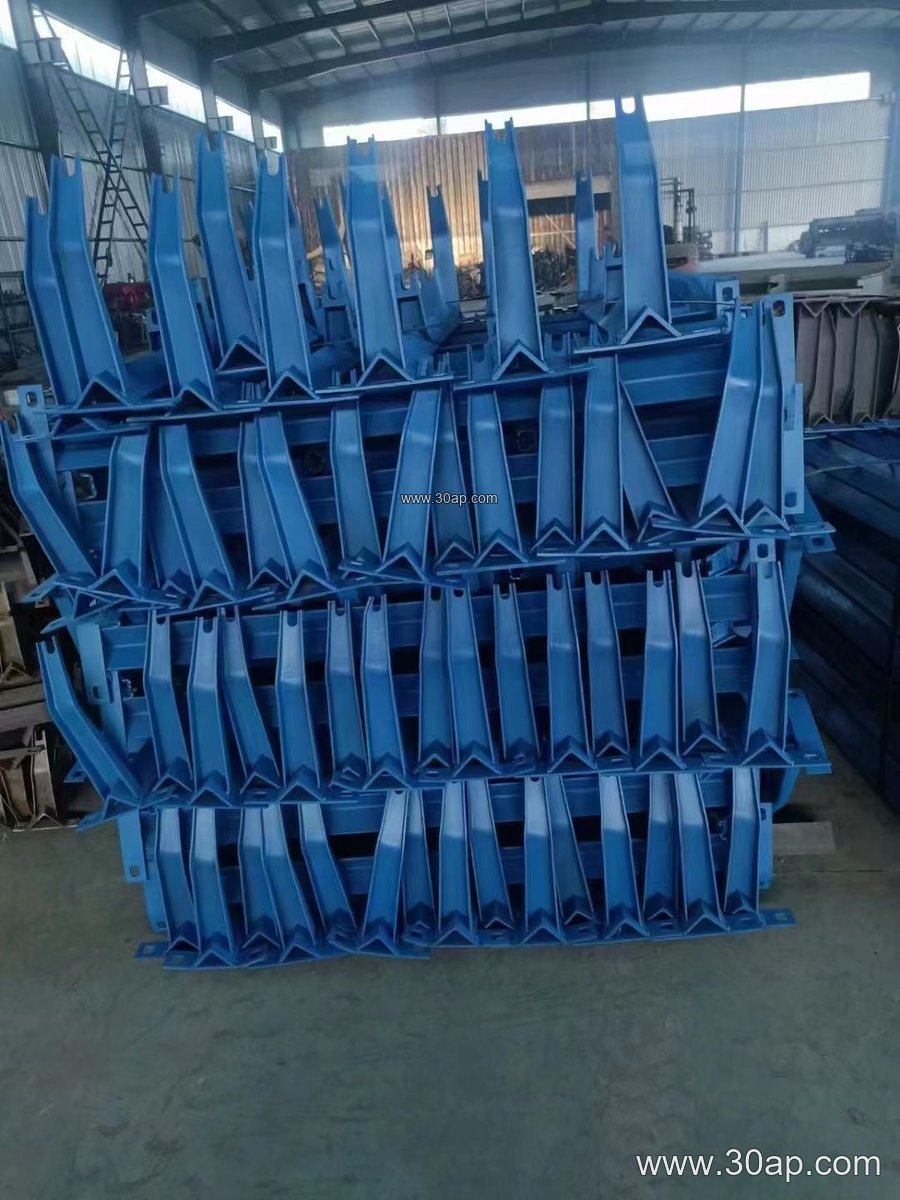
There is no fixed rule that ties one belt width to one trough angle or one roller diameter. A B1200 system may run at 35 degrees with Ø133 rollers in one plant and at 45 degrees with Ø159 rollers in another. Installation hole spacing and crossbeam length are determined by the design, not by a single catalog number.
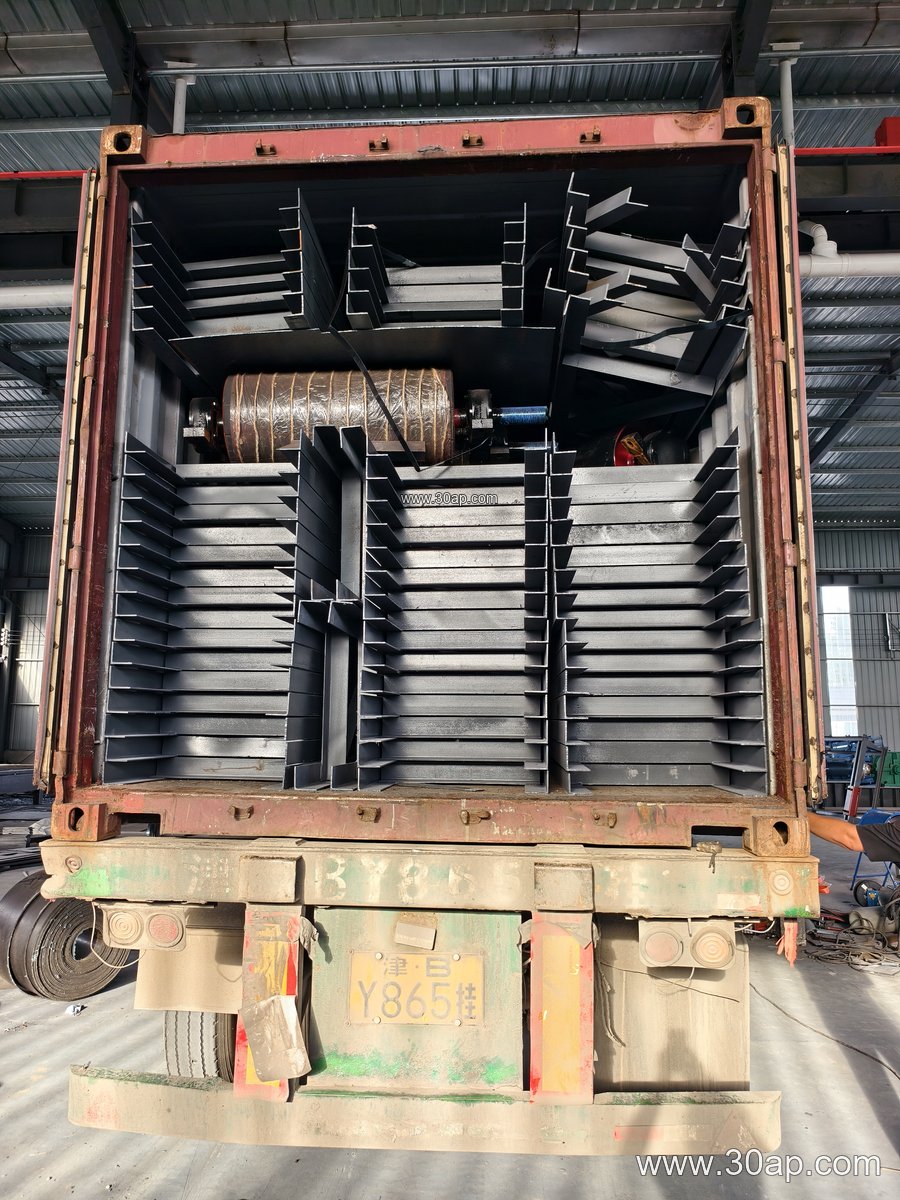
| Parameter | Common range | Note |
|---|---|---|
| Belt width | B500 to B2200 | B800, B1000, B1200 frequent |
| Trough angle | 20° to 45° | Adjustable brackets cover several angles |
| Roller diameter | Ø89 to Ø194 | Selected by load and speed |
| Forward tilt | about 1.5° to 2° | Used on forward-tilt brackets |
Where Heavy-Duty Brackets Are Used
In a limestone quarry or a sand and gravel line, the bracket supports troughing idlers along the main haulage conveyor. In a coal washing plant, it must tolerate fines, moisture, and occasional surge loads. Power plant coal handling and steel plant sinter lines also rely on robust brackets to keep the belt centered under high throughput.
The bracket works together with the conveyor belt, the idler roller, and the conveyor pulley. A heavy-duty mining conveyor belt such as an EP200 or EP300 fabric core belt, or a steel cord belt in a long overland system, transmits load through the idlers into the bracket. If the bracket is undersized, the belt may misalign and the idler may wear prematurely.
Buyer Checklist
Before ordering, confirm the belt width, the required trough angle, the roller diameter, and the mounting hole pattern. Ask whether the bracket is fixed or adjustable, and whether it is intended for carrying, return, impact, or self-aligning service. Check the steel section size and the coating system for the site conditions. For a quarry conveyor belt or an underground coal mining conveyor belt, specify the corrosion and flame-retardant requirements that apply to the whole conveyor, not just the belt.
A well-chosen heavy-duty steel conveyor bracket is a small cost item that protects larger components. Matching it correctly to the idler roller and the conveyor belt is the practical way to keep a bulk material conveyor running straight and steady.