What a High Abrasion Resistant Conveyor Belt Is
A High Abrasion Resistant Conveyor Belt is a heavy-duty rubber belt engineered so that its cover compound withstands scraping, gouging and particle wear far better than a standard general-purpose belt. In practice it is often called an abrasion resistant rubber conveyor belt, and the two names describe the same product: a belt whose top and bottom covers are formulated for abrasive bulk materials rather than for ordinary light duty. The carcass still carries the tension, but the cover does the work of surviving the load.
This is not a substitute for a heat resistant conveyor belt or a flame retardant conveyor belt, which solve different problems. A wear-focused belt is chosen when the material itself is the enemy: sharp stone, sinter, clinker, coke or coarse ore.
How the Belt Is Built
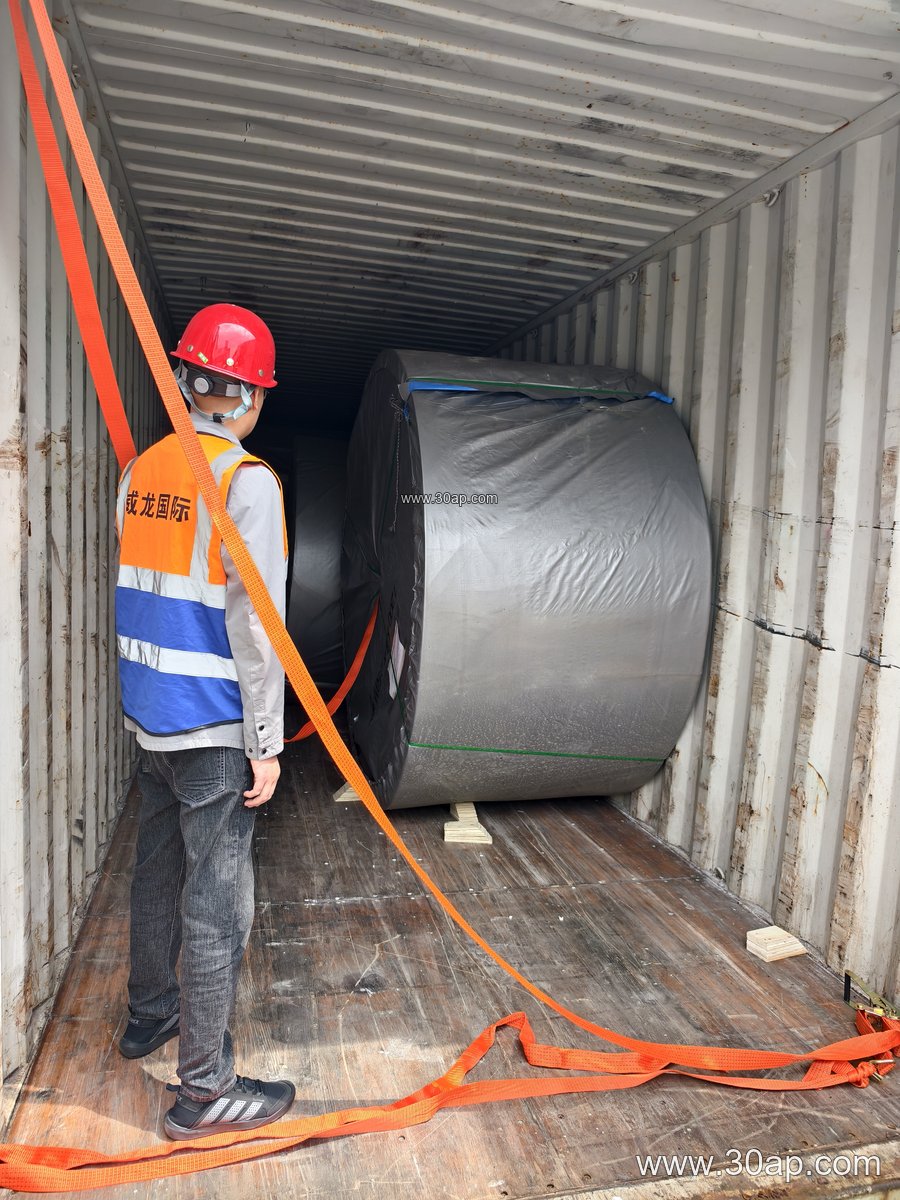
The construction usually combines an abrasion resistant rubber cover with a fabric or steel tension member. Common carcass options include an EP conveyor belt (polyester-nylon), an NN conveyor belt (nylon-nylon), a multi-ply fabric core conveyor belt, and a steel cord conveyor belt for very high tension and long centres. Cover thickness is selected around the duty: typical combinations are 3+1.5 mm, 4+2 mm, 5+2 mm, 6+2 mm and 8+3 mm, with 2 to 6 fabric plies in everyday fabric-core designs.
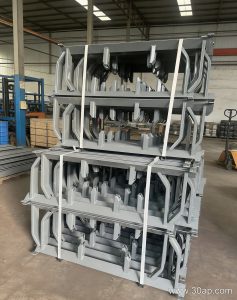
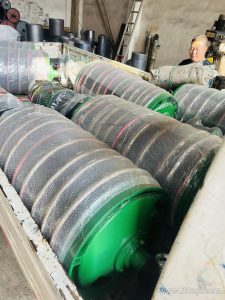
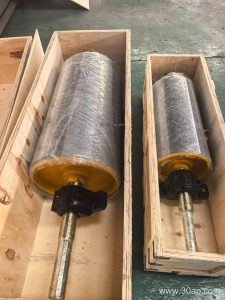
Because the cover is the wear part, buyers should look at the rubber quality rather than the belt name alone. A well-made abrasion resistant conveyor belt keeps its cover thickness for longer, which protects the carcass from moisture and impact damage. On a typical conveyor, the belt runs over idler rollers, wraps a drive pulley and a tail pulley, and is held by a conveyor bracket and frame; the bend pulley only changes direction and should not be confused with the drive or tail pulley when specifying take-up and tension.
Where It Fits in the Plant
Wear-intensive duties appear across many industries. In a quarry conveyor belt or aggregate conveyor belt, crushed rock and gravel scour the cover continuously. A crusher conveyor belt and rock conveyor belt often see the sharpest material right after primary crushing, where impact and abrasion arrive together. In mining, an ore conveyor belt, iron ore conveyor belt or copper ore conveyor belt demands a tough cover, and a gold mining conveyor belt may combine abrasion with wet conditions.
Cement plants handle clinker and limestone, power plants handle coal and ash, and steel plants handle sinter and coke. Ports and ship loading systems move abrasive bulk material at high tonnage. In coal mining, a flame retardant conveyor belt or fire resistant conveyor belt is normally required for safety, and an anti-static conveyor belt may be specified alongside; the abrasion resistant cover is then selected within those safety constraints. Underground coal mining conveyor belt applications often use PVG conveyor belt or PVC conveyor belt constructions, where the cover and the safety class must be considered together.
Specification Points Worth Checking
Belt width and strength should follow the conveyor design, not a fixed rule. A 650mm conveyor belt, 800mm conveyor belt, 1000mm conveyor belt, 1200mm conveyor belt or 1400mm conveyor belt may all appear in abrasive service, and wider belts such as a 1600mm conveyor belt or 1800mm conveyor belt are used on large bulk systems. Belt width does not dictate one pulley diameter, and shaft size must come from the conveyor designer.
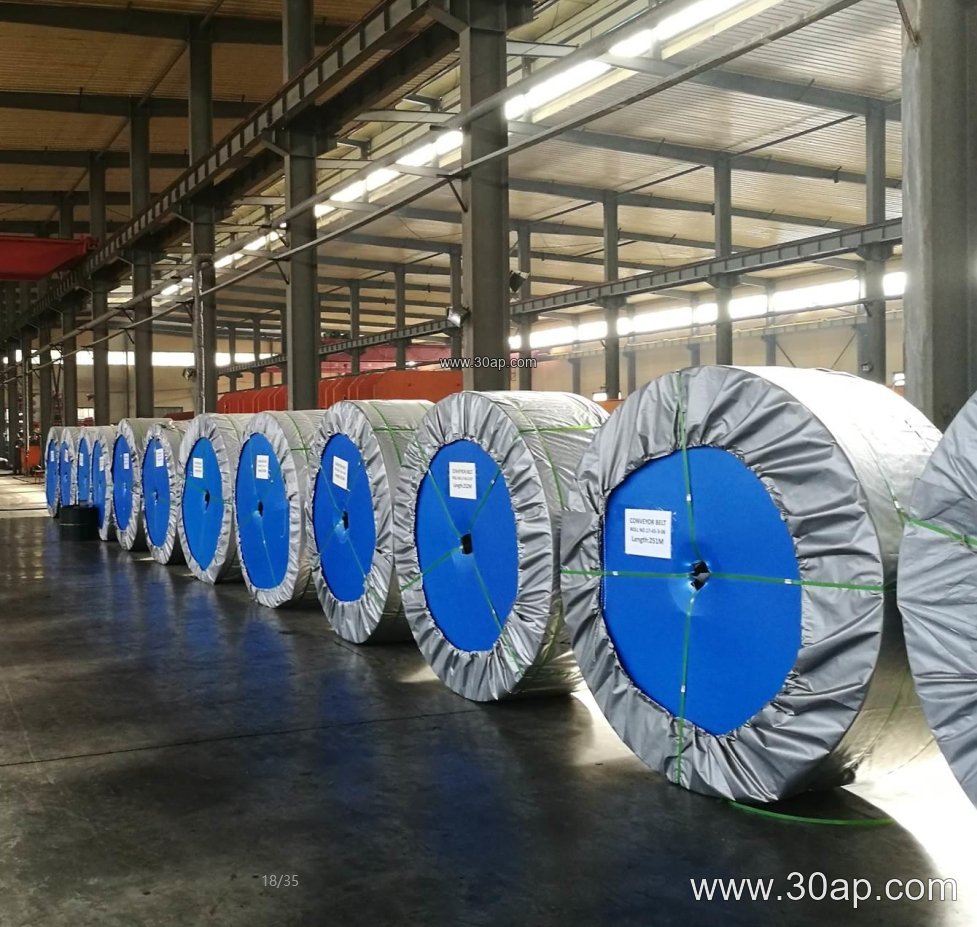
Typical reference values are listed below. They are common ranges, not a supply promise, and final selection is made by design.
- Fabric core grades: EP200, EP315, EP400, EP500, EP630, EP800, EP1000, EP1250, EP1600, EP2000
- Steel cord grades: ST1000, ST1250, ST1600, ST2000, ST2500, ST3150
- Fabric plies: usually 2 to 6
- Cover combinations: 3+1.5, 4+2, 5+2, 6+2, 8+3 mm
- Common widths: B500, B650, B800, B1000, B1200, B1400, B1600, B1800, B2000
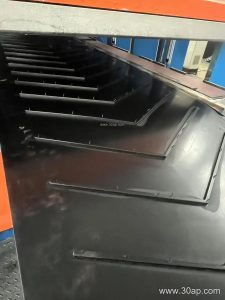
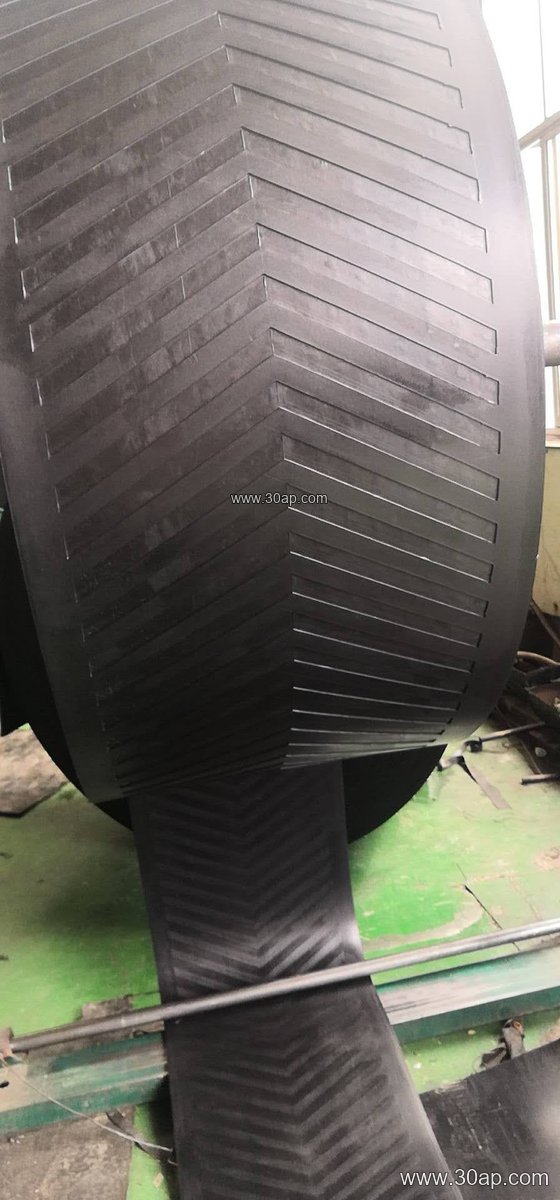
A thicker cover is not always better: it adds weight and can reduce flexibility around smaller pulleys. Where material is carried on an incline, a chevron conveyor belt or corrugated sidewall conveyor belt may be needed to stop roll-back or spillage, but those are separate designs rather than replacements for an abrasion resistant belt.
Buyer Checklist
- Match the cover grade to the material: sharp rock, sinter and clinker need more wear resistance than sand or grain.
- Confirm the carcass grade and ply count against the calculated belt tension and centre distance.
- Check pulley diameters, idler roller spacing and impact points; loading zones often wear fastest.
- Ask how the belt splices: an endless conveyor belt joint made at the factory can outperform a field splice in severe wear.
- For cold sites, confirm the cover remains flexible at low temperature; for oily material, consider an oil resistant conveyor belt instead.
- Keep spare cover thickness records and inspect edges, since edge wear is an early warning sign.
For abrasive bulk handling, the right choice is a belt whose cover is built for wear and whose carcass is built for the conveyor. Matching both to the duty is what keeps a high abrasion resistant conveyor belt running through rock, ore, clinker and coal without premature replacement.