What a Heavy-Load Conveyor Idler Does on a Busy Line
A heavy-load conveyor idler is the rotating support under the belt on a conveyor that moves dense, abrasive, or high-tonnage bulk material. In a limestone quarry, a coal handling section of a power plant, or a crushing and screening circuit, the belt itself is only part of the story. The idler roller carries the load, guides the belt, and keeps friction low enough that the drive does not fight the entire system. When a line runs a wide, thick belt loaded with ore or aggregate, the idler specification becomes a structural decision rather than a detail.
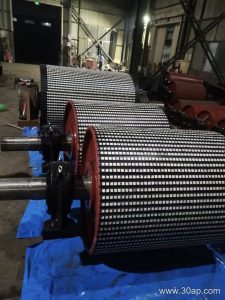
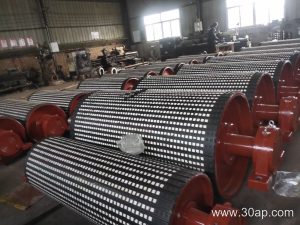
The same product is often called a heavy-duty conveyor roller or heavy-duty carrying idler. Those names describe the same item; they are not a different component. Drive pulleys, tail pulleys, and bend pulleys stay at the ends or along the return path and are never a substitute for troughing or return idlers.
How the Roller Is Built
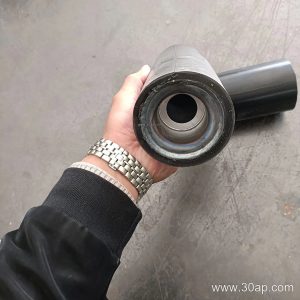
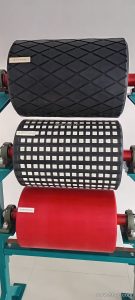
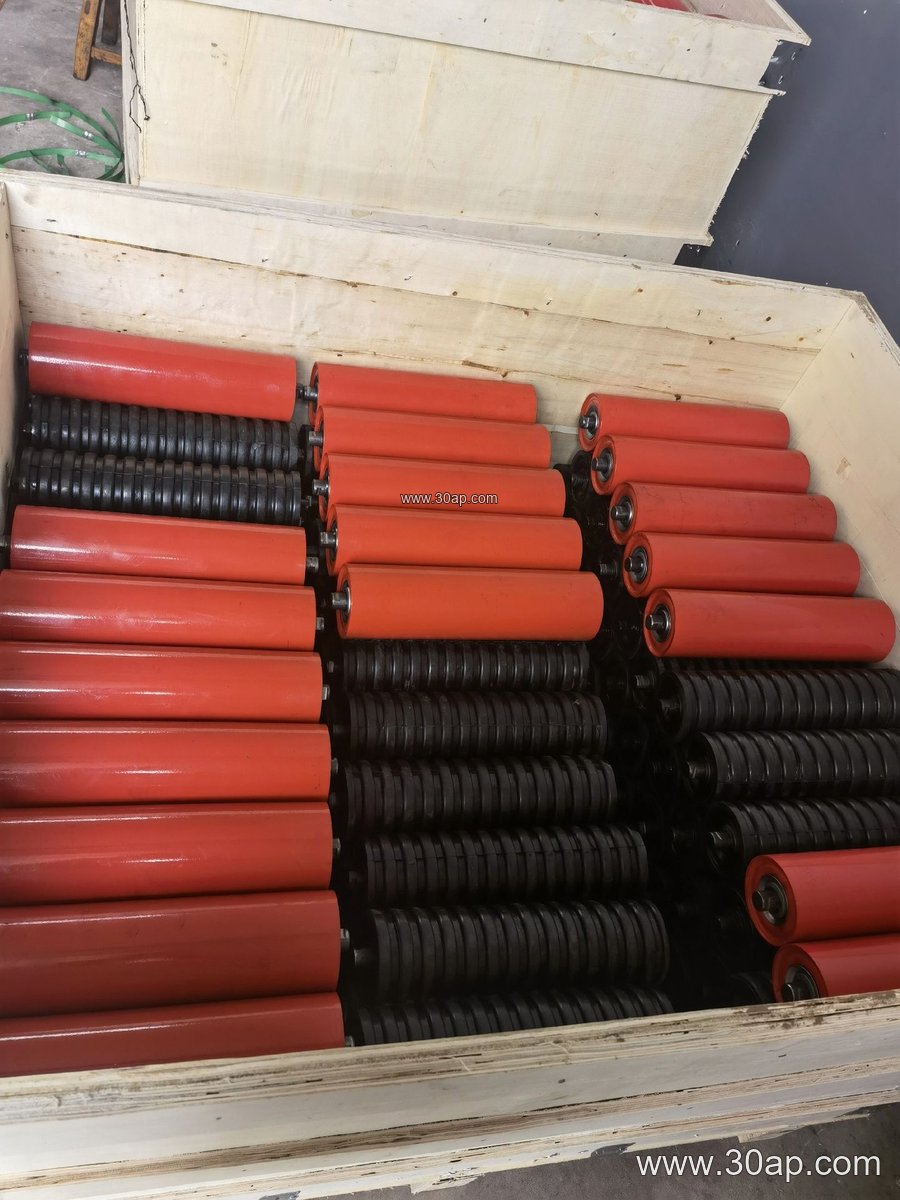
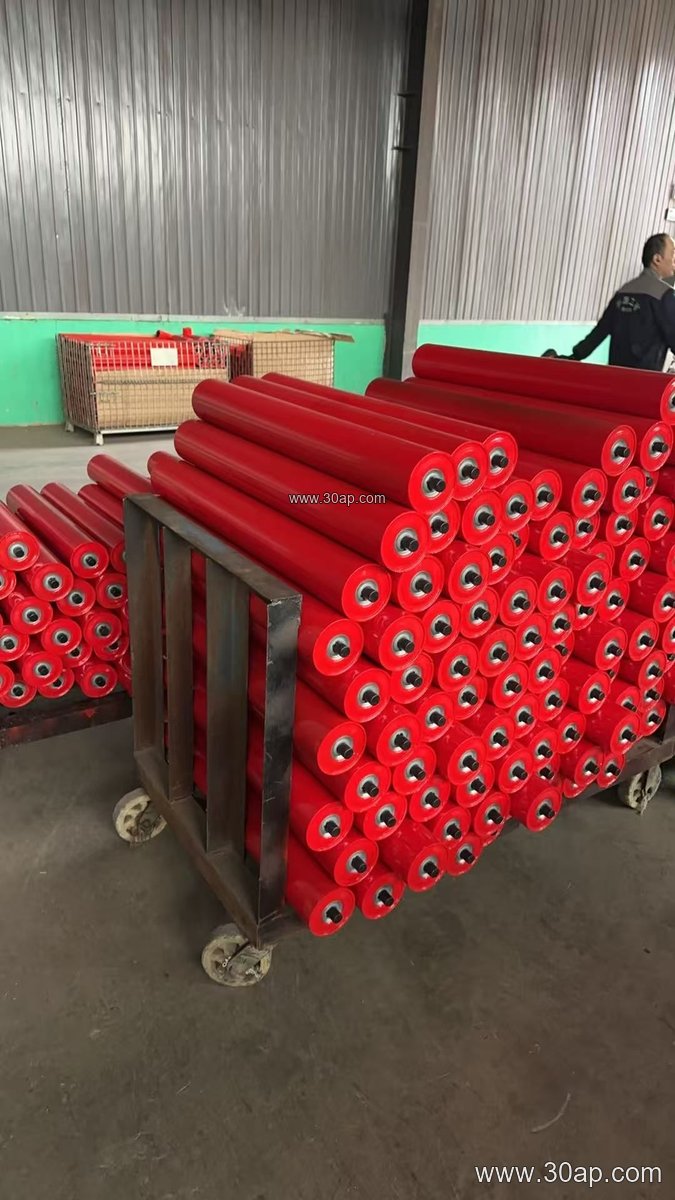
Most heavy-load units combine a steel tube shell, welded end discs, a shaft, and sealed bearings. The shell may be plain steel, nylon-coated, ceramic-covered, or fitted with rubber rings for impact absorption. Bearing seats and labyrinth seals matter as much as tube thickness, because dust and water ingress shorten life faster than load alone in a quarry or a cement plant.
Common roller diameters for this class include Ø102, Ø108, Ø127, Ø133, Ø159, Ø178, Ø194, and Ø219 mm. Bearing sizes such as 6205, 6305, 6306, 6308, and 6310 appear across the range, but no single bearing is tied to one diameter. Shaft diameter follows the calculated load and the frame design, not the belt width by itself.
Troughing Sets and Their Place in the Frame
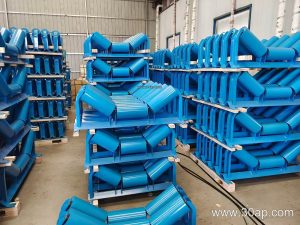
On the carrying side, a three-roll troughing set at 30 or 35 degrees is common for bulk material; 45 degrees suits some free-flowing loads, while 20 degrees appears on wider, flatter belts. A two-roll or single-roll arrangement may be used where the belt is narrow or the material is lumpy. Transition idlers sit near the pulleys to ease the belt from flat to troughed. On the return side, a plain flat return idler or a V-type return roller keeps the belt tracking and sheds spillage.
Impact idlers with rubber rings are placed under the loading point to cushion falling rock. Self-aligning idlers, including friction and tapered types, correct minor misalignment. These are related subtypes used for a specific duty; they do not replace the heavy-load carrying idler in the main run.
Reference Dimensions for Planning
The values below are typical examples, not fixed pairings. Roll length changes with belt width, trough angle, and roll position, and side rolls can differ from the centre roll.
| Belt width | Typical centre roll length, three-roll troughing | Common idler diameter range |
|---|---|---|
| B500 | about 200 mm | Ø76 to Ø108 mm |
| B650 | about 250 mm | Ø89 to Ø127 mm |
| B800 | about 315 mm | Ø89 to Ø133 mm |
| B1000 | about 380 mm | Ø108 to Ø159 mm |
| B1200 | about 465 mm | Ø127 to Ø178 mm |
| B1400 | about 530 mm | Ø133 to Ø194 mm |
| B1600 | about 600 mm | Ø159 to Ø194 mm |
| B1800 | about 670 mm | Ø159 to Ø219 mm |
| B2000 | about 750 mm | Ø178 to Ø219 mm |
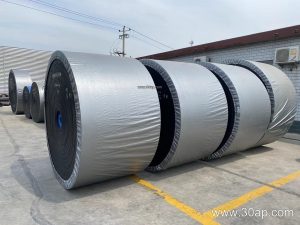
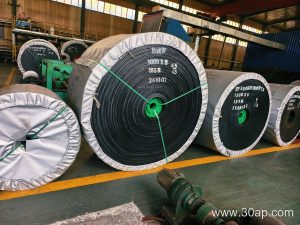
Heavy-duty conveyor belts such as an EP1000 or ST1600 steel cord belt on a 1200 mm or 1500 mm wide line will call for larger rollers and sturdier brackets than a light package-handling conveyor. The idler must suit the belt, not the other way round.
Where These Rollers Earn Their Keep
In a copper or iron ore concentrator, a heavy-load idler handles sharp, dense feed day after day. In a coal preparation plant, flame retardant conveyor belt and anti-static properties matter alongside roller durability. Cement plants and clinker lines combine heat and abrasion, so heat resistant conveyor belt and abrasion resistant conveyor belt grades often run over the same frames. Ports handling ship loading duty favour wide belts and generously sized rollers to keep downtime low.
What a Buyer Should Check
- Match the idler to the actual belt width, trough angle, and load per metre, not to a catalogue assumption.
- Confirm seal type and bearing class for the dust and moisture level on site.
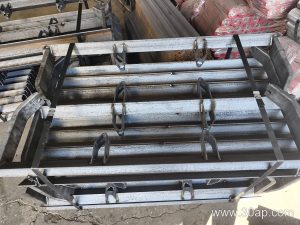
- Check that the conveyor bracket and frame accept the chosen shaft and roller length.
- For impact zones, specify rubber-ring or cushion rollers separately from the main carrying set.
- Ask for the roller’s dynamic load rating and rotation test data rather than only tube thickness.
A well-chosen heavy-load conveyor idler keeps a conveyor belt running true from the tail pulley to the discharge, and it is one of the cheapest ways to protect a much more expensive belt.