What a Feed Point Impact Idler Does
At the transfer point where bulk material drops onto a conveyor, the belt takes a concentrated hit. A feed point impact idler is the carrying-side roller assembly placed directly under that landing zone to absorb the shock and protect the belt carcass. Unlike a standard troughing idler further along the line, this roller is built for repeated impact rather than steady rolling load. It is often specified together with a rubber conveyor belt that has good impact resistance, but the idler itself is the first line of defense.
In quarry, crusher discharge and aggregate lines, the drop height and lump size can be significant. The same applies in coal mining conveyor systems and cement plant raw-material handling. The idler does not stop the impact, but it spreads it across a wider contact area and a more forgiving surface.
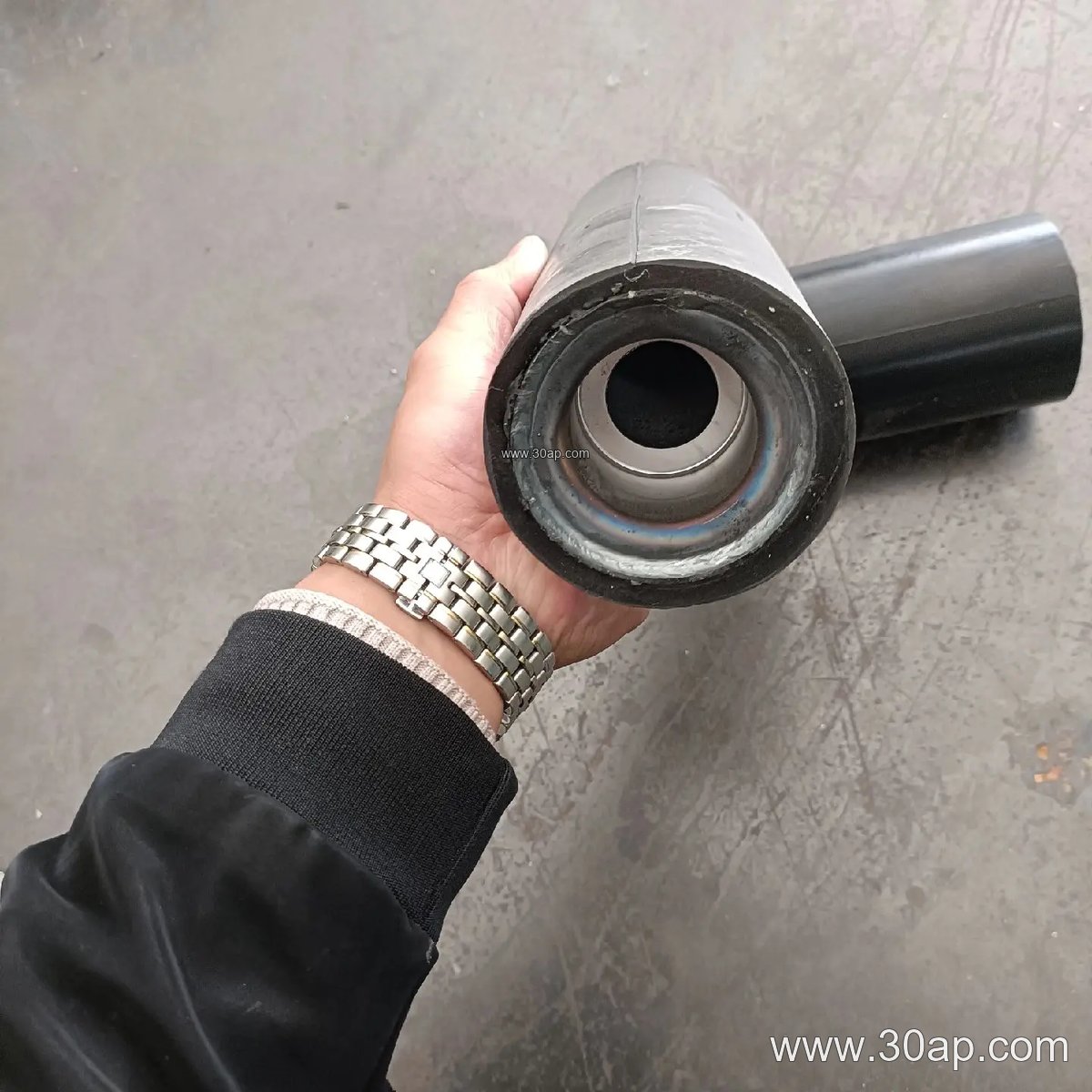
Construction and Surface Options
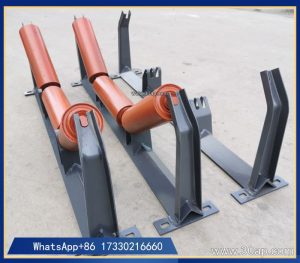
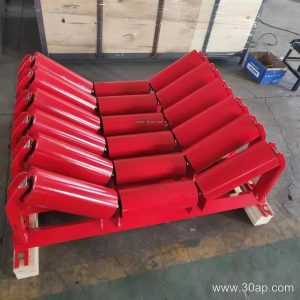
A feed point impact idler usually follows a troughing frame pattern, with the impact roller or rollers mounted on a sturdy bracket. The roller body may be a steel tube, but the face is commonly fitted with rubber rings or discs that compress under load. Some designs use a nylon or ceramic face for different wear conditions, though rubber remains the common choice for shock absorption.
Bearing selection matters because impact loads transfer through the shaft. Common bearing sizes include 6204, 6205, 6305, 6306, 6308 and 6310, matched to the roller diameter and load rating rather than to belt width alone. Roller diameters for impact service typically range from Ø89 up to Ø159 or larger, with Ø127 and Ø133 often seen in medium-duty transfer points. The roller length depends on belt width, trough angle and frame type; for example, a three-roll troughing set on a B1000 belt often uses rolls around 380 mm long, while a B1400 set may use about 530 mm. These are common reference figures, not fixed rules.
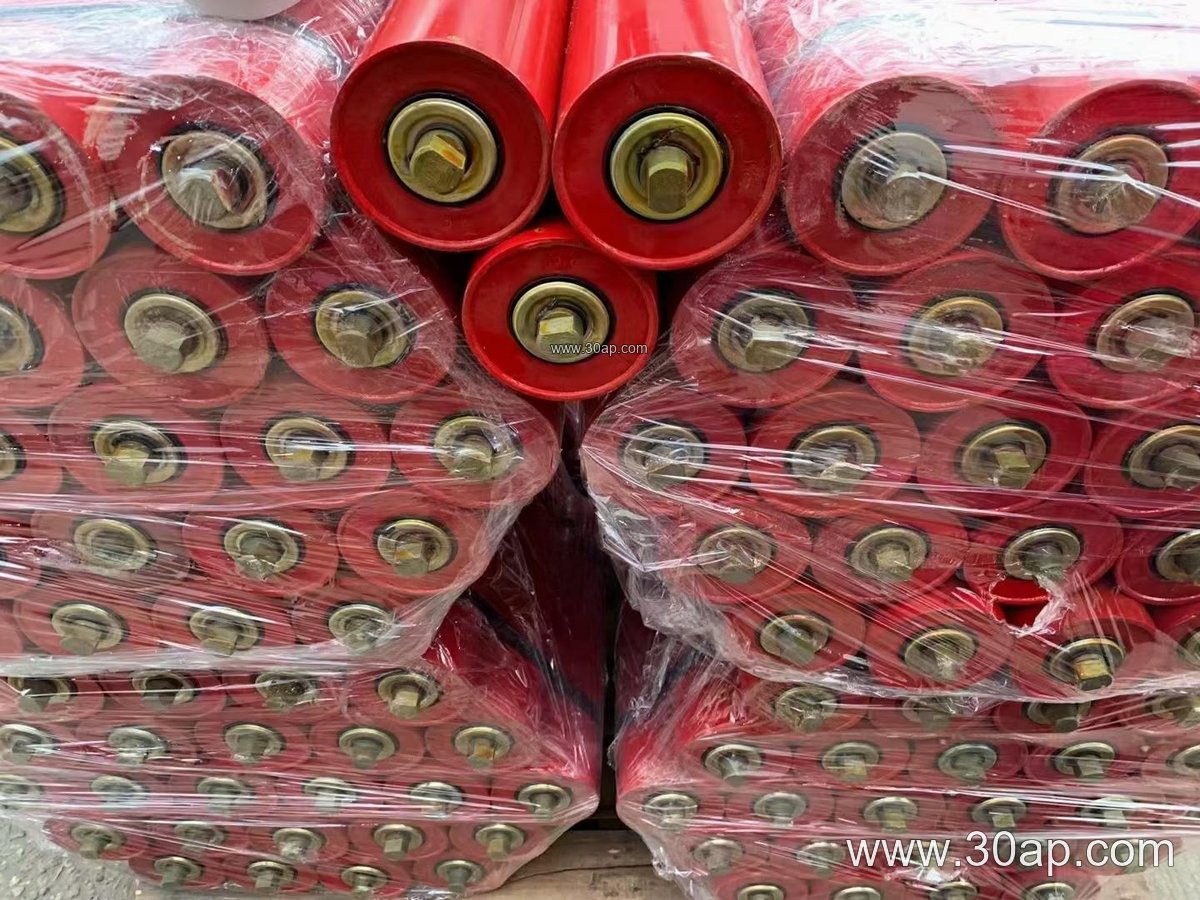
Common reference data
- Roller diameter: Ø89, Ø102, Ø108, Ø127, Ø133, Ø159
- Belt width range: B500 to B2000 and beyond
- Trough angle: 20°, 30°, 35°, 45°
- Surface: rubber ring, steel, nylon, ceramic
- Bearing: 6204, 6205, 6305, 6306, 6308, 6310
Where It Fits in the Conveyor
The impact idler sits at the loading point, often just after the tail pulley and before the first standard troughing idler. In a coal mining conveyor or underground coal mining conveyor, it may be combined with a flame retardant conveyor belt and a skirted conveyor belt to contain dust and spillage. In a port or ship loading conveyor, the drop from the shiploader can be severe, so impact rollers are selected with thicker rubber rings.
It is not a replacement for a bend pulley or a drive pulley; those are different components in the conveyor pulley family. The impact idler only supports the belt on the carrying side at the feed zone. For comparison, a return idler or a V-type return roller handles the empty side and does not need the same cushioning.
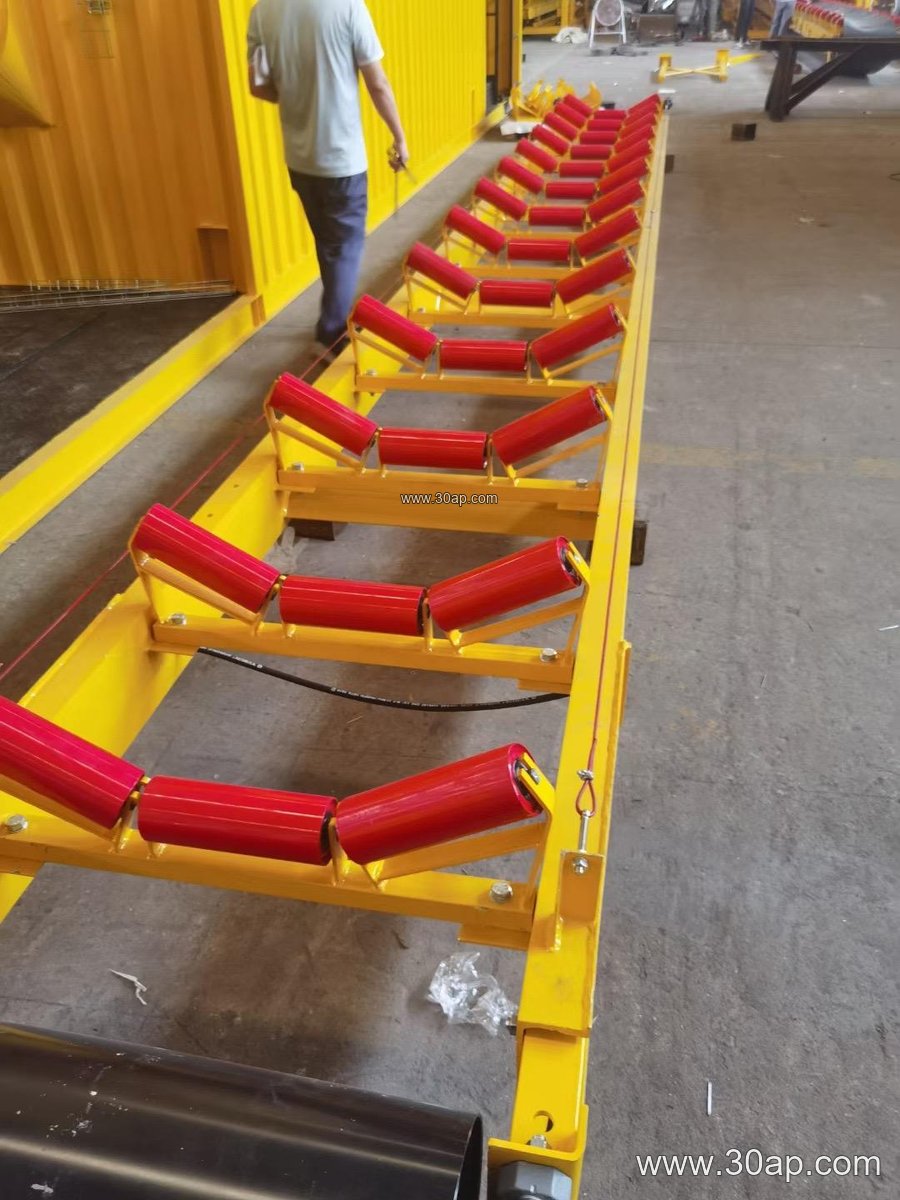
Selection Points for Buyers
Start with the material: lump size, drop height and throughput decide how much cushioning is needed. A crusher conveyor belt handling large rock may call for a larger roller diameter and thicker rubber rings than a cement plant conveyor moving fine clinker. Check the belt width and trough angle so the idler frame matches the existing conveyor bracket. Confirm the bearing size and sealing arrangement for the site conditions; dusty quarry or coal mining environments need better sealing than a clean food grade line.
Also consider the belt type running on the idler. An EP conveyor belt or multi-ply fabric core conveyor belt has different impact tolerance from a steel cord conveyor belt. Heat resistant conveyor belt and oil resistant conveyor belt applications may require the idler surface to be compatible with the belt cover. In cold climates, a cold resistant conveyor belt may be used, but the idler still needs to roll freely.
Maintenance Notes
Inspect the impact idler for flattened rubber rings, seized bearings and frame movement. A worn impact roller can let the belt sag at the feed point, which increases spillage and edge damage. Keep the loading chute aligned so material lands centrally. For more on conveyor components, visit conveyor belt and idler roller resources at www.bulkconveyorparts.com, where related conveyor pulley and conveyor bracket information is also available.